
The discovery of Kennewick Man, also known as the “Ancient One,” in 1996 on the banks of the Columbia River in Kennewick, Washington, sent shockwaves through the scientific and anthropological communities. This remarkably well-preserved human skeleton, estimated to be over 9,000 years old, immediately presented a tantalizing puzzle: who was this individual, and what did his remains tell us about the peopling of the Americas? While initial analyses focused on skeletal morphology, the true revolution in understanding Kennewick Man’s origins came with the advent of ancient DNA technology. Uncovering his autosomal DNA has been a groundbreaking endeavor, unraveling layers of his ancestry and profoundly reshaping our understanding of early human migrations into the New World.
The Skeletal Enigma: Initial Discoveries and Scientific Scrutiny
The discovery itself was serendipitous. Two recreational boaters, while exploring the Columbia River, stumbled upon human bones exposed by receding waters. The initial identification of the remains as ancient spurred immediate legal and scientific interest. The skeleton was remarkably complete, offering a wealth of morphological data. Scientists meticulously examined the bones, noting distinctive cranial features and the presence of a distinctive projectile point lodged in the pelvis, hinting at a violent end or a healed injury from a bygone era. These physical characteristics sparked intense debate, with some researchers suggesting a European or Polynesian link due to certain traits that differed from those typically associated with Native American populations. This divergence in interpretation fueled the scientific and legal battles that would ensue for years.
Early Morphological Analyses and Debates
The early days of Kennewick Man’s study were characterized by extensive osteological analysis. Researchers meticulously documented every bone, creating detailed measurements and comparisons with existing skeletal databases. The cranial vault, in particular, became a focal point of discussion. Its shape and certain facial features were interpreted by some as bearing a resemblance to populations found in northwestern Europe or parts of Polynesia, leading to hypotheses about multiple migration waves into the Americas or even ancient transatlantic contact. These interpretations, while based on careful observation, were inherently limited by the potential for convergent evolution and the vastness of human genetic diversity. The inability to definitively pinpoint Kennewick Man’s ancestral group based solely on his bones underscored the need for more advanced techniques.
The Legal and Ethical Minefield
The discovery of Kennewick Man was not just a scientific event; it was also a deeply fraught legal and ethical one. Native American tribes in the region, particularly the Umatilla, Yakima, and Nez Perce, immediately asserted their ancestral claim to the remains, invoking the Native American Graves Protection and Repatriation Act (NAGPRA). They viewed Kennewick Man as an ancestor and believed his remains should be reburied according to their traditions. This ignited a prolonged legal battle between the tribes and a coalition of scientists who argued for the importance of studying the remains for understanding human prehistory. The legal complexities of NAGPRA and the scientific imperative to learn from these ancient remains created a challenging and often acrimonious environment for research.
Recent studies on the autosomal DNA of Kennewick Man have shed light on the ancient populations of North America, revealing significant insights into their genetic heritage and migration patterns. For those interested in exploring further connections between ancient human history and modern scientific endeavors, a related article discusses the implications of lunar exploration and its potential to reshape our understanding of humanity’s place in the universe. You can read more about this fascinating topic in the article found here: The Moon: Ultimate High Ground for Exploration.
The Dawn of Ancient DNA: A New Era of Discovery
The development of ancient DNA (aDNA) extraction and sequencing techniques in the late 20th and early 21st centuries offered a revolutionary path forward in resolving the Kennewick Man enigma. Unlike morphological analysis, which can be prone to interpretation and limitations, DNA provides a direct window into an individual’s genetic heritage. The possibility of extracting and analyzing DNA from ancient bone samples held the promise of definitively identifying Kennewick Man’s ancestral lineage, bypassing the ambiguities of skeletal morphology. However, the process was not without its formidable challenges, including degradation of DNA over millennia and the need for stringent contamination protocols.
Challenges of Ancient DNA Extraction
Extracting viable DNA from ancient remains is akin to sifting through layers of time for microscopic traces. Over thousands of years, DNA molecules degrade due to environmental factors such as heat, moisture, and microbial activity. The processes of decomposition and fossilization further break down the genetic material into small fragments. Moreover, modern human DNA from researchers, equipment, or even the air can easily contaminate ancient samples, leading to misleading results. Therefore, scientists undertaking aDNA research must employ rigorous sterile techniques, work in specialized clean rooms, and develop sophisticated computational methods to distinguish authentic ancient DNA from modern contamination. The success of extracting usable DNA from Kennewick Man was a testament to advancements in these techniques.
Sequencing and Data Interpretation
Once extracted, the fragmented ancient DNA undergoes a complex sequencing process. This involves breaking down the DNA into smaller, manageable pieces, identifying their order, and then computationally reassembling them into a more complete genetic profile. For Kennewick Man, the initial sequencing efforts focused on mitochondrial DNA (mtDNA), which is inherited maternally and is present in multiple copies within cells, making it more likely to survive over time. However, mtDNA provides only a limited view of ancestry. The real breakthrough came with the ability to sequence autosomal DNA, which is inherited from both parents and encompasses a much larger portion of an individual’s genome, providing a far richer tapestry of ancestral information.
Unveiling the Autosomal Ancestry: The Landmark Study
The publication of the autosomal DNA analysis of Kennewick Man in 2015 marked a pivotal moment in the study of ancient American populations. This groundbreaking research, conducted by a team of international scientists, finally provided a definitive genetic answer to the question of his origins, settling years of debate and reshaping our understanding of early human migration. The results were both surprising and, in many ways, confirmatory of broader patterns emerging from other ancient DNA studies.
The Power of Autosomal DNA
Autosomal DNA comprises the vast majority of an individual’s genome, the 22 pairs of chromosomes that are not sex chromosomes. Unlike mitochondrial DNA or Y-chromosome DNA (which traces paternal lineage), autosomal DNA contains genetic information inherited from all ancestors, offering a comprehensive picture of an individual’s genetic heritage. By analyzing a significant portion of Kennewick Man’s autosomal DNA, scientists could compare his genetic profile to those of diverse modern and ancient populations worldwide. This allowed for the precise identification of his ancestral groups and the estimation of the proportions of his ancestry derived from different ancient populations. The depth of information contained within autosomal DNA was crucial in resolving the complex questions surrounding Kennewick Man.
Comparing to Modern and Ancient Populations
The research team employed sophisticated computational methods to compare Kennewick Man’s autosomal DNA with extensive reference databases of genetic data from various populations. This included genetic profiles from extant indigenous peoples of the Americas, as well as DNA extracted from other ancient human remains found across the globe. Statistical analyses, such as principal component analysis and admixture analysis, were used to identify genetic clusters and patterns of relatedness. The key was to find the closest genetic matches, thereby inferring his ancestral origins. The findings revealed a striking genetic affinity that pointed towards a specific ancestral group.
The Surprising Affiliation: Connection to the Yamnaya Culture
The most significant finding from the autosomal DNA analysis was Kennewick Man’s strong genetic affinity to the Yamnaya culture, a Bronze Age pastoralist group that inhabited the Pontic-Caspian Steppe around 5,000 to 7,000 years ago. This connection, while initially surprising given the vast geographical distance and temporal gap, provided crucial insights into the complex migratory history of early humans. The Yamnaya people are known for their significant expansion and influence across Eurasia, and their genetic legacy has been found in many modern European populations. The presence of Yamnaya-related ancestry in Kennewick Man suggested a more intricate and far-reaching migratory pathway than previously understood.
The Yamnaya: A Nomadic Ancestral Group
The Yamnaya culture, originating from the vast steppes north of the Black Sea, was characterized by its semi-nomadic lifestyle, herding livestock, and mastery of the horse. Archaeological evidence points to their significant expansion across Eurasia during the Late Copper Age and Early Bronze Age. Their migrations are thought to have played a crucial role in shaping the genetic landscape of Europe and parts of Asia, contributing significantly to the ancestry of many modern populations. The discovery of Yamnaya-related ancestry in an ancient American individual raised profound questions about how these genetic signatures could have traveled such vast distances.
Reconstructing Ancient Migratory Pathways
The presence of Yamnaya-related ancestry in Kennewick Man, alongside his clear affiliation with early Native American groups, implied a more complex ancestral journey than a single migration event. Researchers theorized that the ancestral populations that would eventually populate the Americas likely originated in Northeast Asia. However, the Yamnaya connection suggested that these ancestral populations may have undergone significant genetic mixing with other groups further west in Eurasia before their eventual migration across the Bering Strait into the Americas. This could have involved ancient migrations and interactions between Siberian and Eastern European populations that pre-dated the Beringian crossing. The findings opened up a new chapter in understanding the intricate tapestry of human migrations.
Recent studies on Kennewick Man’s autosomal DNA have provided fascinating insights into the genetic makeup of ancient populations in North America. This research not only sheds light on the origins of this prehistoric individual but also contributes to the broader understanding of human migration patterns across the continent. For those interested in historical advancements, you might find it intriguing to explore the ingenious inventions of Hero of Alexandria, which highlight the remarkable ingenuity of ancient civilizations and their contributions to science and technology.
Implications for Peopling of the Americas and Beyond
The unraveling of Kennewick Man’s autosomal DNA has had profound implications, not only for understanding his own identity but also for fundamentally re-evaluating the prevailing models of how the Americas were first populated. The findings have challenged simplistic notions of migration and highlighted the dynamic nature of human movement and genetic exchange over millennia. This research has provided a crucial data point that complements and informs an ever-growing body of ancient DNA evidence from across the globe.
Revisiting Migration Models
The traditional “Clovis-first” model, which posited that the first humans to arrive in the Americas were the Clovis people around 13,000 years ago, has been increasingly challenged by archaeological and genetic evidence of earlier occupations. The autosomal DNA of Kennewick Man, dating back over 9,000 years, further reinforces the idea of a much earlier arrival. Moreover, the Yamnaya connection suggests that the ancestral gene pool of Native Americans may have been shaped by complex intercontinental movements and genetic admixtures that occurred long before the last glacial maximum. This necessitates a more nuanced and interconnected view of human history, where ancient populations were not isolated but engaged in extensive movements and interactions.
Interconnectedness of Ancient Populations
The findings from Kennewick Man underscore the interconnectedness of ancient human populations across vast geographical distances and temporal scales. His genetic signature, linking him to both Asian ancestral groups that migrated to the Americas and indirectly to populations from the Eurasian steppe, paints a picture of a dynamic and interconnected world. It suggests that the peopling of the Americas was not a singular event but rather a complex mosaic of migrations, intermingling, and adaptations. This research serves as a powerful reminder that human history is a shared narrative, woven from the threads of countless journeys and encounters.
The Ongoing Legacy of Kennewick Man
The study of Kennewick Man’s autosomal DNA represents a triumph of scientific innovation and a testament to the power of genetic research. While the legal and ethical considerations surrounding his discovery and study have been complex, the scientific insights gained are invaluable. His remains have provided a crucial anchor point for understanding ancient North American populations, and the ongoing research into his DNA continues to contribute to a more comprehensive and accurate picture of human history. Kennewick Man, the “Ancient One,” has finally spoken through his genes, offering a compelling narrative of his ancestry and enriching our collective understanding of humanity’s ancient past. The journey to uncover his autosomal DNA has not only revealed his story but also illuminated the intricate pathways of our shared human journey.
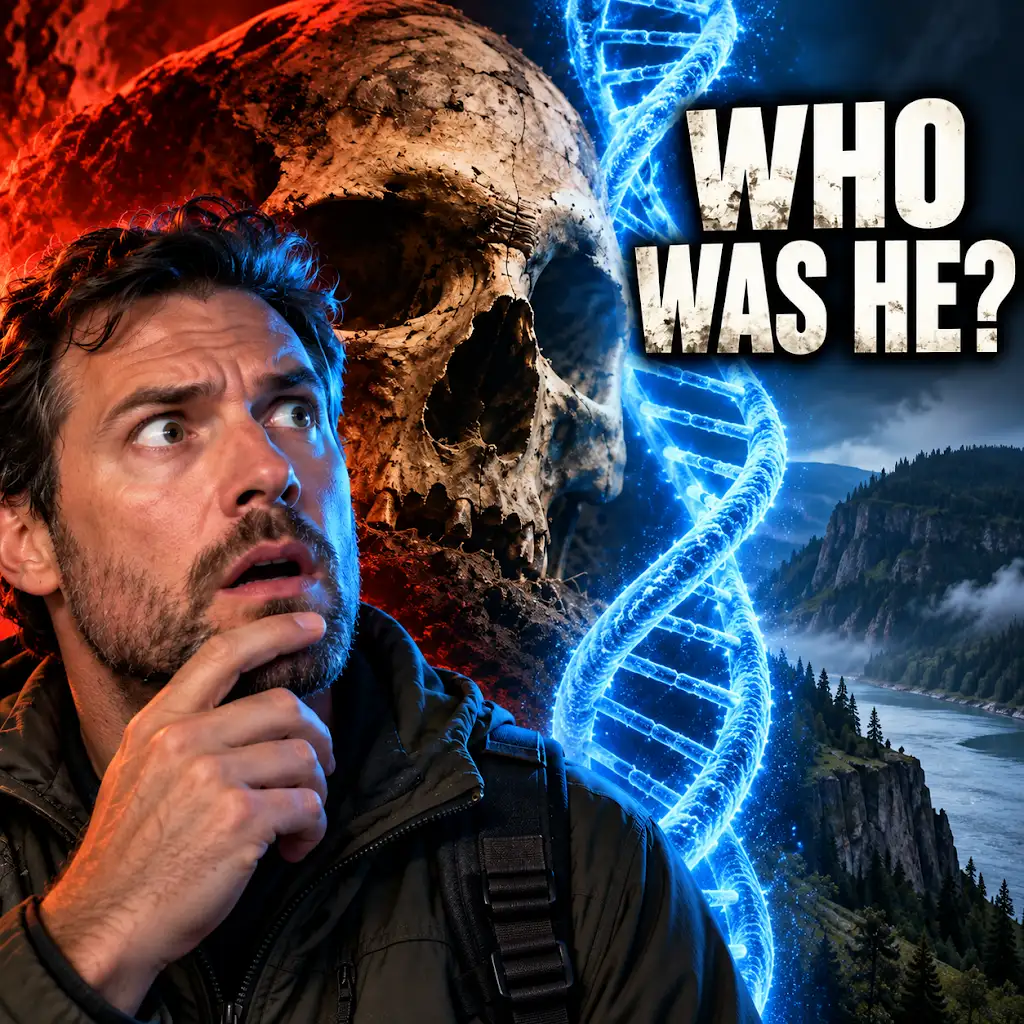
Kennewick Man’s Skull Said One Thing. DNA Said Another.
FAQs
What is Kennewick Man’s autosomal DNA?
Kennewick Man’s autosomal DNA refers to the genetic material inherited from both parents that is analyzed to determine his ancestry and genetic makeup.
Why is Kennewick Man’s autosomal DNA significant?
Studying Kennewick Man’s autosomal DNA can provide insights into his ancestry, migration patterns, and genetic relationships with modern populations.
How is Kennewick Man’s autosomal DNA analyzed?
Kennewick Man’s autosomal DNA is typically analyzed using advanced genetic testing techniques, such as SNP genotyping or whole genome sequencing.
What have studies of Kennewick Man’s autosomal DNA revealed?
Studies of Kennewick Man’s autosomal DNA have revealed genetic connections to Native American populations, suggesting he is closely related to modern Indigenous peoples.
What are the implications of Kennewick Man’s autosomal DNA findings?
The findings from Kennewick Man’s autosomal DNA analysis have implications for understanding the history and ancestry of Native American populations, as well as the broader human migration patterns in North America.