The pursuit of ancestral roots has long been a journey of meticulous research, sifting through faded documents, navigating dusty archives, and piecing together fragmented family narratives. For many, this endeavor has been a lifelong quest, sometimes yielding significant discoveries, but often leaving frustrating gaps and unanswered questions. However, a revolutionary technology has emerged, transforming the landscape of genealogical exploration: DNA testing. This scientific breakthrough offers an unprecedented ability to uncover lost ancestry, revealing connections and shedding light on the unknown branches of family trees.
The human desire to understand one’s origins is deeply ingrained. It’s a fundamental part of identity, a yearning to connect with those who came before and to comprehend the influences that shaped one’s existence. For generations, this connection was primarily facilitated through oral traditions, historical records, and the diligent work of genealogists. These methods, while invaluable, are inherently limited by the survival of documentation, the accuracy of information passed down through generations, and the often-difficult task of tracing lineage through challenging historical periods or across vast geographical distances.
Generations of Mystery
Many families harbor stories of adoption, illegitimacy, or sudden disappearances that leave behind significant genealogical puzzles. These mysteries, often shrouded in silence or incomplete information, can leave individuals feeling adrift from their heritage. The absence of a known biological parent, a lost sibling, or an unknown paternal or maternal line can create a profound sense of incompleteness. Traditional genealogical research often hits a brick wall when facing these situations, as official records may be sealed, incomplete, or simply non-existent. The emotional toll of these unanswered questions can be significant, impacting individuals’ sense of self and belonging.
The Digital Frontier of Genealogy
The advent of the internet, with its vast repositories of digitized records and online family tree platforms, marked a significant leap forward in genealogical research. Suddenly, individuals could access census data, immigration records, and vital statistics from the comfort of their homes. Collaborative platforms allowed researchers to share information, connect with distant cousins, and build comprehensive family trees. However, even with these advancements, certain genealogical walls remained stubbornly in place. The limitations of paper trails and the difficulty of connecting individuals across time and space still presented significant hurdles.
The Promise of Genetic Connection
DNA testing, particularly autosomal DNA testing, has emerged as a powerful complementary tool to traditional genealogical methods. It bypasses the need for extensive documentation by directly analyzing an individual’s genetic makeup. This genetic blueprint holds clues to one’s ancestral origins, revealing ethnic admixtures and, crucially, identifying close and distant relatives who have also submitted their DNA to the same databases. This ability to connect with living relatives, even those unknown to the tester, is where the true power of DNA in uncovering lost ancestry lies.
In the quest to understand our ancestry, recent advancements in DNA analysis have shed light on previously missing genealogical connections, revealing fascinating insights into our past. For those interested in exploring how ancient civilizations have left their mark on modern genetics, a related article titled “Uncovering Secrets of Ancient Reservoir Ruins” provides an intriguing perspective on the intersection of archaeology and genealogy. You can read more about it [here](https://www.realloreandorder.com/uncovering-secrets-of-ancient-reservoir-ruins/).
How DNA Unlocks the Family Tree
The science behind DNA ancestry testing is surprisingly accessible. Companies extract DNA from a saliva sample and then analyze specific markers within the genetic code. These markers are passed down from parents to children, providing a unique genetic fingerprint that can be compared to vast databases of other users. The results are typically presented in two main categories: ethnicity estimates and relative matching.
Autosomal DNA: The Broadest Reach
Autosomal DNA testing is the most common form of consumer DNA testing for genealogy. It examines DNA inherited from all 22 pairs of autosomes, which are the non-sex chromosomes. This means it can trace ancestry from both the paternal and maternal lines, going back approximately five to seven generations. The analysis of autosomal DNA allows
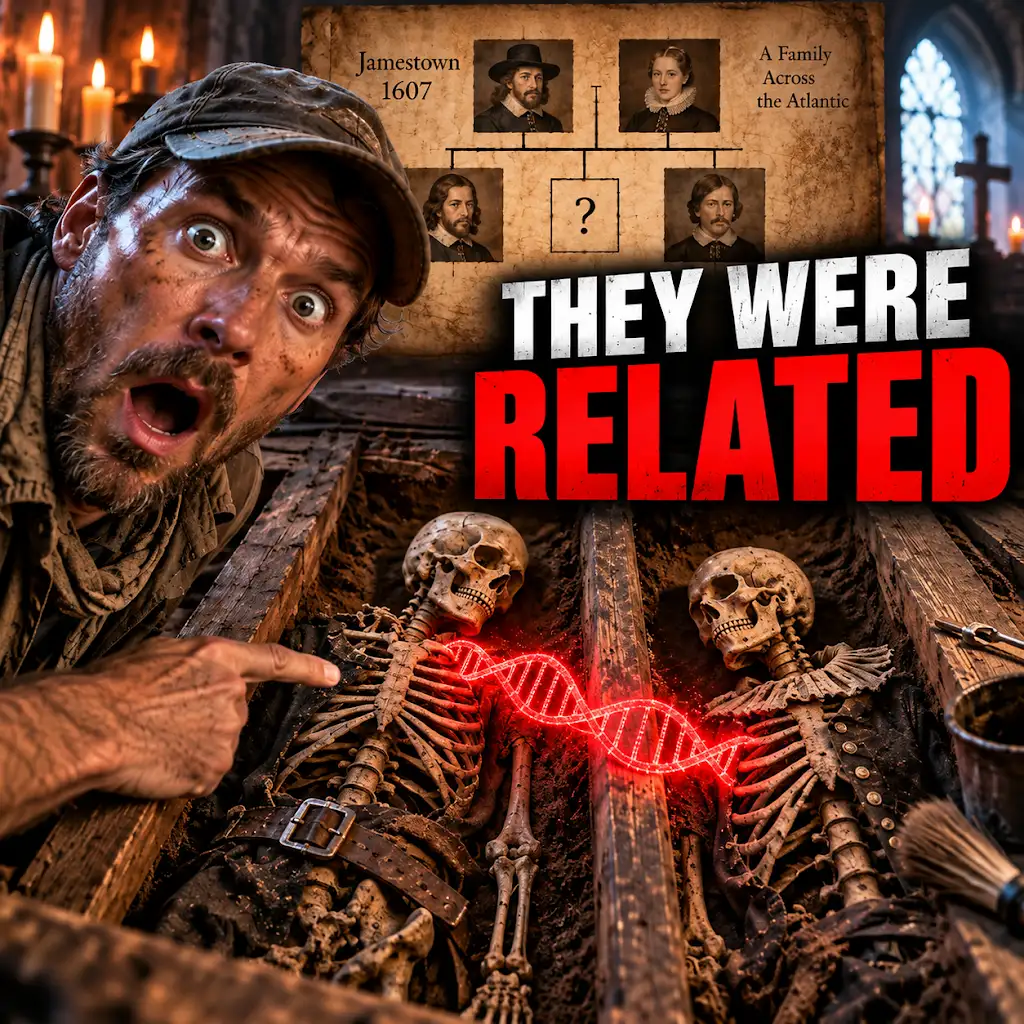
Jamestown DNA Revealed a Family Secret Hidden for 400 Years

FAQs

What is genealogy?
Genealogy is the study of family history and the tracing of ancestral lines.
How can DNA reveal missing genealogy information?
DNA testing can provide insights into one’s ancestry by comparing genetic markers with databases of known genetic profiles, helping to fill in gaps in family trees.
What are the benefits of using DNA for genealogy research?
DNA testing can help confirm relationships, identify unknown relatives, and uncover ethnic origins that may not be documented in traditional genealogical records.
Are there limitations to using DNA for genealogy purposes?
While DNA testing can provide valuable information, it may not always be able to provide specific details about relationships or ancestors beyond a certain number of generations.
How can individuals use DNA testing for genealogy research?
Individuals can use DNA testing kits from companies like AncestryDNA or 23andMe to collect a sample of their DNA and receive detailed reports on their genetic ancestry, matches with relatives, and more.