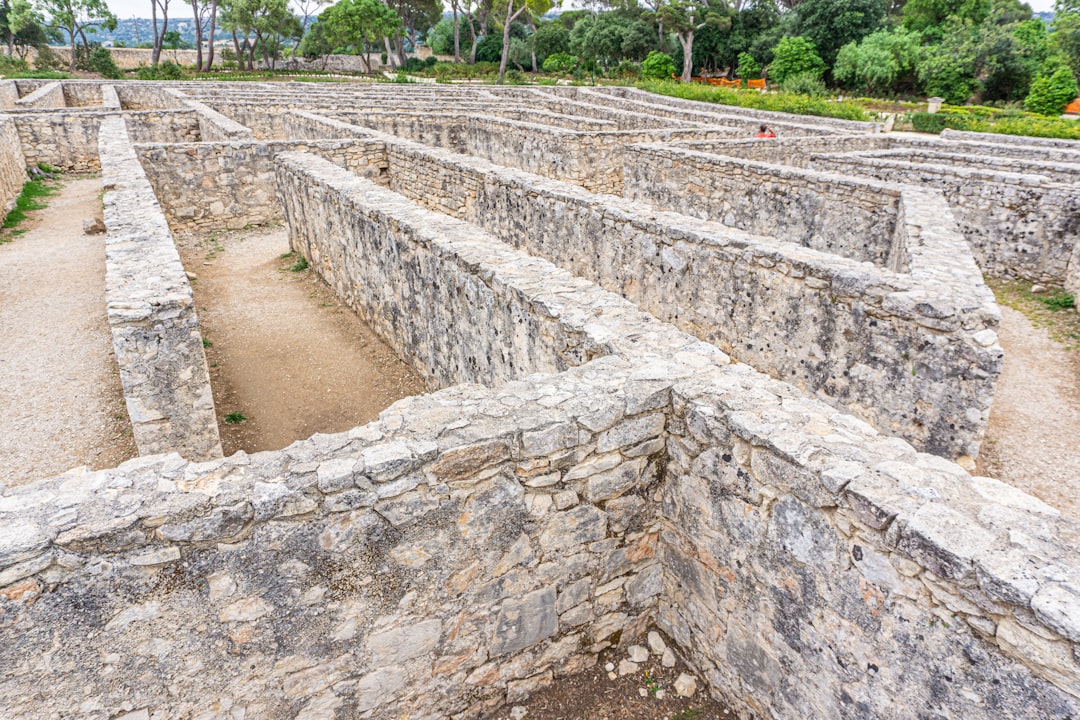
The earth, a silent keeper of secrets, has once again yielded a trove of extraordinary discoveries. Archaeologists, armed with a blend of cutting-edge technology and painstaking excavation, have unearthed a series of colossal ancient burial enclosures, offering unprecedented insights into the lives, beliefs, and social structures of long-vanished civilizations. These monumental structures, some stretching for hundreds of meters, represent not just resting places for the deceased, but elaborate statements of power, status, and cosmological understanding. The sheer scale of these sites challenges previous assumptions about the capabilities and organizational prowess of early societies, prompting a profound reevaluation of our understanding of human history.
The Dawn of Monumental Architecture: Early Expressions of Commemoration
The earliest traces of monumental burial practices often emerge from the Neolithic and Chalcolithic periods, eras characterized by the development of settled agriculture and increasingly complex social hierarchies. These emerging societies, now capable of sustaining larger populations and allocating labor towards non-subsistence activities, began to express their social organization and beliefs through enduring material culture. The construction of large-scale burial enclosures served as a focal point for community identity, a tangible link between the living and the ancestors, and a potent symbol of territorial claim.
Precursors to the Grand Enclosures: Simple Mounds and Collective Tombs
Before the advent of the massive enclosures that are now coming to light, earlier forms of communal burial were already in place. These often included simple earthen mounds, known as barrows or tumuli, which covered individual or group interments. In some regions, collective tombs, such as passage graves or chambered cairns, facilitated the burial of multiple individuals over extended periods, suggesting a continuity of ancestral veneration within specific lineages or communities. These earlier structures, while less imposing, laid the groundwork for the later development of more ambitious mortuary landscapes.
The Genesis of Scale: Why Did They Build So Big?
The transition to the construction of massive burial enclosures was driven by a confluence of factors. The accumulation of wealth and resources, facilitated by agricultural surplus, allowed for the mobilization of significant labor forces. Furthermore, the development of more sophisticated social and political structures meant that leaders and elites could command the construction of such impressive monuments as a demonstration of their authority and influence. The desire to solidify lineage claims, to honor prominent ancestors whose spirits were believed to influence the living, and to create visible markers of community identity likely played crucial roles.
Recent discoveries of massive ancient burial enclosures have sparked significant interest among archaeologists and historians alike, shedding light on the burial practices of ancient civilizations. These monumental structures, often found in various parts of the world, reveal much about the social and cultural dynamics of the societies that created them. For a fascinating exploration of early explorers and their encounters with the unknown, you can read more in this related article: Explorers of Antarctica Before 1820.
The Revelation of the Mega-Structures: Recent Archaeological Discoveries
Recent archaeological campaigns, employing advanced remote sensing techniques such as LiDAR (Light Detection and Ranging) and ground-penetrating radar (GPR), have dramatically expanded our knowledge of these ancient monumental landscapes. These technologies can penetrate dense vegetation and reveal subtle topographic anomalies that would be invisible to the naked eye, leading to the identification of previously unknown sites and the re-evaluation of existing ones. The scale of some of these newly discovered enclosures has been nothing short of astonishing.
LiDAR: Peering Through the Green Veil
LiDAR surveys have proven instrumental in uncovering these hidden giants. By emitting laser pulses and measuring the time it takes for them to return, LiDAR creates highly detailed topographic maps. When flown over heavily forested areas, the laser can penetrate the canopy, mapping the ground surface beneath. This has allowed archaeologists to identify faint outlines of ancient earthworks, ditches, and walls that have long been obscured by centuries of forest growth. The precision of LiDAR has revealed patterns and complexities that were previously unimaginable.
Ground-Penetrating Radar (GPR): Unveiling Subterranean Secrets
Complementary to LiDAR, GPR uses radar pulses to image the subsurface. This technique is invaluable for detecting buried features, such as foundations, pits, and even the disturbed soil of ancient burials. By analyzing the reflected radar waves, archaeologists can build a three-dimensional picture of what lies beneath the surface, helping to delineate the precise boundaries and internal structures of the burial enclosures without extensive excavation.
Case Studies of Gigantism: Notable Discoveries from Around the Globe
Several regions have recently yielded spectacular examples of these massive burial enclosures. In Europe, extensive Neolithic and Bronze Age enclosures, often featuring intricate earthworks and stone alignments, have been identified. These sites, sometimes encompassing areas of several hectares, suggest highly organized societies with a deep understanding of landscape manipulation. In Asia, similar monumental complexes, often associated with elite burials and ritualistic practices, have also come to light, pushing back the timeline for sophisticated mortuary architecture in these regions.
The Architectural Marvels: Design, Construction, and Symbolism
The construction of these ancient burial enclosures was no simple undertaking. It required sophisticated planning, significant logistical organization, and a deep understanding of engineering principles, even if not codified in the way we understand them today. The very design of these structures often carries profound symbolic meaning, reflecting the cosmology and worldview of their creators.
Engineering Prowess: Mobilizing Labor and Resources
The sheer scale of these enclosures implies the mobilization of vast numbers of people. This would have required effective leadership, the ability to feed and house large workforces, and the development of specialized skills for quarrying stone, excavating earth, and constructing embankments. The organization of such projects provides a window into the social stratification and administrative capabilities of these ancient societies.
The Language of Landscape: Earthworks, Stone, and Alignment
The materials used and the way they were arranged were not arbitrary. Massive earthworks, often forming concentric circles or rectilinear patterns, served to delineate sacred spaces and to amplify the presence of the buried individuals. The placement of large standing stones, or megaliths, within or around these enclosures could have served astronomical purposes, marking solstices or equinoxes, or acting as mnemonic devices for oral traditions. The orientation of the enclosures themselves, often towards specific celestial events or landscape features, speaks volumes about their symbolic significance.
Enclosure as a Sacred Threshold: Defining the Liminal Space
The enclosure itself, be it a ditch, a bank, or a monumental wall, served as a clear demarcation between the world of the living and the realm of the dead. This boundary was not merely physical but also imbued with spiritual significance, creating a liminal space where the ancestors could be communicated with and their influence mediated. The act of entering such an enclosure was likely a ritualistic experience, undertaken by specific individuals or during particular ceremonies.
Ritual and Belief: The Purpose Behind the Monumentality
Beyond the physical act of burial, these enclosures served as focal points for complex ritual practices and deeply held beliefs about the afterlife, ancestry, and the cosmos. The scale and labor involved suggest that these were not merely utilitarian cemeteries but significant centers for social and religious activity.
Ancestor Veneration: Honoring the Departed and Seeking Guidance
The profound respect and reverence for ancestors evident in these monumental structures suggest a strong tradition of ancestor veneration. The ancestors were likely seen as intermediaries between the human and the divine, possessing the power to influence the fortunes of the living. The elaborate burials and the continued maintenance of these sites would have been a way to honor them, to ensure their continued well-being in the afterlife, and to solicit their favor.
Cosmic Connections: Alignments and Astronomical Significance
The meticulous alignment of many of these enclosures with celestial events points to a sophisticated understanding of astronomy and a desire to connect the earthly realm with the cosmic order. The solstices and equinoxes, periods of transition and renewal, were likely of particular importance, and their marking by these monumental structures suggests a belief in the cyclical nature of life, death, and rebirth, mirroring the movements of the sun and stars.
The Role of the Elite: Status, Power, and Legitimation
It is highly probable that these massive burial enclosures were closely associated with the elite strata of ancient societies. The ability to commission and oversee such colossal undertakings would have been a clear indicator of wealth, power, and influence. The burials themselves likely contained grave goods that further underscored the status of the individuals interred, reinforcing their social standing and the legitimacy of their descendants.
Recent discoveries of massive ancient burial enclosures have sparked interest among archaeologists and historians alike, as they provide valuable insights into the rituals and social structures of past civilizations. These enclosures, often found in various parts of the world, reveal the complex relationships between communities and their environments. For those interested in the geological aspects that may have influenced such ancient practices, an intriguing article discusses the geological evidence of subglacial Antarctica, shedding light on how ancient landscapes could have shaped human activity. You can read more about it in this related article.
Reinterpreting the Past: Implications for Our Understanding of Ancient Societies
The discovery and ongoing study of these massive ancient burial enclosures are fundamentally reshaping our understanding of early human societies. They challenge long-held assumptions about technological capabilities, social organization, and the complexity of ancient belief systems.
A New Perspective on Social Organization and Labor Mobilization
The sheer scale of construction required for these enclosures indicates a level of social organization and labor mobilization that was previously underestimated for many prehistoric periods. It suggests sophisticated leadership structures, effective communication networks, and the capacity for sustained collective effort over extended periods.
Unveiling Complex Cosmological Frameworks
The intricate designs, astronomical alignments, and symbolic elements embedded within these enclosures point to complex cosmological frameworks and a nuanced understanding of the relationship between humanity, the earth, and the cosmos. These were not simple animistic beliefs but likely intricate systems of thought that guided their actions and shaped their worldviews.
Bridging the Gaps in the Archaeological Record
These discoveries serve to bridge significant gaps in our archaeological record, providing tangible evidence of activities and beliefs for which we previously had only speculative interpretations. They offer a more complete and nuanced picture of human history, demonstrating the ingenuity, creativity, and spiritual depth of our ancestors. The ongoing research promises to further illuminate these ancient mysteries, offering ever-deeper insights into the foundations of human civilization.

260 Ancient Graves Were Hiding in This “Empty” Desert
FAQs

What are massive ancient burial enclosures?
Massive ancient burial enclosures are large structures built by ancient civilizations to house the remains of the deceased. These enclosures can vary in size and design, but they are typically constructed using stone, earth, or other durable materials.
Where are massive ancient burial enclosures found?
Massive ancient burial enclosures can be found in various parts of the world, including Europe, Asia, Africa, and the Americas. Some well-known examples include the megalithic tombs of Europe, the pyramids of Egypt, and the burial mounds of North America.
What is the purpose of massive ancient burial enclosures?
The purpose of massive ancient burial enclosures was to provide a final resting place for the deceased and to honor their memory. These structures often served as important ceremonial and religious sites for the ancient civilizations that built them.
How were massive ancient burial enclosures constructed?
Massive ancient burial enclosures were typically constructed using a combination of manual labor, engineering techniques, and architectural knowledge. The specific methods and materials used varied depending on the time period and the culture responsible for building the enclosure.
What can we learn from studying massive ancient burial enclosures?
Studying massive ancient burial enclosures can provide valuable insights into the beliefs, customs, and social structures of the civilizations that built them. Archaeological research on these sites can also shed light on ancient construction techniques and the ways in which different cultures honored their dead.