
The silent earth, a testament to millennia of human endeavour, often yields its most profound secrets through the patient work of archaeologists. The discovery of human remains within the ditches of Neolithic enclosures is one such revelation, offering a rare and intimate glimpse into the lives, deaths, and rituals of our ancient ancestors. These monumental earthworks, dating back some 6,000 years, were not merely defensive structures or territorial markers; they were vibrant centres of social and ritual activity, and the deposition of human bodies within their confines speaks volumes about their significance. Unearthing these individuals, often fragmented and weathered by time, is a meticulous and emotionally charged process, requiring a deep understanding of both archaeological science and the complex tapestries of past human belief systems.
The Enigmatic Nature of Neolithic Enclosures
Neolithic enclosures, also known as causewayed enclosures or henges, represent a significant leap in prehistoric societal organisation and monumental construction. Emerging around the 4th millennium BCE in Britain and Ireland, and with parallels across Europe, these sites are characterised by their distinctive circular or oval plans, demarcated by banks and ditches. The ditches themselves are often segmented, creating causeways or gaps that allow access into the enclosed space. Their purpose has been a subject of considerable debate for generations of archaeologists, with theories ranging from defensive strongholds and communal gathering places to centres for feasting, trade, and, crucially, ritual activity.
Defining the Enclosure Landscape
The very definition of these sites hinges on their scale and construction. They are not simple homesteads but large-scale communal projects, requiring significant labour and organisation. The material extracted from the ditches was often used to build the accompanying bank, creating a substantial physical barrier and a visible statement of collective power. The presence of large quantities of pottery, animal bones (often from feasting events), and flint tools within and around these enclosures further supports the notion of them as focal points for community life.
The Functionality Puzzle
The functional interpretations of these enclosures are multifaceted. While some may have offered a degree of defence, their often widely spaced causeways and the presence of internal structures suggest a more complex role. The prevalent interpretation leans towards them being significant social and ritual centres, where communities came together for ceremonies, dispute resolution, and the exchange of goods and ideas. The scale of these undertakings implies a level of social cohesion and hierarchical organisation previously thought to be absent in Neolithic societies.
The Significance of the Ditch
The ditches of these enclosures are not merely excavations; they are integral to the meaning and function of the entire site. Their construction would have been a monumental undertaking, symbolising the community’s effort and commitment. More importantly, the act of deposition, whether of artefacts or human remains, within these ditches appears to have been a deliberate and ritualised practice. The ditches, therefore, can be seen as liminal spaces, transitional zones between the everyday world and the sacred, or perhaps as conduits to the underworld.
Artefact Deposition as a Clue
The presence of large quantities of deliberately broken pottery, animal bones, and other artefacts within the ditches provides a strong indication of ritualistic activity. These are not simply discarded domestic items but objects that appear to have been ceremonially deposited, perhaps as offerings or as part of a wider ritualistic landscape. The patterns of deposition, including the types of artefacts and their placement, offer clues to the beliefs and practices of the people who created and used these sites.
Recent archaeological findings have shed light on the Neolithic period, particularly regarding enclosure ditches and the human remains discovered within them. These sites provide valuable insights into the burial practices and social structures of early agricultural communities. For a broader perspective on how human endeavors, both in the past and present, shape our understanding of civilization, you might find the article on the space race and its implications fascinating. It explores the intersection of exploration and conflict, much like the way ancient societies navigated their own challenges. You can read more about it here: Exploring the Final Frontier: Space Race vs. Space War.
The Unveiling of Human Remains: A Delicate Excavation
The discovery of human remains within Neolithic enclosure ditches is a profoundly significant, yet often challenging, aspect of their study. These are not typically the well-preserved skeletons found in burial contexts but often fragmented, disarticulated, and sometimes deliberately damaged bones. The excavation process demands a heightened level of care, precision, and scientific rigor, as each fragment carries the weight of untold history and the potential to unlock new understandings of Neolithic mortuary practices and beliefs.
Precision in the Field
Archaeologists approach these finds with the utmost sensitivity. The excavation is conducted in a controlled manner, often using fine tools such as brushes and dental picks to carefully expose and recover each bone fragment. Detailed records are kept, documenting the exact location, orientation, and context of each discovery. This meticulous approach ensures that no vital information is lost and that the subsequent analysis can be as comprehensive as possible.
Stratigraphic Significance
The position of the human remains within the ditch’s stratigraphy is crucial. Understanding which layer of soil the bones are found in can help determine their age relative to other deposits within the ditch and to the construction of the enclosure itself. This stratigraphic context is fundamental to reconstructing the sequence of events and the timeline of deposition.
Recording and Documentation
Every detail is recorded: the type of bone, its condition, any signs of modification or breakage, and its spatial relationship to other finds. This meticulous documentation forms the bedrock of all subsequent research. Photogrammetry and 3D scanning are increasingly employed to create accurate digital models of the excavation site and the human remains, allowing for detailed analysis and preservation of the original context.
The Role of Osteoarchaeology
Osteoarchaeology, the study of animal and human remains from archaeological sites, plays a vital role in interpreting these discoveries. Osteoarchaeologists can determine the age, sex, and even potential cause of death of the individuals, as well as identify signs of disease, trauma, or modification to the bones.
Interpreting the Deposition: Beyond Burial
The presence of human remains within Neolithic enclosure ditches rarely aligns with what we typically understand as formal burial practices. Unlike the dedicated barrows or graves of later periods, these deposits often lack the clear intentionality of a single, complete burial. The fragmentation, disarticulation, and sometimes even evidence of butchery or secondary treatment of the bones suggest a more complex and ritualistic purpose for their deposition.
Ritualistic Practices and Belief Systems
The prevailing interpretation is that these deposits were part of deliberate ritualistic practices. The ditches, acting as liminal spaces, may have been seen as places to return individuals or their remains to the earth, or perhaps to a realm beyond the living. The nature of the deposition could reflect beliefs about the afterlife, the cyclical nature of life and death, or the appeasement of ancestral spirits.
The Concept of Liminality
The idea of liminality is central to understanding these deposits. Liminal spaces are transitional zones, neither fully inside nor fully outside, often imbued with spiritual significance. Enclosure ditches, with their causeways and their connection to the earth, fit this description, serving as a threshold between different realms or states of being.
Secondary Deposition and Ancestor Veneration
In many cases, the human remains appear to have been deposited after the body had undergone some form of decomposition or even intentional dismemberment. This suggests secondary deposition, where bones were collected and moved to the enclosure ditch. This practice might be linked to ancestor veneration, where the remains of significant individuals were ritually placed to maintain a connection with the community’s lineage.
Evidence of Dismemberment or Secondary Treatment
The presence of cut marks or signs of burning on the bones can indicate deliberate modification after death. These practices could be interpreted as part of a ritualistic cleansing, a way of transforming the individual for their transition, or even as a form of symbolic violence or remembrance.
Insights into Neolithic Society and Ritual
The human remains found within these enclosure ditches provide an invaluable window into the social structures, beliefs, and mortuary customs of Neolithic communities. They challenge simplistic notions of prehistoric life and reveal a society deeply engaged with ritual, symbolism, and the complexities of life and death.
Social Stratification and Special Individuals
The nature of the human remains can sometimes offer clues about social stratification. Are the remains of individuals who appear to have held a special status within the community? Were they leaders, shamans, or individuals who played a significant role in communal life? The study of isotopic analysis of the bones can also reveal dietary patterns and geographical origins, offering insights into mobility and social networks.
Isotopic Analysis and Diet
Isotopic analysis of human remains can reveal information about the diet of the individuals, providing insights into the types of food consumed and their geographical origins. This can help reconstruct trade networks, migration patterns, and the social significance of certain foods.
Community and Identity
The act of depositing human remains within these communal spaces suggests that death and the transition to the afterlife were significant community events. The enclosures themselves may have been focal points for expressing collective identity and for reinforcing social bonds through shared ritualistic practices.
The Collective Memory
The depositions within the enclosure ditches can be seen as a form of collective memory, where the remains of individuals were integrated into the landscape and the ongoing life of the community, ensuring their continued presence and influence.
Recent discoveries of human remains in Neolithic enclosure ditches have sparked significant interest among archaeologists, shedding light on the burial practices and social structures of early agricultural societies. For a deeper understanding of how these findings relate to broader historical contexts, you can explore a related article that discusses the implications of labor value in ancient societies. This insightful piece can be found here, providing a fascinating perspective on the evolution of human communities.
The Future of Research: Interdisciplinary Approaches
The study of human remains in Neolithic enclosure ditches is an ever-evolving field. Future research will undoubtedly benefit from increasingly sophisticated scientific techniques and a commitment to interdisciplinary collaboration, further illuminating the lives and beliefs of these ancient peoples.
Advanced Scientific Techniques
The application of advanced scientific techniques such as ancient DNA analysis, palaeopathology, and advanced dating methods will continue to refine our understanding of the individuals and their context. Ancient DNA can reveal kinship, population movements, and even genetic predispositions to disease.
Ancient DNA and Kinship
Ancient DNA analysis holds immense promise for understanding kinship relationships within the deposits. This could reveal whether individuals were deposited together as family units or as part of unrelated communal rituals.
Comparative Studies and Global Perspectives
Comparing findings from different enclosure sites within a region, and indeed across different continents, will be crucial for identifying common themes and regional variations in Neolithic mortuary practices and belief systems. Understanding the global context of these discoveries enriches our understanding of human history.
Regional Variations in Ritual
By comparing the types of human remains and their depositional contexts across different Neolithic enclosures, archaeologists can begin to identify regional variations in ritual practices, reflecting the diversity of beliefs and social structures across the prehistoric landscape.
The silent earth continues to speak, and with each carefully excavated fragment of bone, each meticulously recorded detail, we draw closer to understanding the complex, vibrant, and deeply spiritual lives of the people who built and used these extraordinary Neolithic enclosures. The human remains discovered within their ditches are not simply archaeological curiosities; they are powerful reminders of our shared human heritage and the enduring mysteries of life, death, and ritual that have captivated humanity for millennia.
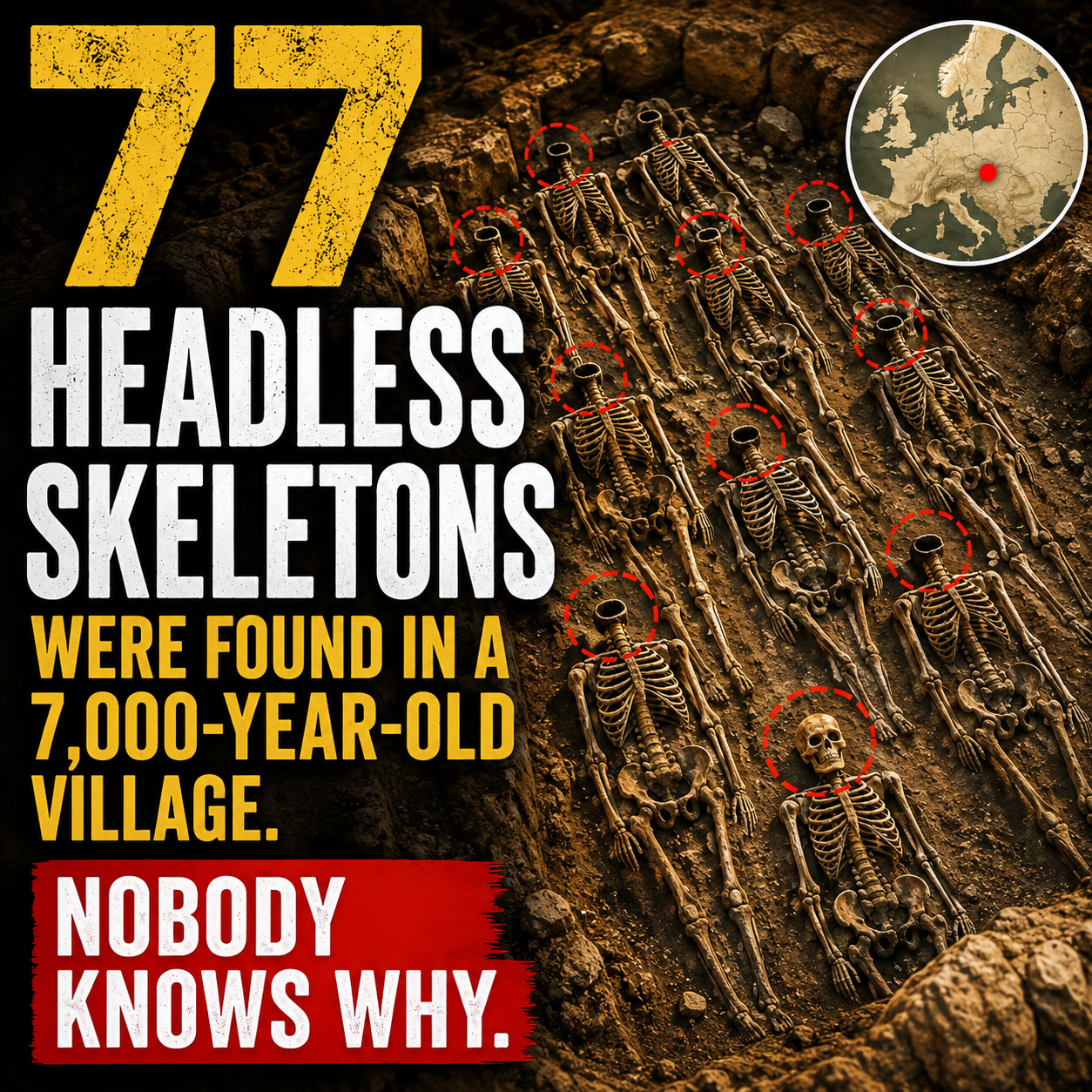
They Found 77 Skeletons Without Heads. The Heads Are Still Missing.
FAQs
What is a Neolithic enclosure ditch?
A Neolithic enclosure ditch is a type of archaeological feature found in Neolithic sites, consisting of a large circular or oval-shaped ditch that encloses an area. These ditches were often used for ceremonial or ritual purposes and are commonly associated with ancient settlements.
What are human remains found in Neolithic enclosure ditches?
Human remains found in Neolithic enclosure ditches are the skeletal remains of individuals from the Neolithic period. These remains can provide valuable insights into the lives, health, and burial practices of the people who lived during that time.
What can the study of human remains in Neolithic enclosure ditches tell us?
The study of human remains in Neolithic enclosure ditches can provide information about the diet, health, and lifestyle of Neolithic people. It can also shed light on their burial practices, social structure, and cultural beliefs.
Where have Neolithic enclosure ditch human remains been found?
Neolithic enclosure ditch human remains have been found in various locations across Europe, including the British Isles, France, and Germany. These discoveries have contributed to our understanding of Neolithic societies and their practices.
What significance do Neolithic enclosure ditch human remains hold?
The discovery of human remains in Neolithic enclosure ditches is significant as it helps archaeologists and historians piece together the lives and customs of Neolithic people. It provides valuable evidence for understanding the cultural and social aspects of this ancient period.