The dawn of human civilization, a period often shrouded in mystery, continues to yield secrets that reshape our understanding of early societies. Recently, a remarkable discovery in the heart of a remote valley has sent ripples of excitement through the archaeological community: the uncovering of what appear to be sophisticated Neolithic ritual structures. These ancient edifices, meticulously preserved beneath layers of earth and time, offer an unprecedented glimpse into the spiritual lives, social organization, and cosmological beliefs of people who lived thousands of years ago. The site, dubbed “The Whispering Stones” by the lead excavation team, promises to be a treasure trove of information, demanding extensive study and careful interpretation.
The journey to unearthing these enigmatic structures was not one of serendipity, but the culmination of years of meticulous surveying and landscape archaeology. A team led by Dr. Aris Thorne, a renowned expert in prehistoric European cultures, had been conducting a multi-year survey of the region, known for its sparse but significant scattering of Mesolithic and early Neolithic tool finds. The initial aim was to map the extent of early human settlement patterns. However, anomalous geophysical readings, detected during a routine ground-penetrating radar (GPR) survey, hinted at something far more substantial beneath the surface.
Persistent Anomalies: The First Clues
The GPR data revealed unusually regular, rectilinear patterns that were inconsistent with natural geological formations. These anomalies, several meters below the current ground level, persisted across multiple survey lines, indicating a deliberate and organized construction. The sheer scale of these subsurface features suggested that they were not merely domestic structures but likely held a significant communal purpose. The team, initially cautious in their interpretations, began to suspect the presence of something extraordinary.
Geophysical Signatures of Intent
The geophysical surveys employed a suite of advanced technologies, including GPR, magnetometry, and electrical resistivity tomography. These methods allowed researchers to “see” beneath the surface without invasive excavation, revealing variations in soil density, the presence of buried features, and anomalies in the magnetic field. The consistent, patterned responses in these readings strongly indicated the presence of man-made structures, distinguishing them from the surrounding natural geology. The regularity of the subsurface features, particularly the straight lines and right angles, was a key indicator of intentional design.
Strategic Trial Trenches: Confirming the Unseen
Based on the compelling geophysical evidence, a series of strategically placed trial trenches were excavated. These small-scale interventions served as a crucial step to verify the GPR findings and to begin to understand the nature of the buried features. The initial digging yielded fragments of pottery, flint tools, and, most significantly, worked stone that appeared to be part of larger, purposefully shaped elements. The careful removal of sediment revealed the upper edges of substantial stone constructions, confirming that the anomalies were indeed the remnants of ancient human activity.
The First Glimpse of Cut Stone
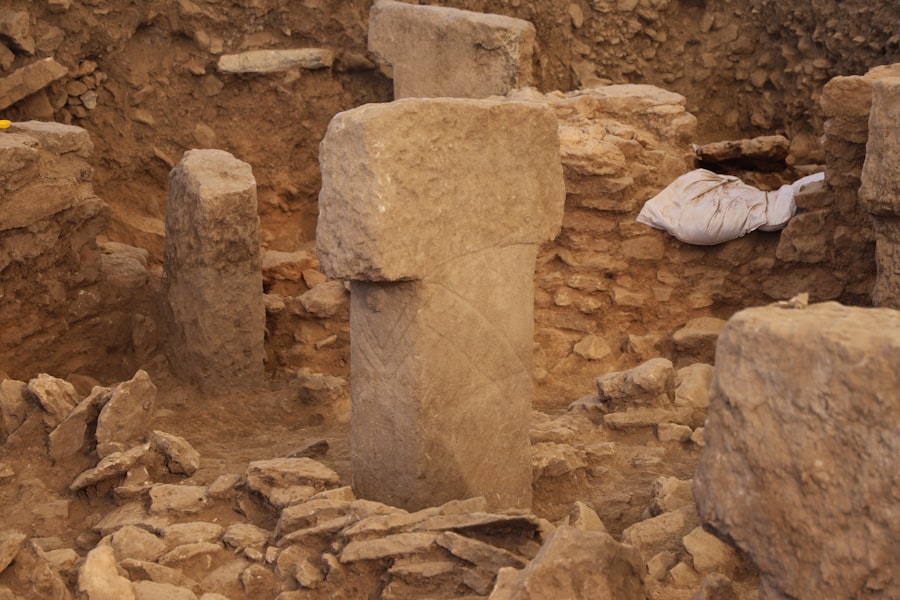
The first tangible evidence of the structures came in the form of large, dressed stone blocks. Unlike the naturally occurring rocks in the area, these stones bore clear signs of human modification – smoothed surfaces, straight edges, and precise fitting. This indicated a level of craftsmanship and architectural ambition that was unexpected for the presumed age of the site. The discovery of these worked stones was a pivotal moment, solidifying the belief that a significant archaeological find was imminent.
Neolithic ritual structures have long fascinated archaeologists and historians, as they provide insight into the spiritual and social practices of early human societies. A related article that explores the broader implications of ancient structures and their significance in contemporary society can be found at this link. This piece discusses how understanding historical frameworks can inform modern governance and societal organization, drawing parallels between ancient rituals and current practices.
Architects of the Sacred: Unveiling the Structures
As excavation progressed, the true scale and complexity of the Neolithic ritual structures began to emerge. The site is not a single monolithic entity, but rather a carefully arranged complex of interconnected spaces, suggesting a multi-purpose ceremonial center. The architecture itself speaks volumes about the ingenuity and organizational capabilities of these ancient people, hinting at a society that was capable of coordinated effort on a large scale for purposes beyond mere survival.
The Great Circle: A Cosmic Alignment
Dominating the center of the complex is a monumental circular enclosure, approximately 50 meters in diameter. Its perimeter is defined by a series of upright megaliths, some standing over three meters tall, interspersed with lower, carefully placed stone slabs. The alignment of these stones is not random; preliminary analysis suggests a deliberate relationship with astronomical phenomena, particularly the solstices and equinoxes. This points towards a deep understanding of celestial movements and their integration into spiritual practices.
Megalithic Mysteries and Astronomical Significance
The placement of the megaliths within the Great Circle is a subject of intense study. Researchers are employing archaeoastronomy techniques to determine if specific stones align with the rising or setting of the sun, moon, or certain stars at significant times of the year. The potential for solstice alignments, for example, suggests that these structures served as observatories or were used for ceremonies tied to the changing seasons, crucial for agricultural societies. The sheer effort involved in quarrying, transporting, and erecting these massive stones underscores the profound importance of these celestial observations and the rituals associated with them.
The Processional Way: A Journey of Transformation
Leading into the Great Circle from the north is a long, straight pathway, approximately 15 meters wide and extending for over 100 meters. This “Processional Way” is flanked by lower, parallel walls constructed from carefully fitted stones. The gradual incline of the pathway and its grand entrance suggest it was a designated route for ceremonial processions, guiding participants towards the sacred heart of the complex. The meticulous construction of this pathway implies a structured and formalized approach to ritual performance.
Echoes of Ancient Footsteps
The Processional Way, worn smooth by millennia of foot traffic, offers a tangible connection to the past. Archaeologists are meticulously examining the surface for any traces of organic material or other evidence that might shed light on the types of processions that took place. The careful construction and length of the pathway suggest a journey, a transition from the mundane world to the sacred space of the Great Circle, perhaps involving a symbolic cleansing or preparation for participants.
The Inner Sanctum: A Chamber of Secrets
Within the Great Circle, at its precise center, lies a smaller, almost perfectly square structure, measuring approximately 10 meters by 10 meters. This “Inner Sanctum” is enclosed by a more substantial stone wall, and its entrance is marked by two imposing standing stones. Inside, the remains of a meticulously constructed stone altar and evidence of hearths have been found. This highly protected and centrally located space is believed to have been the focal point of the most sacred rituals.
Ritual Deposits and Symbolic Offerings
The Inner Sanctum has yielded a wealth of artifacts that provide clues about the rituals performed there. Fragments of finely crafted pottery, intricately carved bone objects, and deposits of pigment suggest offerings and symbolic actions. The presence of hearths indicates that fire played a significant role, perhaps for burning incense, sacrifices, or for illumination during nocturnal ceremonies. The careful placement and nature of these finds strongly suggest that this was a place of profound spiritual significance, reserved for the most important communal rites.
Beyond the Stones: The Human Element

The discovery of these ritual structures is inextricably linked to understanding the people who built and used them. While the stones themselves offer mute testimony to their capabilities, the accompanying archaeological evidence begins to paint a picture of their lives, beliefs, and social organization. The context in which these structures were found, and the artifacts discovered within and around them, are crucial for reconstructing their human dimension.
A Community of Belief
The sheer scale and collaborative effort required to construct the Whispering Stones complex point towards a well-organized and cohesive society. The ability to mobilize labor, plan complex engineering projects, and sustain a workforce for extended periods suggests a level of social stratification and a shared commitment to communal endeavors. These structures were not built by isolated individuals but by a community united by shared beliefs and a common purpose.
Social Stratification and Communal Labor
The existence of specialized roles – architects, builders, stonemasons, and perhaps even religious leaders – can be inferred from the sophistication of the construction. The ability to organize and direct such a large-scale undertaking would have necessitated a clear social hierarchy. Furthermore, the investment of so much labor and resources into structures with no apparent utilitarian purpose points to a society that placed a high value on spiritual or cosmological pursuits.
Diet and Subsistence: Nourishing the Builders and Believers
Analysis of animal bones and plant remains found at the site provides insights into the diet of the people who inhabited the area and likely participated in the construction and rituals. Evidence of domesticated animals like cattle and sheep, alongside wild game and gathered plants, paints a picture of a mixed economy, typical of early agricultural communities. The ability to sustain a workforce engaged in non-subsistence activities suggests a surplus of food and resources.
Tracing the Culinary Landscape
The study of faunal and floral remains, through techniques like archaeobotany and zooarchaeology, allows researchers to reconstruct the ancient diet. Identifying the types of animals hunted or farmed, the grains cultivated, and the wild plants gathered offers a glimpse into their daily lives and resource management strategies. The presence of food remains near the ritual structures might also indicate feasting or communal meals associated with ceremonies.
Tools of Their Trade: Craftsmanship and Technology
The discovery of a variety of tools, ranging from flint knapping implements to stone axes and polished bone needles, reveals the technological capabilities of the Neolithic people. The precision evident in the worked stones of the ritual structures suggests a high degree of skill and specialized knowledge in toolmaking and stoneworking. These tools were not only essential for construction but also for their daily lives and other crafts.
The Art of Stone: From Utility to Monumentality
The flint artifacts found at the site include a range of tools for cutting, scraping, and piercing. More significant, however, are the stone tools directly associated with the construction of the ritual structures. This includes stone hammers, chisels, and polishing stones, demonstrating the methods used to shape and dress the megaliths. The transition from purely functional tools to those employed in monumental construction highlights the evolving technological sophistication of the society.
Unlocking the Meaning: Interpreting the Sacred
The true challenge of this discovery lies in moving beyond the physical structures to understand their intangible significance. What did these rituals entail? What were the beliefs that inspired such monumental undertakings? Archaeologists, anthropologists, and historians are now grappling with these profound questions, drawing upon comparative studies and theoretical frameworks to piece together the puzzle.
Cosmology and Belief Systems: A World of Meaning
The potential astronomical alignments suggest a worldview deeply intertwined with the natural world and celestial cycles. The elaborate constructions imply a rich tapestry of beliefs about the cosmos, the earth, and the human place within them. The careful arrangement of sacred spaces likely reflected a complex understanding of spiritual forces and their influence on human life.
Celestial Influences and Ancient Spirituality
The emphasis on astronomical observation, evident in the potential alignments, suggests that these ancient people were keenly aware of the rhythms of the universe. Their spiritual practices may have been designed to appease, honor, or harness celestial energies. The solstices and equinoxes, with their profound impact on the cycles of life and death, would have been particularly significant moments for ritual and reflection.
The Role of Ritual: Community and Transformation
Ritual is a fundamental aspect of human societies, providing a framework for social cohesion, reinforcing shared values, and marking significant life transitions. The Whispering Stones complex, with its grand Processional Way and central Inner Sanctum, was undoubtedly a stage for such activities. These rituals likely served to strengthen community bonds, transmit knowledge, and facilitate a sense of collective identity.
Sacred Performances and Social Cohesion
The elaborate nature of the rituals, implied by the monumental architecture, suggests that they were of paramount importance to the community. They may have involved storytelling, music, dance, and offerings, all contributing to a powerful shared experience. Such communal gatherings would have reinforced social bonds and a sense of belonging, crucial for the survival and prosperity of early societies.
The Journey of the Soul: Life, Death, and the Afterlife
The presence of potential offerings and the highly protected nature of the Inner Sanctum hint at beliefs surrounding life, death, and the possibility of an afterlife. The rituals may have been intended to ensure a favorable passage for the deceased, to connect with ancestral spirits, or to seek blessings for the living from the spiritual realm.
Ancestor Worship and the Spirit World
Many ancient cultures practiced forms of ancestor worship, believing that the spirits of the departed continued to influence the world of the living. The Whispering Stones could have served as a focal point for such veneration, a place where the community could connect with their ancestors and seek their guidance or protection. The possibility of grave goods or funerary rituals associated with the site would further support this interpretation.
Recent studies on Neolithic ritual structures have revealed fascinating insights into the social and spiritual lives of ancient communities. These structures, often characterized by their unique architectural features, serve as a testament to the complex belief systems of the time. For those interested in exploring how such historical frameworks can influence modern societal structures, a related article discusses the implications of trade agreements on cultural alignment, which can be found here. Understanding these connections can deepen our appreciation for how ancient practices continue to resonate in contemporary contexts.
The Future of Discovery: Unanswered Questions
| Site Name | Location | Type of Structure | Estimated Age |
|---|---|---|---|
| Göbekli Tepe | Turkey | Stone circles and T-shaped pillars | 10,000 BCE |
| Avebury | United Kingdom | Henge monument and stone circles | 2600 BCE |
| Newgrange | Ireland | Megalithic passage tomb | 3200 BCE |
The uncovering of the Whispering Stones is not an endpoint, but rather the beginning of a new chapter in our understanding of Neolithic Europe. While significant progress has been made, numerous questions remain, promising years, if not decades, of further research and interpretation. The ongoing excavation and analysis will undoubtedly continue to reveal the profound depths of this extraordinary discovery.
The Enigma of Departure: Why Was the Site Abandoned?
One of the most pressing questions is why this impressive ritual complex was eventually abandoned. Were there environmental changes, resource depletion, or social upheavals that led to its desertion? Understanding the reasons for abandonment could provide valuable insights into the challenges faced by these early communities and the factors that influenced their settlement patterns.
Tracing the Footprints of Time: Evidence of Decline or Sudden Departure
Archaeologists will be meticulously examining the stratigraphy and artifact distribution to determine if the abandonment was a gradual process or a sudden event. The presence or absence of destruction layers, changes in artifact types, and the state of preservation of the structures themselves could all offer clues. Understanding the transition from active use to abandonment is as crucial as understanding its construction and operation.
Comparative Studies: Connecting the Whispers
The Whispering Stones will undoubtedly be compared with other known Neolithic ritual sites across Europe and beyond. By identifying similarities and differences in architectural styles, artifact assemblages, and potential functional interpretations, researchers can build a broader understanding of regional variations and overarching patterns in Neolithic ritual practices and beliefs.
Echoes Across Continents: Shared Ritual Landscapes
Comparing the Whispering Stones with sites like Stonehenge in Britain, Carnac in France, or the passage tombs of Ireland can reveal shared cosmological ideas, technological advancements, or ritual traditions. These comparative studies are essential for understanding whether these structures represent isolated developments or part of a wider network of spiritual practices and cultural exchange among Neolithic peoples.
The Ethical Imperative: Preservation and Respect
As the excavation continues, the ethical imperative to preserve this invaluable heritage for future generations becomes paramount. Responsible archaeological practices, coupled with community engagement and a commitment to scientific rigor, are essential to ensure that the Whispering Stones are studied and protected with the utmost respect for the people who created them and the knowledge they hold.
Safeguarding the Past: Responsible Stewardship of Heritage
The long-term preservation of the Whispering Stones will require careful planning and ongoing management. This includes measures to protect the site from natural erosion, human interference, and the ravages of time. Engaging local communities and indigenous groups, where applicable, in the stewardship of such sites is crucial for ensuring their continued protection and for fostering a sense of shared responsibility for this extraordinary legacy. The Whispering Stones stand as a powerful testament to the ingenuity, spirituality, and enduring legacy of our Neolithic ancestors, and their secrets will continue to unfold for generations to come.
The World Beyond Göbekli Tepe Is Far Bigger Than We Thought
FAQs
What are Neolithic ritual structures?
Neolithic ritual structures are architectural constructions built during the Neolithic period for religious or ceremonial purposes. These structures were often used for rituals, burials, and other communal activities.
Where are Neolithic ritual structures found?
Neolithic ritual structures can be found in various regions around the world, including Europe, the Middle East, and Asia. Some well-known examples include Stonehenge in England, Gobekli Tepe in Turkey, and Newgrange in Ireland.
What were Neolithic ritual structures used for?
Neolithic ritual structures were used for a variety of purposes, including religious ceremonies, burial rituals, and communal gatherings. They served as important centers for social and religious activities within Neolithic communities.
How were Neolithic ritual structures constructed?
Neolithic ritual structures were typically constructed using large stones, wooden posts, and other natural materials. These structures often required significant labor and engineering skills to build, and their construction reflects the advanced capabilities of Neolithic societies.
What is the significance of Neolithic ritual structures?
Neolithic ritual structures are significant because they provide valuable insights into the religious and social practices of ancient societies. They also demonstrate the architectural and engineering achievements of Neolithic people, as well as their connection to the natural and spiritual world.