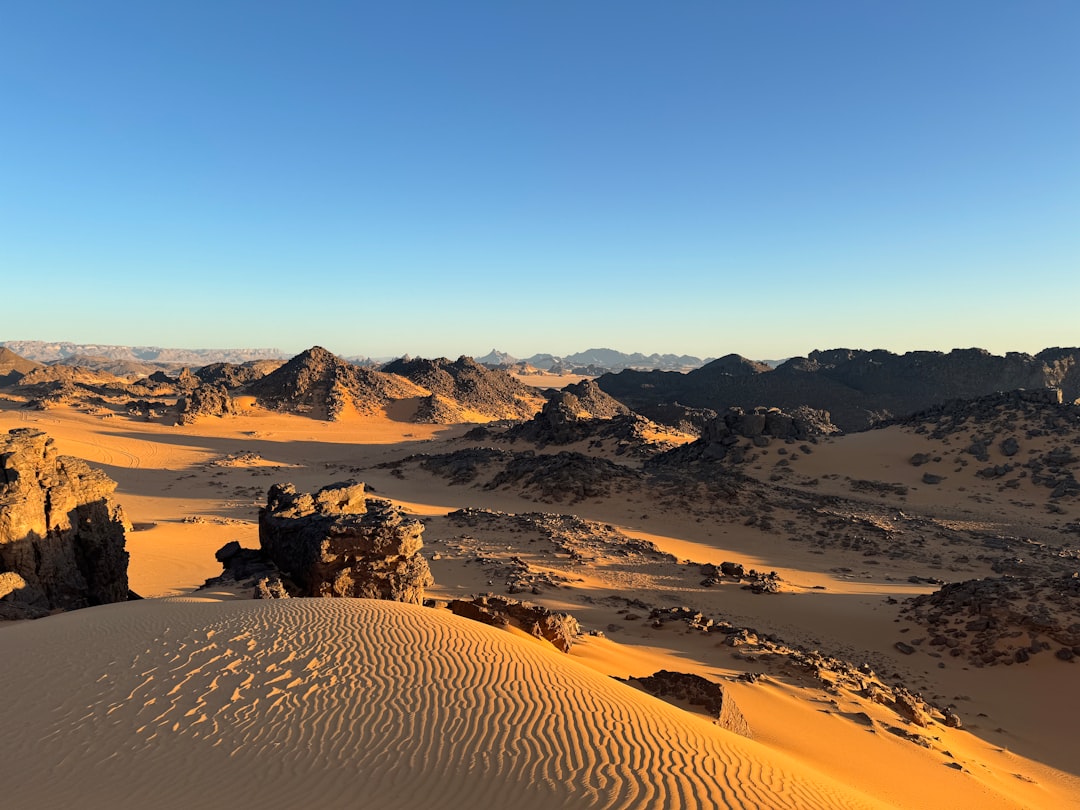
The Sahara Desert, a vast and seemingly impenetrable expanse of sand and rock, holds secrets far older and more vibrant than its current arid reputation would suggest. Beneath the shifting dunes and sun-baked plains lies a forgotten world, a testament to a time when this now-challenging environment teemed with life, was crisscrossed by ancient civilizations, and played a crucial role in shaping human history. Through the persistent efforts of archaeologists, geologists, and paleoanthropologists, scholars are steadily piecing together the mosaic of this ancient Saharan landscape, revealing a story of profound transformation and enduring human ingenuity.
The popular image of the Sahara as a perpetually barren wasteland is a relatively recent phenomenon in its geological and climatic history. For millennia, this vast region experienced dramatic shifts in its environment. Evidence points to numerous periods when the Sahara was a far more hospitable place, characterized by vast lakes, flowing rivers, and savannah-like grasslands. This “Green Sahara” era, recurring throughout Earth’s history, fundamentally altered the potential for human settlement and development.
The Holocene Humid Period: A Flourishing Past
The most recent and well-documented period of a wet Sahara occurred during the Holocene Humid Period, roughly between 11,000 and 5,000 years ago. During this time, monsoon systems extended further north than they do today, bringing significant rainfall to the region. This replenished ancient lake systems, such as the now-dry Mega-Chad, which was once comparable in size to the Caspian Sea. Rivers carved channels that are now buried under meters of sand, and the landscape was dotted with verdant vegetation, supporting a rich and diverse ecosystem. Ancient animal bones discovered in these paleolake beds, including those of hippopotamuses, elephants, and giraffes, paint a vivid picture of a thriving wildlife population. The presence of these large mammals indicates a robust food web, capable of sustaining not just animals but also human populations.
Prehistoric Adaptations to Environmental Change
The inhabitants of the Green Sahara were not passive observers of their environment; they were active participants, adapting their lifestyles to the prevailing conditions. The shift from a wetter to a drier climate was not abrupt but gradual, allowing for generations to develop strategies for survival and resource management. Archaeological sites from this period reveal evidence of sophisticated hunting techniques, as well as the early stages of plant and animal domestication. The ability to adapt to changing rainfall patterns, shifting water sources, and the eventual desertification was a defining characteristic of these early Saharan peoples. Their resilience in the face of environmental upheaval is a crucial lesson for understanding human adaptability throughout history.
Geological Clues to Ancient Water Bodies
Geological formations offer compelling evidence for the existence of past water bodies. Satellite imagery and remote sensing techniques have revealed the subtle outlines of ancient riverbeds and lake shorelines hidden beneath the desert surface. Core samples extracted from the desert floor also contain layers of sediment that indicate periods of submergence and the presence of freshwater. Minerals and rock types found in these cores can provide clues about the chemical composition of these ancient waters, offering insights into their salinity, depth, and the geological processes that shaped them. The study of these geological markers is fundamental to reconstructing the paleogeography of the Sahara and understanding the environmental pressures faced by its ancient inhabitants.
The ancient world beneath the Sahara has long been a subject of fascination for historians and archaeologists alike, revealing a rich tapestry of cultures and technologies that thrived in this vast desert region. A related article that delves into the intriguing aspects of ancient civilizations is titled “Uncovering Lost Ancient Metallurgy Techniques.” This piece explores the advanced metallurgical practices that were once employed by societies in the Sahara, shedding light on their innovations and contributions to the broader narrative of human history. To read more about these fascinating techniques, you can visit the article here: Uncovering Lost Ancient Metallurgy Techniques.
Echoes of Early Civilizations: Unearthing Saharan Settlements
The Green Sahara provided the fertile ground for the emergence of complex societies, predating many of the civilizations traditionally associated with the Nile Valley and Mesopotamia. Archaeological research has uncovered compelling evidence of settled communities, sophisticated tool-making, and early forms of artistic expression, indicating a level of social organization and cultural development that challenges previous assumptions about the timeline of human civilization.
Rock Art: A Visual Chronicle of Ancient Life
Perhaps the most striking evidence of early Saharan life comes from the extraordinary rock art found throughout the region, particularly in the Tassili n’Ajjer plateau in Algeria. These vibrant paintings and engravings, some dating back over 8,000 years, offer a remarkable visual chronicle of life in the ancient Sahara. They depict scenes of hunting, herding, dancing, and daily life, showcasing a diverse range of fauna, including species that no longer inhabit the Sahara. The artistic styles and motifs offer insights into the cultural beliefs, social structures, and technological advancements of these early peoples. The sheer volume and detail of this art suggest a settled and complex society with a rich symbolic and spiritual life.
Early Pastoralism and Sedentary Lifestyles
The shift from nomadic hunting and gathering to more sedentary lifestyles, centered on pastoralism, appears to have begun in the Sahara during the Holocene Humid Period. Discoveries of animal bones and tools associated with herding suggest that early Saharans began to manage and domesticate animals like cattle, sheep, and goats. This allowed for a more stable food supply and facilitated the development of villages and more permanent settlements. Evidence of granary-like structures and grinding stones indicates the cultivation of wild grains and potentially early forms of agriculture, further contributing to a more settled way of life. These innovations were crucial steps in the development of human civilization.
Neolithic Tools and Technologies
The Neolithic period in the Sahara witnessed significant advancements in tool technology. Archaeologists have unearthed a wide array of stone tools, including finely crafted arrowheads, axes, scrapers, and grinding implements. These tools demonstrate a high degree of skill and understanding of lithic technology. The widespread distribution of these tools across different Saharan sites suggests extensive trade networks and cultural exchange between various groups. The development of pottery, used for cooking, storage, and possibly ceremonial purposes, also marks a significant technological leap, indicating a more settled and resourceful populace.
Networks of Trade and Exchange: Connecting the Ancient Sahara
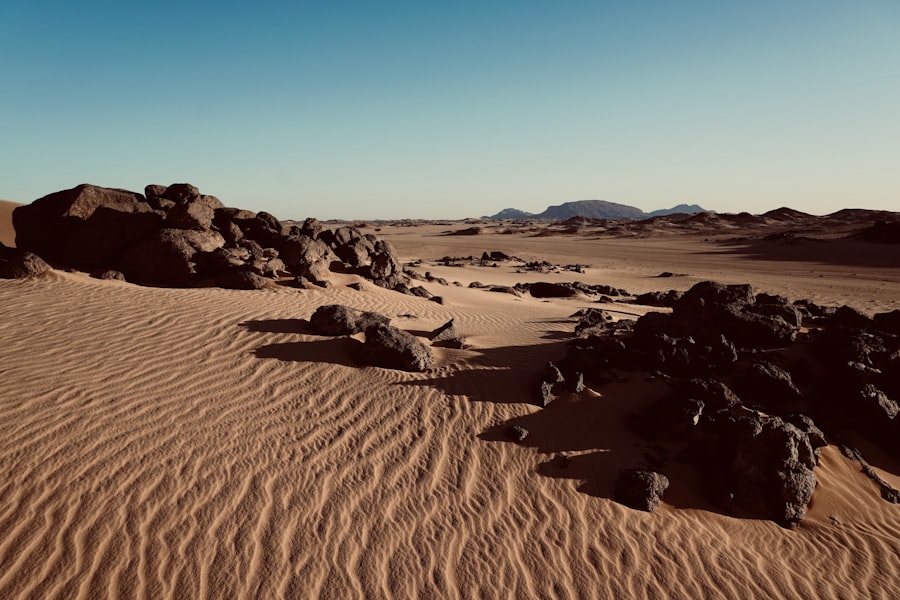
The ancient Sahara was not an isolated entity but a nexus of interconnectedness. Evidence suggests that its inhabitants engaged in extensive trade and exchange networks, both within the desert and with regions beyond its borders. These networks facilitated the movement of goods, ideas, and technologies, contributing to the development and diffusion of Saharan cultures.
The “Green Sahara” Trade Routes
During the wetter periods, pathways through the Saharan savanna became viable routes for travel and trade. These “Green Sahara” trade routes are thought to have connected communities across vast distances, facilitating the exchange of resources like precious stones, hides, and perhaps even early forms of domesticated animals. The discovery of similar artifact types in geographically disparate Saharan regions points to the existence of these interconnected networks. The movement of these materials would have played a crucial role in the economic and social development of these early Saharan societies.
Beyond the Sahara: Interactions with Neighboring Cultures
The Sahara was not an impermeable barrier but a landscape that facilitated interaction with neighboring civilizations. Evidence suggests trade relationships between Saharan groups and those in the Nile Valley, West Africa, and even the Mediterranean coast. For instance, certain types of pottery and tools found in the Sahara bear stylistic resemblances to artifacts from the ancient Egyptian civilization, hinting at possible exchanges. The movement of people and ideas across these boundaries undoubtedly enriched the cultural landscapes of all involved.
The Role of Water Sources in facilitating Connectivity
Ancient wells, springs, and the remnants of lakes and rivers acted as vital nodes and conduits within these trade networks. These water sources provided essential resting points and supply depots for travelers and traders. The strategic placement of settlements around these vital resources likely dictated the flow of trade and communication. Understanding the distribution and significance of these ancient water sources is key to deciphering the routes and patterns of Saharan exchange.
The Sahara’s Enduring Legacy: Resilience and Adaptation
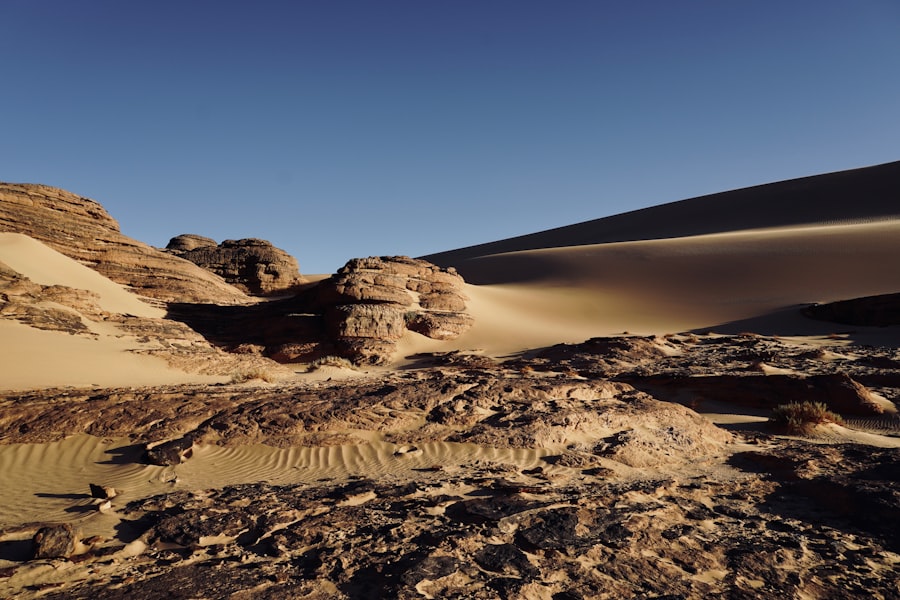
The gradual desertification of the Sahara, beginning around 5,000 years ago, presented a formidable challenge to its inhabitants. However, the story of the Sahara is not one of simple decline but of remarkable resilience and continued human adaptation. The populations that once thrived in this verdant landscape developed strategies to cope with increasing aridity, demonstrating an enduring capacity for innovation and survival.
Migration and the Dispersal of Saharan Peoples
As water sources dwindled and vegetation receded, many Saharan populations were forced to migrate. These migrations played a significant role in the peopling of adjacent regions, particularly into West Africa and across the Sahara to the north. The diaspora of these early Saharans carried with them their languages, cultural practices, and technological knowledge, contributing to the development of new societies and influencing the cultural tapestry of the continent. The genetic and linguistic evidence of populations in these regions often traces back to ancestral Saharan groups.
The Rise of Camel Pastoralism: A Game Changer
The introduction and domestication of the camel proved to be a transformative development in Saharan history, particularly with the advent of greater aridity. The camel’s ability to withstand extreme heat and long periods without water made it an ideal mode of transport and survival in the increasingly harsh desert environment. This led to the resurgence of trans-Saharan trade routes, facilitated by highly mobile camel caravans, allowing for the exchange of goods across the newly formed desert. This adaptation was crucial for the survival and prosperity of Saharan communities.
The “Desertification” Paradox: Challenges and Opportunities
While desertification presented immense challenges, it also fostered unique adaptations and specialized knowledge. Saharan peoples developed sophisticated understanding of arid land management, water conservation techniques, and the exploitation of scarce resources. This period also saw the emergence of nomadic and semi-nomadic lifestyles, perfectly suited to the mobile and sometimes unpredictable nature of the desert environment. The enduring traditions and resourcefulness of contemporary Saharan peoples are a direct legacy of this long history of adaptation.
The ancient world beneath the Sahara is a fascinating topic that reveals the rich history and culture of civilizations that thrived in this vast desert long before it became the arid landscape we know today. Recent archaeological discoveries have shed light on the complex societies that once flourished in this region, showcasing their advancements in trade, agriculture, and architecture. For those interested in understanding how historical contexts can influence modern challenges, you might find insights in a related article about safeguarding wealth against hyperinflation, which can be found here. This connection between past and present highlights the importance of learning from history as we navigate contemporary economic issues.
Modern Science: Unlocking Ancient Secrets
| Region | Civilizations | Artifacts | Archaeological Sites |
|---|---|---|---|
| Libya | Garamantes, Phoenicians | Petroglyphs, pottery | Germa, Ghadames |
| Niger | Empire of Kanem-Bornu | Terracotta figurines, jewelry | Birnin Lafiya, Zinder |
| Chad | Sao civilization | Ceramic vessels, bronze artifacts | Kanem-Borno, Lake Chad region |
Contemporary scientific advancements are revolutionizing our understanding of the ancient Sahara. Sophisticated technologies and interdisciplinary approaches are allowing researchers to peer deeper than ever before into the buried past, revealing the intricate details of this lost world. The ongoing exploration promises to continue rewriting the narrative of human history.
Remote Sensing and Geophysical Surveys: Mapping the Subsurface
Satellite imagery, ground-penetrating radar, and airborne LiDAR (Light Detection and Ranging) are proving invaluable for mapping the subsurface features of the Sahara. These technologies can detect buried structures, ancient river channels, paleolakes, and even subtle variations in the landscape that might indicate the presence of human activity. This non-invasive approach allows archaeologists to identify promising sites for excavation without disturbing the fragile desert environment unnecessarily.
Paleoenvironmental Reconstruction: Understanding Climate Dynamics
Advanced techniques in paleoclimatology, such as the analysis of pollen, isotopic ratios in ancient sediments, and speleothems (cave formations), are providing detailed reconstructions of past Saharan climates. By studying these natural archives, scientists can understand the timing and intensity of past wet and dry periods, their causes, and their impact on the environment and human populations. This understanding is vital for comprehending the context in which ancient Saharans lived and adapted.
Genetic and Anthropological Studies: Tracing Human Migrations
Modern genetic analysis allows researchers to trace the movements and relationships of ancient populations. By analyzing ancient DNA extracted from skeletal remains, scientists can gain insights into the origins, migrations, and genetic diversity of people who inhabited the Sahara. This, combined with traditional anthropological methods of studying material culture and iconography, provides a more comprehensive picture of Saharan populations and their connections to other regions.
The Sahara Desert, once dismissed as a timeless void, is increasingly revealing itself as a dynamic and historically significant region. The ongoing work of scientists and archaeologists continues to uncover its ancient secrets, painting a richer and more complex portrait of human history. The story of the Sahara is a profound reminder of Earth’s ever-changing nature and humanity’s remarkable capacity for adaptation and resilience, a testament to the enduring echoes of a world that once flourished beneath the sands.

The Ancient World Buried Beneath the Sahara
FAQs
What is the ancient world beneath the Sahara?
The ancient world beneath the Sahara refers to the archaeological evidence of ancient civilizations and cultures that once thrived in the Sahara Desert region.
What evidence exists of ancient civilizations in the Sahara?
Evidence of ancient civilizations in the Sahara includes rock art, pottery, tools, and other artifacts, as well as the remains of ancient settlements and burial sites.
What were some of the ancient civilizations that existed in the Sahara?
Some of the ancient civilizations that existed in the Sahara include the Garamantes, the Nubians, the Egyptians, and the Saharan Berbers.
How did these ancient civilizations adapt to the harsh desert environment?
These ancient civilizations adapted to the harsh desert environment by developing sophisticated irrigation systems, domesticating animals, and trading with other civilizations for essential resources.
What can we learn from studying the ancient world beneath the Sahara?
Studying the ancient world beneath the Sahara can provide insights into how ancient civilizations adapted to and thrived in challenging environments, as well as shed light on the interconnectedness of ancient cultures and trade networks.