
The human story on the American continents is a grand, sweeping epic, one that has captivated imaginations and sparked vigorous debate for centuries. For a long time, the prevailing narrative placed the arrival of the first humans in the Americas relatively late, with the Clovis culture, dating back approximately 13,500 years ago, serving as the undisputed vanguard. However, a quiet revolution has been unfolding in the field of archaeology, one that is steadily pushing back the timeline of human presence, revealing a much deeper and more complex tapestry of early American life. This article delves into the fascinating, and sometimes contentious, journey of uncovering the archaeology of the First Americans, exploring the evidence that challenges old paradigms and paints a new picture of humanity’s ancient passage across vast landscapes.
For much of the 20th century, the “Clovis First” model held an almost unshakeable grip on archaeological thought. This theory posited that the Clovis culture, characterized by its distinctive fluted projectile points, represented the earliest widespread human occupation of North America. The reasoning was straightforward: Clovis artifacts were found across a vast geographic area, suggesting a successful and rapid expansion. Furthermore, their appearance seemed to coincide with the melting of the Laurentide Ice Sheet, which opened up a land bridge, the Bering Land Bridge, connecting Siberia to Alaska, and a potential ice-free corridor allowing passage south.
The Discovery and Significance of Clovis Points
The “Ice-Free Corridor” Hypothesis
Limitations of the Clovis First Model
The allure of Clovis First lay in its elegance and apparent simplicity. It provided a coherent explanation for the initial peopling of the Americas, fitting neatly into existing scientific and historical frameworks. The distinctive Clovis points, meticulously crafted and widely distributed, were seen as the signature of a pioneering people who had mastered the challenges of a new world. However, as archaeological techniques advanced and more sites were discovered, cracks began to appear in this seemingly solid foundation. Anomalies emerged, evidence that suggested human presence predated the Clovis horizon, sparking a wave of re-evaluation and the search for deeper histories.
Recent advancements in the archaeology of the First Americans have shed light on the complex societies that existed long before European contact. One fascinating aspect of this research involves the astronomical knowledge of these ancient peoples, which has been explored in detail in a related article. For more insights into how ancient civilizations understood the cosmos, you can read about it in this article on uncovering ancient astronomy secrets: Uncovering Ancient Astronomy Secrets. This exploration not only highlights their sophisticated understanding of celestial events but also emphasizes the cultural significance of astronomy in their daily lives.
Challenging the Timeline: Pre-Clovis Evidence Emerges
The late 20th and early 21st centuries witnessed a groundswell of archaeological discoveries that directly challenged the Clovis First orthodoxy. These sites, often meticulously excavated and subjected to rigorous scientific analysis, presented compelling evidence of human occupation in the Americas thousands of years before the Clovis culture. This paradigm shift was not without its controversies, as established scientific beliefs are often resistant to change. However, the accumulating evidence became increasingly difficult to ignore, forcing the scientific community to grapple with the implications of a much earlier peopling of the continents.
Monte Verde: A Turning Point in the Debate
Perhaps the most influential site in challenging Clovis First was Monte Verde in Chile. Discovered in the early 1970s and excavated over several decades, Monte Verde yielded a wealth of organic material that provided exceptionally reliable dates. Artifacts, including hearths, tools made from stone and bone, and even preserved plant remains, indicated human activity dating back to at least 14,500 years ago, and possibly even earlier. The preservation at Monte Verde was exceptional, offering a detailed glimpse into the daily lives of its inhabitants, including their diet, shelter, and technology. The radiocarbon dating of charcoal and organic materials from distinct cultural layers provided a robust chronology that predated Clovis by a significant margin. This discovery was a watershed moment, forcing archaeologists to seriously consider the possibility of pre-Clovis populations.
Meadowcroft Rockshelter: An Early Contender
Prior to Monte Verde, Meadowcroft Rockshelter in Pennsylvania had already presented intriguing evidence of early human presence. Excavations at Meadowcroft revealed a deep sequence of cultural deposits, with some of the lowest layers yielding artifacts and radiocarbon dates that suggested occupation as far back as 16,000 years ago, and potentially even earlier. While initially met with skepticism, largely due to concerns about potential contamination of the samples and the integrity of the stratigraphy, ongoing research and re-analysis of the data have strengthened Meadowcroft’s claim as a significant pre-Clovis site. Its location in eastern North America also suggested that early migrations were not solely confined to the western route.
Paisley Caves: Coprolites and DNA Evidence
The Paisley Caves in Oregon provided a different, yet equally compelling, line of evidence. Here, archaeologists discovered ancient human coprolites (fossilized feces) containing human DNA. Radiocarbon dating of these coprolites placed them at approximately 14,300 years ago. Crucially, the DNA analysis showed a clear distinction from later Native American populations, suggesting an earlier migratory wave. The discovery of these coprolites, coupled with the genetic evidence, provided strong support for human presence in North America well before the Clovis period. The ability to extract and analyze ancient DNA from such early human remains has revolutionized our understanding of migration patterns and population genetics.
Rethinking Migration Routes: Beyond the Ice-Free Corridor

The emergence of compelling pre-Clovis evidence necessitated a re-evaluation of how and when humans first arrived in the Americas. The traditional “ice-free corridor” model, which facilitated the southward movement of Clovis populations, became insufficient to explain the presence of people who arrived before this corridor was fully open. This led to the exploration and increasing acceptance of alternative migration routes.
The Coastal Migration Hypothesis
The most prominent alternative hypothesis is the “coastal migration route.” This theory suggests that early humans traveled along the Pacific coast of North America, utilizing the abundant marine resources available. This route would have been viable even when the interior ice sheets were still largely intact. Evidence supporting this hypothesis includes the discovery of coastal archaeological sites that predate Clovis and the presence of marine-derived resources in the diets of early coastal populations. The ease of travel and abundant food sources along the coast would have made it an attractive migratory pathway, potentially allowing for much earlier entry into the continents.
Evidence from the Far East and Beringia
Recent archaeological discoveries in Northeast Asia and Siberia are also shedding light on the origins of the First Americans. Sites in these regions are revealing evidence of human occupation dating back further than previously thought, suggesting that populations were present in Beringia, the landmass connecting Asia and North America during glacial periods, for a significant duration before migrating south. The genetic links between Siberian populations and modern Native Americans further reinforce the connection between these regions. The exploration of these far-flung landscapes is crucial to understanding the ancestral homelands of the first Americans and the duration of their sojourn in Beringia.
Diverse Technologies and Lifestyles of Early Americans
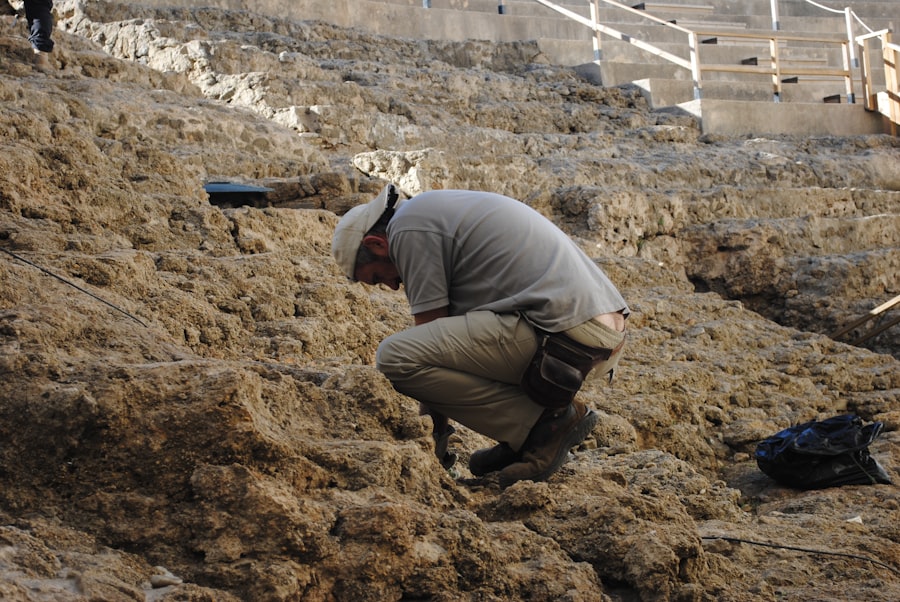
As the timeline of human occupation in the Americas extends further back, so too does the understanding of the diversity of technologies and lifestyles adopted by these early peoples. The focus has shifted from a singular Clovis technology to a mosaic of different toolkits and subsistence strategies employed by various groups.
Bifacial Technologies Beyond Clovis
While Clovis points are iconic, archaeologists are now identifying a growing number of pre-Clovis lithic technologies. These include various types of scrapers, knives, and projectile points that do not conform to the classic Clovis fluting. These distinct toolkits suggest that different groups of people with their own traditions and innovations were present in the Americas, perhaps arriving at different times or adapting to different environments. The study of these varied lithic traditions provides insights into the cultural evolution and diffusion of ideas among early American populations.
Evidence of Diverse Subsistence Strategies
The archaeological record reveals that early Americans employed a range of subsistence strategies. While some groups may have been highly mobile big-game hunters, as exemplified by the Clovis culture, others focused on exploiting marine resources, gathering plants, and hunting smaller game. The preservation of faunal and floral remains at pre-Clovis sites, such as Monte Verde, provides direct evidence of their diets and their sophisticated understanding of local ecosystems. This demonstrates a remarkable adaptability and resourcefulness in facing diverse environmental challenges.
The Question of Cultural Continuity
A significant area of ongoing research is the question of cultural continuity between pre-Clovis populations and later groups, including the Clovis people and subsequent Native American cultures. Are there discernible traditions, technologies, or even genetic links that trace back to these earliest inhabitants? Unraveling these connections is crucial for understanding the long-term development of human societies in the Americas and the intricate web of cultural transmission and evolution.
Recent discoveries in the archaeology of the First Americans have shed light on the advanced technologies that may have existed long before European contact. These findings challenge traditional narratives and suggest that early inhabitants of North America possessed sophisticated skills and knowledge. For a deeper exploration of ancient technologies and their implications, you can read about some intriguing theories in this article on lost secrets that might reshape our understanding of early civilizations.
Future Directions and Unanswered Questions
| Metric | Value | Description |
|---|---|---|
| Estimated Arrival Date | ~15,000 – 23,000 years ago | Approximate time range when the first humans are believed to have arrived in the Americas |
| Primary Migration Route | Bering Land Bridge (Beringia) | Land connection between Siberia and Alaska used during the last Ice Age |
| Oldest Archaeological Site | Bluefish Caves, Canada | Site with evidence of human activity dating back around 24,000 years |
| Notable Culture | Clovis Culture | Known for distinctive stone tools, dating to around 13,000 years ago |
| Key Artifact Type | Fluted Projectile Points | Stone spear points characteristic of early Paleoamerican cultures |
| Genetic Evidence | Ancient DNA from Siberian and Native American populations | Supports migration theories and population origins |
| Subsistence Strategies | Hunting megafauna, gathering plants | Early diets included large Ice Age animals and wild plants |
| Significant Site | Monte Verde, Chile | One of the earliest known human settlements in the Americas (~14,500 years ago) |
Despite the remarkable progress made in uncovering the archaeology of the First Americans, numerous questions remain unanswered, and the field continues to evolve with new discoveries and technological advancements. The quest to understand humanity’s deepest past on these continents is far from over.
The Role of Genetics in Peopling Studies
Advanced Dating Techniques and Their Impact
The development and refinement of advanced dating techniques, such as improved radiocarbon dating methods and optically stimulated luminescence (OSL) dating, continue to push the boundaries of what we can date. These technologies allow for more precise chronologies and the dating of materials previously inaccessible, opening up new avenues of research and potentially revealing even earlier human presence. The ability to date sediments and artifacts with greater accuracy is fundamental to building a reliable timeline of human occupation.
The Search for Even Earlier Sites
The ongoing search for archaeological sites that might predate even the currently accepted pre-Clovis dates is a central focus of future research. Archaeologists are employing increasingly sophisticated survey techniques, including remote sensing and predictive modeling, to identify potential locations for such early human activity. The possibility of finding evidence of human presence dating back 20,000, 30,000, or even more years ago continues to drive exploration.
Understanding the Cultural and Environmental Contexts
Ultimately, the goal is not just to establish a timeline of arrival but to understand the cultural complexities, environmental adaptations, and societal structures of these ancient peoples. Future research will continue to focus on reconstructing their lifeways, their interactions with their environments, and their journeys across the vast and changing landscapes of the Americas, offering a richer and more nuanced understanding of the human odyssey. The archaeology of the First Americans is a dynamic and exciting field, constantly rewriting our understanding of human history on this continent.

Kennewick Man’s Skull Said One Thing. DNA Said Another.
FAQs
What is the archaeology of the First Americans?
The archaeology of the First Americans refers to the study of the earliest human inhabitants of the Americas, including their cultures, lifestyles, and migration patterns.
How do archaeologists study the First Americans?
Archaeologists study the First Americans through excavations of ancient sites, analysis of artifacts, examination of human remains, and use of advanced scientific techniques such as radiocarbon dating and DNA analysis.
When did the First Americans arrive in the Americas?
The exact timing of the arrival of the First Americans is still debated among archaeologists, but evidence suggests that they arrived in the Americas at least 15,000 years ago, possibly even earlier.
What are some key archaeological sites related to the First Americans?
Key archaeological sites related to the First Americans include Monte Verde in Chile, Meadowcroft Rockshelter in Pennsylvania, and the Clovis sites in North America, which are known for their distinctive stone tools.
What can the archaeology of the First Americans tell us about early human history?
Studying the archaeology of the First Americans can provide insights into early human migration patterns, adaptation to new environments, technological advancements, social structures, and interactions with other ancient cultures.