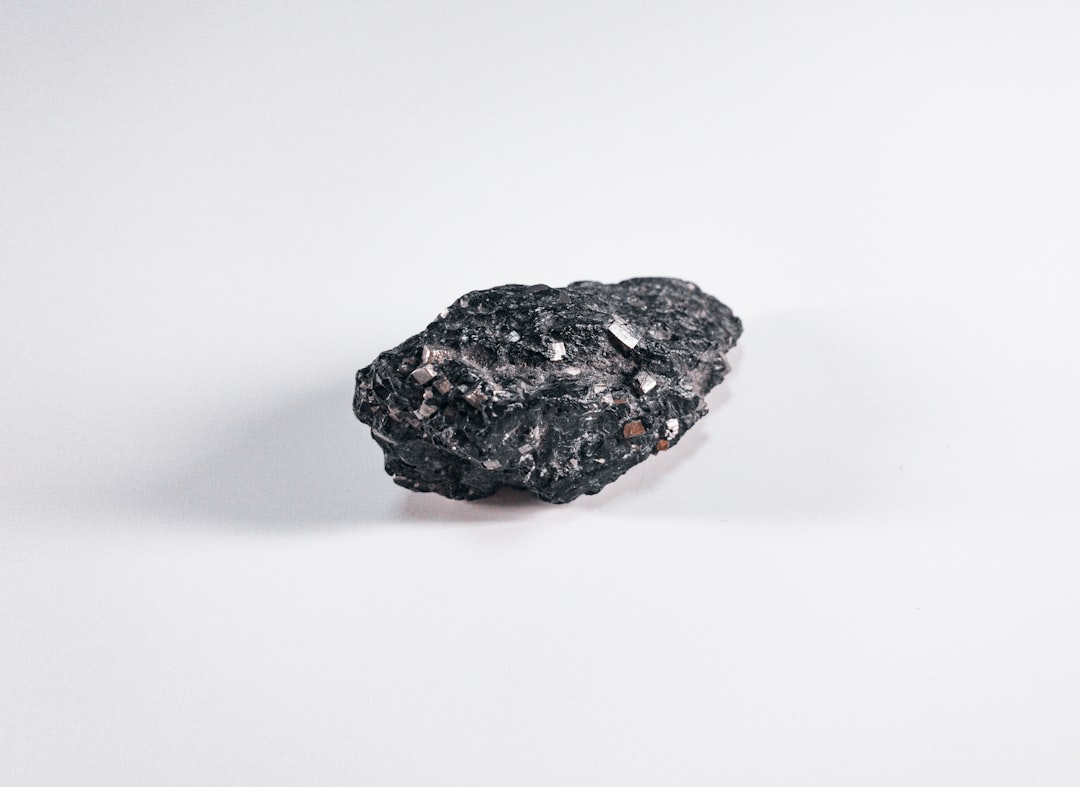
Obsidian, a volcanic glass formed from rapidly cooled molten rock, has captivated humanity for millennia. Its glassy sheen, sharp fracture, and inherent beauty have made it a prized material for tools, weapons, and adornments. Yet, beyond its aesthetic and functional qualities, obsidian possesses a hidden identity – a unique chemical fingerprint. This intricate signature, dictated by the geological origin and evolutionary history of the magma from which it formed, holds the key to unlocking secrets about ancient trade routes, volcanic processes, and even the geological past of our planet. Uncovering this chemical fingerprint is a complex yet rewarding endeavor, utilizing sophisticated analytical techniques to decipher the subtle variations in elemental composition that distinguish one obsidian deposit from another.
Obsidian’s very existence is a testament to the dramatic forces at play beneath the Earth’s surface. It is not the product of slow, crystalline growth like that found in many minerals, but rather a rapid quenching of silica-rich magma. Understanding this formation process is paramount to appreciating the nuances of its chemical makeup.
Volcanic Eruptions: The Catalyst for Glass Formation
The journey of obsidian begins deep within the Earth’s mantle or crust, where temperatures and pressures are sufficient to melt rock into magma. This magma, particularly felsic in composition (rich in silica and alkali elements like sodium and potassium), is the primary precursor to obsidian. When this molten material is expelled from a volcano during an eruption, the rate at which it cools is the critical factor determining its destiny.
Rapid Cooling: The Key to Vitrification
For obsidian to form, the magma must cool so rapidly that the constituent atoms do not have sufficient time to arrange themselves into an orderly crystalline structure. This rapid cooling, often occurring when incandescent lava flows encounter water or are exposed to the atmosphere in thin sheets, effectively “freezes” the magma in a disordered, glassy state. Slow cooling, in contrast, allows for crystal formation, resulting in crystalline igneous rocks like granite or rhyolite, which share a similar chemical composition to obsidian but differ fundamentally in their internal structure.
Magma Composition: The Foundation of the Fingerprint
While rapid cooling is essential for the formation of glass, the initial composition of the parent magma dictates the elemental building blocks that will be present in the resulting obsidian. Felsic magmas are typically enriched in elements such as silicon (Si), aluminum (Al), sodium (Na), potassium (K), and oxygen (O). However, even within this broad category, variations in the proportions of these major elements, as well as the presence and concentration of trace elements, begin to lay the groundwork for the unique chemical fingerprint of each obsidian deposit.
Chemical fingerprinting of obsidian has gained significant attention in archaeological studies, particularly in understanding ancient trade routes and sourcing materials. A related article that explores innovative technologies in resource management and their implications for lunar operations can be found at Advancing Lunar Operations with Autonomous Systems. This article discusses how autonomous systems can enhance our understanding of resource utilization, which parallels the methodologies used in chemical fingerprinting to analyze and source geological materials on Earth.
Deconstructing the Fingerprint: Analytical Techniques in Focus
The deciphering of obsidian’s chemical fingerprint is not a simple task. It requires the application of advanced analytical methodologies that can precisely measure the concentrations of a wide array of elements, from the major constituents to trace impurities. These techniques are the archeologist’s and geologist’s equivalent of a forensic investigation, revealing the subtle differences that mark obsidian’s origin.
Instrumental Neutron Activation Analysis (INAA): A Powerful Probe
Perhaps one of the most widely employed and powerful techniques for obsidian sourcing is Instrumental Neutron Activation Analysis (INAA). This method involves bombarding a sample of obsidian with neutrons in a nuclear reactor. The neutrons are absorbed by the atomic nuclei of the elements present in the sample, inducing radioactivity. As these radioactive isotopes decay, they emit gamma rays at characteristic energies. By measuring the intensity and energy of these gamma rays, scientists can quantitatively determine the concentration of many elements, including rare earth elements (REEs) and other trace elements, which are particularly useful for distinguishing obsidian sources. INAA is a non-destructive technique (though the sample becomes radioactive temporarily), preserving the artifact for future analysis.
X-ray Fluorescence (XRF): A Versatile Tool
X-ray Fluorescence (XRF) is another valuable technique for analyzing obsidian. In XRF, a sample is bombarded with X-rays, which cause electrons in the atoms to be ejected from their orbits. When these electrons fall back into their original positions, they emit characteristic fluorescent X-rays. The energy and intensity of these fluorescent X-rays are unique to each element, allowing for their identification and quantification. XRF can be used for both qualitative and quantitative analysis and is particularly effective for determining the concentrations of major and minor elements. Portable XRF devices have also made it possible to analyze obsidian in situ, without the need for sample removal, which is invaluable for archaeological fieldwork.
Inductively Coupled Plasma – Mass Spectrometry (ICP-MS): Unveiling the Trace Elements
Inductively Coupled Plasma – Mass Spectrometry (ICP-MS) is a highly sensitive technique that excels at detecting and quantifying elements present in extremely low concentrations – the trace elements. In ICP-MS, a sample is introduced into a high-temperature plasma, which atomizes and ionizes the elements. These ions are then passed through a mass spectrometer, which separates them based on their mass-to-charge ratio. By counting the number of ions at each mass, scientists can determine the concentration of even the rarest elements. ICP-MS is particularly adept at measuring isotopic ratios, which can provide additional layers of information about the geochemical processes that influenced the obsidian’s formation.
Other Analytical Approaches: Complementary Insights
While INAA, XRF, and ICP-MS are the workhorses of obsidian sourcing, other analytical methods can provide complementary insights. Particle-Induced X-ray Emission (PIXE) is similar to XRF but uses charged particles instead of X-rays as the excitation source, offering a different sensitivity profile. Laser Ablation Inductively Coupled Plasma – Mass Spectrometry (LA-ICP-MS) allows for spatially resolved analysis, enabling scientists to examine variations in chemical composition across a single obsidian sample, potentially revealing zoning or segregation within the volcanic glass.
The Signature Elements: What Makes Obsidian Unique?
The chemical fingerprint of obsidian is not defined by a single element, but by the intricate interplay and specific ratios of numerous elements. Certain elements, due to their chemical behavior during magma formation and cooling, are particularly effective discriminators between different obsidian sources.
Major Elements: The Bulk Composition
The major elements, comprising the bulk of the obsidian’s composition, provide a foundational understanding of its origin. Silicon dioxide (SiO2) is the dominant component, typically comprising 70-75% of obsidian. Aluminum oxide (Al2O3) is also a significant constituent, usually ranging from 12-16%. Sodium oxide (Na2O) and potassium oxide (K2O) are present in important quantities, varying with the magma’s overall chemistry. Variations in the precise percentages of these major oxides can already offer initial clues to differentiate between broadly defined types of obsidian.
Trace Elements: The Subtle Distinctions
It is in the realm of trace elements that the most powerful source discrimination often lies. These elements are present in the obsidian in concentrations ranging from parts per million (ppm) to parts per billion (ppb). Their presence and abundance are influenced by a complex web of factors, including the source rocks of the magma, the degree of partial melting, fractional crystallization processes within the magma chamber, and the presence of volatile elements.
Rare Earth Elements (REEs): Geochemical Signatures
Rare earth elements, a group of 15 elements with similar chemical properties and a tendency to occur together in nature, are particularly valuable for obsidian sourcing. Their distribution patterns – the relative abundance of lighter REEs (like lanthanum and cerium) compared to heavier REEs (like dysprosium and lutetium) – can be highly diagnostic. These patterns are sensitive to the conditions under which the magma formed and evolved. For example, certain types of volcanic arcs might be associated with magmas exhibiting specific REE enrichment or depletion patterns.
Other Discriminatory Trace Elements
Beyond the REEs, a host of other trace elements provide crucial information. Elements like Rubidium (Rb), Strontium (Sr), Zirconium (Zr), Niobium (Nb), Yttrium (Y), and various transition metals (e.g., Cobalt (Co), Scandium (Sc)) can all exhibit variations in their concentrations that correlate with specific geological sources. The relative ratios of these elements are often more informative than their absolute concentrations, as they reflect processes that affect multiple elements in a similar way. For instance, the ratio of Rb to Sr can be indicative of the extent of fractional crystallization.
Isotopic Signatures: A Deeper Look
In addition to elemental concentrations, isotopic analysis can further refine obsidian sourcing. Isotopes are atoms of the same element that have different numbers of neutrons, leading to different atomic masses. Variations in isotopic ratios, such as those of strontium (87Sr/86Sr), neodymium (143Nd/144Nd), or oxygen (18O/16O), can reflect the geological history and source lithologies of the magma. Different source regions will have distinct isotopic signatures inherited from the underlying crust or mantle from which their magmas are derived.
Provenancing Obsidian: Unlocking Ancient Worlds

The ability to chemically fingerprint obsidian has profound implications for various scientific disciplines, most notably archaeology. By matching the chemical signature of obsidian artifacts found at ancient sites with the chemical composition of obsidian sources in the surrounding landscape, researchers can reconstruct ancient trade networks, understand migration patterns, and gain insights into the economic and social structures of past societies.
Archaeological Applications: Tracing Ancient Trade Routes
The discovery of obsidian artifacts at archaeological sites, often far from their geological source, is a common occurrence. Because of its conchoidal fracture and sharpness, obsidian was a highly desirable material for early toolmakers. The ability to determine the exact geological origin of an obsidian artifact allows archaeologists to map the movement of this valuable commodity across vast distances. This, in turn, reveals the extent of prehistoric trade routes, the sophistication of ancient transportation systems, and the economic relationships between different communities. For instance, if obsidian from a specific source in Anatolia is found at a Neolithic site in the Balkans, it indicates a significant trade connection.
Identifying the Source: The Detective Work
The process of “provenancing” obsidian begins with the creation of a chemical “database” or “library” of known obsidian sources. Geologists and archaeologists meticulously collect samples from geological outcrops of obsidian, often identified through geological surveys and local knowledge. These source samples are then analyzed using the techniques described previously, creating a detailed chemical profile for each recognized deposit. Once these source profiles are established, obsidian artifacts unearthed at archaeological sites undergo the same analysis. By comparing the chemical fingerprint of an artifact with the established source profiles, researchers can often pinpoint its geological origin.
Challenges and Refinements in Provenancing
While obsidian sourcing is a powerful tool, it is not without its challenges. Some obsidian sources may have very similar or overlapping chemical compositions, making it difficult to definitively distinguish between them. Furthermore, volcanic processes can sometimes lead to variations in chemical composition even within a single geological deposit. Therefore, it is crucial to analyze a sufficient number of samples from both artifact and source to establish statistically robust matches. The development of advanced statistical methods for comparing chemical datasets has been instrumental in refining obsidian provenancing.
Chemical fingerprinting of obsidian has become an essential tool in archaeological studies, allowing researchers to trace the origins of ancient artifacts and understand trade networks among prehistoric cultures. A fascinating related article discusses how this technique has been applied to uncover evidence of ancient droughts and their impact on human societies. For more insights on this topic, you can read the article on the archaeological findings at unearthing ancient droughts. This research highlights the interconnectedness of environmental changes and human adaptation throughout history.
Beyond Archaeology: Obsidian in Geology and Volcanology
| Sample ID | Location | Obsidian Type | Chemical Composition (%) |
|---|---|---|---|
| 001 | California | Clear Lake | SiO2: 75, Al2O3: 12, FeO: 3, MgO: 1, CaO: 2, Na2O: 4, K2O: 3 |
| 002 | Utah | Black Rock | SiO2: 78, Al2O3: 10, FeO: 2, MgO: 1, CaO: 2, Na2O: 3, K2O: 4 |
| 003 | Oregon | Obsidian Butte | SiO2: 72, Al2O3: 13, FeO: 4, MgO: 2, CaO: 1, Na2O: 5, K2O: 3 |
The chemical fingerprint of obsidian is not solely of interest to archaeologists; it also provides invaluable insights for geologists and volcanologists studying the Earth’s dynamic processes. Understanding the chemical variations within obsidian flows can shed light on the complex magmatic systems that produce them and the broad geological context of volcanic activity.
Understanding Magma Evolution
The chemical composition of obsidian is a direct reflection of the magma from which it cooled. By analyzing the elemental and isotopic signatures of obsidian, geologists can reconstruct the history of the magma chamber. This includes understanding the processes of magma generation at depth, the chemical differentiation that occurs through processes like fractional crystallization and assimilation of surrounding rocks, and the influence of volatile components (like water and carbon dioxide) on the magma’s chemistry. Variations in trace element ratios, particularly REEs, can reveal the extent of melting of different source rocks and the pathways the magma took through the Earth’s crust.
Tracing Volcanic Processes and Eruption Dynamics
The chemical fingerprint can also provide clues about the nature of volcanic eruptions. For example, different eruptions from the same volcano may produce obsidian with distinct chemical compositions, reflecting changes in the magma composition over time or variations in the eruption dynamics. The degree of mixing between different magma batches can also be inferred from the chemical signature of the resulting obsidian. Studying obsidian flows from well-documented eruptions can help volcanologists refine their models of eruption processes and predict the behavior of future volcanic events.
Geochronology and Paleoclimate Reconstruction
While not directly part of the chemical fingerprint, the glassy nature of obsidian can sometimes lend itself to dating techniques. Techniques like argon-argon dating or fission track dating can be applied to obsidian for chronological purposes, helping to establish the age of volcanic deposits and the archaeological layers associated with them. In some cases, the chemical composition of obsidian can also be indirectly linked to paleoclimate reconstruction. For instance, the presence of certain volatile elements or impurities might correlate with atmospheric conditions at the time of eruption.
In conclusion, the chemical fingerprint of obsidian is far more than just a list of elemental concentrations. It is a complex geological narrative, meticulously inscribed by the forces of volcanism and the chemistry of the Earth. Through the application of advanced analytical techniques, scientists are able to decipher this intricate signature, unlocking secrets about ancient human civilizations, the vast geological history of our planet, and the dynamic processes that continue to shape our world. The unassuming volcanic glass, once prized for its utility and beauty, now stands as a silent witness, its chemical composition a testament to its origin and a guide to understanding the past.

How Volcanic Glass Solved a 10,000-Year-Old Mystery
FAQs
What is obsidian?
Obsidian is a naturally occurring volcanic glass formed as an extrusive igneous rock. It is usually black in color and has a smooth, glassy texture.
How is chemical fingerprinting used to study obsidian?
Chemical fingerprinting of obsidian involves analyzing the elemental composition of the material to determine its source. This can be done using techniques such as X-ray fluorescence (XRF) or neutron activation analysis (NAA).
What can chemical fingerprinting tell us about obsidian?
Chemical fingerprinting can provide information about the geographic origin of obsidian, as well as its trade and exchange patterns in ancient societies. It can also help archaeologists understand the movement of people and goods in the past.
Why is it important to study the chemical composition of obsidian?
Studying the chemical composition of obsidian can help archaeologists and anthropologists trace the movement of ancient peoples, understand trade networks, and gain insights into prehistoric economies and social interactions.
What are some modern applications of chemical fingerprinting of obsidian?
In addition to its use in archaeology, chemical fingerprinting of obsidian is also used in forensic science to trace the origin of artifacts and in geological studies to understand volcanic processes and the formation of obsidian deposits.