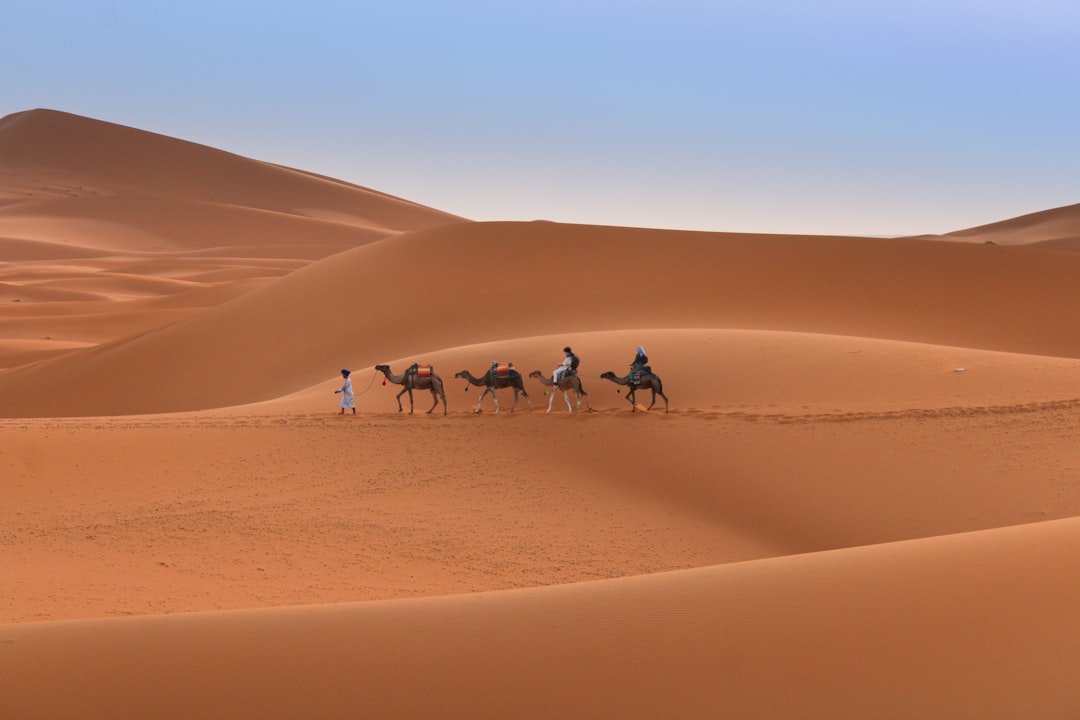
The Sahara Desert, a vast expanse of aridity and extreme heat, dominates the North African landscape. For millennia, it has been perceived as an immutable wasteland, a testament to the destructive power of climate change. Yet, an accumulating body of scientific evidence is painting a radically different picture, one where this formidable desert was once a vibrant, life-sustaining ecosystem. This phenomenon, often referred to as the “Green Sahara,” is not a myth, but a recurring chapter in Earth’s climatic history, a period of lush savannas, teeming rivers, and vibrant human civilizations that existed, and periodically re-emerged, long before recorded history. Uncovering the Green Sahara requires delving into the intricacies of Earth’s orbital mechanics, the dynamic nature of atmospheric circulation, the resilience of ancient human populations, and the power of cutting-edge scientific technology.
The Sahara’s transformation from a verdant landscape to a desolate desert is intrinsically linked to a natural, cyclical process driven by the Earth’s orbit around the sun. This phenomenon, known as Milankovitch cycles, explains the long-term shifts in climate, including the periodic greening periods of the Sahara. The Earth’s orbital path is not constant; it undergoes subtle variations in its eccentricity (the shape of the orbit), axial tilt (obliquity), and axial precession (wobble). These changes, occurring over tens of thousands of years, influence the amount and distribution of solar radiation received by different parts of the planet, ultimately dictating global climate patterns.
Orbital Precession: The Unsung Maestro of the Green Sahara
Of paramount importance in understanding the Green Sahara is Earth’s axial precession. This is the slow wobble of the Earth’s axis, much like a spinning top that gradually changes its angle. This wobble causes the timing of the solstices and equinoxes to shift relative to the Earth’s position in its orbit. Approximately every 21,000 years, the Northern Hemisphere’s summer solstice occurs when the Earth is closest to the sun (perihelion). This alignment leads to more intense solar radiation reaching northern latitudes during the summer months.
The effect of this intensified solar radiation was profound for the Sahara. Warmer summers meant increased evaporation from the Atlantic Ocean and the Mediterranean Sea, leading to higher atmospheric moisture content. This increased moisture, combined with other atmospheric dynamics, fueled the expansion of the West African Monsoon. The monsoon, typically confined to a more southerly latitude, would surge northward, bringing heavy and sustained rainfall to regions that are now parched desert. This influx of precipitation was the critical factor that transformed vast swathes of the Sahara into a mosaic of grasslands, savannas, and importantly, large freshwater lakes and rivers.
The West African Monsoon: A Thirsty Giant’s Reach
The West African Monsoon is a complex system driven by the seasonal temperature contrast between land and ocean. During the Northern Hemisphere’s summer, the landmass of Africa heats up significantly more than the Atlantic Ocean. This creates a low-pressure system over the continent, drawing moist air inland from the ocean. In a Green Sahara period, the amplified solar insolation from orbital precession supercharged this process. The strengthened monsoon system pushed further north than usual, penetrating deep into the Sahara.
This northward penetration didn’t just mean occasional rain showers. It represented a sustained period of high rainfall, with evidence suggesting annual precipitation levels comparable to those currently experienced in parts of the Sahel region, or even further south. These rains replenished existing hydrological systems and created new ones, giving rise to the vibrant ecosystems described in archaeological and geological records. The presence of ancient lakes, now buried beneath kilometers of sand, and the fossilized remains of aquatic life, like hippopotamuses and fish, are undeniable testaments to the monsoon’s powerful reach during these humid periods.
The concept of the Green Sahara, which refers to the period when the Sahara Desert was a lush and fertile region, has intrigued researchers and historians alike. For a deeper understanding of how environmental changes have shaped human history, you can explore the article “Cracking the Hidden Rulebook of History,” which delves into the intricate relationships between climate, geography, and societal development. This article provides valuable insights into how the Green Sahara period influenced early human civilizations. To read more, visit Cracking the Hidden Rulebook of History.
Tropical Plumes and Buried Rivers: The Hydrological Backbone of the Green Sahara
The sustained rainfall brought by the intensified West African Monsoon did not merely evaporate immediately. It fed into intricate hydrological systems that sustained life for millennia. Recent scientific investigations have begun to unravel the mechanisms by which this water was distributed and stored, revealing the impressive scale of these ancient water networks. The concept of “tropical plumes” has emerged as a key explanation for how this moisture was efficiently transported to arid regions.
Tropical Plumes: Airborne Rivers Nourishing the Land
New research, particularly from southern Moroccan caves, provides compelling evidence for the existence of “tropical plumes.” These plumes are essentially massive airborne river systems, vast currents of moisture-laden air that originate in the tropics and can extend far into the Sahara. They acted as highly efficient conveyor belts, delivering significant volumes of rainfall to inland regions that would otherwise be incredibly arid. The presence of these plumes confirms that the climate forces at play during the Green Sahara periods were capable of permanently transforming the desert into a lush savanna, not just offering fleeting moments of respite.
These plumes are not merely theoretical constructs. Their presence is inferred from isotopic analysis of ancient precipitation records preserved in cave formations and other geological archives. By studying the ratios of different oxygen and hydrogen isotopes in these ancient water samples, scientists can reconstruct the origin and trajectory of the moisture that fell as rain. The findings consistently point to a strong tropical influence, indicating that the mechanisms responsible for the Green Sahara were deeply rooted in the large-scale atmospheric circulation patterns originating from the inter-tropical convergence zone.
Buried River Systems: Mapping the Ghost of Waterways
The tangible evidence of these ancient wetter periods is found beneath the modern desert sands. Advanced satellite imagery, combined with ground-penetrating radar and sophisticated geological surveys, has begun to map an extensive network of buried river systems and ancient lakes. These are not mere ephemeral trickles, but substantial waterways that once carved through the landscape, supporting diverse ecosystems and human settlements.
These buried rivers and lakes, some of which were hundreds of kilometers long and several meters deep, represent the hydrological backbone of the Green Sahara. They provided reliable water sources for both flora and fauna, and for the human communities that thrived in these revitalized environments. The discovery and mapping of these subterranean watercourses offer a concrete visualization of the dramatic transformation the Sahara underwent, transforming an arid expanse into a landscape replete with life-giving water. Human settlements and hunting grounds, strategically located near these ancient water sources, have been identified, further solidifying the connection between water availability and human presence in the Sahara.
Life in the Green Sahara: A Prehistoric Paradise
The existence of abundant water and a favorable climate during the Green Sahara periods fostered a flourishing of life, both animal and human. Archaeological discoveries are piecing together a picture of a vibrant ecosystem supporting a diverse range of fauna and a human population that developed sophisticated ways of life. The sheer scale of the transformations suggests a period of ecological abundance that stands in stark contrast to the modern Sahara.
A Prehistoric Biodiversity Hotspot
The Green Sahara was a far cry from the barren plains of today. It was a region teeming with life, supporting a rich biodiversity. Evidence from fossil records and rock art indicates the presence of a wide array of mammals, including species that are now extinct in the region or have retreated to more southerly climes. Large herbivores like elephants, giraffes, and antelope roamed the savannas, while predators such as lions and hyenas likely stalked their prey. Crucially, the presence of hippopotamuses, which are entirely dependent on freshwater environments, strongly points to the existence of substantial and permanent bodies of water, such as the lakes and rivers that once crisscrossed the landscape.
The transformation also supported a rich avian population and intricate aquatic ecosystems within the lakes and rivers. Fish populations would have been substantial, forming a vital food source for both humans and other predators. This widespread presence of life demonstrates that the Green Sahara was not a marginal environment, but a significant ecological zone capable of supporting complex food webs and a high biomass.
The Takarkori People: A Genetically Distinct Lineage
One of the most profound revelations about human life in the Green Sahara comes from the analysis of ancient human remains. A groundbreaking genetic discovery concerning 7,000-year-old mummified remains from the Takarkori people in Libya has unveiled a previously unknown, genetically distinct human population. This lineage appears to have branched off from sub-Saharan ancestors approximately 50,000 years ago, predating the last glacial period.
Significantly, these ancient Saharans showed no discernible genetic influence from Near Eastern or European groups. This suggests a period of relative isolation or at least limited gene flow with populations to the north and east during their formative periods. Their genetic makeup provides a unique window into the deep history of human populations in Africa and their adaptation to changing environmental conditions. The fact that they thrived in the Green Sahara indicates a long-standing connection to this region, with populations evolving and adapting within its dynamic climate.
Cultural Exchange and Pastoralism: Adapting to a Changing Landscape

The human story of the Green Sahara is not just about survival, but about adaptation and cultural innovation. As the environment shifted and the periods of greening waxed and waned, human societies developed strategies to thrive. The spread of new technologies and practices, such as pastoralism, played a crucial role in their ability to sustain themselves in these changing landscapes.
The Spread of Pastoralism: More Than Just Migration
Contrary to earlier assumptions that technological or cultural innovations spread primarily through mass migration, new evidence suggests that pastoralism—the herding of livestock—diffused across the Green Sahara through cultural exchange. This implies a degree of interaction and communication between different groups living within the Sahara, even if their genetic makeup remained distinct.
The isolated nature of the Green Sahara’s human populations, as suggested by the Takarkori genetic findings, did not preclude the sharing of ideas and practices. As the climate supported more expansive grasslands, the herding of domestic animals like cattle and sheep would have become increasingly advantageous. The ability of these communities to maintain and develop animal husbandry despite their genetic separation highlights the power of cultural transmission. This suggests that shared environmental challenges and the pursuit of sustainable livelihoods fostered a spirit of cooperation and knowledge sharing, allowing pastoralism to take root and flourish across the region.
Archaeological Breakthroughs: Unveiling Ancient Communities
Recent archaeological excavations are providing a more detailed understanding of the human presence and development during the Green Sahara periods. Significant breakthroughs in the Ennedi region of Chad have yielded a robust chronological framework for ancient communities. These digs have uncovered tens of thousands of rock engravings, offering invaluable insights into the daily lives, beliefs, and environments of these past peoples.
Furthermore, the discovery of a cemetery containing skeletons from two distinct civilizations that lived a thousand years apart, but both during the humid period, is particularly illuminating. This provides direct evidence of human settlement and continuity in the region over extended periods. The meticulous excavation and analysis of these sites are not only revealing the extent of human occupation but also the sophistication of their societies and their deep connection to the landscape, which was dramatically different from the desert we see today.
The fascinating transformation of the Sahara from a lush, green landscape to the arid desert we know today has intrigued scientists for decades. This phenomenon, often referred to as the Green Sahara, highlights the significant climatic shifts that have occurred over thousands of years. For those interested in exploring how environmental changes can impact different regions, a related article discusses the militarization of the Moon’s South Pole, shedding light on how humanity’s quest for resources can mirror the challenges faced on Earth. You can read more about it in this insightful piece here.
The Modern Echoes: NASA’s Glimpse of Potential
| Aspect | Details |
|---|---|
| Location | North Africa, including parts of Algeria, Chad, Egypt, Libya, Mali, Mauritania, Morocco, Niger, Sudan, and Tunisia |
| Period | 10,000 to 5,000 years ago |
| Climate | Wetter and greener than the current Sahara desert |
| Vegetation | Grasslands, lakes, and rivers supported a variety of wildlife |
| Impact | Significant influence on human migration and development of early civilizations |
While the Green Sahara periods are separated by vast stretches of time, the Sahara’s inherent potential for greening remains. Modern scientific tools, particularly satellite imagery, are offering tantalizing glimpses of this potential, demonstrating that the desert can, under specific climatic conditions, revert to a more verdant state. These modern observations provide a contemporary context for understanding the ancient transformations.
NASA’s Satellite Imagery: A Fleeting Verdant Mirage
In 2024 and 2025, NASA released stunning satellite images that showcased recent, temporary greening events in the modern Sahara. These events, characterized by a surge of vegetation across areas that are typically barren, were attributed to specific meteorological phenomena. One notable cause was the impact of an extratropical cyclone, which brought significant rainfall to the region. Another factor was the northward shift of the Intertropical Convergence Zone (ITCZ), the belt of rain that marks the boundary between the northern and southern trade winds.
These satellite images are not just aesthetically striking; they offer a powerful visual testament to the Sahara’s latent capacity for life. They demonstrate that the arid conditions of the modern Sahara are not necessarily an immutable destiny. Instead, they highlight the sensitivity of the region’s ecosystems to climatic shifts and the potential for rapid greening when the right conditions prevail. This provides a modern analogue that helps scientists and the public alike conceptualize how the much larger and longer-lasting greening events of the past might have occurred.
The Sahara’s Humid Potential: A Cyclical Reality
The recurring nature of the Green Sahara, driven by orbital precession and amplified by the West African Monsoon, underscores the cyclical reality of Earth’s climate. The modern ephemeral greening events serve as vivid reminders that the Sahara’s arid state is a phase, not a permanent condition. While the large-scale, millennial-long greening periods are a feature of past climatic epochs, the underlying mechanisms for water availability and vegetation growth are still present, albeit dormant under current climatic regimes.
Understanding the Green Sahara is not merely an archaeological or paleo-climatological exercise. It holds significant implications for our understanding of climate change, past and present. It demonstrates the profound impact that subtle orbital variations can have on global climate and the dramatic transformations that can occur when hydrological systems are amplified. The study of the Green Sahara provides crucial data for refining climate models and for appreciating the dynamic nature of our planet’s ecosystems, offering a humbling perspective on the ever-changing face of Earth.

The Sahara Won’t Stay a Desert Forever
FAQs
What is the Green Sahara?
The Green Sahara refers to a period in the Earth’s history, approximately 10,000 years ago, when the Sahara Desert was a much greener and more hospitable environment. This period is also known as the African Humid Period.
What caused the Green Sahara?
The Green Sahara was caused by changes in the Earth’s orbit and tilt, which led to increased rainfall in the region. This, in turn, allowed vegetation to flourish and supported a diverse range of wildlife.
How long did the Green Sahara last?
The Green Sahara lasted for approximately 5,000 years, from around 10,000 to 5,000 years ago. During this time, the Sahara Desert was transformed into a lush and fertile landscape, with lakes, rivers, and grasslands.
What impact did the Green Sahara have on human history?
The Green Sahara had a significant impact on human history, as it provided a hospitable environment for early human populations to thrive. It is believed that the Green Sahara played a crucial role in the development of agriculture and the rise of ancient civilizations in the region.
What caused the end of the Green Sahara?
The end of the Green Sahara was caused by changes in the Earth’s orbit and tilt, which led to a gradual decrease in rainfall in the region. This resulted in the desertification of the Sahara and the return to the arid conditions that are present today.