The Arctic, a region once considered a pristine and frozen frontier, is now at the forefront of witnessing the profound and accelerating impacts of climate change. Among the many dramatic shifts occurring, the thawing of permafrost is revealing startling remnants of the past, none more poignant than the abandoned Camp Century. This former U.S. Army base, buried beneath nearly 100 feet of ice and snow in Greenland, was built with the ambitious intention of serving as a secret underground city and a staging point for launching nuclear missiles during the Cold War. Today, however, it has transformed into a stark symbol of a changing planet, as rising global temperatures are slowly but surely exposing its buried secrets and presenting a complex environmental challenge.
Camp Century’s story begins in an era defined by geopolitical tension and a race for technological superiority. Conceived in the late 1950s, its primary objective was not only military but also a bold demonstration of human ingenuity in sub-zero conditions. The project aimed to test the feasibility of establishing permanent military installations within the Greenland ice sheet, a seemingly impenetrable fortress against potential adversaries. Construction commenced in 1959, a monumental feat of engineering that involved drilling and excavating tunnels and rooms within the ice itself.
The Strategic Vision: A Hidden Military Outpost
The strategic rationale behind Camp Century was deeply rooted in the Cold War doctrine of deterrence. The U.S. military envisioned it as a clandestine base capable of housing a significant number of personnel and a fleet of intercontinental ballistic missiles (ICBMs). The sheer scale of the operation was astounding: a network of interconnected tunnels spanning over a mile, complete with living quarters, a hospital, a recreation center, and even a chapel, all carved out of solid ice. This underground city was designed to be self-sufficient, with its own power generation and waste disposal systems. The idea was that its hidden location and the insulating properties of the ice would make it virtually undetectable and impervious to attack.
Engineering Marvels in an Extreme Environment
The construction of Camp Century was a testament to human resilience and technological prowess. Operating in temperatures that regularly plunged below -40 degrees Celsius, engineers and laborers faced unimaginable challenges. They developed innovative techniques for excavating and stabilizing the ice, using specialized machinery and construction methods to create a habitable environment within the frozen depths. The base was powered by a portable nuclear reactor, a groundbreaking piece of technology at the time, which provided heat and electricity to the entire complex. This ability to generate power in such an isolated and hostile environment was seen as a significant achievement, further underscoring the ambition of the project.
The Illusion of Permanence: A Short-Lived Dream
Despite its ambitious design and initial success, Camp Century’s operational life was relatively short. By the mid-1960s, the harsh realities of its Arctic location began to take their toll. The constant movement and deformation of the ice, a phenomenon known as glacial creep, caused the structures to buckle and shift. The tunnels required continuous maintenance and reinforcement to remain stable, a costly and labor-intensive endeavor. Ultimately, the strategic utility of the base diminished as missile technology evolved, and the logistical challenges of maintaining such a remote outpost became increasingly prohibitive. In 1966, Camp Century was decommissioned and abandoned, leaving behind a testament to a bygone era of geopolitical maneuvering.
Recent research at Camp Century has shed light on the impacts of climate change, particularly in relation to the melting of ice sheets and its potential effects on global sea levels. This topic is intricately connected to broader economic issues, such as inflation and supply chain dynamics. For a deeper understanding of how these environmental changes can influence economic factors, you may find the article on the impact of nearshoring on inflation insightful. You can read it here: The Impact of Nearshoring on Inflation.
The Slow Unveiling: Permafrost Thaw and the Reclamation of Camp Century
For decades, Camp Century lay dormant, entombed by the vastness of the Greenland ice sheet. However, the relentless march of climate change, particularly the amplified warming in the Arctic, has begun to disrupt this frozen slumber. As global temperatures rise, the permafrost that once held the base in a state of suspended animation is now thawing, initiating a slow but inexorable process of reclamation.
The Arctic Amplification Effect: Warming at an Accelerated Pace
The Arctic is warming at a rate two to three times faster than the global average, a phenomenon known as Arctic amplification. This accelerated warming is driven by a complex interplay of factors, including the reduction in sea ice albedo (the reflectivity of the surface) and changes in atmospheric circulation patterns. This amplified warming has direct consequences for the stability of ice sheets and glaciers, as well as the vast expanses of permafrost that underlie much of the Arctic landscape. Camp Century, situated within this rapidly changing environment, is a prime example of these consequences.
The Dynamic Nature of Ice: Glacial Creep and its Consequences
The Greenland ice sheet is not static. It is a dynamic, flowing entity, and the ice surrounding Camp Century has been continuously deforming and moving over the decades. This glacial creep, driven by the immense pressure of the ice mass, has exerted stress on the buried structures. Initially, the engineering aimed to account for some degree of ice movement. However, as the ice sheet’s dynamics are further influenced by climate change, the rate and nature of this creep may be changing, potentially accelerating the exposure process.
The Emergence of Buried Relics: A Glimpse into the Past
As the ice thaws, the buried infrastructure of Camp Century is gradually being exposed. What was once a hidden military complex is now becoming a tangible, albeit decaying, artifact of the past. Reports and scientific expeditions have documented the emergence of buildings, vehicles, and even personal belongings that were left behind. This gradual unveiling offers a unique, if somber, opportunity to study a piece of Cold War history preserved in ice.
Environmental Concerns: The Hazardous Legacy of Camp Century
The thawing of Camp Century presents a significant environmental challenge, primarily due to the materials and waste that were left behind when the base was abandoned. The prospect of these hazardous substances leaching into the environment as the ice melts is a growing concern for scientists and policymakers.
Unforeseen Consequences: The Hidden Dangers of Abandoned Sites
When Camp Century was decommissioned, the expectation was that it would remain permanently frozen and inaccessible. Consequently, the waste management practices of the era may not have fully anticipated the long-term implications of permafrost thaw. Among the concerns are residual fuels, lubricants, and potentially even radioactive materials from the nuclear reactor. The risk is that as the ice melts, these substances could be released into the surrounding meltwater and eventually enter Arctic ecosystems.
The Threat of Contamination: Leaching into Waterways
The thawing process creates meltwater, which acts as a solvent. This meltwater can pick up contaminants from the buried materials and transport them away from the site. The Greenland ice sheet is the source of many rivers and streams that eventually drain into the Arctic Ocean. Therefore, any contamination from Camp Century has the potential to spread through these waterways, impacting aquatic life and potentially reaching human communities further afield.
The Shadow of the Nuclear Reactor: A Lingering Threat
Perhaps the most significant concern surrounding Camp Century is the presence of the decommissioned nuclear reactor and its associated waste. While efforts were made to safely remove spent fuel rods, there may still be residual radioactive materials on-site. The thawing of the permafrost could expose these materials, raising fears of localized radiation contamination. Scientists are actively monitoring the area to assess the level of risk.
Scientific Investigations and Monitoring Efforts: Understanding the Evolving Threat
Recognizing the potential environmental ramifications, scientific researchers have intensified their efforts to investigate and monitor Camp Century. These investigations are crucial for understanding the rate of thaw, assessing the types and quantities of hazardous materials present, and predicting the future trajectory of environmental change at the site.
Remote Sensing and Ice Sheet Dynamics: Mapping the Thaw
Advanced remote sensing technologies, including satellite imagery and aerial surveys, play a vital role in monitoring the changes occurring at Camp Century. These technologies can map the extent of the ice melt, track the movement of the ice sheet, and identify areas where the buried structures are becoming exposed. By analyzing this data over time, scientists can gain a clearer understanding of the rate at which the permafrost is thawing and the impact of glacial creep.
Ground-Based Expeditions: Direct Assessment and Sampling
Direct ground-based expeditions are essential for conducting in-depth investigations at Camp Century. These expeditions involve teams of scientists who venture to the remote site to physically examine the exposed structures, collect samples of ice and soil, and conduct environmental monitoring. These on-site efforts allow for a more precise assessment of the contaminants present and the potential pathways for their dispersal.
Assessing Contaminant Risk: Chemical and Radiological Analysis
A key focus of scientific investigations is the assessment of contaminant risk. This involves collecting samples of meltwater, soil, and debris from around Camp Century and subjecting them to rigorous chemical and radiological analysis. The goal is to identify the specific contaminants present, quantify their concentrations, and determine their potential toxicity to the environment and human health.
Recent research at Camp Century has shed light on the impacts of climate change, revealing how melting ice can expose ancient artifacts and ecosystems. This fascinating intersection of history and science is reminiscent of the insights gained from the Piri Reis map, which showcases the advanced cartographic skills of ancient civilizations. For a deeper understanding of how ancient maps can inform modern science, you can explore this related article on ancient cartography.
Future Implications and Policy Considerations: Navigating a Changing Arctic Landscape
| Year | Temperature (°C) | Ice Thickness (m) | CO2 Levels (ppm) |
|---|---|---|---|
| 1959 | -23.6 | 26 | 315 |
| 2019 | -14.0 | 16 | 409 |
| 2050 (projected) | -8.5 | 8 | 550 |
The case of Camp Century highlights the broader challenges posed by the thawing of permafrost across the Arctic. As more abandoned sites and previously stable frozen ground begin to thaw, a significant environmental and logistical undertaking will be required to address the legacy of past human activities.
The Arctic as a Historical Archive: More Than Just Ice
Camp Century serves as a potent reminder that the Arctic is not merely a frozen wilderness but also a repository of human history, albeit one with a complex and sometimes hazardous legacy. Beyond military bases, there are also old mining sites, industrial facilities, and even abandoned settlements that are now vulnerable to permafrost thaw. The potential for widespread environmental contamination from these sites is a growing concern.
The Need for Proactive Management: A Global Responsibility
Addressing the challenges posed by thawing permafrost requires a proactive and collaborative approach. This includes developing comprehensive strategies for identifying and assessing potential hazards, prioritizing sites for remediation, and investing in the necessary technologies and infrastructure to manage these risks. The responsibility for managing these challenges extends beyond individual nations to the global community, as the impacts of Arctic environmental change can have far-reaching consequences.
Policy and Planning for the Future: Adapting to a New Reality
Governments and international organizations need to develop robust policy frameworks and long-term planning strategies to address the evolving Arctic landscape. This includes investing in research and development, fostering international cooperation, and engaging with local communities who are often the first to experience the impacts of these environmental changes. The lessons learned from Camp Century can inform these critical decisions and help navigate the complex future of the Arctic.
In conclusion, Camp Century, once a symbol of Cold War ambition, has been transformed into a stark indicator of climate change’s power. Its gradual emergence from the ice serves as a compelling narrative of how rising global temperatures are not only reshaping landscapes but also unearthing the remnants of our past, presenting us with critical environmental challenges and demanding a forward-thinking approach to safeguarding our planet.
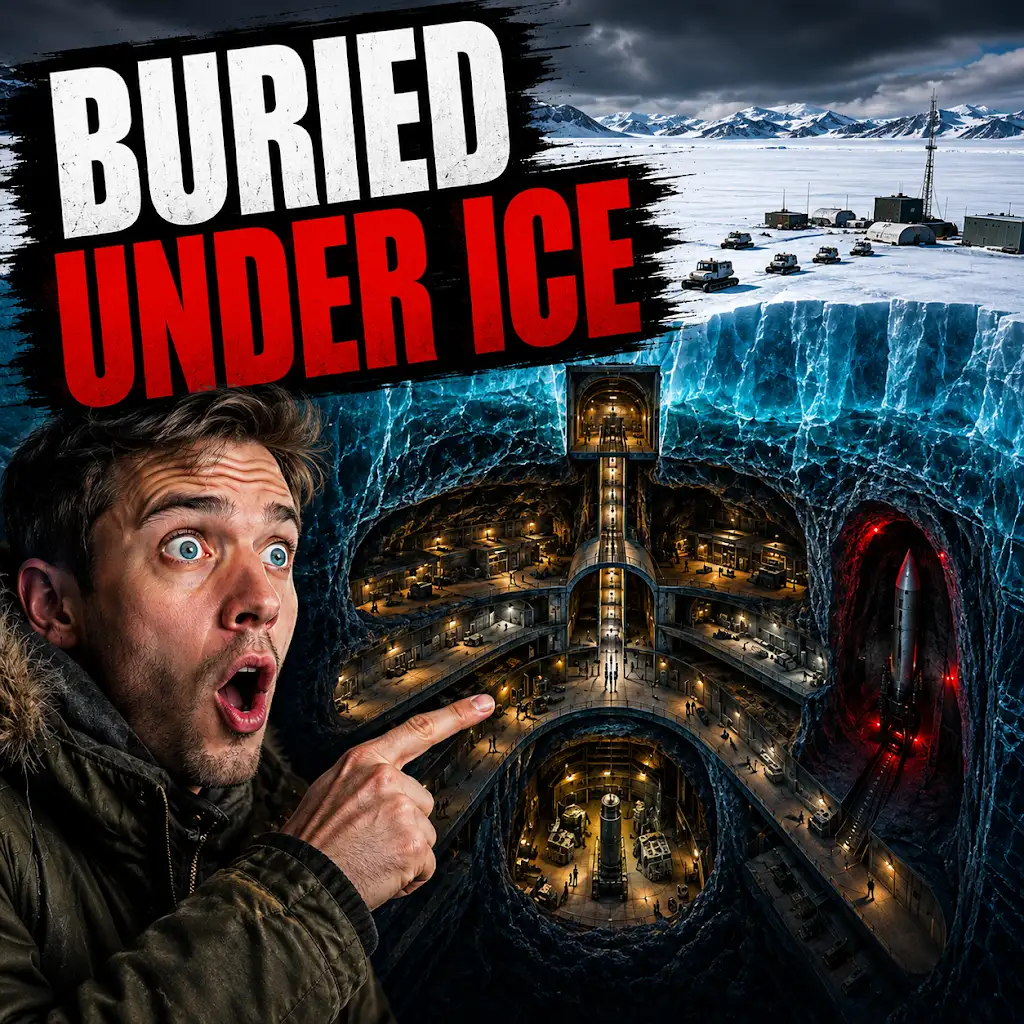
The U.S. Built a Nuclear City Under Greenland. The Ice Won.
FAQs
What is Camp Century?
Camp Century was a military base built by the United States in Greenland in 1959 as part of a research project known as Project Iceworm. It was primarily used for scientific research and testing during the Cold War.
What type of climate change research was conducted at Camp Century?
Camp Century was used to conduct research on the effects of climate change on the Greenland ice sheet. Scientists studied ice cores and monitored changes in temperature, snow accumulation, and ice melt to better understand the impact of climate change on the region.
What were the findings of the climate change research at Camp Century?
The research conducted at Camp Century provided valuable data on the rate of ice melt and the impact of climate change on the Greenland ice sheet. This data has been used to improve climate models and understand the potential consequences of continued global warming.
What is the current status of Camp Century?
Camp Century was abandoned in 1967 due to concerns about the stability of the ice sheet and the environmental impact of the base. The site is currently buried under layers of ice and snow, and there are ongoing discussions about the potential environmental hazards posed by the abandoned base as the ice continues to melt.
How does the research at Camp Century contribute to our understanding of climate change?
The research conducted at Camp Century has contributed to our understanding of the impact of climate change on polar regions and has provided valuable data for climate scientists and policymakers. The findings from Camp Century have helped to inform discussions about the need for global action to mitigate the effects of climate change.