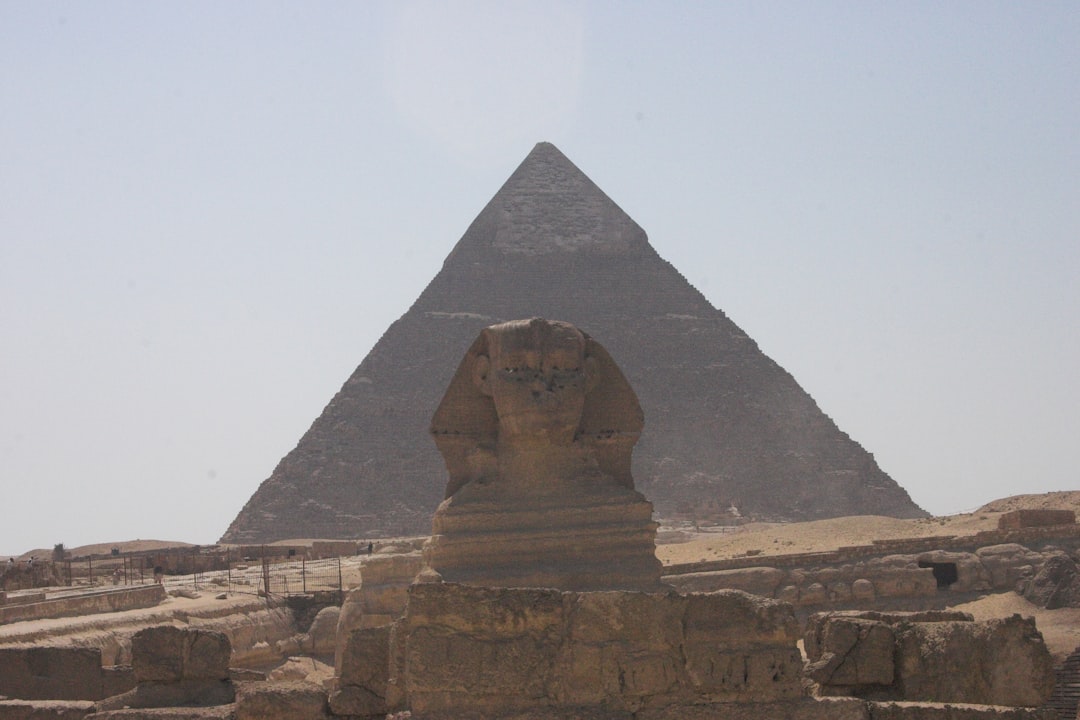
The Fourth Dynasty of ancient Egypt, a period often characterized by monumental construction and powerful pharaohs, produced figures whose legacies continue to captivate and mystify. Among these, Khafre, also known by his Hellenized name Chephren, stands as a central figure, primarily due to his association with one of the most iconic structures ever built: the Great Sphinx of Giza. While much of his life remains shrouded in the mists of antiquity, the enduring monuments attributed to him offer a tangible glimpse into the reign of a pharaoh who left an indelible mark on the landscape of ancient Egypt and the collective imagination of humanity.
Khafre’s lineage places him firmly within the heart of the Fourth Dynasty’s royal hierarchy, a dynasty synonymous with the zenith of pyramid building. Understanding his familial connections is crucial to appreciating his position and the resources he would have commanded.
Son of a Colossus: The Family Tree
Khafre was the son of Khufu, the pharaoh responsible for the construction of the Great Pyramid of Giza, the largest and most astonishing structure of its kind. This familial tie positioned Khafre within a legacy of grand architectural ambition, inheriting not only the throne but also a tradition of monumental engineering. His mother is generally believed to have been Queen Meresankh III, though this attribution remains subject to ongoing scholarly debate. The exact sequence of succession within the Fourth Dynasty can be complex, with various theories proposed regarding the rulers who immediately followed Khufu. Some Egyptologists suggest a pharaoh named Djedefre, Khafre’s half-brother, may have reigned between Khufu and Khafre. Djedefre is also credited with building a pyramid at Abu Rawash, a site slightly north of Giza, and for being the first pharaoh to explicitly use the title “Son of Ra,” thereby linking the king more directly with the sun god. This transition in titulary might indicate a shift in religious emphasis or a consolidation of royal power that Khafre would inherit and perhaps intensify.
The Pathways to Power: Succession Debates
The precise circumstances surrounding Khafre’s ascension to the throne are not entirely clear. Ancient Egyptian records, particularly from such an early period, are often fragmented and open to interpretation. While the general consensus is that he succeeded Djedefre, the length of Djedefre’s reign and the political landscape he inherited (or perhaps navigated) from Khufu are areas of active scholarly discussion. Some theories propose a period of instability or even dynastic contention following Khufu’s long and powerful reign. Regardless of the exact sequence, what is evident is that Khafre assumed control of a highly centralized and organized kingdom, one capable of mobilizing vast resources for state-sponsored projects on an unparalleled scale. The administrative infrastructure, the workforce organization, and the technical knowledge required for large-scale construction were already well-established by his predecessors, providing Khafre with a formidable foundation upon which to build his own legacy.
Khafre, the ancient Egyptian pharaoh known for his impressive pyramid and the Great Sphinx, is a fascinating figure in the study of ancient civilizations. For those interested in exploring more about the architectural achievements and cultural significance of his reign, a related article can be found at this link. This resource delves into the historical context of Khafre’s contributions to Egyptian society and the lasting impact of his monumental constructions.
The Giza Necropolis: Khafre’s Enduring Architectural Legacy
The Giza Plateau, an arid expanse overlooking modern-day Cairo, stands as a testament to the ambitions of the Fourth Dynasty pharaohs. While Khufu’s Great Pyramid dominates the landscape, Khafre’s contributions are equally significant, shaping the iconic skyline of the necropolis.
The Pyramid of Khafre: A Masterpiece of Engineering
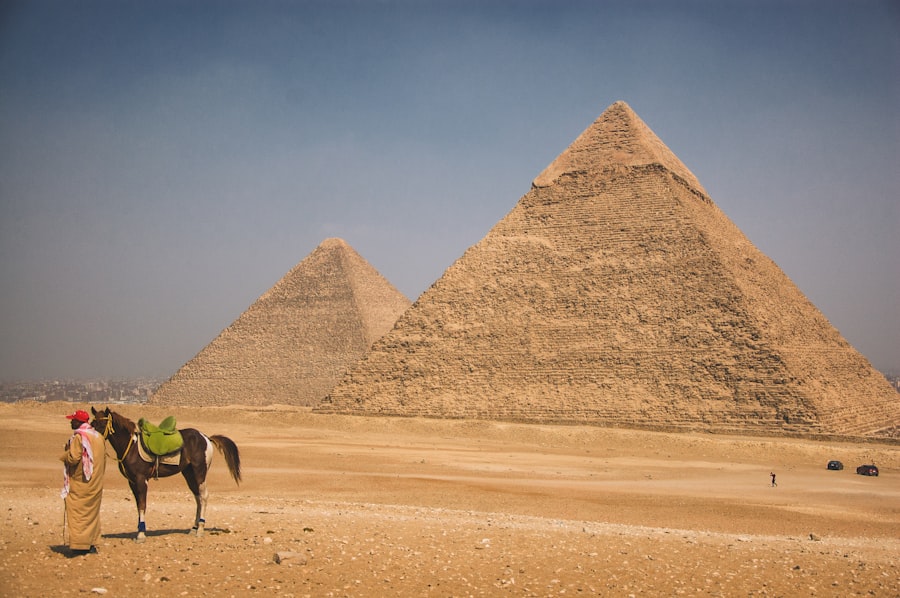
Khafre’s pyramid, though slightly smaller in volume than his father’s, creates an optical illusion that often makes it appear taller. This is due to its construction on a higher bedrock base and its steeper angle of inclination. Its casing stones, originally of polished white Tura limestone, now remain only on the upper sections, still gleaming strikingly in the desert sun. The pyramid complex itself is a marvel of ancient Egyptian engineering and architectural planning. It comprises the main pyramid, a mortuary temple directly to its east, a causeway connecting the mortuary temple to a valley temple nearer the Nile, and a smaller satellite pyramid. The precision of its construction, the alignment with cardinal directions, and the sheer scale of the undertaking speak volumes about the organizational capabilities and astronomical knowledge of the ancient Egyptians under Khafre’s command.
The mortuary temple, while now largely ruined, reveals sophisticated design with its massive granite pillars and extensive courtyards. It would have served as the site for rituals and offerings to the deceased pharaoh, an eternal home for his ka. The causeway, a monumental sealed passage, connected these two vital architectural elements, allowing for the ceremonial transport of the pharaoh’s body and offerings from the Nile to his final resting place. This integrated complex was not merely a tomb; it was a carefully planned machine for the king’s eternal sustenance and glorification, a cosmic bridge between the earthly and divine realms.
The Guardian of Giza: The Great Sphinx
Perhaps Khafre’s most recognizable legacy, the Great Sphinx is a monumental limestone statue depicting a mythical creature with the body of a lion and the head of a human. While some fringe theories suggest an earlier origin, mainstream Egyptology overwhelmingly attributes its creation to Khafre. The colossal statue is carved directly out of a natural bedrock outcrop, demonstrating a remarkable ability to see and exploit existing geological features for monumental effect. Its human head is widely believed to be a portrait of Khafre himself, immortalizing his image as a powerful, divine protector.
The Sphinx’s role in the Giza complex is multifaceted. It acts as a guardian, an eternal sentinel overseeing the necropolis and the pharaoh’s eternal slumber. It also embodies the dual nature of royalty: the pharaoh as both a powerful, earthly ruler (the lion’s body, symbolizing strength and authority) and a divine, intelligent being (the human head, representing wisdom and a connection to the gods). The Sphinx faces east, towards the rising sun, an orientation laden with religious symbolism relating to rebirth and regeneration, further solidifying its connection to the pharaoh’s continued existence in the afterlife. The sheer awe that the Sphinx has inspired throughout millennia speaks to its timeless design and powerful symbolism.
Subsidiary Structures: The Valley Temple and Sphinx Temple
Integral to Khafre’s pyramid complex are the Valley Temple and the Sphinx Temple. The Valley Temple, located at the eastern end of the causeway closer to the Nile, is a masterful example of architectural simplicity and power. Built almost entirely of enormous, precisely cut red granite blocks, it served as the entry point to the sacred complex. It was here that purificatory rites would have been performed on the king’s body before its ascent to the mortuary temple and ultimately, the burial chamber within the pyramid. The stark, unadorned walls and massive pillars create an atmosphere of imposing solemnity.
Adjacent to the Great Sphinx, the Sphinx Temple was also constructed of massive limestone and granite blocks. While now largely ruined, archaeological investigations reveal a layout designed for solar worship, with two sanctuaries oriented towards the rising and setting sun. This temple suggests a specific cult dedicated to the Sphinx, possibly identifying it with the sun god Re-Horakhty, further solidifying the pharaoh’s divine connection and his role as a solar ruler. These subsidiary structures complete the grand architectural narrative of Khafre’s reign, each playing a vital role in his eternal journey.
Unraveling the Mystery: The Sphinx’s Identity and Purpose
The Great Sphinx remains an enigma, its stoic gaze provoking centuries of speculation and inquiry. While its attribution to Khafre is widely accepted, the deeper meaning and precise symbolism endure as topics of scholarly fascination.
Arguments for Khafre as the Sphinx’s Creator
The primary evidence linking the Great Sphinx to Khafre is circumstantial yet compelling. Its geographical location, situated directly in front of Khafre’s causeway and adjacent to his valley temple, strongly suggests an integral connection to his pyramid complex. Furthermore, a statue depicting Khafre, unearthed in his valley temple, bears a striking resemblance to the facial features of the Sphinx, particularly the shape of the eyes, nose, and chin, allowing for the ravages of time and erosion. Several stelae from later periods, most notably the “Dream Stele” of Thutmose IV, also implicitly refer to the Sphinx as an entity guarding the Giza necropolis, a role perfectly aligned with Khafre’s architectural program. The sheer logistical brilliance required to carve such a massive monument from bedrock points to the centralized authority and organizational capacity of the Fourth Dynasty, particularly under a powerful pharaoh like Khafre.
The Symbolism of the Sphinx: Guardian, King, and God
Beyond its practical function as a colossal portrait of the pharaoh, the Sphinx is steeped in profound religious and political symbolism. The combination of a human head and a lion’s body is a classic representation of royal power and divine authority in ancient Egypt. The lion, a fierce and majestic creature, symbolizes strength, protection, and kingship. The human head, specifically believed to be that of Khafre, imbues this raw power with intellect, wisdom, and the divine essence of the pharaoh. The Sphinx, therefore, is not merely a statue; it is a manifestation of the pharaoh himself, projected onto the landscape as an eternal guardian.
Its eastward orientation is also significant, aligning it with the rising sun. This connects the Sphinx, and by extension Khafre, to the powerful symbolism of the sun god Re, who was intimately associated with kingship and rebirth. The rising sun represented creation and renewal, and the pharaoh, as the living Horus and son of Re, played a crucial role in maintaining cosmic order (Ma’at). The Sphinx, therefore, stands as a tangible link between the earthly king and the celestial deities, embodying his power to protect Egypt and ensure its prosperity. It is a timeless embodiment of royalty, religious belief, and monumental art.
Life Beyond the Monuments: Glimpses into Khafre’s Reign

While Khafre’s architectural achievements are undeniable, one must also endeavor to understand the broader context of his reign. What do we know of his administration, his family, and the daily life of Egypt under his rule?
Administration and Governance in the Fourth Dynasty
Khafre’s reign, like that of his father Khufu, represents a period of highly centralized rule. The immense resources required for the construction of the Giza pyramids and Sphinx testify to an efficient and sophisticated administrative apparatus. The country was likely governed through a complex bureaucracy, with high officials, often members of the royal family or trusted nobles, overseeing various departments such as treasury, agriculture, and construction. The vizier, the highest official, would have played a crucial role in coordinating these efforts. Taxation, likely in the form of agricultural produce and labor, would have fueled these monumental projects.
Furthermore, the scale of work suggests a highly organized corvée system, where large numbers of ordinary Egyptians contributed their labor to the state for periods each year. This was not necessarily slavery in the modern sense but a form of civic duty, often fulfilling tax obligations and contributing to the glory of the divine king and the nation. The logistics of feeding, housing, and managing thousands of workers speak to an advanced level of planning and resource management, a hallmark of Fourth Dynasty governance.
Family and Royal Court
Khafre was married to several queens, a common practice for Egyptian pharaohs to secure dynastic stability and alliances. His principal wife was Queen Meresankh III, herself a granddaughter of Khufu, marking a continuation of close dynastic intermarriage. Her elaborate tomb at Giza, discovered and excavated, provides valuable insights into the lives of elite women during this period, showcasing finely crafted reliefs and detailing her family connections. Khafre had numerous children, including his successor, Menkaure, who would go on to build the third and smallest of the Giza pyramids.
The royal court would have been a vibrant center of power, ritual, and culture. High-ranking officials, priests, scribes, and artists would have populated the palace, each contributing to the functioning of the state and the glorification of the pharaoh. Life in the court, though privileged, would have been highly structured, revolving around the divine personage of the king and the elaborate religious rituals designed to ensure the well-being of Egypt and the pharaoh’s eternal journey.
Khafre, the ancient Egyptian pharaoh known for his impressive pyramid and the Great Sphinx, has been the subject of much scholarly interest. For those looking to delve deeper into the architectural achievements of ancient Egypt, a related article can be found at Real Lore and Order, which explores the significance of pyramid construction and its impact on Egyptian society. This resource provides valuable insights into the historical context surrounding Khafre’s reign and the monumental structures that define it.
The End of an Era and Enduring Legacy
| Metric | Details |
|---|---|
| Name | Khafre (also known as Chephren) |
| Reign | c. 2558–2532 BC |
| Dynasty | 4th Dynasty of Egypt |
| Famous Monument | Second Pyramid of Giza |
| Pyramid Height | 136.4 meters (originally 143.5 meters) |
| Location | Giza Plateau, Egypt |
| Notable Artifact | The Great Sphinx of Giza (attributed to Khafre) |
| Father | Pharaoh Khufu |
| Mother | Queen Meritites I |
| Burial Site | Valley Temple near the Great Sphinx |
Khafre’s death marked the transition to another powerful pharaoh, his son Menkaure, who continued the tradition of pyramid building at Giza. Yet, Khafre’s own contributions would forever define the Giza necropolis.
Succession and the Continuity of the Fourth Dynasty
Following Khafre’s reign, his son Menkaure ascended to the throne. Menkaure’s pyramid at Giza, though considerably smaller than those of his father and grandfather, is notable for the significant use of red granite in its lower courses, indicating a continued access to and ability to transport this valuable material from Aswan. His mortuary temple also yielded some of the most exquisite statues from the Old Kingdom, including the famous triad statues of Menkaure with the goddess Hathor and a nome deity. The continuation of monumental construction under Menkaure suggests a smooth transition of power and a stable kingdom that remained committed to the grand ideals of its predecessors.
The Fourth Dynasty, encompassing Khufu, Khafre, and Menkaure, truly represents the “Golden Age” of the Old Kingdom. These pharaohs left behind a legacy that transcended mere architectural marvels, speaking to a profound understanding of engineering, astronomy, and religious symbolism.
Khafre’s Place in History and Modern Consciousness
Khafre’s legacy is undeniably intertwined with the Great Sphinx. This colossal monument has become a universal symbol of ancient Egypt, a timeless icon that sparks wonder and fuels the human imagination. His pyramid, standing proudly alongside his father’s, forms an integral part of one of the world’s most recognizable archaeological sites. For centuries, visitors to Giza have gazed upon his works, pondering the sheer scale of the achievement and the societal forces that allowed such ambitions to materialize.
From ancient Greek historians who marveled at the pyramids to modern archaeologists employing cutting-edge technology, Khafre’s monuments continue to be subjects of intense study and popular fascination. They are not merely stone structures; they are a direct line to a distant past, a tangible connection to a civilization that pushed the boundaries of human endeavor. Through these enduring creations, Khafre, the pharaoh who likely commissioned the Great Sphinx, continues to speak across millennia, inviting humanity to contemplate the power of ancient Egypt and the profound mystery of its kings. His legacy stands not just as a testament to personal ambition, but as a silent, monolithic witness to a grand civilization that forever altered the global cultural landscape.
FAQs
Who was Khafre?
Khafre was an ancient Egyptian pharaoh of the Fourth Dynasty during the Old Kingdom period. He is best known for building the second-largest pyramid at Giza and is often credited with commissioning the Great Sphinx.
When did Khafre rule Egypt?
Khafre ruled Egypt approximately from 2558 to 2532 BCE during the Old Kingdom era.
What is Khafre famous for?
Khafre is famous for constructing the Pyramid of Khafre at Giza, which is the second-largest pyramid on the Giza plateau, and for the Great Sphinx, which is believed to bear his likeness.
How is Khafre related to other pharaohs?
Khafre was the son of Pharaoh Khufu, who built the Great Pyramid of Giza, and he was succeeded by his son Menkaure, who built the third pyramid at Giza.
What is the significance of Khafre’s pyramid?
Khafre’s pyramid is significant because it represents the architectural and engineering advancements of the Old Kingdom and serves as a testament to the power and religious beliefs of ancient Egyptian civilization. It is also notable for its well-preserved mortuary temple and the nearby Great Sphinx.