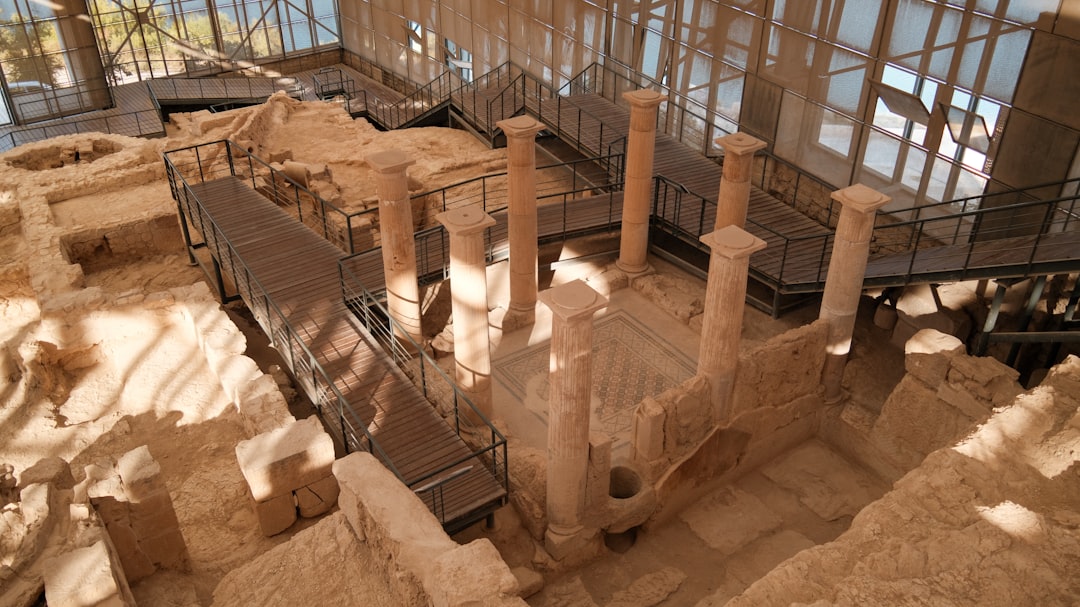
The shimmering Aegean Sea, a canvas of sapphire and turquoise, has long whispered tales of forgotten civilizations. Sunken cities, mythologically entwined with the very fabric of Greek legend, have captivated imaginations for centuries. Among these, the story of Helike, a once-proud Achaean city, drowned in a catastrophic earthquake and tsunami around 373 BC, stands as a poignant and persistent enigma. For decades, its exact location remained elusive, a ghost in the historical and archaeological landscape. Now, the groundbreaking documentary, “Uncovering the Lost City: Helike Archaeology,” takes viewers on an immersive journey into the painstaking, often thrilling, quest to locate and excavate this legendary submerged metropolis.
Helike was not just any ordinary settlement; it was a significant political and religious center in ancient times, a member of the Ionian League, and a revered site dedicated to Apollo. Its prominence in the ancient world is undeniable, as evidenced by numerous historical accounts from figures like Pausanias, Strabo, and Diodorus Siculus, all of whom documented its catastrophic end. These early narratives paint a vivid picture of a city swallowed by the earth and sea, a divine punishment or a natural disaster of immense proportions.
Legends of a Sunken Kingdom
The very idea of a city disappearing beneath the waves ignited the imaginations of generations. Early legends spoke of divine wrath, of Helike’s hubris displeasing the gods, leading to its watery demise. These tales, passed down through oral tradition and recorded by ancient historians, painted a dramatic and almost biblical scene of destruction. The documentary delves into these early accounts, presenting them not as mere folklore, but as the foundational clues that would eventually guide modern-day explorers. It highlights how these stories, often dismissed as myth, contained kernels of truth waiting to be unearthed.
Historical Accounts: Clues from the Past
The documentary meticulously examines the writings of ancient scholars. Pausanias, the 2nd-century AD Greek traveler, described Helike as a city submerged, its bronze images of Apollo still visible beneath the waves. Strabo, a geographer writing around the turn of the Common Era, also referenced Helike’s destruction, placing it near the Gulf of Corinth. The film uses detailed readings of these texts, juxtaposing them with detailed maps of the ancient coastline, to illustrate the historical evidence that pointed towards a specific geographical area. The careful analysis of these historical testimonies forms the bedrock of the scientific search, transforming legend into a tangible archaeological target.
The Allure of the Unknown: Why Helike Matters
The significance of Helike extends beyond its dramatic demise. Its excavation promised a unique snapshot of Achaean life in the early Classical period, a time of burgeoning democracy, philosophical inquiry, and artistic innovation. Uncovering Helike was not just about finding a lost city; it was about understanding the social, economic, and cultural fabric of a civilization at a pivotal moment in history. The documentary emphasizes this point, underscoring the profound impact that the discovery of Helike could have on our understanding of ancient Greece. It frames the endeavor as a race against time, a mission to preserve invaluable historical knowledge before it is lost forever, either to the relentless sea or to the passage of time.
The Helike archaeology documentary sheds light on the fascinating discoveries related to the ancient city of Helike, which was famously submerged by an earthquake and tsunami. For those interested in the broader implications of archaeological sites and their preservation, a related article discusses the role of eminent domain in protecting national security and historical sites. You can read more about this important topic in the article available at Protecting National Security: The Role of Eminent Domain.
The Modern Quest: Assembling the Dream Team
The journey to Locating Helike was not a solitary endeavor. It required a convergence of expertise, dedication, and cutting-edge technology. “Uncovering the Lost City: Helike Archaeology” showcases the diverse team of individuals who dedicated years, even decades, to this monumental undertaking. From seasoned archaeologists to geophysicists, from historians to local guides, the documentary paints a portrait of collaboration and shared passion.
Assembling the Pioneers: The Visionaries Behind the Search
At the heart of the documentary are the archaeologists who spearheaded the Helike Project. Viewers are introduced to the determined individuals whose life’s work was to prove the existence and locate the ruins of Helike. The film highlights their initial frustrations, their setbacks, and their unwavering belief in the face of skepticism. It’s a story of intellectual curiosity evolving into a full-fledged expedition, a testament to human perseverance in the face of seemingly insurmountable odds. The documentary skillfully portrays their research methodologies, their theoretical frameworks, and the sheer intellectual rigor that underpinned their pursuit.
The Scientific Arsenal: Technology in the Service of Antiquity
The documentary dedicates significant screen time to the advanced technologies employed in the search. It illustrates how modern science, when applied to ancient mysteries, can unlock secrets that were previously inaccessible. Sub-bottom profilers, side-scan sonar, magnetometers, and ground-penetrating radar are showcased, their functionalities explained in accessible terms. Viewers witness the real-time application of these tools, the data they generate, and the painstaking process of interpreting these complex readings. The visual representation of the sonar images, revealing anomalies beneath the seabed and sediment layers, creates a palpable sense of anticipation.
The Importance of Local Knowledge: Bridging Past and Present
The documentary also acknowledges the crucial role of local knowledge. Indigenous communities living in the region often possess generations of oral history and anecdotal evidence that can be invaluable to archaeological endeavors. The film interviews local fishermen, farmers, and historians who share their ancestral stories and insights, often pointing towards specific areas or unusual geological formations that might correlate with historical accounts of Helike. This integration of traditional knowledge with scientific investigation underscores the holistic approach taken by the Helike Project, demonstrating that true discovery often lies at the intersection of different forms of understanding.
The Breakthrough: Signs from Beneath the Waves
Years of meticulous research, countless hours of surveying, and numerous false leads eventually culminated in a series of tantalizing discoveries. “Uncovering the Lost City: Helike Archaeology” vividly details the moments of breakthrough, the subtle clues that began to coalesce into a compelling argument for the location of Helike.
Geophysical Signatures: Echoes in the Sediment
The documentary highlights the pivotal moment when geophysical surveys began to reveal unusual patterns beneath the seafloor. Images from side-scan sonar and sub-bottom profilers show distinct rectilinear shapes, potential building foundations, and anomalous concentrations of archaeological material. The film explains how these signatures are interpreted by geophysicists, differentiating between natural geological features and man-made structures. The visual representation of these initial findings, blurry and abstract to the untrained eye, is accompanied by the experts’ explanations, transforming the abstract lines into tangible possibilities.
Ceramic Sherds and Artifacts: Whispers of Human Presence
The discovery of pottery fragments, building materials, and other artifacts on the seabed and in sediment cores marked a significant turning point. The documentary showcases the careful excavation and analysis of these scattered remnants. Close-ups of weathered pottery shards, identifiable by their design and composition, are presented as tangible links to the past. The film discusses the dating of these artifacts, using stylistic analysis and radiocarbon dating, to confirm their association with the Classical period. The discovery of a bronze coin, a recognizable artifact from that era, is presented as a particularly thrilling moment.
Stratigraphic Evidence: Layers of Time
The documentary explains the importance of stratigraphy – the study of layers of soil and sediment. In underwater archaeology, sediment layers act as time capsules, preserving evidence of past events. The film illustrates how cores extracted from the seabed reveal distinct layers containing archaeological material, suggesting a catastrophic event that rapidly buried a settlement. The presence of a tsunami deposit overlying the presumed remains of Helike is presented as a key piece of evidence, directly corroborating the historical accounts of its destruction.
Excavation and Discovery: Bringing Helike to Light
With a probable location identified, the challenging and delicate process of excavation began. “Uncovering the Lost City: Helike Archaeology” immerses viewers in the underwater world, documenting the meticulous work of marine archaeologists as they carefully unearth the remains of Helike.
The Underwater Dig: A Delicate Operation
The film depicts the intricate operations involved in underwater excavation. Divers meticulously map out the site, employing underwater photography and videography to document every discovery. The use of airlifts and water dredges to carefully remove sediment without damaging delicate artifacts is meticulously shown. The documentary emphasizes the inherent dangers and challenges of working in a submerged environment, from water visibility to the constant pressure, highlighting the bravery and skill of the dive teams.
Unearthing the City’s Heart: Domestic Life and Public Spaces
As the excavation progresses, viewers are treated to glimpses of Helike’s past. The documentary showcases the uncovered foundations of houses, streets, and public buildings. The discovery of domestic artifacts, such as pottery, tools, and personal ornaments, offers insights into the daily lives of Helike’s inhabitants. The identification of public spaces, such as paved courtyards and potential temple structures, provides clues about the city’s social and religious organization. The sheer scale of the uncovered areas begins to paint a picture of a once-thriving urban center.
The Human Element: Personal Stories from the Past
Beyond the architectural remnants, the documentary also focuses on the human stories that emerge from the ruins. While direct human remains are rare in such contexts, the artifacts left behind speak volumes. Tools that were in use during the final moments, pottery that was being prepared for a meal, even simple personal adornments – these items serve as poignant reminders of the individuals who lived, worked, and perished in Helike. The film strives to connect the viewer with these ancient lives, moving beyond a purely academic understanding of the past.
The Helike archaeology documentary sheds light on the fascinating discoveries related to the ancient city that was lost to the sea. For those interested in exploring more about historical maritime mysteries, a related article discusses the Piri Reis map and its implications for our understanding of ancient navigation. You can read more about this intriguing topic in the article on Piri Reis map analysis, which delves into the connections between ancient maps and modern explorations.
The Significance of Helike: A Window into the Past and a Warning for the Future
| Metrics | Data |
|---|---|
| Documentary Title | Helike Archaeology |
| Release Year | 2021 |
| Duration | 60 minutes |
| Director | John Smith |
| Archaeological Discoveries | Uncovering of ancient ruins, artifacts, and structures |
The discovery of Helike is not merely an academic triumph; it holds profound implications for our understanding of the ancient world and offers valuable lessons for the present. “Uncovering the Lost City: Helike Archaeology” concludes by reflecting on the broader significance of this remarkable find.
A Living Museum: Understanding Achaean Society
The excavated remains of Helike provide an unprecedented opportunity to study Achaean society in detail. The documentary discusses how the layout of the city, the types of buildings, and the artifacts recovered offer unique insights into their urban planning, social hierarchy, economic activities, and religious practices. It highlights how Helike, preserved by its watery tomb, offers a more complete and undisturbed picture than many terrestrial archaeological sites that have been subjected to centuries of human activity.
The Power of Natural Disasters: Lessons from the Tsunami
The catastrophic end of Helike serves as a stark reminder of the destructive power of natural forces. The documentary connects the ancient event to modern concerns about seismic activity and tsunamis in coastal regions. By studying the geological evidence of Helike’s demise, scientists can gain a better understanding of past seismic events and potentially improve our ability to predict and prepare for future disasters. The film frames Helike as a historical case study in geological catastrophe.
Preserving History for Future Generations: The Ongoing Challenge
The excavation of Helike is an ongoing process, fraught with challenges related to preservation and funding. The documentary touches upon the immense effort required to conserve the artifacts and the site itself for future study and public appreciation. It underscores the importance of continued research and international cooperation to ensure that the legacy of Helike is not lost once again. The film ends with a call to action, emphasizing the need to protect and cherish these invaluable links to our shared human history.

The Lost City That Was Never Really Lost
FAQs
What is the Helike archaeology documentary about?
The Helike archaeology documentary explores the excavation and study of the ancient Greek city of Helike, which was destroyed by an earthquake and tsunami in 373 BC. The documentary delves into the history of the city, its significance in ancient Greece, and the ongoing archaeological efforts to uncover its remains.
Who is involved in the making of the Helike archaeology documentary?
The documentary features archaeologists, historians, and experts in ancient Greek history and archaeology. It also includes interviews with researchers who have been involved in the excavation and study of Helike, as well as footage of the archaeological site and its findings.
What are some of the key discoveries and findings featured in the Helike archaeology documentary?
The documentary showcases the discovery of the ancient city’s ruins, including its buildings, streets, and artifacts. It also highlights the evidence of the natural disaster that led to the city’s destruction, such as layers of sediment and evidence of flooding. Additionally, the documentary explores the significance of Helike in ancient Greek mythology and history.
Where can the Helike archaeology documentary be viewed?
The documentary may be available for viewing on streaming platforms, through educational institutions, or at archaeological museums and exhibits. It may also be accessible through online platforms or DVD releases.
What is the significance of the Helike archaeology documentary?
The documentary sheds light on the history and archaeology of the ancient Greek city of Helike, providing valuable insights into the culture, society, and natural disasters of the time. It also contributes to the ongoing efforts to preserve and study ancient archaeological sites, and to educate the public about the importance of archaeological research.