The quiet hum of the old desktop computer had become a familiar soundtrack to Sarah’s evenings. For months, she’d been diligently navigating the labyrinthine pathways of her family tree, piecing together lineages from faded photographs, brittle birth certificates, and the often-unreliable memories of her elders. While the branches stretching back to her great-grandparents were relatively well-defined, a persistent anomaly had begun to gnaw at her: a distinct lack of information about a particular aunt, her grandmother’s younger sister, who seemed to have vanished from the narrative. This missing link wasn’t just a genealogical curiosity; it felt like a void, a silence in the symphony of her family’s story that Sarah was determined to fill.
The initial inklings of this gap came during a casual conversation with her mother. Discussing family anecdotes, Sarah had inquired about her great-aunt Clara, the sister of her beloved Grandma Eleanor. Her mother’s brow furrowed slightly. “Clara? Oh, yes, Grandma Eleanor’s sister. She… well, she moved away a long time ago. We don’t really have much contact.” The vagueness was palpable, a subtle deflection that piqued Sarah’s nascent genealogical radar. Further probing yielded similar responses: vague references to a move, a desire for a fresh start, or simply, “It was a different time.” There were no detailed accounts of her life, no wedding invitations tucked into old photo albums, no mentions in family letters that Sarah could find. It was as if Clara had existed, but her story had been carefully edited out, or perhaps, simply forgotten.
Generations of Silence
Sarah understood that family histories often contained silences. Some were born of personal preference, others of societal pressures or geographical distance. Yet, the complete absence of Clara’s life events – marriages, children, significant milestones – felt deliberate. She began to cross-reference stories. Grandma Eleanor’s childhood anecdotes rarely included a younger sister. When they did, it was often a fleeting mention, a brief anecdote that quickly shifted focus. This wasn’t a typical sibling relationship; it was as if Clara had been a ghost in their shared past, present but never truly accounted for.
The Photographic Anomaly
The photograph albums provided another layer of intrigue. While filled with images of family gatherings, holidays, and everyday life, Sarah meticulously scanned each page for any sign of Clara. There were pictures of Grandma Eleanor with her parents, her siblings, her own children. But Clara? Not a single candid shot, no smiling face in a group portrait. This absence was more than just a lack of photos; it suggested a deliberate exclusion, or perhaps, a life lived so far removed that it never intersected with the documented moments of the family’s collective memory.
If you’re interested in exploring the complexities of historical connections and the impact of trade on societal structures, you might find a related article on the collapse of Bronze Age trade networks particularly insightful. This piece delves into how the disruption of trade routes influenced various civilizations, much like how missing branches in a family tree can reveal gaps in our understanding of lineage and heritage. For more information, you can read the article here: The Collapse of Bronze Age Trade Networks.
The First Threads of Investigation
Undeterred, Sarah turned her attention to the official records, the bedrock of genealogical research. Armed with her grandmother’s birth name and approximate birth year, she began her online search. The early results were frustratingly sparse. Census records offered glimpses, but without a clear surname for Clara after a certain age, tracking her became a formidable challenge. It was a detective story unfolding in bits and bytes, each search engine query a potential clue, each dead end a frustrating setback.
Navigating the Digital Archives
Sarah spent countless hours scouring digitized census records, looking for any young women who fit Clara’s age and surname variations. The early census records were crucial, listing family members and their ages, providing a snapshot of the household. However, once Clara would have left her parents’ home, her trail became significantly harder to follow without a married name. She employed various search strategies, using different spellings of her grandmother’s maiden name and exploring potential married names that might have been associated with her through family whispers or vague recollections.
Birth and Marriage Records: A Necessary Hurdle
The critical missing pieces were Clara’s marriage record and any subsequent birth records for her children. Without these, Sarah was effectively searching for a needle in a haystack. She meticulously searched the online databases for marriage licenses in the general geographical areas where her grandmother’s family had resided during Clara’s likely marriageable years. This involved sifting through hundreds, sometimes thousands, of entries, looking for a name that might be Clara’s, cross-referencing with potential husband’s names that had been mentioned, however vaguely, in family lore.
Unearthing the Hidden Narrative
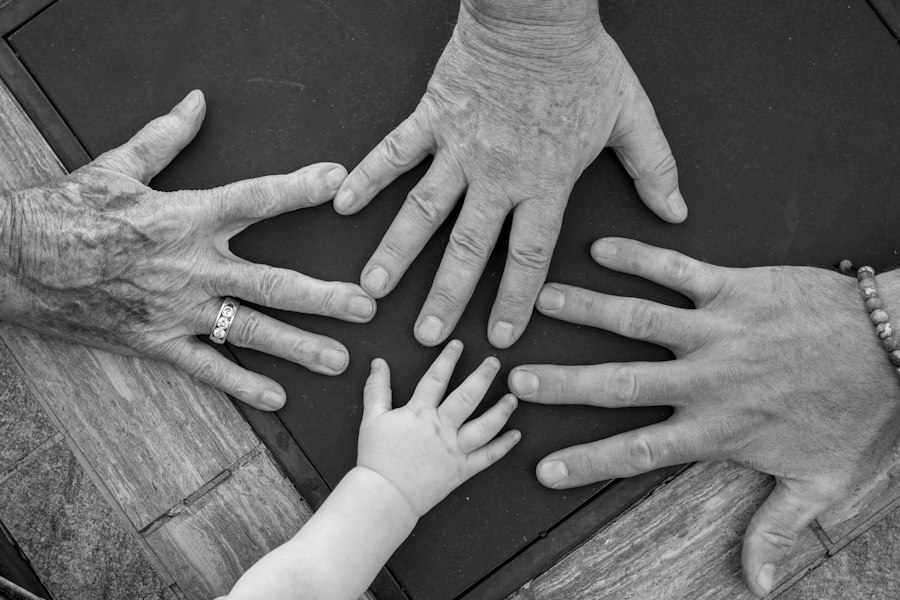
The breakthrough came not from a grand revelation, but from a series of small, incremental discoveries. It was a painstaking process of triangulation, connecting disparate pieces of information until a coherent picture began to emerge. Each new document, each newly unearthed detail, felt like a triumph, a small victory against the silence. Sarah learned to embrace the serendipity of genealogical research, understanding that sometimes, the most important clues appear in the most unexpected places.
The Vital Records Breakthrough
The first significant lead materialized when Sarah, in a moment of inspired desperation, searched for Clara using her mother’s maiden name as a potential married surname. To her astonishment, a marriage record appeared for a “Clara Elizabeth Davies” (using her grandmother’s maiden name) to a “Thomas Arthur Miller” in a neighboring county, dated just a few years after Grandma Eleanor’s own marriage. This was the first concrete anchor. The date and location were plausible, fitting the timeline of when Clara would have likely married and moved away.
Deeds and Obituaries: Echoes of a Life
With Clara’s married name, the search broadened considerably. Sarah began to explore property deeds, looking for records of the Millers owning land or a home. This provided geographical context for their lives. More significantly, she stumbled upon a digitized newspaper archive. Searching for “Clara Miller” within these archives yielded an obituary, albeit one for a woman who had passed away several decades prior. The obituary was concise, listing her surviving children by name. This was the ultimate confirmation, the definitive proof that Clara had indeed lived a full life, with a family of her own.
Reconstructing the Lost Branch

The obituary for Clara Miller was a watershed moment. It provided the names of her children, effectively opening up a new set of branches on Sarah’s family tree. The initial joy of discovery was tinged with a sense of profound sadness that this information had been so inaccessible, so absent from her family’s oral history. Sarah felt a responsibility to honor Clara’s memory and to integrate her story back into the family narrative.
The Children of Clara and Thomas
The names provided in Clara’s obituary were crucial. Sarah’s next step was to search for these individuals, and their descendants. This involved a new phase of genealogical research, focusing on a younger generation. She used the same techniques as before – census records, birth and death indexes, and newspaper archives – but now with more specific targets. It was a race against time, as records for more recent generations can be harder to access publicly due to privacy concerns.
Connecting with Living Relatives
The ultimate goal of genealogical research isn’t just about filling in names on a chart; it’s about understanding the people behind those names. Sarah knew that the most rewarding part of this journey would be to connect with Clara’s descendants. She began cautiously, using public online directories and social media to locate potential relatives. The prospect of reaching out to strangers with news of a long-lost family connection was both exciting and daunting.
Exploring the mysteries of our ancestry can often lead to unexpected discoveries, especially when it comes to missing branches in a family tree. For those intrigued by the secrets that lie within our past, a fascinating article titled “Unearthed Ancient Secrets Revealed in New Documentary” delves into the latest findings that could shed light on our genealogical puzzles. You can read more about it here, where it discusses how modern technology is helping to uncover lost connections and enrich our understanding of family histories.
The Significance of Reconciliation
| Metric | Description | Impact | Common Causes | Resolution Strategies |
|---|---|---|---|---|
| Number of Missing Branches | Count of family branches absent from the tree | Limits completeness and accuracy of genealogy | Lost records, unknown relatives, adoption | Research archives, DNA testing, family interviews |
| Percentage of Unknown Ancestors | Proportion of ancestors with no data or connections | Reduces ability to trace lineage fully | Incomplete documentation, migration, name changes | Cross-referencing multiple sources, crowdsourcing |
| Average Depth of Tree | Number of generations traced back | Shallower trees indicate missing branches | Limited research scope, early family history gaps | Expand research scope, use historical records |
| Number of Unlinked Individuals | Individuals in the database not connected to main tree | Creates isolated data, reduces tree integrity | Data entry errors, unknown relationships | Data validation, relationship verification |
| Frequency of Conflicting Data | Instances of contradictory information about relatives | Causes confusion, may hide missing branches | Multiple sources, transcription errors | Source evaluation, consensus building |
Uncovering Clara’s story wasn’t just about satisfying Sarah’s personal curiosity. It represented a deeper act of reconciliation, of bringing a forgotten part of her family back into the light. It highlighted the subjective nature of family history and the importance of actively seeking out and preserving all narratives, even those that might have been marginalized or intentionally obscured.
Understanding the Reasons for the Silence
Sarah pondered the possible reasons for Clara’s near-erasure from family memory. Was it a painful separation? A disagreement? Societal norms of the time that dictated certain lives were best left unmentioned? She considered the possibility of shame, or perhaps, a simple desire for privacy that was respected, if not fully understood, by the rest of the family. Without direct testimony from those involved, these remained hypotheses, but they offered context for the silence.
The Power of a Complete Narrative
Sarah’s journey reinforced the idea that a family tree is more than just a collection of names and dates. It is a tapestry woven from the lives, loves, losses, and experiences of individuals. By bringing Clara back into the fold, Sarah felt she was creating a more complete and accurate picture of her heritage. It was a testament to the enduring power of family bonds, even across generations and through periods of silence. The missing branch, once a source of frustration, had become a symbol of resilience and the ongoing process of understanding where one comes from. This exploration had transformed her from a passive recipient of family lore into an active historian, piecing together a fragmented past and ensuring that future generations would know the full story of their ancestors, including the aunt who had once been a whisper.
Jamestown DNA Revealed a Family Secret Hidden for 400 Years
FAQs
What is a missing branch in a family tree?
A missing branch in a family tree refers to a gap or missing information in the lineage of a family, where a direct ancestor or descendant is unknown or unaccounted for.
How can a missing branch affect genealogical research?
A missing branch can significantly impact genealogical research by creating obstacles in tracing lineage, understanding family connections, and accurately documenting the family history.
What are some common reasons for a missing branch in a family tree?
Common reasons for a missing branch in a family tree include lack of records, missing documents, name changes, adoptions, disownments, estrangements, and other circumstances that may have led to the omission of an individual from the family history.
How can one go about filling in a missing branch in a family tree?
To fill in a missing branch in a family tree, individuals can conduct thorough research, explore alternative sources of information, collaborate with other family members, seek assistance from genealogical experts, and utilize online databases and resources to uncover missing links.
Why is it important to address and resolve missing branches in a family tree?
Addressing and resolving missing branches in a family tree is crucial for preserving the accuracy and completeness of the family history, understanding one’s heritage, connecting with relatives, and ensuring that future generations have a comprehensive record of their ancestors.