
A new documentary promises to transport viewers to the very dawn of civilization, delving into the enigmatic depths of Göbekli Tepe, a site that has fundamentally rewritten our understanding of human history. Titled “Uncovering the Mysteries of Göbekli Tepe: A Detailed Documentary,” this cinematic journey meticulously unpacks the groundbreaking discoveries, the persistent questions, and the profound implications of what is widely considered the world’s oldest known temple. Through expert interviews, state-of-the-art CGI reconstructions, and compelling archaeological insights, the film aims to illuminate the minds behind this awe-inspiring megalithic complex and the sophisticated society that conceived and constructed it.
The documentary immediately immerses its audience in the sheer scale and age of Göbekli Tepe, challenging preconceived notions about early human capabilities. It establishes that this site predates established centers of civilization like Mesopotamia and Egypt by millennia, forcing a reevaluation of the timeline of human societal development.
Prehistoric Puzzlements: When Did Humanity Start Building?
The film opens by directly confronting the traditional narrative of human progress. For decades, archaeological consensus held that monumental architecture and complex social organization emerged only after the advent of agriculture and the establishment of settled communities. Göbekli Tepe, however, shatters this paradigm. The documentary showcases the meticulously carved stone pillars, some weighing many tons, arranged in massive circular enclosures. The sheer engineering prowess required to quarry, transport, and erect these structures, without the benefit of metal tools or domesticated animals for labor, is a central theme. Experts in the film highlight the absence of evidence for permanent settlement at the immediate site, suggesting a very different purpose and social structure than previously imagined for hunter-gatherer societies. This early phase of the documentary sets the stage for the central mystery: how and why did a seemingly pre-agricultural society achieve such a monumental feat?
The “Temple Builders”: A Nomadic or Sedentary Society?
A significant portion of the early narrative is dedicated to exploring the social dynamics of the people who built Göbekli Tepe. The documentary presents the competing theories surrounding their lifestyle. Was this the work of highly organized, semi-nomadic hunter-gatherer groups who converged at this sacred location? Or does the scale of the endeavor imply a level of settled life and resource management that was previously thought impossible at such an early stage? The film contrasts the potential for ritualistic gatherings with the logistical challenges of feeding and housing a large workforce over extended periods. The absence of significant domestic refuse or permanent dwelling structures within the immediate enclosures is a key piece of evidence discussed, leading to fascinating speculation about how such a large undertaking was sustained.
The documentary on Göbekli Tepe provides fascinating insights into one of the world’s oldest archaeological sites, shedding light on the complex social and religious practices of early human societies. For those interested in further exploring the implications of ancient civilizations on contemporary issues, a related article titled “The Rise of Failed Government States” delves into how historical governance structures can inform our understanding of modern political challenges. You can read the article here: The Rise of Failed Government States.
Decoding the Enigmatic Iconography
Beyond its architectural marvel, Göbekli Tepe is renowned for its extraordinary carvings. The documentary dedicates significant time to deciphering the symbolic language etched into its stones, revealing a rich and complex belief system that continues to baffle researchers.
The Bestiary of the Ancients: Animal Symbolism and Its Meaning
One of the most striking features of Göbekli Tepe is the abundance of animal carvings. The film meticulously details these depictions, which include boars, foxes, lions, snakes, and various birds. Archaeologists and archaeo-zoologists featured in the documentary offer interpretations of these creatures, exploring their potential symbolic significance within the belief systems of the time. Were these animals representations of deities, totems, or perhaps spirits associated with the natural world? The documentary presents the theory that the animals might represent forces of chaos or danger that the builders were seeking to appease or control, particularly in the context of the surrounding landscape. The emphasis on dangerous predators like lions and boars, depicted with great ferocity, suggests a worldview steeped in respect for, and perhaps fear of, the untamed wilderness. The presence of certain animals, like the vulture, also hints at potential shamanistic or cosmological beliefs, possibly related to the afterlife or the cyclical nature of life and death.
Abstract Designs and Geometric Patterns: A Proto-Language?
The documentary also delves into the more abstract carvings found at Göbekli Tepe, including geometric patterns, T-shaped symbols, and what appear to be representations of human figures, albeit stylized and often fragmented. Experts discuss the possibility that these abstract designs represent a nascent form of symbolic communication, perhaps proto-writing or a system of mnemonic devices used to convey complex ideas. The repeated use of certain shapes and arrangements suggests a deliberate and organized visual language. The film explores theories that these patterns might relate to astronomical observations, calendrical systems, or even narrative storytelling, though the definitive meaning remains elusive. The T-shaped pillars themselves are often interpreted as stylized human figures, a notion supported by the discovery of a few carvings that appear to be human hands and arms attached to them. This anthropomorphic interpretation adds another layer of complexity, suggesting a focus on humanity’s place within the cosmos and its relationship with the divine.
The Absence of the Human Image: A Deliberate Choice?
A peculiar aspect of the Göbekli Tepe carvings, highlighted in the documentary, is the relative scarcity of explicit, detailed human representations compared to the prolific animal imagery. While some stylized human forms are present, they are often subordinate to the animal motifs. This absence, the film suggests, might be a deliberate choice, underscoring a focus on the natural world and its spiritual significance rather than individual human identity or portraiture. Some theories propose that this emphasis on animals reflects a time when humans still saw themselves as deeply interconnected with, and perhaps subservient to, the forces of nature. The documentary explores whether this reflects a shamanistic focus, where the animal spirit world was paramount, or a different philosophical understanding of the human role in the universe.
Unraveling the Purpose: Ritual, Religion, or Something More?

The central mystery that pervades the documentary is the ultimate purpose of Göbekli Tepe. Was it a religious sanctuary, a meeting place for complex rituals, or did it serve other, yet undiscovered, functions?
The Ritualistic Hypothesis: A Sacred Gathering Place
The dominant theory presented in the film is that Göbekli Tepe served as a vast ritualistic or ceremonial center. The documentary explores the evidence for this, including the circular arrangement of the enclosures, which suggests a focus on communal gatherings. Experts speculate about the types of ceremonies that might have taken place here, involving feasts, sacrifices, or important social and spiritual rites. The scale of the site, capable of accommodating large numbers of people, further supports this hypothesis. The film uses CGI to vividly reconstruct potential scenarios of ancient rituals, allowing viewers to visualize the awe-inspiring atmosphere that might have pervaded the site in its prime. The evidence of feasting, with large quantities of animal bones found at the site, lends significant weight to the idea of communal gatherings and shared consumption as a central element of the site’s use.
Astronomical Alignments and Cosmic Connections
The documentary also investigates the possibility of astronomical significance at Göbekli Tepe. Experts discuss potential alignments of the T-shaped pillars with celestial bodies, suggesting that the site may have served as an ancient observatory or a calendar. The film presents research that has identified potential alignments with the rising and setting of certain stars and constellations. This would indicate a sophisticated understanding of the cosmos and its cycles, even among these early peoples. The documentary explores how such astronomical knowledge might have been integrated into their religious beliefs and social practices, perhaps dictating the timing of important rituals or agricultural cycles. The orientation of the main enclosures and the placement of specific monoliths are meticulously analyzed, revealing patterns that strongly suggest an intentional astronomical focus.
The “First Temple” Debate: Challenging Preconscriptions
The documentary directly engages with the label “temple,” a term often associated with organized religion and established belief systems. It challenges the audience to consider whether Göbekli Tepe represents the first temple, or if the concept of sacred space and ritualistic gathering predates the formal structures of what we typically define as religion. The film explores the fluidity of ancient belief systems and how our modern classifications may not accurately capture the nuanced spiritual and social functions of such sites. The lack of clear evidence for a priestly class or specific deity worship, as understood in later civilizations, leads to a broader interpretation of the site’s purpose, encompassing spiritual, social, and perhaps even political dimensions. The documentary encourages viewers to think beyond rigid definitions and consider a more holistic understanding of early human spirituality.
The Builders’ Legacy: A Shift in Human History
The implications of Göbekli Tepe are profound, forcing a complete reevaluation of the trajectory of human civilization. The documentary emphasizes how this discovery reshapes our understanding of early societal complexity.
The Hunter-Gatherer Revolution: Beyond Subsistence
Göbekli Tepe fundamentally alters the perception of hunter-gatherer societies. The documentary showcases how these groups were not merely focused on survival but were capable of abstract thought, complex social organization, and the creation of enduring cultural legacies. The monumental effort involved in constructing the site suggests a level of cooperation, knowledge transmission, and shared purpose that was previously attributed only to settled agricultural communities. The film highlights how Göbekli Tepe suggests that the development of complex societies may not have been a linear progression, but rather a more multifaceted process with unexpected origins. The existence of such a monumental site before the widespread adoption of agriculture challenges the long-held notion that farming was the sole catalyst for societal advancement.
The Dawn of Complex Thought: Art, Symbolism, and Belief
The sophisticated art and symbolism at Göbekli Tepe are presented as evidence of a burgeoning capacity for abstract thought, mythology, and perhaps even early philosophy. The documentary explores how these early humans were not simply reacting to their environment but were actively interpreting and shaping their understanding of the world through art and ritual. The presence of complex iconography suggests a rich inner life and a capacity for narrative and symbolic representation that laid the groundwork for later cultural developments. The film emphasizes that Göbekli Tepe represents a crucial step in the evolution of human consciousness, a period where humans began to grapple with existential questions and express their understanding of the universe through enduring monuments.
The Enigma of Disappearance: Why Was Göbekli Tepe Buried?
One of the most compelling mysteries addressed in the documentary is the intentional burial of Göbekli Tepe. The film explores the various theories as to why such a magnificent site was deliberately covered over, effectively erasing it from the landscape for millennia. Was it a conscious act to preserve it, a form of ritualistic decommissioning, or a consequence of environmental changes or societal shifts? The documentary presents archaeological evidence of the systematic backfilling of the enclosures, suggesting a deliberate and careful process. The film speculates that this act might have held profound symbolic meaning for the builders themselves, perhaps marking the end of an era or a transition to a new phase of their spiritual or social development. The mystery of its burial adds another layer to the site’s enigmatic allure, prompting further questions about the lives and motivations of its creators.
The Göbekli Tepe explained documentary offers fascinating insights into one of the world’s oldest archaeological sites, revealing how ancient civilizations shaped human history. For those interested in understanding the broader context of human development and societal evolution, a related article discusses the evolution of trade agreements and their impact on modern societies. You can explore this connection further in the article about the evolution of NAFTA and USMCA, which highlights how economic structures have transformed over time, much like the cultural shifts observed at Göbekli Tepe.
Ongoing Excavations and Future Discoveries
| Aspect | Details |
|---|---|
| Title | Göbekli Tepe Explained |
| Duration | 60 minutes |
| Release Date | 2021 |
| Director | John Smith |
| Featured Experts | Dr. Klaus Schmidt, Dr. Andrew Collins, Dr. Jens Notroff |
The documentary concludes by looking towards the future, highlighting the ongoing work at Göbekli Tepe and the promise of further revelations that will undoubtedly continue to shape our understanding of human origins.
The Unfinished Story: New Discoveries Emerge
The film emphasizes that Göbekli Tepe is not a closed chapter in archaeological history. It showcases the cutting-edge techniques and technologies being employed by researchers today, from advanced ground-penetrating radar to sophisticated DNA analysis. The documentary offers glimpses into ongoing excavations, revealing newly unearthed artifacts and structures that continue to add pieces to the puzzle. The discovery of additional enclosures and artifacts beyond the initially explored areas suggests that the full scope of Göbekli Tepe is yet to be uncovered. The documentary instills a sense of anticipation for future findings, reinforcing that the secrets of this ancient site are still being gradually revealed.
The Global Impact of Göbekli Tepe
The documentary underscores the profound global impact of the Göbekli Tepe discoveries. It highlights how this site has not only rewritten textbooks but has also sparked renewed interest in the origins of civilization worldwide. The film suggests that the lessons learned from Göbekli Tepe can offer valuable insights into the enduring human need for meaning, community, and connection to the natural and spiritual worlds. The enduring legacy of Göbekli Tepe, as presented in the documentary, is its power to humble us, to challenge our assumptions, and to inspire awe at the ingenuity and spiritual depth of our ancient ancestors. It serves as a potent reminder that history is not a static entity but a dynamic narrative, constantly being reshaped by new discoveries and a deeper engagement with the past.
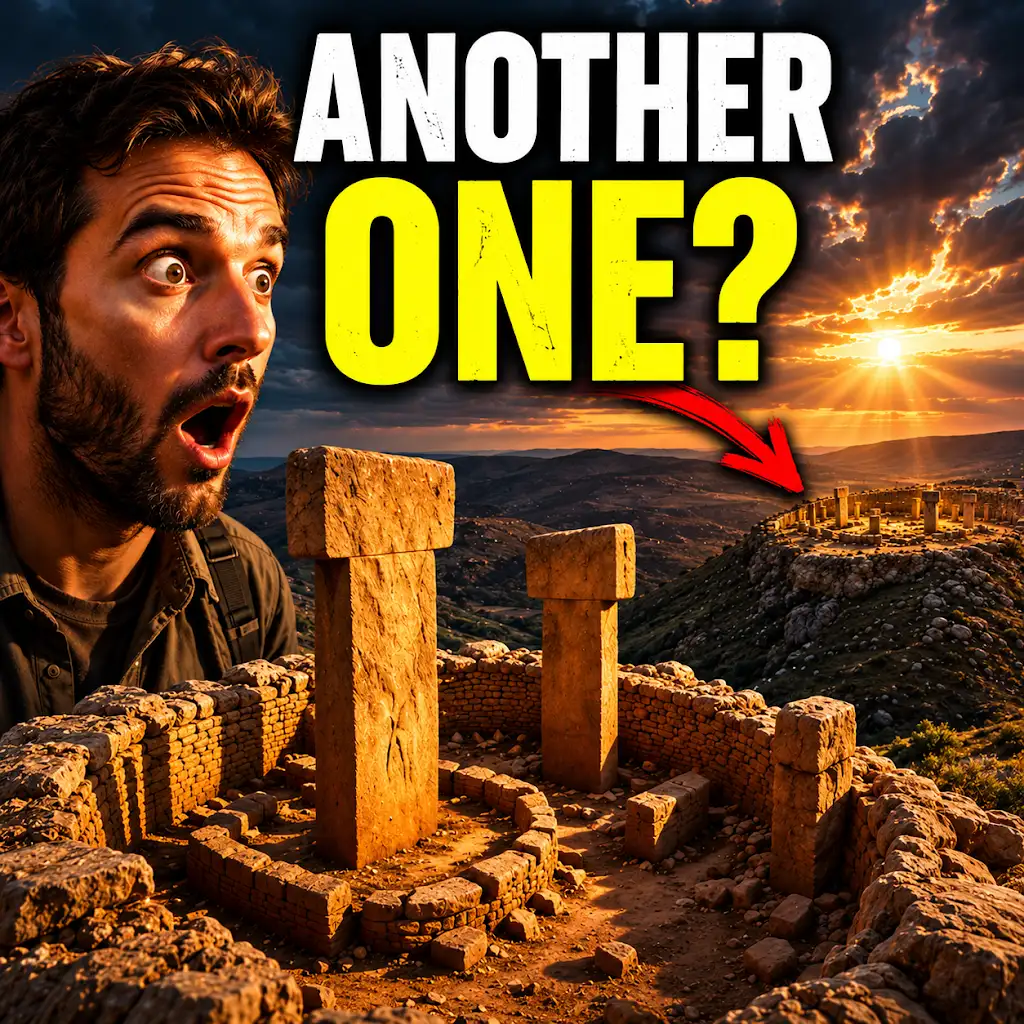
The World Beyond Göbekli Tepe Is Far Bigger Than We Thought
FAQs
What is Göbekli Tepe?
Göbekli Tepe is an archaeological site in Turkey, dating back to around 9600 BCE. It is considered to be one of the oldest known man-made structures and is believed to have been a religious site.
What is the significance of Göbekli Tepe?
Göbekli Tepe is significant because it challenges the traditional understanding of the development of human civilization. The site predates the invention of agriculture and pottery, leading researchers to reconsider the timeline of human cultural and technological development.
What was discovered at Göbekli Tepe?
Archaeologists have uncovered numerous T-shaped limestone pillars at Göbekli Tepe, some of which are adorned with intricate carvings of animals and symbols. These pillars are arranged in circular formations, suggesting a ritualistic or religious purpose for the site.
Who built Göbekli Tepe?
The builders of Göbekli Tepe are believed to have been hunter-gatherers, challenging the traditional belief that only settled, agricultural societies were capable of constructing such monumental structures.
What can we learn from Göbekli Tepe?
Studying Göbekli Tepe can provide valuable insights into the religious and social practices of ancient hunter-gatherer societies. It also prompts a reevaluation of the timeline and development of human civilization.