
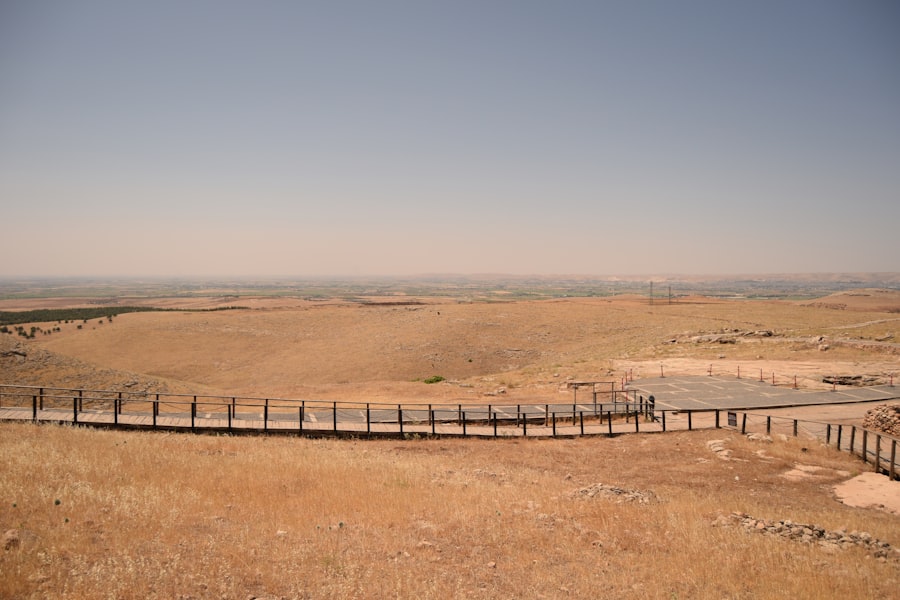
The wind, a constant companion on the Anatolian plains, whispers across the sun-baked landscape, carrying with it the dust of millennia. Here, atop a gently sloping hill, lies a site that has irrevocably altered our understanding of human history: Göbekli Tepe. For decades, archaeologists have labulated over its purpose, its creators, and the sheer ingenuity it represents. It is a place where the very foundations of civilization seem to have been laid, not by settled farmers with surplus grains, but by hunter-gatherers with motivations we are only just beginning to comprehend. To simply call it an archaeological site is insufficient; Göbekli Tepe is a profound enigma, a stone testament to a forgotten chapter of our shared human story.
The story of Göbekli Tepe’s discovery is as remarkable as the site itself. For years, the mound, known locally as “the grand temple,” had been part of an agricultural landscape. Villagers in the nearby settlement of Örencik had even reused stones from the site for construction. However, in 1963, American archaeologist Peter Benedict noted the presence of stone-lined trenches and scattered flint artifacts during a survey. While he recognized the potential significance, the prevailing archaeological theories of the time, which strongly linked monumental architecture and complex ritualism to settled agricultural societies, led him to believe the site was an abandoned Byzantine-era castle or monastery. It was a common, albeit mistaken, interpretation given the prevalent understanding of Neolithic development.
The true nature of Göbekli Tepe remained hidden for another three decades. It was not until the mid-1990s that German archaeologist Klaus Schmidt, then working on a survey of the region, became intrigued by Benedict’s earlier findings and the peculiar shape of the few visible stone structures protruding from the earth. Schmidt, a seasoned excavator with a keen eye for the unconventional, recognized that the scattered remnants hinted at something far older and more profound than a medieval ruin. He initiated a systematic excavation in 1995, and what he and his team began to uncover defied all existing paradigms.
Early Surveys and Tentative Discoveries
- Peter Benedict’s Initial Observations: Benedict’s 1963 survey, though ultimately misinterpreting the site’s age, was crucial in bringing Göbekli Tepe to the attention of the archaeological community. His keen eye for anomalies prevented it from being completely overlooked.
- The Role of Local Knowledge: The local inhabitants of Örencik had long known of the mound and its unusual stone features, inadvertently preserving parts of the site through their customary practices.
Klaus Schmidt’s Vision and the Turning Point
- Challenging Preconceptions: Schmidt was not afraid to question established archaeological dogma. He recognized the extraordinary nature of the carved megaliths and the sophisticated stonework, which did not fit the profile of hunter-gatherer societies as previously understood.
- Systematic Excavation and Revealing the Layers: Schmidt’s meticulous excavation methodology allowed for the careful uncovering of successive layers of occupation, revealing the astonishing scale and complexity of Göbekli Tepe.
Göbekli Tepe, often regarded as one of the world’s oldest known temples, has sparked significant interest among archaeologists and historians due to its intricate stone carvings and the implications it has for understanding early human civilization. For those intrigued by how ancient structures can influence modern developments, a related article discussing the thriving industrial real estate market in Mexico can provide fascinating insights into how historical contexts shape contemporary growth. You can read more about this topic in the article available at Mexico’s Industrial Real Estate Thriving.
The Monumental Architecture: Circles of Stone and Enigmatic Pillars
The most striking feature of Göbekli Tepe is its circular and oval enclosures, often referred to as “temples” or “sanctuaries.” These vast structures, measuring up to 30 meters (98 feet) in diameter, are replete with massive T-shaped limestone pillars, many weighing several tons, and some reaching heights of 5.5 meters (18 feet). Arranged in concentric rings, these pillars are not merely utilitarian construction; they are intricately carved with a menagerie of animals. Lions, boars, foxes, gazelles, vultures, snakes, and scorpions adorn their surfaces, often depicted in dynamic and almost alive poses. The sheer scale of construction, the effort required to quarry, transport, and erect these megaliths, and the artistic sophistication of the carvings are astounding, especially considering the era in which they were created.
The T-shaped pillars themselves are a subject of much debate. While some interpretations suggest they represent stylized human forms, possibly deities or ancestral spirits, others believe they are abstract representations of the cosmos or the natural world. The lack of any evidence of permanent settlement in the immediate vicinity further fuels the mystery. This was not a village or a city; it appears to have been a dedicated ritualistic or ceremonial center, a place of congregation and spiritual significance for dispersed hunter-gatherer groups. The sheer manpower and organizational skills required to construct and maintain such a site suggest a level of social complexity previously thought to be absent in pre-agricultural societies.
The T-Shaped Pillars: Symbolism and Interpretation
- Anthropomorphic Representations? The debate continues regarding whether the T-shaped pillars are stylized human figures, perhaps representing deities or important ancestors, or more abstract symbolic forms.
- Artistic Depictions of the Natural World: The detailed carvings of animals suggest a deep connection to and reverence for the natural world by the creators of Göbekli Tepe.
The Enclosures: Ritualistic Hubs of Hunter-Gatherer Life
- Concentric Ring Structures: The distinctive circular and oval layouts of the enclosures point towards organized gatherings and ceremonies.
- Evidence for Early Social Organization: The ability to mobilize labor for quarrying, transporting, and erecting these massive stones implies a sophisticated level of social organization and cooperation among hunter-gatherer bands.
The Mystery of the Creators: Hunter-Gatherers and the Dawn of Social Complexity
Göbekli Tepe predates the advent of agriculture by at least 7,000 years. It was built by peoples who were, according to prevailing theories at the time, hunter-gatherers – groups subsisting on wild plants and animals, living a nomadic or semi-nomadic existence. This fact alone is revolutionary. It challenges the long-held belief that settled agriculture was the necessary precursor to complex societies, monumental architecture, and organized religion. Instead, Göbekli Tepe suggests that it was the need for shared ritual and communal gathering that may have spurred the development of settled life and, subsequently, agriculture.
The implications are staggering. It implies that the drive for spiritual connection, for group identity, and for the construction of shared meaning might have been a more powerful engine of social change than the practical necessity of food production. The people who built Göbekli Tepe were not simply surviving; they were actively engaging with their spiritual world, creating a physical manifestation of their beliefs and their understanding of the cosmos. They possessed a sophisticated understanding of astronomy and likely had a complex social structure capable of organizing the immense labor required for construction.
Rethinking the Neolithic Revolution
- Challenging the Agricultural Imperative: Göbekli Tepe flips the traditional narrative of the Neolithic Revolution, suggesting that ritual and social cohesion may have preceded, and even driven, the adoption of agriculture.
- The Spiritual Drive for Civilization: The site suggests that the human desire for meaning and connection played a pivotal role in the development of early complex societies.
Social and Organizational Prowess
- Hunter-Gatherer Capabilities: The sheer scale of Göbekli Tepe forces a reevaluation of the organizational and logistical capabilities of hunter-gatherer societies.
- Evidence of Specialization: The existence of skilled stonemasons and artists points towards a degree of social specialization within these groups.
The Purpose of Göbekli Tepe: A Sanctuary for the Gods or a Cosmic Calendar?
The single most persistent question surrounding Göbekli Tepe is: what was its purpose? While a definitive answer remains elusive, several compelling theories have emerged. The most favored interpretation is that it served as a ritualistic or ceremonial center, a sanctuary where dispersed groups would gather for religious festivals, communal feasts, or rites of passage. The absence of habitation structures, hearths, or evidence of domestic life strongly suggests it was not a settlement in the traditional sense.
Another fascinating theory posits that Göbekli Tepe functioned as a sophisticated astronomical observatory or an early form of calendar. The alignment of some of the pillars and enclosures with celestial events, such as solstices and equinoxes, has led researchers to investigate the possibility of a deep understanding of the cosmos among its builders. The carvings of animals, some of which are nocturnal or associated with specific seasons, could have played a role in tracking celestial movements or marking the passage of time. The “vulture stone,” for instance, a relief depicting a headless human figure surrounded by birds, has been interpreted by some as representing the death cult and the observation of scavenger birds, which would have been prevalent at the time of burials.
Ritualistic Gathering and Spiritual Practices
- A Place of Congregation: The prevailing theory suggests Göbekli Tepe was a focal point for religious ceremonies and communal gatherings of various hunter-gatherer bands.
- Possible Burial Rites: Some researchers believe the site may have been integrated with funerary practices, though direct evidence of burial is scarce.
Astronomical Significance and Calendrical Observations
- Celestial Alignments: Studies have revealed potential alignments of the structures with significant astronomical events, hinting at a sophisticated understanding of the cosmos.
- Interpreting the Animal Symbolism: The animal carvings may have served as a means to track celestial cycles or mark the changing seasons.
Göbekli Tepe, often regarded as one of the world’s oldest known temples, has intrigued archaeologists and historians alike with its monumental stone structures and intricate carvings. This ancient site, located in modern-day Turkey, offers profound insights into the early human societies that built it, suggesting that complex religious practices and social organization existed long before the advent of agriculture. For those interested in exploring how ancient civilizations laid the groundwork for future societal developments, a fascinating article can be found here that delves into the implications of early human innovation and its parallels with modern advancements. You can read more about these connections in the context of human progress by visiting this article.
The End of an Era and the Site’s Mysterious Burial
| Aspect | Details |
|---|---|
| Location | Göbekli Tepe, Turkey |
| Age | Estimated to be around 11,000 years old |
| Discovery | Discovered in the 1960s, but excavation began in the 1990s |
| Significance | Considered one of the oldest known temples in the world |
| Structure | Consists of circular and rectangular enclosures with T-shaped pillars |
| Artifacts | Carvings of animals, abstract symbols, and humanoid figures |
Perhaps the most enigmatic aspect of Göbekli Tepe is not what was built, but how and why it was abandoned and deliberately buried. Around 8000 BCE, after centuries of use and expansion, the ritual enclosures began to be systematically filled in with earth and stone. This was not a gradual decay or abandonment due to a natural disaster. It was a deliberate act, an intentional entombment of a monumental sacred space. The exact reasons for this massive undertaking remain a profound mystery.
Several hypotheses attempt to explain this deliberate burial. One suggestion is that as agricultural societies began to rise in the region, the old ways of hunter-gatherer worship and gathering became obsolete or were superseded by newer belief systems. The act of burial might have been a way to symbolically lay to rest the old order, to honor and preserve the sacred space while marking a transition to a new way of life. Another possibility is that the site became too sacred or too powerful to remain exposed, and its burial was an act of ultimate reverence or protection. The intentionality of the burial suggests it was a conscious decision, a carefully orchestrated act that has preserved Göbekli Tepe in remarkable condition for millennia, allowing us a pristine glimpse into a forgotten past.
The Deliberate Entombment
- Systematic Backfilling: The evidence clearly indicates a conscious and organized effort to bury the enclosures, not an accidental collapse or abandonment.
- A Shift in Societal Norms? The burial may signify a societal or religious shift, perhaps related to the rise of agriculture and new belief systems.
Hypotheses for the Burial
- Preservation and Reverence: The act of burial could have been a profound act of respect or a method to protect the sacred site from further disturbance.
- Transition to New Beliefs: The closure of Göbekli Tepe might symbolize the passing of the old hunter-gatherer traditions with the emergence of new societal structures and belief systems.
Göbekli Tepe continues to be an active site of research and discovery. Its secrets are slowly being coaxed from the earth, revealing a more nuanced and complex narrative of humanity’s early journey. It challenges our assumptions, expands our empathy for our ancient ancestors, and reminds us that the foundations of civilization might be laid not solely on the pursuit of sustenance, but also on the potent and enduring human need for connection, meaning, and the vast, awe-inspiring universe around us. The stones of Göbekli Tepe stand as silent witnesses to a time when the spiritual realm and the earthly plane were intricately interwoven, a testament to a prehistory far richer and more sophisticated than we ever dared to imagine.

Could Humanity Remember a World That No Longer Exists?
FAQs
What is Göbekli Tepe?
Göbekli Tepe is an archaeological site in Turkey, dating back to the Neolithic period, around 9600 BCE. It is considered one of the oldest known man-made structures and is believed to have been a religious site.
Who built Göbekli Tepe?
The builders of Göbekli Tepe are believed to have been early hunter-gatherers who lived in the region. The site’s construction challenges previous assumptions about the capabilities of ancient societies and their ability to undertake large-scale building projects.
What is the significance of Göbekli Tepe?
Göbekli Tepe is significant because it provides evidence of complex social and religious structures in prehistoric societies. The site’s elaborate stone pillars and carvings suggest a sophisticated understanding of architecture and symbolism.
What was the purpose of Göbekli Tepe?
The purpose of Göbekli Tepe is still a subject of debate among archaeologists and historians. Some believe it was a religious site used for rituals and ceremonies, while others suggest it may have served as a gathering place for early societies.
How was Göbekli Tepe discovered?
Göbekli Tepe was discovered in the 1960s by researchers from the University of Chicago and the University of Istanbul. Excavations began in the 1990s, and since then, the site has yielded a wealth of information about early human societies and their cultural practices.