
The universe is a vast and dynamic place, and its celestial ballet is often punctuated by violent encounters. Among the most dramatic and revealing of these are impact craters – the indelible scars left behind when asteroids, comets, or meteoroids collide with planetary surfaces. For millennia, these pockmarked landscapes have captivated human curiosity, inspiring awe, fear, and scientific inquiry. Uncovering the mysteries of impact craters is not merely an academic pursuit; it is a journey into the history of our solar system, a quest to understand the forces that shape worlds, and a vital endeavor in assessing potential threats to our own planet. These enigmatic features, from the smallest dimple on the Moon to the colossal Chicxulub structure, hold profound secrets waiting to be unearthed.
The formation of an impact crater is an event of immense energy release, transforming the target landscape in a matter of seconds. The initial impact is a fleeting, yet incredibly powerful, moment. The kinetic energy of the impacting object, traveling at speeds often tens of kilometers per second, is instantaneously converted into heat, shock waves, and physical deformation of the target material. This process is far more complex than a simple “dent” on a surface; it involves a cascade of physical phenomena that sculpt the characteristic bowl-shaped depression.
The Initial Impact and Shock Wave Propagation
As the projectile strikes, it compresses the target material directly beneath it, generating an intensely powerful shock wave. This shock wave propagates outward through both the impactor and the target at supersonic speeds. The pressure and temperature associated with this shock can vaporize the impactor and a significant portion of the target rock. This initial phase is responsible for creating the transient cavity, a temporary depression that is often larger than the final crater.
Excavation and Ejecta Blanketing
Following the initial shock, the high-pressure zone beneath the impact site causes the ground to rebound and fracture. This excavation process blasts vast quantities of material – known as ejecta – outwards from the impact site. The trajectory and distribution of this ejecta are crucial clues to the impact’s energy and the angle of impact. Ejecta blankets can extend for hundreds or even thousands of kilometers, blanketing surrounding terrain and preserving fragments of the impactor and the original surface. The size and morphology of the ejecta particles provide insights into the shock conditions they experienced. Fine-grained dust, larger ballistic blocks, and even melted or vaporized rock can be found within these extensive deposits.
Modification and Final Crater Morphology
The transient cavity is inherently unstable. The steep walls collapse inwards, and the rebound of the deeply shocked and uplifted floor can lead to the formation of complex crater features. These include central peaks, terraced walls, and even ring structures in larger impacts. The final shape and size of the crater are a result of the interplay between the initial excavation, gravity-driven collapse, and the geological properties of the target material. For instance, craters formed in solid rock will generally have steeper walls and a more pronounced central peak than those formed in unconsolidated sediments. The presence of a volatile-rich subsurface, such as water ice, can also significantly alter the modification stage, leading to broader, shallower craters with more extensive ejecta.
The study of impact craters not only sheds light on the geological history of our planet but also offers insights into the technological advancements of ancient civilizations. For a deeper understanding of how ancient technology influenced societal structures and political control, you can explore the article on this topic at The Influence of Ancient Technology on Political Control. This connection highlights the interplay between natural events and human development throughout history.
Deciphering the Record: What Craters Tell Us About Celestial Bodies
Impact craters are not just geological scars; they are time capsules, preserving a history of bombardment that has occurred over billions of years. By studying their distribution, size, and characteristics on different celestial bodies, scientists can piece together the evolutionary paths of planets, moons, and asteroids. This cosmic census provides invaluable data for understanding planetary formation, the migration of celestial bodies, and the processes that have shaped their surfaces.
Age Dating Surfaces Through Crater Counts
One of the most fundamental applications of impact crater studies is in the geological dating of planetary surfaces. The rate at which impacts occur is not uniform throughout solar system history. Early in its formation, the solar system was a much more chaotic place, with a higher density of planetesimals and debris. As the planets formed and cleared their orbits, the impact rate gradually decreased. Therefore, the number of craters on a surface is a direct proxy for its age. Older surfaces are more heavily cratered than younger ones. This technique, known as crater counting, allows scientists to assign relative ages to different geological units and to estimate absolute ages when calibrated with radiometric dating from returned samples or other geophysical data.
Evidence of Past Water and Atmospheric Conditions
The morphology of impact craters can also reveal crucial information about the environment in which they formed. For example, craters found on Mars often exhibit features indicative of the presence of water. The ejecta blankets of some Martian craters appear to have flowed like liquid, suggesting that water or ice was present at the time of impact, allowing for much greater mobility of the ejected material. The angle of impact and the size of the crater can also constrain the atmospheric density at the time of formation. A denser atmosphere would have fragmented or slowed smaller impactors more effectively, leading to fewer, smaller craters, or craters with different ejecta patterns.
Understanding the Role of Impactors in Planetary Evolution
Impacts have played a profound role in shaping planetary evolution. Large impacts have been implicated in the formation of planetary magnetic fields, the creation of oceans, and even the delivery of organic molecules essential for the origin of life. For instance, the impact that formed the Moon is thought to have been a colossal event that significantly altered Earth’s rotation and tilt, potentially influencing the development of its seasons and climate. Studies of impact craters on icy moons like Europa and Enceladus provide evidence for subsurface oceans and tidal heating, key ingredients for potential habitability.
The Search for Past Life: Bio-signatures in Impact Structures
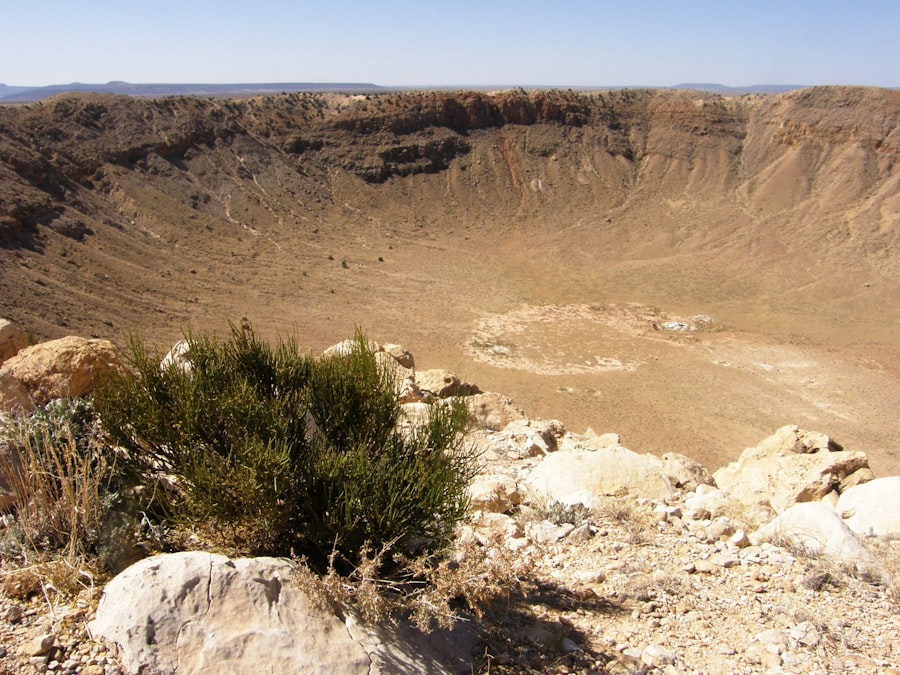
The connection between impacts and the origins of life is a captivating area of research. While impacts are destructive, they can also create environments conducive to life, at least temporarily. Furthermore, they can preserve evidence of life that may have existed prior to the impact or that emerged in the post-impact environment. Identifying these potential bio-signatures within impact structures is a key objective of astrobiology.
Hydrothermal Systems and the Genesis of Life
Large impacts can create intense heat, melting rock and forming hydrothermal systems – hot-water environments rich in dissolved minerals. Such hydrothermal systems are considered prime candidates for the origin of life on Earth, providing energy and chemical building blocks. Scientists are actively searching for evidence of ancient hydrothermal systems within impact craters on Mars and other bodies. The presence of minerals like clays and carbonates, often associated with hydrothermal activity, can be indicative of these processes.
Preserving Organic Matter and Microbial Fossils
Impact events can both destroy and preserve organic matter. The extreme heat of the impact can vaporize delicate organic molecules. However, in certain circumstances, particularly in water-rich environments, impact can rapidly bury and protect organic materials, preventing their degradation. Furthermore, impact-induced shock can, in some cases, fossilize microbial life, creating microstructures that resemble fossilized bacteria. The analysis of these structures, often employing advanced microscopy and spectroscopic techniques, is crucial for determining if they are truly biological in origin or simply mineralogical artifacts.
Panspermia and the Delivery of Life’s Building Blocks
The hypothesis of panspermia, the idea that life or its precursors can be transported between celestial bodies via impacts, also finds support in crater studies. Ejecta from impacts can carry rock fragments, including those potentially harboring microbial life, into space. Some of these fragments could eventually land on other planets, seeding them with life. Conversely, meteorites, which are fragments ejected from other bodies by impacts, are known to contain complex organic molecules, suggesting that the building blocks of life are widespread in the cosmos and can be delivered to planets through impact processes.
Threat and Opportunity: Managing the Risk of Future Impacts
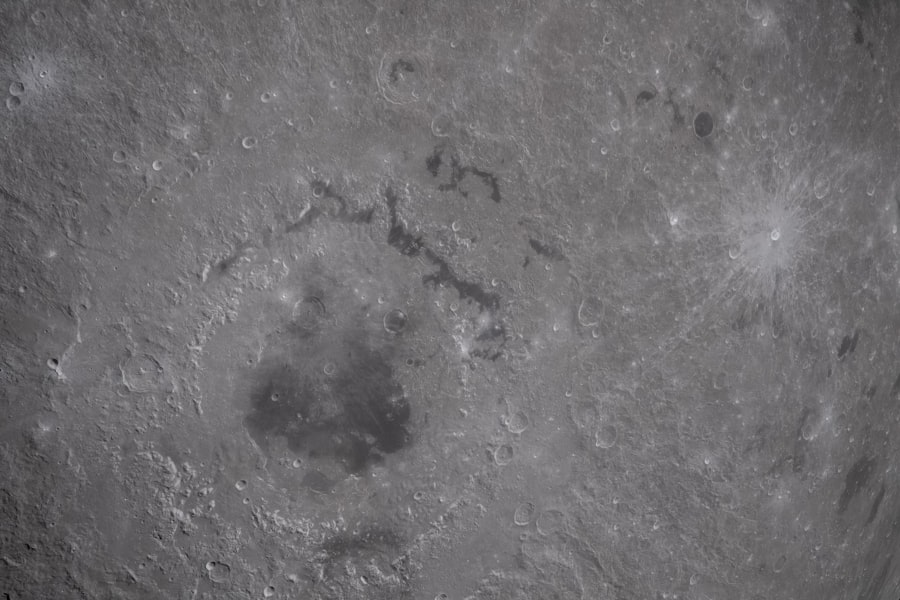
The study of impact craters is not solely a retrospective endeavor; it is also a critical tool for assessing and mitigating the risks posed by future cosmic collisions. While large, civilization-ending impacts are rare on human timescales, they are an undeniable part of the solar system’s history and will occur again in the future. Understanding these threats, along with the potential opportunities presented by extraterrestrial materials, is paramount.
Identifying and Tracking Near-Earth Objects (NEOs)
The ongoing effort to identify and track Near-Earth Objects (NEOs), asteroids and comets whose orbits bring them close to Earth, is directly informed by our understanding of impact cratering. By studying the frequency and size distribution of craters on the Moon and other bodies, astronomers can estimate the flux of potential impactors. This knowledge allows for the development of sophisticated detection programs that scan the skies for potentially hazardous objects. The meticulous mapping of crater sizes and their corresponding impactor sizes helps calibrate these detection efforts.
Planetary Defense Strategies: Mitigation and Prevention
Once a potentially hazardous NEO is identified, planetary defense strategies come into play. These range from deflection techniques, such as kinetic impactors or gravity tractors, to, in extreme cases, disruption. The design and effectiveness of these mitigation strategies are informed by our knowledge of impact physics and crater formation. For instance, understanding how much energy is required to alter an object’s trajectory necessitates a deep understanding of the momentum transfer involved in impacts.
The Potential for Resource Exploration
Beyond the threat, extraterrestrial impacts also present potential opportunities. Asteroids and comets are rich in valuable resources, including water, rare earth metals, and platinum-group elements. While currently challenging, the prospect of mining these celestial bodies for resources could revolutionize industries and provide essential materials for future space exploration and terrestrial use. The study of impact melt and ejecta can provide initial clues about the composition of impactors that might be targeted for future resource extraction.
Recent studies on impact crater investigation have revealed fascinating insights into the geological processes that shape our planet. For a deeper understanding of how manufacturing practices can be optimized in various environments, you might find it interesting to explore the article on maximizing efficiency and logistical advantages in Mexico. This piece highlights the strategic benefits of manufacturing in different regions, which can also be applied to the analysis of impact sites. You can read more about it in this article.
The Future of Crater Research: Advanced Technologies and New Discoveries
| Crater Name | Location | Diameter (km) | Age (years) |
|---|---|---|---|
| Barringer Crater | Arizona, USA | 1.2 | 50,000 |
| Chicxulub Crater | Yucatán Peninsula, Mexico | 180 | 66,000,000 |
| Manicouagan Crater | Quebec, Canada | 100 | 214,000,000 |
The study of impact craters is an evolving field, constantly being propelled forward by advancements in technology and the relentless pursuit of knowledge. New observational capabilities, sophisticated analytical techniques, and ambitious space missions are set to unlock even deeper secrets held within these cosmic scars. The ongoing exploration of our solar system promises a wealth of new data and a deeper understanding of the impact process and its profound implications.
High-Resolution Remote Sensing and Imaging
Modern space missions are equipped with increasingly sophisticated remote sensing instruments that can capture images of planetary surfaces at unprecedented resolutions. These instruments, including high-resolution cameras, radar, and LiDAR, allow scientists to map crater morphology in exquisite detail, revealing subtle features that were previously undetectable. This detailed mapping is crucial for distinguishing between impact origins and other geological processes and for precisely characterizing crater dimensions.
Advanced Geochemical and Mineralogical Analysis
On Earth, and increasingly on other celestial bodies through robotic sample return missions, advanced analytical techniques are being employed to study the chemical and mineralogical composition of impactites (rocks altered by impact). Techniques such as mass spectrometry, X-ray diffraction, and electron microscopy provide detailed information about the temperatures, pressures, and chemical transformations that occurred during impacts. This level of analysis is vital for understanding the fate of volatiles, the potential for organic synthesis, and the fidelity of bio-signatures.
Laboratory Simulations and Numerical Modeling
Complementing observational and analytical studies, sophisticated computer models are used to simulate the physics of impact events. These numerical simulations allow scientists to explore a wide range of impact scenarios, from hypervelocity collisions to the subsequent modification processes. By comparing simulation results with observational data, scientists can refine their understanding of impact dynamics, constrain physical parameters, and test hypotheses about crater formation and evolution. These simulations are crucial for predicting the outcomes of different impact scenarios and for designing effective planetary defense strategies. The future of impact crater research promises a thrilling continuation of humanity’s quest to comprehend its place in the cosmos, written in the silent, stony language of these celestial wounds.

This Crater Was Supposed to Rewrite Human History… It Didn’t
FAQs
What is an impact crater?
An impact crater is a circular depression on the surface of a planet, moon, or other solid body in the solar system, formed by the hypervelocity impact of a smaller body such as a meteorite or asteroid.
How are impact craters investigated?
Impact craters are investigated using a variety of methods including field studies, remote sensing, geophysical surveys, and laboratory analysis of samples collected from the crater site.
What can impact crater investigations tell us?
Impact crater investigations can provide valuable information about the size, velocity, and composition of the impacting body, as well as the geological and environmental effects of the impact.
What are some famous impact craters on Earth?
Some famous impact craters on Earth include the Chicxulub crater in Mexico, which is associated with the extinction of the dinosaurs, and the Barringer crater in Arizona, which is one of the best-preserved impact craters on Earth.
Why are impact crater investigations important?
Impact crater investigations are important because they can help us understand the history of impacts on Earth and other planetary bodies, as well as the potential hazards and risks associated with future impacts.