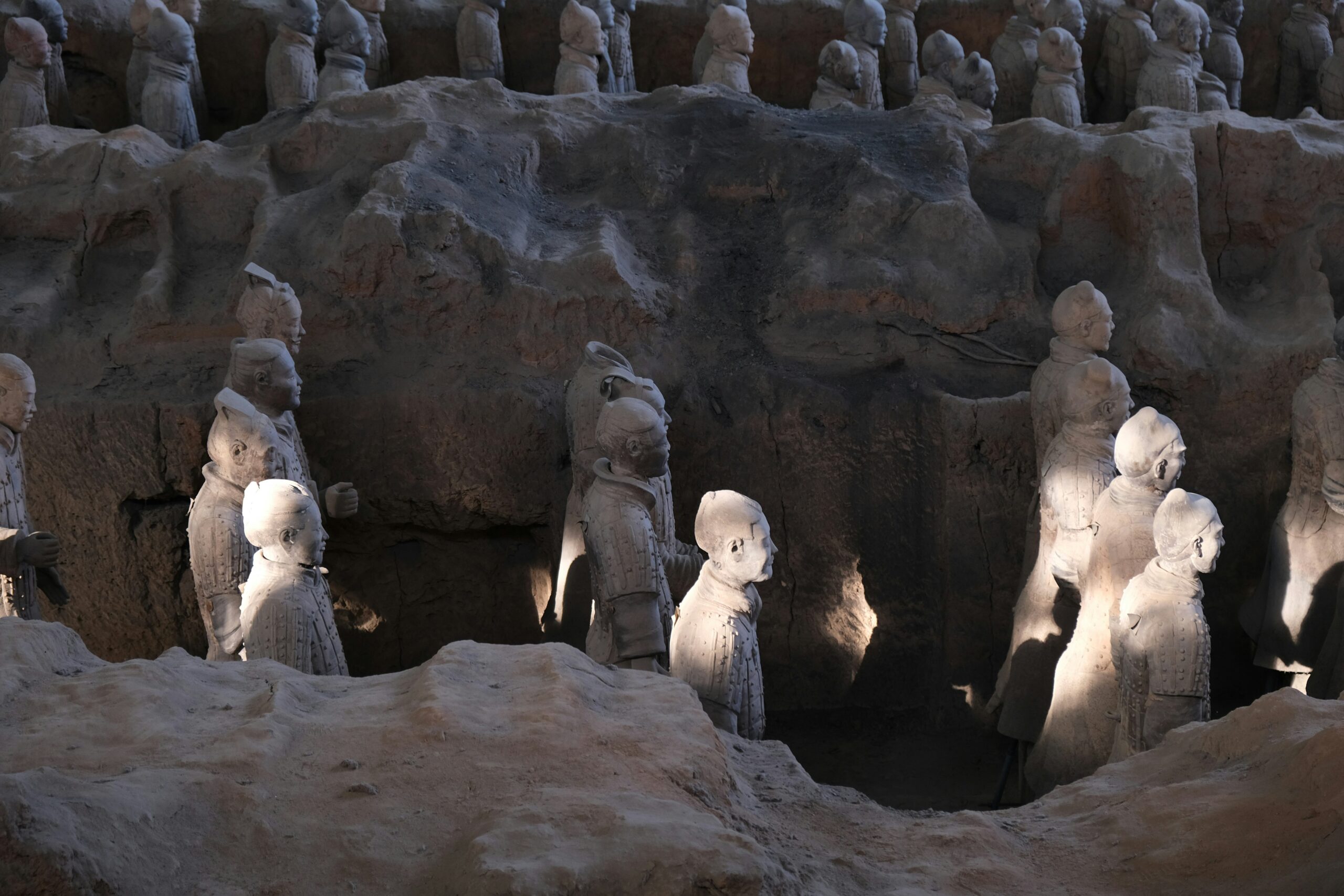
The flickering images on screen drew the viewer into a world long lost to time, a realm of towering pyramids, enigmatic hieroglyphs, and civilizations that shaped the very foundations of human history. “Uncovering the Mysteries of the Ancient World: A Fascinating Documentary” is not merely a viewing experience; it is a portal, an immersive journey that skillfully unravels the intricate tapestries of our earliest ancestors, prompting awe and a profound sense of connection to the past. This documentary doesn’t shy away from the grand narratives, but it truly excels in its ability to illuminate the forgotten corners, the subtle details that breathe life into the stones and artifacts left behind. It is a testament to the enduring human spirit of exploration and the insatiable curiosity that drives us to understand where we came from.
The allure of the ancient world lies in its sheer scale and the profound sense of mystery that shrouds its most iconic achievements. This documentary masterfully captures that inherent fascination, guiding the audience through a curated selection of civilizations that, despite their eventual decline, left an indelible mark on the human story. From the fertile plains of Mesopotamia to the windswept sands of Egypt, and the sun-drenched shores of Greece and Rome, the film revisits the cradles of civilization, offering fresh perspectives on their triumphs and their eventual enigmas. It’s a journey that begins not just with dates and rulers, but with the very essence of what it meant to be human in these nascent societies.
Mesopotamia: The Cradle of Civilization’s Cradle
The documentary’s exploration of Mesopotamia is particularly poignant, focusing on the Tigris and Euphrates rivers as the lifeblood of this groundbreaking region. It delves into the development of the first cities, like Uruk and Ur, showcasing how the complex organizational structures required for large-scale irrigation and agriculture necessitated new forms of governance and social stratification.
The Birth of Writing: Cuneiform’s Enduring Legacy
A significant portion of the Mesopotamian segment is dedicated to the invention of cuneiform. The film visually demonstrates the painstaking process of impressing wedge-shaped marks onto wet clay tablets, explaining how this revolutionary system of writing allowed for record-keeping, the codification of laws, and the transmission of knowledge across generations. It highlights the sheer ingenuity of a people who, out of necessity, devised a method to capture language and thought. The documentary doesn’t just show cuneiform; it interprets it, revealing insights into their economic systems, their religious beliefs, and even their administrative dealings. The sheer volume of surviving tablets, many still being deciphered today, serves as a powerful testament to their communication prowess.
The Ziggurat’s Silent Watch: Religion and Power
The towering ziggurats, the stepped pyramid-like structures of Mesopotamia, are presented not just as architectural marvels but as potent symbols of the symbiotic relationship between religious devotion and temporal power. The film explores the rituals performed within their precincts and the central role of the priesthood in Mesopotamian society. It posits that these structures were not merely places of worship but also served as observatories, administrative centers, and even granaries, underscoring their multifaceted significance. The sheer scale of these constructions, built without modern machinery, speaks volumes about the organized labor and deep-seated beliefs that characterized these ancient cultures.
Egypt: Land of the Pharaohs and Eternal Life
The Egyptian segment of the documentary is undoubtedly a visual feast, transporting viewers to a land defined by the Nile’s cyclical bounty and the enduring quest for eternal life. The iconic pyramids, the enigmatic Sphinx, and the richly decorated tombs are brought to life with stunning cinematography and insightful commentary.
The Pyramids: Engineering Marvels and Royal Tombs
The construction of the pyramids is explored in detail, challenging popular misconceptions and delving into the sophisticated engineering and logistical prowess of the ancient Egyptians. The film meticulously examines the methods used to quarry, transport, and erect massive stone blocks, highlighting the intricate ramp systems and the sheer manpower involved. It debunks the myth of slave labor as the primary workforce, presenting evidence of paid laborers and skilled artisans who dedicated their lives to these colossal undertakings. The documentary also explores the pyramid’s symbolism, linking their triangular form to the sun’s rays and the pharaoh’s ascent to the afterlife.
Hieroglyphs: A Visual Language of Gods and Kings
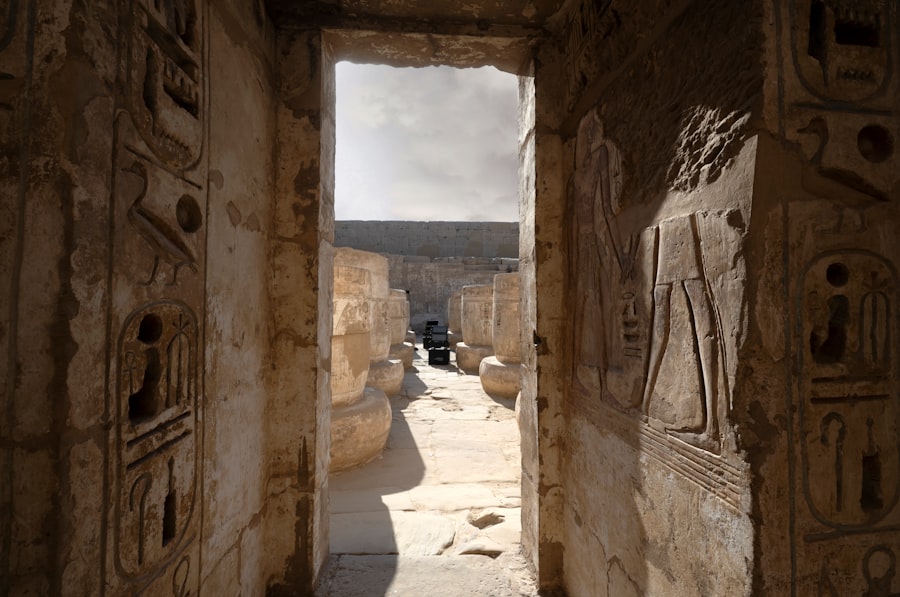
The vibrant and intricate hieroglyphs that adorn the tombs and temples of Egypt are presented as more than just decorative elements; they are a sophisticated visual language that unlocked the secrets of Egyptian history, religion, and daily life. The film illustrates the painstaking process of decipherment, paying homage to scholars like Jean-François Champollion, and highlights how these symbols served as a powerful tool for religious and political propaganda, ensuring the pharaoh’s legacy and the continuity of their divine rule. The documentary showcases how even the seemingly simple depictions of animals and objects held profound symbolic meaning, woven into a complex narrative of cosmic order and divine intervention.
The Nile’s Embrace: Lifeblood of a Civilization
The critical importance of the Nile River is a recurring theme. The documentary emphasizes how its predictable annual floods not only provided fertile land for agriculture, sustaining a large population, but also shaped the Egyptians’ worldview, their calendar, and their concept of cyclical renewal. The film illustrates how the river was also a vital transportation artery, facilitating trade and the movement of goods and people across vast distances, connecting disparate communities and fostering a unified Egyptian identity.
For those interested in the complexities of historical trade agreements and their impact on ancient economies, a fascinating article can be found at this link: The Evolution of NAFTA and USMCA. This piece explores how trade agreements have shaped economic landscapes over time, drawing parallels to the trade practices of ancient civilizations. Understanding these connections can provide valuable insights into the development of commerce and diplomacy throughout history.
The Aegean Sea: The Dawn of Western Thought
The documentary then shifts its gaze westward, to the sun-drenched islands and coastlines of the Aegean Sea, where the seeds of Western philosophy, democracy, and art were sown. This section of the film is a celebration of intellectual and artistic innovation, showcasing societies that, while often fragmented, laid the groundwork for much of what we consider modern civilization.
Minoan Crete: A Flourishing Bronze Age Society
The exploration begins with the enigmatic Minoan civilization, a Bronze Age culture that thrived on the island of Crete. The film showcases the vibrant frescoes and elaborate palaces, like Knossos, painting a picture of a sophisticated society with a maritime focus and a unique artistic sensibility.
The Labyrinth and the Myth: Beyond the Walls of Knossos
The documentary delves into the myths surrounding the labyrinth and the Minotaur, suggesting that these legends might be rooted in the complex architecture of Minoan palaces and their bull-leaping rituals. It explores the evidence of their extensive trade networks, their advanced pottery, and the intriguing Linear A script, which remains largely undeciphered, adding another layer of mystery to this fascinating civilization. The film uses archaeological evidence to reconstruct their daily lives, their religious practices, and their impressive seafaring capabilities.
Bull-Leaping: Ritual, Sport, or Both?
The iconic image of bull-leaping is examined in detail. The documentary presents various theories, from it being a dangerous religious ritual performed to appease deities associated with strength and fertility, to a highly skilled sport that demonstrated agility and courage. The vibrant depictions in the frescoes leave no doubt about its central importance in Minoan culture, and the film attempts to unravel its deeper meaning.
Mycenaean Greece: Warriors and Traders
Following the Minoans, the documentary turns to the Mycenaeans, a mainland Greek civilization that conquered Crete and established their own powerful kingdoms. The film highlights their warrior ethos, their monumental architecture, like the Lion Gate at Mycenae, and their early form of Greek writing, Linear B.
The Warrior Kings of Mycenae
The documentary reconstructs the lives of Mycenaean kings and warriors, emphasizing the evidence of extensive fortifications, weapons, and burial practices that suggest a society accustomed to conflict and conquest. It explores the vast wealth discovered in their tombs, indicating a highly organized and hierarchical society with a significant degree of control over trade routes. The film connects archaeological findings to Homeric epics, suggesting that these tales might hold kernels of historical truth about this warrior culture.
Linear B: Unlocking the Mycenaean Past
The decipherment of Linear B by Michael Ventris is celebrated as a monumental achievement, revealing that the Mycenaean dialect was an early form of Greek. The film explains how these clay tablets, primarily palace inventories and administrative records, provided invaluable insights into their economy, their social structure, and their administrative systems, offering a glimpse into the daily workings of their palaces.
The Colossal Cities of the Roman Empire
No exploration of the ancient world would be complete without a detailed examination of the Roman Empire, a civilization that, through its military might, legal system, and engineering prowess, left an enduring legacy on the Western world. The documentary emphasizes the sheer scale and organization that defined Rome.
The Grandeur of Rome: Engineering and Infrastructure
The film showcases the Romans’ unparalleled engineering achievements, from their aqueducts that supplied fresh water to sprawling cities, to their vast network of roads that facilitated communication and trade. The documentary highlights the ingenuity behind their architectural innovations, such as concrete and the arch, which allowed them to build on an unprecedented scale.
Aqueducts: Lifelines of the Empire
The intricate systems of aqueducts are presented as one of the most crucial and enduring legacies of Roman engineering. The documentary illustrates how these feats of hydraulics brought clean water to millions of people, enabling the growth of cities and improving public health. The scale and precision of their construction, spanning vast distances and navigating challenging terrain, are a testament to their advanced understanding of gravity and fluid dynamics.
Roman Roads: The Arteries of an Empire
The vast and meticulously constructed Roman road network is depicted as the backbone of the empire. The film explains how these durable roads facilitated rapid troop movement, efficient trade, and the dissemination of information, effectively uniting a vast and diverse territory. The documentary emphasizes the strategic planning and engineering expertise that went into their creation, ensuring their longevity and their crucial role in maintaining imperial control.
The Pantheon: A Triumph of Architecture and Engineering
The Pantheon in Rome is presented as a masterpiece of Roman architecture and a testament to their innovative use of concrete and the dome. The documentary explores the mathematical precision and engineering ingenuity required to create such a vast, unsupported dome, highlighting its enduring influence on subsequent architectural designs. The oculus, the opening at the apex, is discussed not only for its structural purpose but also for its symbolic significance, connecting the earthly realm to the heavens and bathing the interior in natural light.
Public Baths: Social Hubs and Centers of Hygiene
The Roman public baths are portrayed as much more than just places for personal hygiene; they were vibrant social centers where citizens from all walks of life mingled, conducted business, and engaged in intellectual discourse. The documentary explores the complex heating systems, the various pools and rooms, and the integral role these institutions played in Roman daily life and social cohesion.
Pompeii and Herculaneum: Frozen in Time
The tragic eruption of Mount Vesuvius and the subsequent preservation of Pompeii and Herculaneum offer a unique and poignant window into Roman daily life. The film uses advanced imaging techniques and archaeological discoveries to reconstruct the lives of the inhabitants, revealing intimate details of their homes, their businesses, and their final moments.
Daily Life Revealed: From Bakeries to Brothels
The uncovered buildings and artifacts provide an unparalleled glimpse into the mundane and the extraordinary aspects of Roman existence. The documentary showcases everything from well-preserved bakeries with their ovens still intact, to intricate mosaics that adorned wealthy villas, and even the poignant graffiti scrawled on walls, offering a raw and unfiltered view of Roman society.
The Human Element: Casts of the Victims
The plaster casts of the victims of Vesuvius are presented with a somber respect, reminding viewers of the real human cost of the disaster. The documentary uses these poignant remnants to evoke empathy and to underscore the fragility of life, even in the heart of a seemingly unassailable empire.
The Enigmas of the Pre-Columbian Americas

The documentary doesn’t limit its scope to the Old World. It bravely ventures across the Atlantic to explore the remarkable civilizations that flourished in the Americas long before European arrival, highlighting their distinct achievements and the lingering questions surrounding their rise and fall.
The Maya: Architects of Time and the Cosmos
The Maya civilization, with its sophisticated calendar, intricate writing system, and monumental architecture, is presented as a testament to human ingenuity in a different part of the world. The film explores their advanced astronomical observations and their complex religious beliefs, which were deeply intertwined with their understanding of time and the cosmos.
The Maya Calendar: A Celestial Masterpiece
The Maya calendar system, with its interlocking cycles and its remarkable accuracy, is a central focus. The documentary explains how it was used for religious prophecy, agricultural planning, and the recording of historical events. It highlights the Maya’s profound understanding of celestial movements and their ability to integrate this knowledge into their societal structure.
The Rise and Fall: Unraveling the Mystery
The documentary grapples with the perplexing question of the Maya’s Classic Period collapse. It explores various theories, from environmental degradation and warfare to social unrest, presenting evidence that suggests a complex interplay of factors contributed to the abandonment of their magnificent cities. The film emphasizes that the Maya did not disappear; rather, their civilization underwent a significant transformation and continued in different forms.
The Inca: Empire Builders of the Andes
The Inca Empire, the largest empire in pre-Columbian America, is showcased for its remarkable administrative capabilities, its sophisticated engineering, and its mastery of the challenging Andean landscape. The film emphasizes their unparalleled road system and their adeptness at managing a vast and diverse population.
Machu Picchu: The City in the Clouds
Machu Picchu, the iconic Inca citadel, is presented as a marvel of engineering and a symbol of their ingenuity. The documentary explores its unique location, its intricate stonework, and its likely purpose as a royal estate or religious sanctuary. The film highlights the advanced agricultural terraces and the sophisticated water management systems that allowed for the sustenance of this mountaintop city.
Quipu: The Knotty Language of Record
The Inca’s unique system of record-keeping, the quipu, is explored in detail. The documentary explains how these knotted cords, with varying colors and knot types, were used to represent numerical data, historical accounts, and perhaps even more complex information. The film acknowledges that the full decipherment of quipu remains an ongoing challenge, adding to the mystique of this advanced civilization.
If you’re fascinated by the mysteries of the ancient world, you might find an intriguing article that delves into the secrets of forgotten technologies. This piece explores how ancient civilizations may have possessed advanced knowledge that has been lost to time. You can read more about these fascinating discoveries in the article on forbidden ancient technology, which complements the themes presented in the documentary.
The Enduring Power of Ancient Artifacts
| Documentary Title | Release Year | Duration | Director |
|---|---|---|---|
| Ancient Egypt: Life and Death in the Valley of the Kings | 2013 | 90 minutes | James Tovell |
| Ancient Greece: The Greatest Show on Earth | 2016 | 120 minutes | Michael Scott |
| Rome: Rise and Fall of an Empire | 2006 | 60 minutes per episode | Various |
Throughout the documentary, the artifacts themselves become storytellers, whispering tales of forgotten people and lost worlds. From the smallest shard of pottery to the grandest temple, these tangible links to the past are presented not just as objects of historical interest, but as windows into the human experience.
Interpreting the Past: Archaeology as Detective Work
The film emphasizes the crucial role of archaeology in piecing together the fragments of ancient civilizations. It showcases the meticulous work of archaeologists, from careful excavation to the scientific analysis of materials, highlighting how each discovery contributes to our understanding of the past. The documentary illustrates the process of interpreting meaning from seemingly disparate pieces of evidence.
The Art of Reconstruction: Bringing the Past to Life
The documentary utilizes cutting-edge technology, including 3D modeling and virtual reality, to reconstruct ancient sites and artifacts. This allows viewers to experience these lost worlds in a way that was previously unimaginable, bringing the scale and grandeur of ancient cities to life and offering a more immersive understanding of their inhabitants’ lives.
The Continual Unraveling: New Discoveries and Lingering Questions
The film underscores that the study of the ancient world is an ongoing process. New discoveries are constantly being made, challenging existing theories and opening up new avenues of inquiry. The documentary concludes by emphasizing that while much has been learned, the ancient world still holds many secrets, inviting viewers to remain curious and to anticipate the future revelations that will undoubtedly continue to emerge. The very act of watching this documentary is an invitation to join in this grand, ongoing quest for knowledge.
“Uncovering the Mysteries of the Ancient World: A Fascinating Documentary” is more than just an educational program; it is an inspiration. It reminds viewers of the incredible achievements of our ancestors, the enduring power of human ingenuity, and the profound connections that bind us to those who came before. It is a testament to the fact that the echoes of the ancient world continue to resonate in our present, shaping our understanding of ourselves and our place in the grand sweep of human history. The journey through time offered by this documentary leaves the viewer with a profound sense of wonder and an enduring appreciation for the rich and complex tapestry of our shared human past.

When the Mediterranean Became a Desert | The Messinian Salinity Crisis Explained
FAQs
What is the ancient world documentary about?
The ancient world documentary explores various aspects of ancient civilizations, including their culture, technology, architecture, and historical events. It provides a comprehensive look at the ancient world and how it has shaped the modern world.
Which ancient civilizations are covered in the documentary?
The documentary covers a wide range of ancient civilizations, including but not limited to the Egyptians, Greeks, Romans, Mesopotamians, Chinese, and Mayans. It delves into their unique contributions to art, science, religion, and governance.
Who are the experts featured in the documentary?
The documentary features renowned historians, archaeologists, and scholars who specialize in the study of ancient civilizations. These experts provide valuable insights and analysis based on their research and expertise in the field.
What makes this documentary unique compared to others about the ancient world?
This documentary stands out for its in-depth exploration of lesser-known ancient civilizations and its focus on uncovering new discoveries and perspectives. It also utilizes advanced technology and visual storytelling to bring the ancient world to life.
Where can I watch the ancient world documentary?
The documentary may be available for streaming on various platforms such as streaming services, educational websites, or through purchase as a DVD or digital download. Check with your local library or online retailers for availability.