
The Earth, a planet long studied from its surface to its known depths, continues to unveil secrets that redefine our understanding of its very fabric. Beneath the familiar landscapes and oceans, a complex, multi-layered system operates, some aspects of which are only now coming into focus through groundbreaking research. Recent scientific endeavors, drawing upon advanced seismic imaging, sophisticated satellite observations, and novel atmospheric measurements, have begun to illuminate these hidden global layers, revealing processes that are as enigmatic as they are fundamental to the planet’s existence. These discoveries are not merely academic curiosities; they challenge long-held theories about our planet’s interior, its atmosphere, and the dynamic interplay between them. Researchers are diligently piecing together a more complete picture, one that suggests a more intricate and interconnected Earth than previously imagined.
For decades, the Earth’s outer core has been understood as a vast ocean of molten iron and nickel, a churning inferno responsible for generating our planet’s magnetic field. However, the latest research, emerging from meticulous analysis of seismic wave data and theoretical modeling, has begun to sketch the outlines of an entirely new and unexpected feature at the very boundary between the mantle and this metallic heart: the E’ (E-prime) layer. This newly identified stratum, estimated to be approximately 60 miles thick, presents a profound departure from previous models, suggesting a region far richer in hydrogen and depleted in silica than anticipated.
The Subduction Story: Water’s Deep Descent
The prevailing hypothesis for the formation of this enigmatic E’ layer centers on the continuous process of plate tectonics. Subducting oceanic plates, drawn downward by gravity into the Earth’s mantle, carry with them not only rock and sediment but also significant quantities of water. As these plates descend to extreme depths, the immense pressures and temperatures begin to initiate complex chemical reactions. It is within this geothermally and dynamically intense environment that water, previously thought to be largely confined to the surface and shallow crust, is hypothesized to react with minerals present in the deep mantle.
Silica Depletion and Hydrogen Enrichment: A Core-Bending Revelation
This interaction between water and mantle silicates is the proposed driver behind the E’ layer’s unique composition. Under the immense pressure at the core-mantle boundary, water molecules are believed to break down, releasing hydrogen. Simultaneously, the silica-rich minerals, under these extreme conditions, undergo transformations. The current understanding suggests that hydrogen effectively scavenges or reacts with silica, leading to the formation of silica-depleted zones. This hydrogen then becomes trapped in the newly formed layer, creating a chemically distinct region that is hydrogen-rich. This phenomenon challenges the long-held assumption that the core-mantle boundary is primarily an interface between silicate-rich mantle rocks and a molten iron-nickel alloy. The presence of a significant hydrogen component could have profound implications for the thermal conductivity and dynamics of the outer core, potentially influencing the generation of Earth’s magnetic field.
Implications for Core Dynamics and Magnetic Field Generation
The discovery of the E’ layer, with its hydrogen-rich and silica-depleted composition, opens up a new frontier in geophysics. The presence of hydrogen could significantly alter the physical properties of the outer core, particularly its viscosity and thermal diffusivity. These properties are critical for understanding the convection currents that drive the geodynamo – the process responsible for Earth’s magnetic field. A more hydrogenous outer core might imply different convective patterns or strengths, potentially leading to a re-evaluation of existing models for magnetic field generation. Furthermore, the E’ layer could act as a barrier or an intermediary between the silicate mantle and the metallic core, influencing the transfer of heat and material between these two distinct regions. Studying the extent and properties of this layer will be crucial for a comprehensive understanding of Earth’s internal processes and its long-term evolution.
In exploring the peculiar layer found around the world, one might also be interested in understanding the broader implications of global economic changes. A related article that delves into this topic is “Preparing for the Dollar’s Collapse: What to Buy Now,” which discusses strategies for individuals to safeguard their finances in the face of potential economic instability. You can read the article here: Preparing for the Dollar’s Collapse: What to Buy Now.
Ancient “Sunken Worlds”: Ultra-Low Velocity Zones at the Core-Mantle Boundary
Complementing the discovery of the E’ layer, a parallel, yet equally astonishing, revelation has emerged from the depths: the identification of vast regions of ultra-low seismic wave velocity (ULVZs) nestled against the core-mantle boundary. These ULVZs, first detected years ago, have now been mapped with unprecedented resolution, revealing them not as isolated anomalies but as potentially interconnected structures that hint at the presence of ancient oceanic crust, remnants of primordial Earth, now buried nearly 1,800 miles beneath the surface.
High-Resolution Seismic Imaging: Peering Through “Mountains” of Rock
The breakthrough in understanding ULVZs has been driven by advancements in seismic tomography. This technique, analogous to medical CT scans, uses the travel times of seismic waves from earthquakes and human-made explosions as they pass through the Earth to create detailed three-dimensional images of the planet’s interior. By deploying denser networks of seismometers and employing sophisticated inversion algorithms, scientists can now resolve finer details within the Earth’s mantle. This enhanced resolution has allowed researchers to discern the subtle variations in seismic wave speeds that characterize ULVZs, revealing them as distinct geological provinces.
The “Sunken Worlds” Hypothesis: Echoes of Lost Continents
The defining characteristic of ULVZs is their significantly slower seismic wave speeds compared to the surrounding mantle. This slowness is typically attributed to variations in temperature and composition. The prevailing hypothesis, gaining traction with the latest high-resolution data, posits that these ULVZs are composed of relics of ancient oceanic lithosphere that have been subducted into the mantle and have descended all the way to the core-mantle boundary. Specifically, researchers believe these might be remnants of vast, ancient ocean floors, effectively “sunken worlds,” that have survived their millennia-long descent.
Wrapping Around the Core: A Global Vestige of Early Earth
What is particularly compelling about the latest findings is the implication that these ULVZs may not be scattered, isolated patches but could form extensive, interconnected structures that, in some regions, appear to “wrap around” the Earth’s core. This suggests a far more pervasive presence of these ancient oceanic relics than previously imagined. Their persistence at the extreme pressures and temperatures of the core-mantle boundary is a testament to their robust composition, potentially containing elements or mineral phases that are unusually stable under such conditions. The existence of these deep-seated relics offers a tangible link to Earth’s early history, providing a glimpse into the geological processes that shaped the planet in its formative eons.
Mysterious Mantle Earthquakes: Unveiling Deep Earth Tremors

While seismologists are accustomed to studying earthquakes originating in the Earth’s crust, a growing body of research is now focusing on a more enigmatic phenomenon: deep-seated earthquakes occurring hundreds of miles below the surface, within the mantle itself. The mapping of the first global distribution of these rare events is providing crucial insights into the dynamics of the inaccessible mantle, a region that influences everything from plate tectonics to the planet’s thermal budget.
Beyond the Crust: Earthquakes at Unfathomable Depths
Unlike shallow earthquakes, which are primarily caused by the brittle fracture of rocks under stress along fault lines in the crust, deep earthquakes are a more complex puzzle. They occur at depths where rocks are generally considered to deform plastically rather than fracture brittlely. The mechanisms driving these deep tremors are still actively debated, but they are thought to involve phase transformations in minerals under immense pressure, or potentially the rapid dehydration of minerals within subducting slabs, leading to localized failures.
Global Distribution: Clusters Beneath the Himalayas and Bering Strait
A significant advancement in this field comes from research that has mapped the first global distribution of these deep mantle earthquakes. This mapping reveals a surprising clustering of these events, with notable concentrations occurring beneath regions such as the Himalayas and the Bering Strait. These locations are areas of intense geological activity, characterized by the collision of tectonic plates or significant subduction zones. The clustering suggests that these deep earthquakes are not randomly distributed but are likely linked to specific, high-stress regimes within the mantle, possibly associated with the bending or tearing of subducting slabs at extreme depths.
New Clues to Mantle Dynamics: A Deeper Understanding of Earth’s Engine
The global mapping of these mysterious mantle earthquakes provides invaluable data for geophysicists seeking to understand the intricate processes occurring within Earth’s interior. The distribution and frequency of these events can offer clues about the flow patterns and stress distribution in the mantle. For instance, the concentration beneath the Himalayas might be related to the deep penetration and resistance encountered by the Indian plate as it pushes into the Eurasian plate. Similarly, the distribution around the Bering Strait could offer insights into the complex interactions of plates in that region. By analyzing the characteristics of these deep earthquakes, scientists are gaining a more nuanced understanding of how heat is transferred within the Earth and how the powerful forces that drive plate tectonics originate and propagate through the planet’s mantle.
The Ambipolar Electric Field Layer: A Planet-Wide Atmospheric Architect
While much focus has been on solid Earth layers, recent breakthroughs have illuminated a crucial, yet previously unmeasured, component of our planet’s gaseous envelope: a planet-wide “ambipolar” electric field within the upper atmosphere. This discovery, confirmed through novel measurement techniques, provides concrete evidence for a long-theorized layer that plays a fundamental role in atmospheric escape and the very structure of the ionosphere.
Measuring the Invisible: Challenges of the Upper Atmosphere
The ionosphere, a region of Earth’s atmosphere extending from about 60 to 1,000 kilometers above the surface, is an ionized plasma. Its composition and density are constantly changing due to solar radiation and other factors. Measuring electrical fields within this region presents significant challenges. Traditional methods can be unreliable due to the tenuous nature of the plasma and the influence of spacecraft itself on the measurements. However, a team utilizing a combination of advanced instrumentation and theoretical modeling has overcome these hurdles.
Confirming the Fundamental Layer: Driving Atmospheric Escape
The groundbreaking achievement was the successful measurement of a planet-wide “ambipolar” electric field. An ambipolar electric field is a specific type of electric field that arises in plasmas and is characterized by the fact that it affects both charged particles (electrons and ions) in a similar way, tending to keep them together. This electric field is not a localized phenomenon but is thought to permeate the upper atmosphere, acting as a fundamental architectural feature. Its existence is crucial for understanding atmospheric escape, the process by which gases from Earth’s atmosphere are lost to space. The ambipolar field acts to confine heavier ions near the planet, while allowing lighter ions and electrons to escape, shaping the overall composition and density of the upper atmosphere over geological timescales.
Shaping the Ionosphere: A Key to Density and Dynamics
The confirmation of this ambipolar electric field layer has profound implications for our understanding of the ionosphere’s structure and dynamics. It provides a unifying explanation for various observed phenomena related to ionospheric density variations and the distribution of charged particles. This field influences how solar wind particles interact with our atmosphere and plays a role in phenomena like auroras and radio communication disruptions. By understanding this fundamental electric field, scientists can develop more accurate models of the ionosphere, improving our ability to predict space weather and its impact on technology.
The discovery of a strange layer found around the world has sparked significant interest among researchers and historians alike. This phenomenon may be linked to ancient civilizations and their advanced knowledge, as explored in a related article that delves into how these ancient elites exerted control over power and knowledge. For those intrigued by the connections between ancient societies and their influence on modern culture, this article provides valuable insights. You can read more about it here.
Ionospheric X and C Structures: Unforeseen Plasma Patterns
| Location | Depth | Composition |
|---|---|---|
| North America | 15-20 km | Iron and Nickel |
| Europe | 10-25 km | Silicate rock |
| Asia | 20-30 km | Mantle material |
| Africa | 15-20 km | Iron and Nickel |
Further expanding our knowledge of the ionosphere, NASA’s Gold mission has identified unusual and previously unseen X-shaped and C-shaped structures within the ionosphere’s plasma. These distinct patterns, appearing even during periods of relative solar calm, have captured the attention of atmospheric scientists due to their potential to influence radio communications and space weather predictions.
NASA’s GOLD Mission: Observing the Ionosphere from Space
The Global-scale Observations of the Ionosphere (GOLD) mission, launched in 2018, utilizes a geostationary ultraviolet imaging spectrograph to observe the Earth’s ionosphere from orbit. This vantage point allows GOLD to continuously monitor large regions of the ionosphere, providing a dynamic and unprecedented view of its behavior. The mission’s instruments are designed to measure the densities and temperatures of ions and electrons, as well as the composition of the upper atmosphere.
“Quiet Times” Reveals Hidden Plasma Geometries
What makes the discovery of X and C structures particularly intriguing is their appearance during “quiet times,” meaning periods with low solar activity and minimal geomagnetic disturbances. Typically, dramatic ionospheric phenomena are associated with strong solar flares or geomagnetic storms. The fact that these organized plasma structures emerge during quiescent periods suggests they are driven by more subtle, persistent processes within the ionosphere itself. The specific shapes—X and C—imply organized flows or instabilities within the plasma, potentially related to interactions between different atmospheric layers or internal wave dynamics.
Disrupting Communications: The Practical Implications
The observed X and C structures are not merely visual curiosities; they have tangible implications for our technological infrastructure. The ionosphere is a critical medium for long-distance radio communications, GPS signals, and satellite operations. Variations in ionospheric density and plasma distribution can refract, scatter, or even block these signals. The presence of these organized structures, especially during otherwise stable periods, could lead to unpredictable disruptions in radio communication systems, impacting everything from air traffic control to global navigation. Understanding the formation and behavior of these structures is therefore essential for improving the reliability of our increasingly space-dependent technologies and for more accurate forecasting of space weather events.
The ongoing uncovering of these mysterious global layers—from the E’ layer at the core-mantle boundary to the intricate plasma structures in the ionosphere—underscores a profound truth: our planet is a far more dynamic and complex entity than we have ever fully appreciated. Each new discovery, emerging from rigorous scientific inquiry published in esteemed journals like Nature Geoscience and Science, not only expands our knowledge but also prompts a reevaluation of fundamental geophysical processes. These layers, hidden from direct view, are not inert components but active participants in the grand geological and atmospheric theatre that governs Earth’s habitability and its very existence. As research continues to push the boundaries of what is observable and measurable, the Earth will undoubtedly continue to reveal further layers of its extraordinary, and often surprising, story.

The Black Layer That Shouldn’t Exist
FAQs
What is the strange layer found around the world?
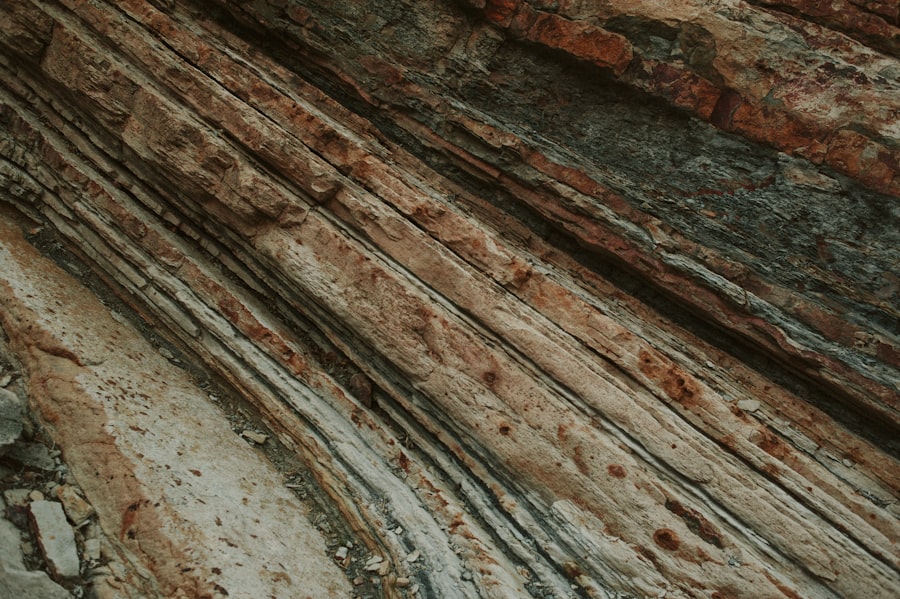
The strange layer found around the world is a mysterious geological formation that has been discovered in various locations across the globe. It is characterized by its unusual composition and has puzzled scientists and researchers.
What is the composition of the strange layer?
The composition of the strange layer varies from location to location, but it typically consists of a combination of minerals, sediments, and organic materials. Some samples have also shown traces of unusual isotopic ratios and chemical elements not commonly found in the Earth’s crust.
Where has the strange layer been found?
The strange layer has been found in diverse locations, including remote deserts, deep ocean floors, and even within ice cores from polar regions. This widespread distribution has added to the intrigue surrounding this geological anomaly.
What are some theories about the origin of the strange layer?
There are several theories about the origin of the strange layer, including extraterrestrial impacts, volcanic eruptions, and ancient geological processes. Some researchers have also proposed that it could be the result of a unique combination of environmental factors and geological events.
What are the implications of the discovery of the strange layer?
The discovery of the strange layer has significant implications for our understanding of Earth’s geological history and processes. It also raises questions about the potential impact of such formations on the environment and ecosystems. Further research and analysis are needed to unravel the mysteries surrounding this enigmatic geological feature.