Echoes in the Arid Earth: The Enigma of the Nazca Humanoid Figures
For centuries, the stark, sun-baked plains of the Nazca Desert in southern Peru have held a profound mystery. Scattered across this vast expanse are geoglyphs – colossal designs etched into the earth, visible only from significant heights. While the more famous animal figures like the hummingbird, spider, and monkey have captivated imaginations, a more elusive and controversial set of creations continues to spark debate and fuel speculation: the Nazca Humanoid Figures. These anthropomorphic designs, often depicted with disproportionately large heads, slender bodies, and sometimes unusual appendages, present a unique challenge to conventional interpretations of the ancient Nazca culture. Uncovering the story behind these enigmatic figures requires delving into archaeological findings, examining aerial perspectives, and confronting the persistent questions of their purpose and creators.
The Nazca people, who flourished in the region between 100 BCE and 800 CE, were masters of their environment, developing sophisticated irrigation systems and a rich artistic tradition. Their legacy is indelibly marked by the geoglyphs, a testament to their engineering prowess and cosmological beliefs. However, the human-shaped figures stand apart, deviating from the more commonly observed fauna. Unlike the animal representations, which often conform to known species, the humanoid figures exhibit a degree of abstraction and exaggeration that hints at a different kind of significance. Their discovery, largely through aerial reconnaissance in the 20th century, has only amplified their mystique, placing them at the nexus of archaeology, art history, and even more fringe theories. This article aims to trace the known pathways of discovery, explore the existing archaeological evidence, and consider the diverse interpretations surrounding these captivating figures, a trail etched in the ancient earth.
The Nazca humanoid figures, etched into the arid landscape of Peru, have long fascinated researchers and tourists alike, drawing attention to the mysteries of ancient civilizations. Interestingly, a related article explores the significance of climate history in shaping human activity, as seen in Greenland’s ice cores. This research highlights how environmental changes can influence cultural developments, much like the conditions that allowed the Nazca lines to be created and preserved. For more insights on this topic, you can read the article here: Uncovering Greenland’s Climate History Through Ice Cores.
The Dawn of Discovery: Revealing the Giants from Above
The recognition of the Nazca Humanoid Figures as distinct and significant creations is a relatively recent phenomenon, intrinsically linked to the advent of aerial observation. Before the widespread use of aircraft, these massive designs remained hidden in plain sight, their true scale and form obscured by their very immensity. The arid climate and remote location of the Nazca pampas contributed to their preservation, but it was the perspective from above that truly unlocked their secrets.
Early Aerial Surveys and Initial Cataloging
The initial systematic exploration of the Nazca lines, including the humanoid figures, began in the 1920s and 1930s with the pioneering work of Peruvian archaeologist Toribio Mejía Xesspe. Mejía was one of the first to recognize the geoglyphs as deliberate creations, systematically surveying and documenting them from the ground and, crucially, with early aerial photographic missions. His work laid the foundational groundwork for future research, identifying numerous figures and noting their vast scale. He observed that many of these designs, including those with human-like characteristics, were best appreciated from a vantage point, a concept that would revolutionize their understanding.
Following Mejía’s efforts, pilots and archaeologists alike continued to document the lines. The development of aviation and aerial photography in the mid-20th century proved instrumental. Pilots flying over the Nazca region reported seeing an astonishing array of designs etched into the desert floor. These observations, often initially dismissed as natural formations or the work of imaginative observers, gradually accumulated, compelling a more rigorous scientific investigation. The publication of aerial photographs in popular magazines and scientific journals brought these remarkable etchings to a wider audience, sparking global fascination. It was during this period that the distinct “humanoid” figures, with their elongated limbs and often simplified facial features, began to be specifically identified and cataloged alongside the more familiar animal motifs.
The Maria Reiche Legacy: A Life Dedicated to the Lines
No exploration of the Nazca Humanoid Figures would be complete without acknowledging the monumental contributions of Maria Reiche. A German mathematician and archaeologist, Reiche arrived in Peru in 1932 and became deeply engrossed in the study of the Nazca lines. For decades, she lived and worked in the desert, meticulously surveying, measuring, and cleaning the geoglyphs. Her dedication was unparalleled, often facing harsh conditions and skepticism from the scientific community.
Reiche’s research, primarily conducted from the late 1930s until her death in 1998, was pivotal in establishing the scientific validity of the Nazca lines and, by extension, the humanoid figures. She painstakingly mapped hundreds of geoglyphs, meticulously documenting their dimensions, orientation, and interrelationships. Reiche was particularly struck by the apparent astronomical alignments of some figures, proposing that the lines served as a vast celestial calendar or observatory. While her astronomical theories have been debated and refined over time, her rigorous fieldwork and detailed documentation provided an invaluable dataset for all subsequent researchers. She recognized the humanoid figures as a distinct category, often noting their striking visual impact and their departure from naturalistic depictions, further cementing their status as subjects of serious study. Her legacy remains the bedrock upon which much of our current understanding of the Nazca geoglyphs is built.
Decoding the Etchings: Archaeological Context and Interpretations
The physical evidence of the Nazca Humanoid Figures, beyond their sheer visual presence, offers crucial clues to their creation and purpose. Archaeological excavations in the vicinity of the geoglyphs have yielded artifacts and structural remains that, when considered alongside the designs themselves, paint a more nuanced picture of the Nazca culture and their motivations. However, interpreting these figures remains a complex and often contentious endeavor.
Material Culture and Associated Findings
Archaeological investigations near the Nazca lines have uncovered a wealth of material culture belonging to the Nazca civilization. This includes pottery shards, textile fragments, tools, and remnants of settlements. While direct evidence linking specific artifacts to the creation or purpose of the humanoid figures is scarce, the general cultural context is invaluable. The Nazca were skilled potters, known for their polychrome ceramics often adorned with intricate designs, including anthropomorphic motifs. These artistic representations on pottery, while smaller in scale, sometimes share stylistic elements with the geoglyphs, suggesting a continuity in their symbolic language.
Excavations have also revealed ceremonial sites and plazas near some of the larger geoglyphs. The presence of these structures indicates that the areas where the lines were created were likely considered sacred or significant spaces. Ritual offerings, such as food, drink, and precious materials, have been found at these sites, pointing to a religious or ceremonial dimension to the geoglyphs. The discovery of tools that could have been used for clearing the desert surface – such as stones and digging implements – further supports the idea of deliberate human construction. However, the exact techniques employed for creating such massive figures with precision, especially the more complex humanoid forms, remain a subject of ongoing research and debate.
Theories of Purpose: From Ritual to Astronomy
Theories regarding the purpose of the Nazca Humanoid Figures are as varied as the figures themselves. One of the most prominent and enduring hypotheses, championed by Maria Reiche, centers on astronomical observation. She proposed that many of the lines and figures were aligned with celestial events, acting as a giant astronomical calendar or observatory to track solstices, equinoxes, and the movements of stars. While some alignments have been identified, the extent to which this was the primary purpose for all the figures, including the humanoid ones, is still debated.
Another significant interpretation views the geoglyphs as having a ritualistic or ceremonial function. The association with sacred sites and evidence of offerings suggests that these figures may have been part of religious practices, possibly connected to fertility rites, prayers for rain, or communication with deities. The sheer scale of the figures, requiring a view from above, could have been intended for divine audiences or for ceremonies performed on elevated platforms from which they could be observed.
More speculative theories, often venturing into the realm of pseudoarchaeology, propose extraterrestrial involvement, suggesting the figures were landing strips or messages for alien visitors. These theories, while popular in some circles, lack concrete archaeological support and are generally dismissed by mainstream academia. The consensus among archaeologists is that the figures were created by the Nazca people for reasons rooted in their own cultural, religious, and perhaps astronomical beliefs, though the precise nature of these motivations remains elusive for many of the designs, particularly the humanoid ones.
Examining the Forms: Anatomy of the Nazca Humanoids
The Nazca Humanoid Figures present a distinct set of characteristics that set them apart from other geoglyphs and from natural human representations. Their stylized forms, exaggerated features, and sometimes enigmatic appendages invite careful examination and offer potential insights into the Nazca worldview.
Distinctive Features and Stylistic Variations
The most striking characteristic of the Nazca Humanoid Figures is their often exaggerated proportions. Many possess disproportionately large heads, sometimes depicted as circular or oval, with simple lines for eyes and mouths. The bodies are typically slender, with elongated limbs. Some figures are shown standing with arms outstretched, while others appear to be in motion or engaged in some action.
One notable humanoid figure, often referred to as the “Astronaut” or “Spaceman,” features a rounded head with a distinct facial expression, a slim body, and what appears to be a cape or garment. This particular figure has fueled much speculation due to its seemingly modern depiction. Other humanoid figures, like the “Giant” or “Spider-Man,” exhibit more abstract or generalized forms. The diversity in their representations suggests that “humanoid” is a broad category encompassing various symbolic meanings rather than a single, uniform depiction. The simplicity of their execution, achieved through the removal of dark desert stones to expose lighter soil underneath, belies the complexity of their potential meanings.
Theories of Representation: Gods, Shamans, or Ancestors?
The question of what these humanoid figures represent is central to their enigma. One leading interpretation posits that they depict deities or supernatural beings. The exaggerated features could be a way of emphasizing their divine power or otherworldly nature. In many cultures, depictions of gods and spirits often deviate from naturalistic forms, emphasizing symbolic attributes over anatomical accuracy.
Another compelling theory suggests that the figures represent shamans or individuals undergoing spiritual transformation. The elongated limbs and unusual postures could symbolize ecstatic states, journeys to the spirit world, or interactions with spiritual forces. The Nazca culture had a complex shamanistic tradition, and the geoglyphs may have served as visual aids or focal points for these practices.
Some scholars also propose that the figures represent ancestors or mythical heroes, important figures within the Nazca lineage or mythology. Their creation on such a grand scale could have been a way to honor them, commemorate their deeds, or ensure their continued presence and influence. The cyclical nature of their creation and maintenance, if they were indeed maintained over time, might suggest a continuous connection to these important figures. Without direct textual evidence from the Nazca themselves, these interpretations remain informed speculation, piecing together clues from iconography, cultural practices, and the figures themselves.
The recent discoveries surrounding the Nazca humanoid figure trail have sparked significant interest among researchers and enthusiasts alike. These ancient geoglyphs, etched into the Peruvian desert, continue to reveal mysteries about the civilization that created them. For those interested in understanding the broader implications of cultural artifacts and their impact on modern society, an insightful article can be found here, which discusses the rise of the Mexican consumer and its connection to cultural heritage. This exploration not only highlights the importance of preserving historical sites but also emphasizes how they influence contemporary economic trends.
The Enduring Mystery: Unanswered Questions and Ongoing Research
| Metric | Value | Unit | Description |
|---|---|---|---|
| Distance from Nazca Lines Center | 3.2 | km | Proximity of humanoid figure trail to the central Nazca Lines area |
| Trail Length | 1.5 | km | Total length of the humanoid figure trail |
| Elevation Change | 45 | meters | Elevation difference along the humanoid figure trail |
| Average Width of Trail | 2.3 | meters | Average width of the humanoid figure trail |
| Number of Viewing Points | 4 | count | Designated spots for observing the humanoid figure trail |
| Estimated Age | 1500 | years | Approximate age of the humanoid figure trail |
Despite decades of study, the Nazca Humanoid Figures continue to hold a significant portion of their mystery. While considerable progress has been made in understanding the Nazca culture and the context of the geoglyphs, many questions surrounding the humanoid figures remain unanswered, driving ongoing research and sparking continued fascination.
Challenges in Interpretation and Dating
One of the primary challenges in understanding the Nazca Humanoid Figures is the lack of written records from the Nazca civilization. Unlike cultures with extensive written histories, our understanding of their beliefs, practices, and motivations is derived almost entirely from archaeological evidence and interpretation of their art and material culture. This reliance on inference makes definitive conclusions difficult.
Dating the geoglyphs precisely has also been a challenge. While the Nazca culture is generally dated between 100 BCE and 800 CE, pinpointing the exact period of creation for each individual figure, especially the humanoid ones, can be difficult. Radiocarbon dating of organic materials found within or near the lines can provide approximate timelines, but the figures themselves are composed of earth and stone, offering fewer direct dating opportunities. The possibility that some figures were created earlier or later than others, or that they were maintained and modified over time, adds further complexity.
Future Directions in Exploration and Understanding
Ongoing research into the Nazca Humanoid Figures continues to explore new avenues of inquiry. Advances in remote sensing technologies, such as drone-based lidar and high-resolution satellite imagery, are providing unprecedented detail and the ability to detect subtle features and variations in the landscape that may have been previously overlooked. These technologies can aid in mapping and analyzing the geoglyphs with greater precision, potentially revealing new patterns or connections.
Interdisciplinary approaches are also crucial for future understanding. Collaboration between archaeologists, anthropologists, astronomers, art historians, and even cognitive scientists can bring diverse perspectives to bear on the enigma. Continued archaeological excavations, focusing on areas surrounding the humanoid figures, may yet uncover more definitive evidence of their creation and purpose. Furthermore, comparative studies with geoglyphs from other ancient cultures around the world might reveal shared motifs or symbolic languages that can shed light on the Nazca creations. The journey to fully uncover the secrets of the Nazca Humanoid Figures is far from over, with each new discovery and interpretation adding another layer to their captivating story.
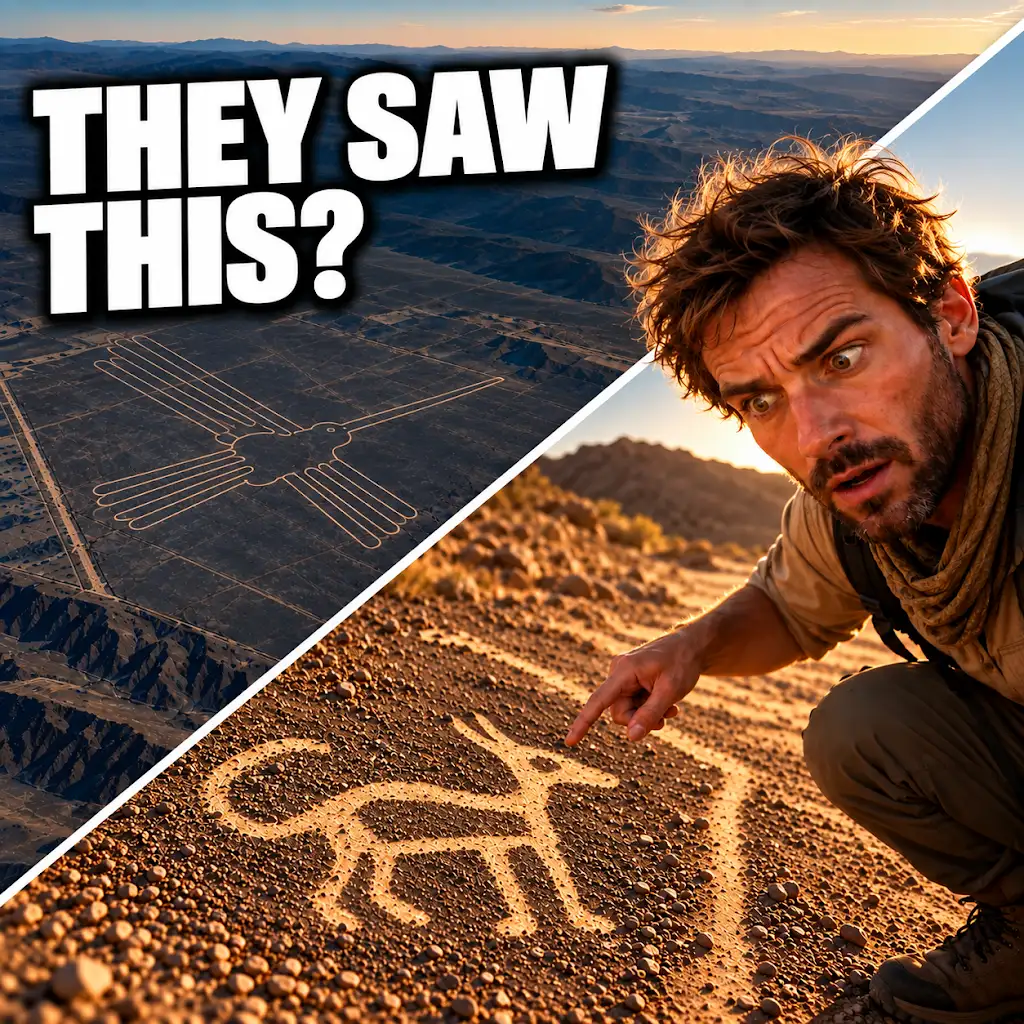
AI Found New Nazca Drawings—Could People See Them from the Ground?
FAQs
What is the Nazca humanoid figure trail proximity?
The Nazca humanoid figure trail proximity refers to the location of the famous Nazca Lines in Peru, specifically focusing on the humanoid figure geoglyphs that are part of the larger Nazca Lines.
Where are the Nazca Lines located?
The Nazca Lines are located in the Nazca Desert in southern Peru. They cover an area of approximately 500 square kilometers.
What are the Nazca Lines?
The Nazca Lines are a series of ancient geoglyphs created by the Nazca people between 500 BC and 500 AD. They are large designs made in the desert floor by removing rocks and earth to reveal the lighter-colored ground beneath.
What is the significance of the humanoid figure geoglyphs in the Nazca Lines?
The humanoid figure geoglyphs are believed to represent various deities worshipped by the Nazca people. They are thought to have had religious or ceremonial significance.
How can visitors view the Nazca Lines and the humanoid figure geoglyphs?
Visitors can view the Nazca Lines and the humanoid figure geoglyphs from observation towers along the Pan-American Highway, or by taking a flight over the area in a small plane. It is important to note that walking on the geoglyphs is strictly prohibited to preserve their integrity.