
The secrets behind Cahokia’s meteoric rise from a small settlement to a sprawling metropolis within a few centuries have long captivated archaeologists and historians. This ancient Mississippian city, located near modern-day St. Louis, Missouri, stands as a testament to the ingenuity and organizational capabilities of its inhabitants. At its zenith, around 1050-1200 CE, Cahokia boasted a population estimated to be between 10,000 and 20,000 people, making it larger than any contemporary European city. The sheer speed and scale of its development have prompted a continuous quest to understand the factors that fueled this remarkable transformation.
The story of Cahokia’s rapid growth is not one of sudden appearance but rather a gradual build-up fueled by a confluence of environmental, social, and economic factors. Before the city’s full bloom, the Mississippi River valley was home to a scattering of Woodland period peoples. However, around the 9th century CE, a shift began, marked by increasing population densities and more complex social structures.
The Role of the Environment: A Fertile Cradle
The Mississippi River valley provided an exceptionally advantageous environment for the development of a large-scale agricultural society. The rich alluvial soils deposited by the river’s annual floods were incredibly fertile, supporting intensive maize cultivation. This agricultural surplus was a fundamental prerequisite for sustaining a large, non-food-producing population, a hallmark of complex societies.
Sophisticated Agricultural Practices
The inhabitants of Cahokia were not simply passive recipients of environmental bounty. Archaeological evidence suggests they employed sophisticated agricultural techniques, including crop rotation and possibly the use of fertilizers, to maximize their yields. The development of efficient storage methods for surplus grain would have been crucial for weathering lean periods and supporting a growing population.
Waterways as Arteries of Trade and Travel
The Mississippi River and its tributaries served as vital highways for Cahokia. These waterways facilitated the transportation of goods, people, and ideas across a vast region. This connectivity was instrumental in the city’s economic expansion and its ability to project influence. The strategic location of Cahokia at the confluence of major rivers likely played a significant role in its ascendancy.
Early Settlements and Cultural Continuity
While Cahokia’s rapid growth is striking, it didn’t emerge in a vacuum. Scholars trace its roots to earlier Woodland period cultures, such as the La Moine culture, which laid some of the groundwork for future developments. This continuity in settlement patterns and cultural traditions suggests a gradual evolution rather than a radical break.
The Influence of Neighboring Cultures
Interactions with other Mississippian chiefdoms likely played a role in Cahokia’s rise. The exchange of knowledge, technologies, and perhaps even people could have contributed to its accelerated development. The Mississippian world was a dynamic network of interconnected societies, and Cahokia was at its heart.
Cahokia, once the largest pre-Columbian city in North America, grew to its impressive size through a combination of advanced agricultural practices, trade networks, and social organization. To understand the intricate systems that supported such a thriving civilization, one can explore the article on ancient water management systems, which highlights how effective irrigation and water control contributed to the sustainability of large populations. For more insights, you can read the article here: Uncovering Ancient Water Management Systems.
The Engine of Growth: Economic and Social Drivers
The environmental advantages, while crucial, were only part of the equation. Cahokia’s rapid growth was propelled by a sophisticated economic system and a hierarchical social structure that facilitated large-scale organization.
The Power of Maize: A Staple Crop and Economic Backbone
Maize, or corn, was the dietary cornerstone of Cahokian society. Its high caloric yield and suitability for storage made it an ideal crop for supporting a dense population. The ability to produce and store significant surpluses of maize allowed for a division of labor, freeing up a portion of the population to engage in specialized crafts, religious activities, and administrative roles.
Agricultural Innovations and Specialization
Beyond basic cultivation, evidence suggests innovations in agricultural tools and techniques. The development of specialized tools for planting, weeding, and harvesting would have increased efficiency. This specialization in food production formed the economic bedrock upon which the rest of Cahokian society was built.
Trade Networks: Connecting the Mississippian World
Cahokia was a major hub in an extensive regional trade network. Goods from far-flung regions, including copper from the Great Lakes, shells from the Gulf Coast, and obsidian from the Rocky Mountains, have been found at the site. This trade was not merely about acquiring luxury goods; it also involved the exchange of essential resources and the diffusion of cultural practices.
The Role of Exotic Goods in Status and Power
The acquisition and distribution of exotic goods played a significant role in establishing and maintaining social hierarchies. Access to these valuable commodities likely conferred prestige and power upon Cahokia’s elite, who could then redistribute them to solidify alliances and reward followers.
Specialized Craft Production
The surplus generated by agriculture and the influx of raw materials from trade allowed for the development of specialized craft production. Artisans in Cahokia produced a wide array of goods, including pottery, stone tools, shell beads, and intricate carvings. The quality and quantity of these artifacts speak to a highly skilled and organized workforce.
Social Stratification: A Hierarchy of Power
Cahokia was not an egalitarian society. Archaeological evidence, particularly the differing sizes and contents of burials, indicates a clear social hierarchy. A powerful elite, likely a ruling class of chiefs and priests, resided in the more elaborate structures and were buried with richer grave goods.
The Elite and their Role in Mobilization
This elite class likely played a crucial role in mobilizing labor for public works projects, such as the construction of monumental earthworks, and in organizing agricultural production and trade. Their authority was likely reinforced by religious ideology and the control of valuable resources.
The Commoners: The Laboring Force
The majority of Cahokia’s population consisted of commoners, who were responsible for agricultural labor, craft production, and the construction and maintenance of the city. While their lives may have been less privileged, their collective efforts were essential to Cahokia’s success.
Monumental Architecture: Symbols of Power and Organization
The most visually striking evidence of Cahokia’s rapid growth and organizational prowess lies in its monumental architecture, particularly its vast earth mounds. These structures were not merely decorative; they served crucial social, religious, and political functions.
The Grandeur of Monks Mound
The centerpiece of Cahokia is Monks Mound, a colossal earthwork that stands approximately 100 feet tall and covers more than 14 acres at its base. The construction of this single mound required an estimated 22 million cubic feet of earth, moved by hand, basketful by basketful, over decades. Its sheer scale is a testament to the immense labor force that could be mobilized and organized by the Cahokian elite.
Construction Techniques and Labor Mobilization
The construction of Monks Mound and other large earthworks likely involved seasonal labor, with farmers contributing their efforts during off-seasons. The ability to coordinate and manage such a massive undertaking speaks volumes about Cahokian leadership and social organization. The use of sophisticated engineering principles, such as the creation of terraces and retaining walls, is also evident.
The Purpose of Monks Mound: A Seat of Power
While its exact purpose remains debated, it is widely believed that Monks Mound served as the primary residence of Cahokia’s paramount chief and as the administrative and ceremonial center of the city. Its elevated position would have offered a commanding view of the surrounding landscape and its inhabitants, reinforcing the elite’s authority.
Other Prominent Mounds and their Functions
Beyond Monks Mound, Cahokia boasted hundreds of other mounds, each with its own likely function. Some were flat-topped platforms, potentially supporting residential structures for the elite or ceremonial buildings. Others were burial mounds, containing the remains of individuals, often accompanied by grave goods that reflect their social status.
Ridge-Top Mounds and Ritual Landscapes
The arrangement of mounds in specific patterns, often along ridge tops or in concentric circles, suggests intentional planning and a deliberate creation of sacred or ritual landscapes. These configurations may have held cosmological significance for the Cahokians.
The “Woodhenge” and Astronomical Alignments
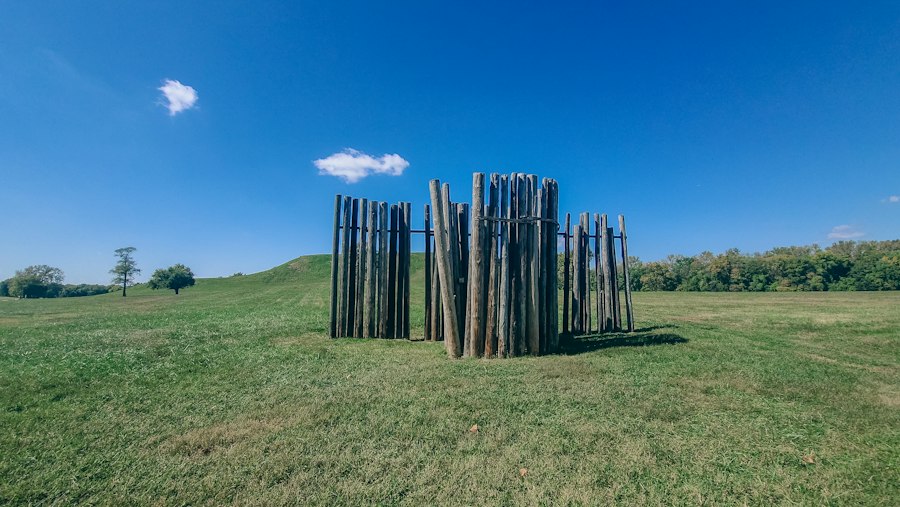
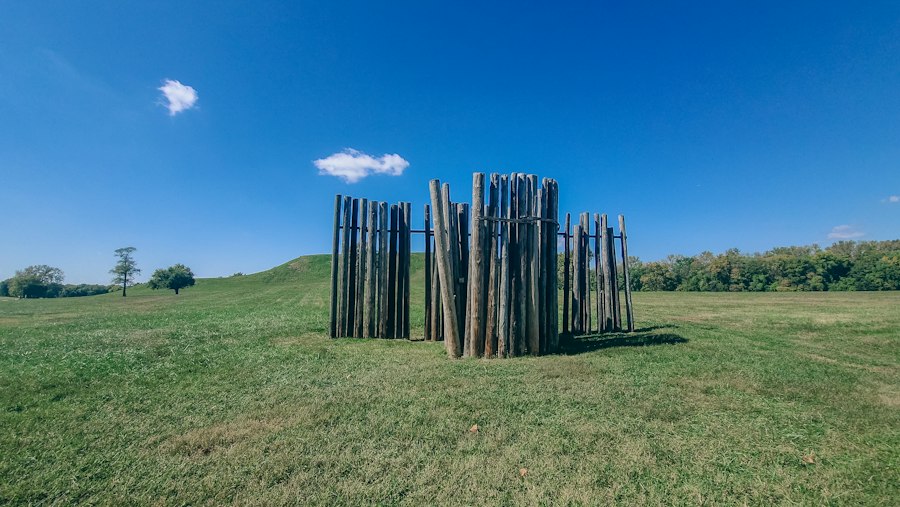
The discovery of a series of large wooden posts, dubbed “Woodhenge,” further points to the Cahokians’ interest in astronomy and celestial observation. These structures were likely used to track the sun’s movements, marking solstices and equinoxes, which would have held great importance for agricultural cycles and religious ceremonies.
Religious Beliefs and Practices: Unifying the Society
Religion played a vital role in unifying Cahokian society and legitimizing the power of its elite. The elaborate construction of mounds and the rich iconography found on artifacts suggest a complex system of beliefs and rituals.
Cosmology and the Sacred Landscape
Cahokian cosmology likely involved a worldview that interconnected the earthly realm, the underworld, and the celestial spheres. The mounds themselves may have been seen as artificial mountains, connecting the earth to the heavens. The careful placement of these structures within the landscape suggests a profound understanding and reverence for their environment.
The Role of the Sun and Celestial Bodies
As hinted by Woodhenge, celestial bodies, particularly the sun, likely held significant importance in Cahokian religious beliefs. Their movements may have been linked to agricultural cycles, seasonal changes, and the cycles of life and death.
Ritual Practices and Ceremonial Centers
The mounds served as focal points for a variety of religious rituals and ceremonies. These events would have brought the community together, reinforcing social bonds and demonstrating the power of the elite to mediate between the human and spiritual realms.
Evidence of Sacrifice and Feasting
Archaeological findings, including evidence of feasting and, in some cases, human sacrifice, suggest that Cahokian religious practices could be elaborate and demanding. These rituals were likely crucial for maintaining cosmic balance and ensuring the prosperity of the community.
Iconography and Symbolism: Decoding the Sacred Narrative
The intricate artwork found on pottery, shell gorgets, and other artifacts provides glimpses into Cahokian religious beliefs and mythology. Recurring motifs, such as birds of prey, serpents, and anthropomorphic figures, likely held symbolic meaning and represented deities, spirits, or mythical beings.
The “Birdman” Motif
The recurring “Birdman” motif, often depicted with wings, talons, and human-like features, is particularly intriguing. It is believed to represent a powerful shaman or warrior deity, embodying a connection between the earthly and spiritual realms.
Cahokia, once a thriving urban center, grew to become one of the largest pre-Columbian cities in North America, largely due to its strategic location and the agricultural innovations of its inhabitants. The city’s rise can be further understood by exploring the technological advancements that shaped ancient societies, as discussed in a related article on ancient inventions. This piece highlights how such innovations may have influenced urban development and societal complexity, providing valuable context to the growth of Cahokia. For more insights, you can read the article here.
The Decline and Legacy: Mysteries of a Vanishing City
| Factors | Explanation |
|---|---|
| Agricultural productivity | The fertile soil of the Mississippi River floodplain allowed Cahokia to support a large population through farming. |
| Trade networks | Cahokia’s strategic location allowed it to become a hub for trade, attracting people from surrounding regions. |
| Social and political organization | Cahokia’s complex social and political structure helped manage a large population and maintain order. |
| Religious and ceremonial significance | Cahokia’s religious and ceremonial activities may have attracted pilgrims and visitors, contributing to its growth. |
| Infrastructure and urban planning | The construction of large earthen mounds and a well-planned urban layout may have contributed to the city’s appeal and growth. |
Despite its remarkable rise and influence, Cahokia experienced a decline and eventual abandonment. The reasons for this disappearance are complex and still debated among scholars, but they offer further insights into the dynamics of ancient societies.
Factors Contributing to Decline
Several factors likely contributed to Cahokia’s downfall, and it’s probable that a combination of these issues led to its abandonment.
Environmental Degradation and Resource Depletion
The intensive agriculture and deforestation required to support such a large population may have led to environmental degradation, including soil erosion and a decline in local resources. This could have made it increasingly difficult to sustain the city.
Social Unrest and Political Instability
Internal social tensions, potentially arising from increasing inequality or the strain of supporting a large population, could have led to unrest and political instability. The power of the elite may have waned, leading to a breakdown in social order.
Disease and Health Crises
As with many large, dense urban centers, Cahokia may have been susceptible to the rapid spread of infectious diseases. A significant epidemic could have decimated the population and contributed to its decline.
Climate Change and its Impact
While difficult to definitively prove for this period, significant shifts in climate, such as prolonged droughts or periods of excessive flooding, could have disrupted agricultural production and placed immense stress on the society.
The Abandonment of Cahokia
By the 14th century CE, Cahokia was largely abandoned. The monumental mounds stood as silent sentinels, reminders of a once-thriving civilization. The people who had built and inhabited this impressive city dispersed, their descendants likely integrating into smaller, surrounding communities.
The Enduring Mystery and Ongoing Research
The reasons for Cahokia’s abandonment remain one of archaeology’s most compelling mysteries. Ongoing research, utilizing new technologies and analytical techniques, continues to shed light on the complex factors that led to its rise and fall. Each new discovery adds another piece to the puzzle, allowing us to better understand this extraordinary ancient American civilization.
Legacy of Cahokia: A Beacon of Mississippian Achievement
Despite its demise, Cahokia’s legacy is undeniable. It stands as a testament to the advanced social, economic, and political organization of Mississippian peoples. Its monumental architecture, sophisticated trade networks, and complex religious practices continue to inspire awe and fuel scholarly inquiry, reminding us of the vibrant and dynamic history of North America long before European arrival. The secrets of Cahokia’s rapid growth are not fully uncovered, but the ongoing quest to understand them offers a profound lesson in the rise and fall of human civilizations.

A City Bigger Than London Once Stood in America. Then It Vanished.
FAQs
1. What is Cahokia?
Cahokia was a pre-Columbian Native American city located in present-day Illinois, near St. Louis, Missouri. It was the largest and most influential urban settlement of the Mississippian culture, thriving between the 9th and 15th centuries.
2. How did Cahokia become so large?
Cahokia’s growth and size can be attributed to factors such as its strategic location for trade and agriculture, its social and political organization, and its ability to support a large population through advanced farming techniques.
3. What role did trade play in Cahokia’s expansion?
Trade was a significant factor in Cahokia’s growth, as it was located near the confluence of several major rivers, making it a hub for regional and long-distance trade. This allowed Cahokia to acquire valuable resources and establish itself as a center of commerce.
4. What were the key features of Cahokia’s social and political organization?
Cahokia had a complex social and political structure, with a ruling elite and a stratified society. The city was likely governed by a chief or council of leaders, and it had a system of religious and ceremonial centers that helped maintain social order and cohesion.
5. What led to the decline of Cahokia?
The decline of Cahokia is believed to have been caused by a combination of factors, including environmental degradation, resource depletion, social and political unrest, and possibly external pressures from neighboring groups. By the 14th century, the city’s population had significantly declined, and it was eventually abandoned.