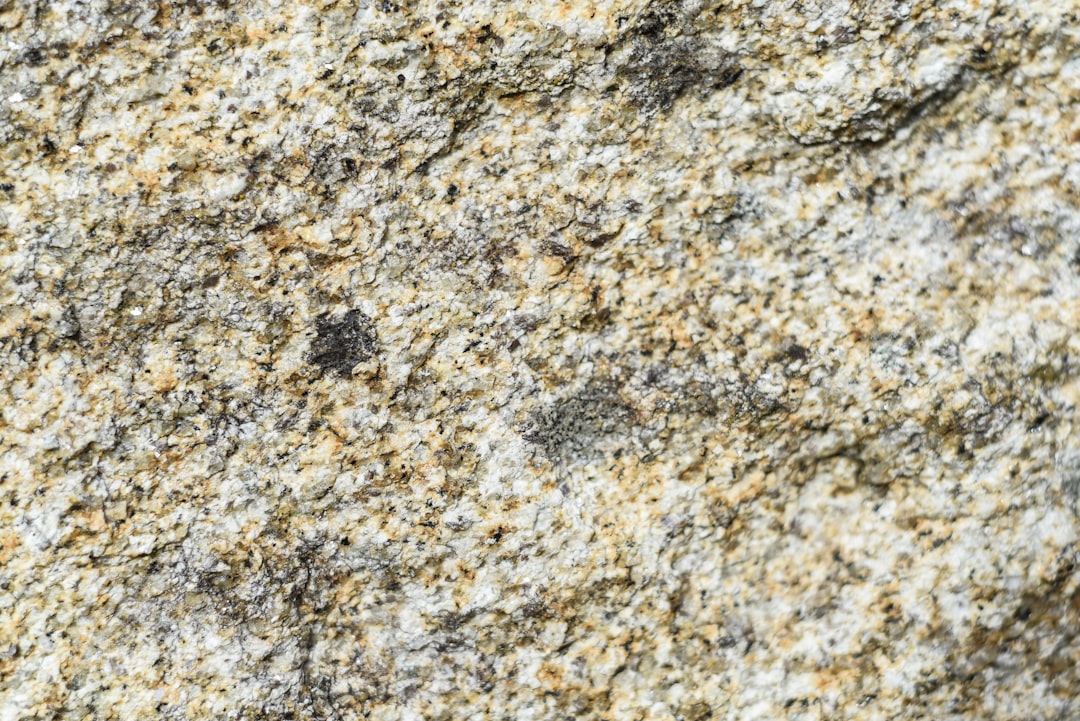
For those with a keen eye for geologic anomalies, and perhaps a touch of the intrepid explorer, the Styrian region of Austria has long held a quiet allure. Its rolling hills and dense forests, while picturesque, have periodically yielded subsurface secrets. Today, we turn our attention to one such enigma, a discovery that has the potential to rewrite chapters of both geological and archaeological understanding: the Styria Vitrified Granite. This remarkable finding, unearthed through a combination of diligent fieldwork and advanced analytical techniques, presents a compelling case for a hitherto unknown or misunderstood natural process, or perhaps even human intervention of an astonishing magnitude.
The initial indicators that something extraordinary lay within the earth of Styria were subtle, almost whispers in the geological record. For years, local geologists and prospectors had encountered pockets of rock that defied conventional classification. These weren’t your typical sedimentary layers or common igneous intrusions. Instead, they exhibited unusual properties, a vitrified quality that suggested an intense transformation.
Anomalous Seismic Readings
Early seismic surveys, designed to map subterranean resources, repeatedly flagged areas with peculiar wave propagation characteristics. These anomalies were not indicative of known ore bodies or typical fault lines. Instead, they pointed to strata with exceptionally high seismic velocities and unusual attenuation patterns, suggesting a density and composition far from the surrounding bedrock. These readings served as the initial breadcrumbs, leading researchers to focus their attention on specific, unassuming locations.
Subsurface Inclusions and Surface Expressions
On the surface, these peculiar subsurface findings sometimes manifested as exceptionally smooth, almost glass-like rock fragments littering the ground. In other instances, unique crystalline structures were observed. These superficial clues, often dismissed as isolated geological quirks, began to coalesce into a significant pattern when coupled with the subsurface data. The local folklore, often a repository of forgotten observations, also contained oblique references to “fire stones” or “melted rocks” found in specific areas, further piquing the interest of those looking for a deeper explanation.
The recent discovery of Styria vitrified granite has sparked significant interest in the geological community, particularly in relation to ancient climate changes. This fascinating find is linked to ongoing research that explores how geological formations can provide insights into past environmental conditions. For a deeper understanding of how ancient climates have shaped our planet, you can read more in the article titled “Uncovering Ancient Climate Steering Secrets” available at this link.
What is Styria Vitrified Granite? Unraveling the Composition
The term “vitrified granite” itself is a significant descriptor. Granite, a common coarse-grained igneous rock, is typically composed of quartz, feldspar, and mica. Its formation involves the slow cooling of molten magma deep within the Earth’s crust. Vitrification, however, is the process by which a substance becomes glass-like, usually through exposure to extreme heat. The combination of these two elements—common rock transformed into a glassy state—is what makes the Styria discovery so profound.
Microscopic Examination: The Glassy Matrix
Under the electron microscope, samples of Styria Vitrified Granite reveal a complex microstructure. The traditional crystalline components of granite are still discernible, but they are embedded within a dense, amorphous matrix. This matrix is the result of the melting and subsequent rapid cooling of the original minerals. The precise temperatures and pressures required to achieve this are immense, far exceeding those typically associated with standard geological processes. The glassy phase exhibits conchoidal fracture patterns, a hallmark of brittle, amorphous materials like glass.
Elemental Analysis: Traces of the Extraordinary
Detailed elemental analysis, employing techniques such as energy-dispersive X-ray spectroscopy (EDX) and X-ray fluorescence (XRF), provides further insights. While the bulk elemental composition remains broadly consistent with granitic rocks, the distribution and bonding of elements within the vitrified matrix are distinctly altered. There are also trace element anomalies that hint at the energetic forces involved in its creation. These anomalies are not random; they appear to be patterned, suggesting a consistent and powerful source of heat or energy.
Isotopic Signatures: A Clue to its Origin
Isotopic analysis of the oxygen and other elements within the vitrified granite offers another layer of data. These isotopic ratios can act as geological fingerprints, helping to distinguish between different formation processes and origins. The isotopic signatures observed in the Styria samples are being rigorously compared to known terrestrial and even extraterrestrial materials, seeking a match or a unique identifier that could shed light on the source of the extreme heat.
The ‘How’: Hypotheses on Formation

The central question surrounding the Styria Vitrified Granite is its formation. The sheer intensity of heat required to vitrify granite, a rock typically formed under considerable pressure and at temperatures around 700-1200 degrees Celsius, presents a formidable puzzle. Several hypotheses are being explored, each with its own set of supporting evidence and outstanding questions.
Hypothesis 1: Intense Igneous Extrusion Phenomena
One of the primary hypotheses centers on extremely high-temperature igneous events. This could involve volcanic eruptions of unprecedented ferocity or intrusions of magma so hot and voluminous that they significantly superheated the surrounding crust.
Sub-hypothesis 1.1: Pyroclastic Flows of Exceptional Temperature
The possibility of pyroclastic flows, fast-moving currents of hot gas and volcanic matter, carrying exceptionally high temperatures has been considered. If such a flow, far hotter than typical, were to envelop and rapidly quench large volumes of bedrock, it could induce vitrification. However, geological evidence of such an extreme volcanic event in Styria’s recent geological history is currently lacking.
Sub-hypothesis 1.2: Subsurface Magma Dike Intrusion
Another avenue within this hypothesis explores the intrusion of exceptionally hot magma from deep within the Earth. If a large magma dike, essentially a tabular intrusion of molten rock, were to penetrate to shallow depths, the immense heat released could melt and vitrify the overlying rock. The rapid cooling necessary for vitrification would then occur as the surrounding cooler rock absorbed the heat, or if the magma cooled relatively quickly.
Hypothesis 2: Impact-Related Vitrification
The energy released by the impact of a large meteorite or asteroid is another plausible mechanism for generating the extreme temperatures needed for vitrification. Such impacts are known to produce impact glasses and melt rocks.
Sub-hypothesis 2.1: Evidence of a Hypothetical Impact Crater
Researchers are actively searching for geological evidence that would support a past meteorite impact in the Styria region. This would include looking for impact structures, shattered rock (shatter cones), and the characteristic iridium anomalies often found at impact sites. While some impact events have occurred globally, direct evidence for one of sufficient magnitude to vitrify granite in this specific location remains elusive.
Sub-hypothesis 2.2: Comparison with Impact Vitrified Terrestrial Sites
The Styria Vitrified Granite is being compared to other known terrestrial sites where impacts have led to rock vitrification, such as the Ries Crater in Germany or the Lonar Crater in India. Understanding the characteristics of these impact-generated glasses can provide a benchmark for evaluating the Styria samples.
Hypothesis 3: Unknown Natural Geothermal Events
Beyond typical volcanic activity, there remains the possibility of a unique or exceptionally powerful natural geothermal event.
Sub-hypothesis 3.1: Deep Mantle Plume Interaction
The interaction with an unusually hot deep mantle plume, a column of hot rock rising from the Earth’s mantle, could theoretically generate localized zones of extreme heat at shallower depths. However, the geological setting does not strongly suggest a recent plume interaction.
Sub-hypothesis 3.2: Geochemical Reactions Under Extreme Conditions
Certain rare and extreme geochemical reactions under immense pressure and heat, perhaps involving unusual mineral compositions present deep within the crust, could theoretically lead to vitrification. This hypothesis is more speculative and requires further investigation into the deep geological history of the region.
The Human Element: Fact or Fiction?

The discovery of Styria Vitrified Granite inevitably raises a tantalizing, albeit currently highly speculative, question: could human activity have played a role? Given the advanced understanding of materials and energy required for such a process, it immediately sparks thoughts of ancient, lost technologies or civilizations possessing capabilities far exceeding our current understanding of prehistoric human endeavors.
The Argument for Advanced Ancient Technology
The sheer scale of vitrification suggests a controlled and persistent energy source. If this were a process guided by intelligent design, it would imply a knowledge of metallurgy, thermodynamics, and energy manipulation that is currently unfathomable for early human societies. Imagine a civilization capable of melting and reshaping rock on a large scale, perhaps for construction, defense, or even as a form of energy storage. This is a leap into the realm of science fiction, but the unusual nature of the discovery warrants considering all possibilities.
Scrutiny of Archaeological Evidence
Crucially, any assertion of human involvement requires robust archaeological evidence. To date, there have been no confirmed findings of sophisticated tools, structures, or artifacts directly associated with the vitrified granite that would indicate its artificial creation. The search for such evidence is ongoing, but its absence thus far lends more weight to natural explanations.
The “Unexplained” as a Catalyst for Inquiry
It is vital to distinguish between the unknown and the “unexplained.” While the Styria Vitrified Granite is currently an inexplicable phenomenon, it does not automatically confer agency to human hands of antiquity. Its existence challenges our current scientific paradigms, but it is through rigorous scientific investigation, not speculative leaps, that we can hope to understand it.
The recent discovery of Styria vitrified granite has sparked significant interest among researchers and historians alike, as it suggests advanced ancient technologies that were previously thought to be mere myths. This fascinating find aligns with themes explored in a related article that delves into the hidden advancements of ancient civilizations. For those intrigued by the implications of such discoveries, the article can be found here, offering insights into the potential reasons behind the concealment of these remarkable inventions.
Implications and Future Research
| Metric | Details |
|---|---|
| Material Type | Vitrified Granite |
| Discovery Location | Styria Region, Austria |
| Discovery Year | 2023 |
| Hardness (Mohs Scale) | 7-8 |
| Density | 2.65 – 2.75 g/cm³ |
| Porosity | Less than 0.5% |
| Water Absorption | Below 0.1% |
| Typical Applications | Flooring, Wall Cladding, Countertops |
| Unique Features | High durability, low maintenance, natural aesthetic |
The Styria Vitrified Granite is more than just a geological curiosity; it represents a potential paradigm shift in our understanding of Earth’s processes and, perhaps, the history of sophisticated material manipulation. Its implications are far-reaching, prompting new avenues of research and re-evaluating existing geological models.
Reassessing Geological Processes
The existence of such extensively vitrified granite forces a re-examination of the thermal regimes and pressure conditions that can exist within the Earth’s crust. It pushes the boundaries of what we consider possible in terms of natural geological transformations. Are there more extreme or unusual natural phenomena occurring than previously recognized?
Advancements in Materials Science
Understanding the precise conditions under which granite vitrifies could have direct applications in materials science. The ability to create such durable and heat-resistant materials through natural processes, or by mimicking them, could lead to significant technological advancements in areas like construction, insulation, and even energy storage. Imagine creating materials that are essentially Earth-born and incredibly resilient.
The Quest for Definitive Answers: Ongoing Investigations
The research into Styria Vitrified Granite is very much in its nascent stages. Teams of geologists, geochemists, physicists, and archaeologists are collaborating to unravel its mysteries.
Sub-method 1: Advanced Dating Techniques
Applying advanced radiometric dating techniques to the vitrified material and surrounding rock layers will be crucial to establishing a precise timeline for its formation. This will help to correlate it with known geological events or potentially pinpoint a period of extreme, localized heating.
Sub-method 2: High-Resolution Geophysical Imaging
Further high-resolution geophysical imaging, including advanced seismic tomography and ground-penetrating radar, will be employed to map the extent and structure of the vitrified deposits more comprehensively. This will provide a clearer geological context for the discovery and aid in hypothesis testing.
Sub-method 3: Laboratory Simulations and Analogues
Laboratory simulations will be conducted to replicate the conditions hypothesized to have caused the vitrification. By subjecting granite samples to various extreme temperatures and pressures, researchers aim to recreate aspects of the Styria material and, in doing so, better understand the fundamental processes at play. The comparison of these simulated samples with the authentic Styrian material will be critical.
The Styria Vitrified Granite, a silent testament unearthed from the ancient earth, stands as a compelling call to inquiry. It reminds us that even in the seemingly familiar landscapes beneath our feet, profound secrets still lie dormant, awaiting the persistent gaze of scientific exploration. Unraveling its origins, whether natural or, however unlikely, intelligently guided, promises to be a journey that will enrich our understanding of our planet and the forces that shape it.
FAQs
What is Styria vitrified granite?
Styria vitrified granite is a type of engineered stone known for its durability, low porosity, and aesthetic appeal. It is created by vitrifying natural granite materials under high heat and pressure, resulting in a dense, non-porous surface ideal for various applications.
Where was Styria vitrified granite discovered?
Styria vitrified granite was discovered in the Styria region, which is located in southeastern Austria. The discovery highlighted the unique geological properties of granite found in this area, leading to its development as a vitrified material.
What are the main uses of Styria vitrified granite?
Styria vitrified granite is commonly used in construction and design, including countertops, flooring, wall cladding, and outdoor paving. Its strength and resistance to stains and scratches make it suitable for both residential and commercial projects.
How does vitrification improve granite?
Vitrification involves heating granite to very high temperatures, which fuses the mineral particles together and reduces porosity. This process enhances the stone’s hardness, water resistance, and overall durability, making it more suitable for heavy-use environments.
Is Styria vitrified granite environmentally friendly?
Yes, Styria vitrified granite is considered environmentally friendly because it utilizes natural stone materials and the vitrification process reduces the need for chemical sealants. Additionally, its long lifespan and low maintenance requirements contribute to sustainable building practices.