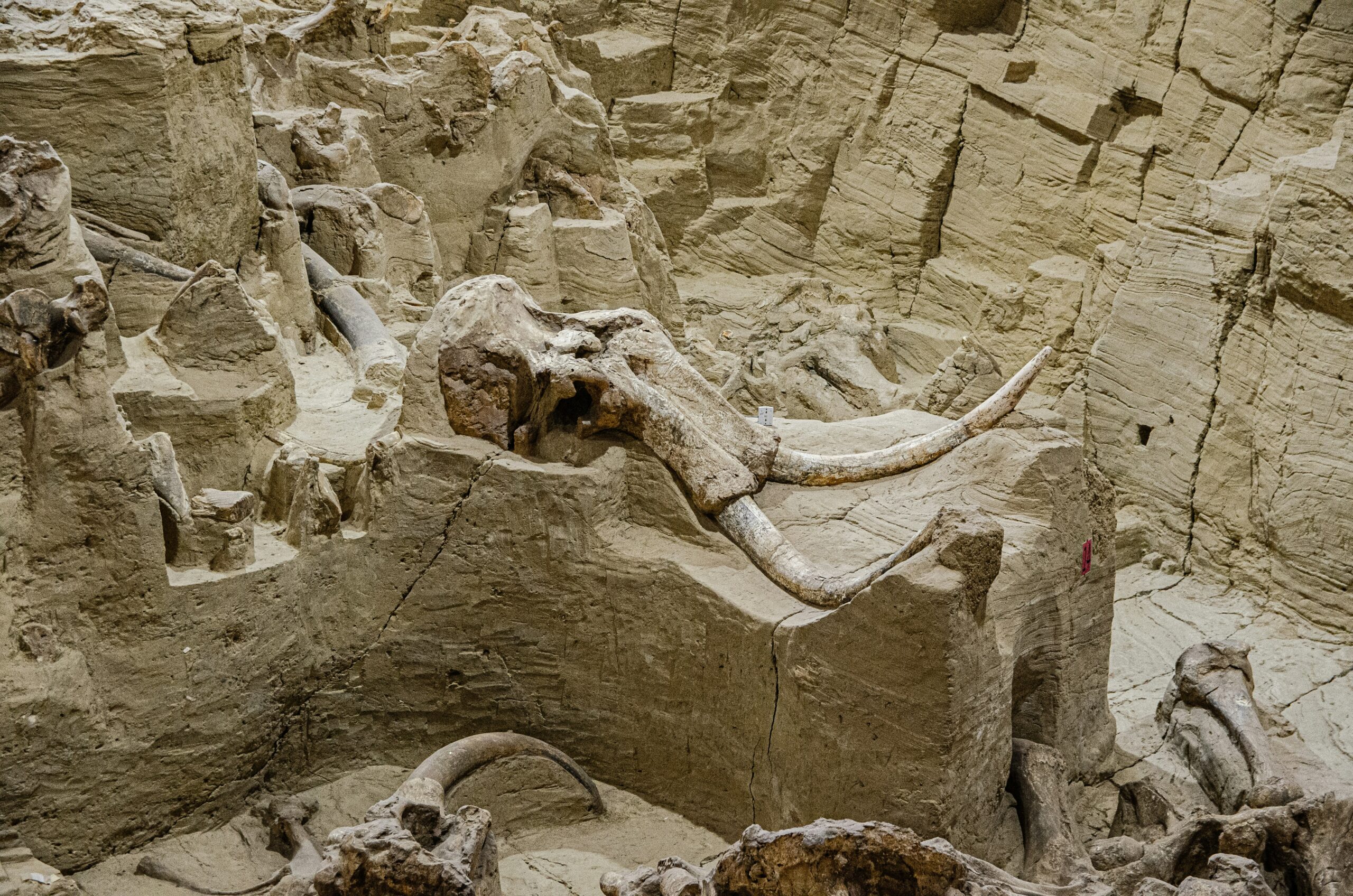
The Younger Dryas, a period of abrupt and intense climate cooling that brought the last Ice Age roaring back for over a millennium, remains a profound enigma in Earth’s history. Spanning roughly from 12,900 to 11,700 years ago, this dramatic climatic shift had far-reaching consequences, profoundly impacting ecosystems and the human populations that navigated them. While the geological and paleoclimatological evidence for the Younger Dryas is robust, its direct impact on early human societies, and the adaptive strategies they employed, has been a persistent question mark. However, a growing body of archaeological research is now meticulously sifting through the strata of human history, unearthing compelling clues that illuminate how our ancient ancestors not only survived but in some cases, seemingly flourished, through this challenging epoch.
The narrative of human adaptation during the Younger Dryas is not a monolithic one. From the vast plains of North America to the savannas of Africa and the Fertile Crescent, different regions experienced varying degrees of climatic impact, and in turn, yielded diverse human responses. Archaeologists, armed with increasingly sophisticated dating techniques, advanced analytical methods, and a deeper understanding of paleoenvironmental reconstructions, are piecing together a more nuanced picture of human resilience, innovation, and even, in some hypotheses, trauma. This article delves into the ongoing, exhilarating quest to uncover and interpret the rich tapestry of archaeological evidence left by our forebears as they grappled with the harsh realities of the Younger Dryas.
The Greenland Ice Core Revelation: A Climate Benchmark
Recent studies have shed light on the Younger Dryas period, revealing significant archaeological evidence that suggests a complex interaction between early human populations and their environment during this time. For a deeper understanding of how ancient societies adapted to climatic changes, you may find it interesting to explore related topics in the realm of technological advancements and their impacts on culture. One such article discusses the evolution of manufacturing in modern contexts, which can provide a fascinating contrast to ancient practices. You can read more about it here: Exploring Mexico’s Electronics Manufacturing Hubs.
The Ice Core Archives
The pivotal discovery that truly brought the Younger Dryas into sharp focus for a wider scientific community came from the analysis of deep ice cores drilled in Greenland. These cylindrical samples of ancient ice act as unparalleled archives of Earth’s past atmosphere, trapping dust, volcanic ash, and crucially, air bubbles that preserve the isotopic composition of greenhouse gases.
The Isotopic Signature of Change
The remarkable resolution of ice cores allows scientists to reconstruct past temperatures with astonishing accuracy. By analyzing the ratio of oxygen isotopes (specifically, oxygen-18 to oxygen-16) in the ice, researchers can infer past temperatures at the time the snow fell. The Greenland ice cores revealed a dramatic and abrupt cooling event, a stark deviation from the general warming trend that marked the end of the last glacial period. This cooling was not a gradual decline but a sharp plunge, reaching temperatures comparable to those in the midst of the ice age, before another equally abrupt warming signaled its end.
Dating the Event: Unraveling the Chronology
The layers within the ice are precisely datable through counting annual snowfall layers and by referencing distinctive geological markers, such as volcanic ash layers (tephra) that can be cross-dated with other geological records. This meticulous dating established the Younger Dryas as a distinct and precisely timed climatic episode, providing a crucial chronological framework for correlating with archaeological findings across the globe. Without this robust climate benchmark, linking specific human adaptations to this particular period would be far more speculative. The Greenland ice cores, therefore, serve as the bedrock upon which much of the archaeological investigation into the Younger Dryas is built.
North American Adaptations: Navigating Ice Age Remnants
The impact of the Younger Dryas on North America was particularly pronounced, with a significant resurgence of glacial conditions. This return to a colder, drier climate presented immense challenges for the hunter-gatherer societies of the continent.
The Clovis Culture and the Younger Dryas Hypothesis
One of the most prominent hypotheses connecting a specific archaeological culture to the Younger Dryas centers on the Clovis culture. Characterized by their distinctive, fluted projectile points, Clovis people were highly mobile hunter-gatherers who occupied much of North America around 13,500 to 12,800 years ago. The initial hypothesis, notably championed by James Kennett and others, proposed that the impact of a comet or asteroid at the onset of the Younger Dryas, or its subsequent effects, may have caused widespread environmental disruption, including wildfires and climate change, leading to the decline of the megafauna upon which Clovis people depended, and ultimately, their disappearance.
Examining the Evidence: Debates and Interpretations
This ” Younger Dryas impact hypothesis” has been a subject of intense scientific debate. While proponents point to purported evidence such as nanodiamonds, carbon spherules, and platinum anomalies found in geological layers dating to the Younger Dryas onset, critics raise concerns about the widespread distribution and interpretation of these markers. The exact timing of Clovis disappearance also coincides with the Younger Dryas cool period, leading to ongoing research to disentangle population shifts, climate impacts, and potential external factors.
Post-Clovis Adaptations and Regional Diversification
Following the period traditionally associated with Clovis, a diversification of lithic technologies and settlement patterns becomes evident across North America. This suggests that human groups adapted to the altered environmental conditions by developing new subsistence strategies and territorial organizations.
The Folsom Tradition: Refining Hunting Strategies
The Folsom tradition, which succeeded Clovis, is recognized for its even more refined lanceolate points, often exhibiting delicate fluting. While Folsom toolkits suggest a continued reliance on hunting, particularly of bison, the spatial distribution of Folsom sites may indicate more localized hunting grounds and possibly smaller, more tightly-knit social groups compared to the presumed widespread reach of Clovis. The ability of Folsom groups to persist through the Younger Dryas suggests a successful adaptation to the prevailing climate.
Paleo-Arctic Traditions: Survival in the North
In the far north, evidence of Paleo-Arctic traditions also persists through and beyond the Younger Dryas. These groups, adapted to tundra environments that would have been amplified by the Younger Dryas cooling, developed specialized toolkits for hunting cold-adapted fauna. Their survival underscores the remarkable capacity of human populations to persist in challenging environments through technological and behavioral innovation.
The Fertile Crescent: Resilience in a Changing Landscape
The Fertile Crescent, a region of immense ecological and cultural significance, also bears the imprint of human responses to the Younger Dryas. While not as drastically glaciated as North America, this area experienced significant shifts in rainfall and vegetation.
The Natufian Culture: Pre-Adapting for the Cold
The Natufian culture, flourishing in the Levant from approximately 12,800 to 10,000 BCE, predates and overlaps with the Younger Dryas. This culture is renowned for its sophisticated hunter-gatherer lifestyle, characterized by sedentary or semi-sedentary settlements, the intensive harvesting of wild cereals, and the beginnings of plant domestication.
Sedentism and Resource Management
The Natufian emphasis on wild cereal exploitation and their semi-permanent settlements may have provided a degree of buffering against rapid climate shifts. Their knowledge of local flora and fauna, coupled with the ability to store and process resources, could have allowed them to weather periods of reduced rainfall that likely accompanied the Younger Dryas in this region. The presence of elaborate burial practices and communal structures also suggests a complex social organization that could have facilitated collective adaptation.
The Pre-Pottery Neolithic A and B: A New Dawn in the Post-Dryas Era
Following the Younger Dryas, the region witnessed a profound transformation leading to the Neolithic Revolution. The emergence of the Pre-Pottery Neolithic A (PPNA) and later Pre-Pottery Neolithic B (PPNB) marks a significant acceleration in the adoption of fully domesticated plants and animals, alongside the development of permanent villages and more complex social structures.
The Younger Dryas as a Catalyst for Change?
The abrupt climatic stress of the Younger Dryas has been controversially proposed by some researchers as a potential catalyst for the rapid adoption of fully agricultural economies. The idea is that the environmental instability of the Younger Dryas, even if less severe than in other regions, might have pushed existing semi-agricultural practices to their limits, thereby incentivizing a more radical shift towards reliable food production through agriculture. However, other scholars argue that the trend towards domestication was already underway and that the Younger Dryas’s impact was more about recalibrating existing practices rather than initiating a dramatic new path. The debate continues to explore the complex interplay between climate, resource stress, and cultural innovation in the transition to agriculture.
Recent studies have shed light on the Younger Dryas period, revealing significant archaeological evidence that may reshape our understanding of early human adaptation to climate change. For a deeper exploration of how these findings connect to broader historical contexts, you can read more in this insightful article about trade relations and their impact on cultural exchanges. The connections between environmental shifts and human behavior are crucial, and this article provides a fascinating perspective on how such dynamics have evolved over time. To learn more, visit this link.
Beyond Broad Strokes: Regional Specificity and Micro-Adaptations
While continental-scale climate shifts are undeniable, their impact on human societies was never uniform. Archaeological investigations are increasingly focusing on regional specificity and the subtle, yet crucial, micro-adaptations that allowed people to thrive in diverse localized environments during the Younger Dryas.
Environmental Proxies and Human Assemblages
Understanding the specific environmental conditions of a given archaeological site is paramount. Researchers meticulously analyze paleoenvironmental proxies, such as pollen records, faunal remains, and soil analysis, to reconstruct the local flora, fauna, and climate that prevailed during the Younger Dryas. This allows for a more direct correlation between the human assemblages (tools, settlements, diet) and the prevailing ecological pressures.
Case Studies: Diverse Responses to a Common Challenge
- The Magdalenian Tradition in Europe: While the Younger Dryas cooling was less intense in parts of Europe compared to North America, it still led to significant changes in landscape and game availability. The Magdalenian culture, known for its sophisticated art and tool industries, adapted through hunting of reindeer and other cold-adapted animals, often pursuing them across vast distances. The continued flourishing of Magdalenian sites throughout the period speaks to their robust adaptive strategies, which may have included dynamic settlement patterns and efficient hunting technologies.
- East Asian Adaptations: In East Asia, evidence suggests different regional responses. While some areas experienced drier conditions, others may have seen shifts in the distribution of key resources. Archaeological sites from this period reveal diverse toolkits and subsistence strategies, indicating a capacity for local innovation in response to specific environmental challenges.
The Role of Mobility and Networks
The Younger Dryas likely spurred significant shifts in human mobility patterns. For some groups, increased mobility may have been essential for tracking migrating game herds or accessing dwindling water sources. For others, it might have led to more localized movements within redefined territories.
Interregional Exchange and Information Flow
The exchange of information about resources, technologies, and successful strategies would have been invaluable during this period of environmental flux. Evidence of long-distance trade networks, even during the Younger Dryas, suggests that human societies were more interconnected than previously assumed, and that such networks could have played a crucial role in disseminating adaptive knowledge.
The Future of Younger Dryas Archaeology: Refined Techniques and New Questions
The ongoing research into the Younger Dryas is a testament to the dynamic and evolving nature of archaeology. As new technologies emerge and our understanding deepens, the quest to unravel the human story of this climatic episode continues to yield fascinating discoveries.
Advanced Dating and Analytical Technologies
The precision of radiocarbon dating has been a cornerstone of Younger Dryas research, but ongoing advancements, such as refinements in AMS (Accelerator Mass Spectrometry) dating and the growing use of cosmogenic nuclide dating for geological layers, are further enhancing chronological accuracy. Furthermore, advanced analytical techniques like stable isotope analysis applied to human remains and artifacts can provide insights into diet, migration patterns, and even social structures, offering a more intimate glimpse into past lives.
Geoarchaeology and Landscape Reconstruction
The integration of geoarchaeological approaches, which examine the interplay between geological processes and archaeological evidence, is proving invaluable. This allows for a more nuanced understanding of how landscapes changed during the Younger Dryas and how human settlements were situated within these dynamic environments.
Emerging Hypotheses and Interdisciplinary Collaboration
The Younger Dryas continues to be a fertile ground for new hypotheses, pushing the boundaries of our understanding of human adaptability, societal resilience, and the potential triggers for major cultural shifts. The most fruitful avenues of research increasingly involve interdisciplinary collaboration, bringing together archaeologists, paleoclimatologists, geologists, biologists, and anthropologists.
The Search for “Knock-on” Effects
Future research will undoubtedly delve deeper into the potential “knock-on” effects of Younger Dryas climate shifts on human health, social organization, and long-term cultural trajectories. Questions about the potential for increased conflict, disease prevalence, or even the development of new forms of social organization in response to resource scarcity will continue to drive inquiry. The story of human adaptation to the Younger Dryas is far from complete, and each unearthed artifact, each meticulously analyzed layer of ice or soil, brings us closer to understanding the remarkable resilience and ingenuity of our ancient ancestors in the face of profound environmental challenges.

What Heated These Minerals? (The Abu Hureyra Mystery)
FAQs
What is the Younger Dryas period?
The Younger Dryas period was a sudden and intense cooling event that occurred around 12,900 to 11,700 years ago, marking the end of the last glacial period. It is named after a flower, Dryas octopetala, that flourished during this cold period in Europe.
What archaeological evidence supports the existence of the Younger Dryas period?
Archaeological evidence supporting the existence of the Younger Dryas period includes the discovery of Clovis points, a distinctive type of stone tool, and the presence of black mats, which are organic-rich layers of sediment, in various sites across North America.
How did the Younger Dryas period impact human populations?
The Younger Dryas period is believed to have had a significant impact on human populations, leading to changes in subsistence strategies and migration patterns. Some researchers suggest that the environmental changes during this period may have contributed to the extinction of megafauna and the decline of the Clovis culture.
What role does archaeology play in understanding the Younger Dryas period?
Archaeology plays a crucial role in understanding the Younger Dryas period by providing evidence of human adaptation to environmental changes, as well as insights into the cultural and technological developments of ancient societies during this time.
What are some key archaeological sites associated with the Younger Dryas period?
Key archaeological sites associated with the Younger Dryas period include the Clovis sites in North America, such as the famous Clovis site in New Mexico, as well as sites in Europe, such as the Ahrensburg culture sites in Germany and the Magdalenian sites in France. These sites have yielded important artifacts and evidence related to the Younger Dryas period.