
The frigid depths of the Arctic Ocean, a realm of perpetual twilight and crushing pressures, held more than just icy waters and unique ecosystems during the Cold War. Beneath the frozen surface, a secret world of technological ambition and strategic maneuvering unfolded. This was the domain of “Under the Ice: Secret Cold War Projects,” a clandestine arena where superpowers vied for dominance, driven by an insatiable hunger for intelligence, defense, and technological superiority. The vast, unforgiving environment of the Arctic served as both a strategic frontier and a vast, natural vault, concealing audacious projects that reshaped the course of military history and pushed the boundaries of human ingenuity.
The Arctic, a vast and largely unexplored expanse, became a pivotal theater of operations during the Cold War. Its proximity to both the United States and the Soviet Union, coupled with its strategic waterways and resource potential, made it an irresistible target for military strategists. The frozen landscape, however, presented unique challenges and opportunities, birthing a series of unconventional and often audacious projects designed to exploit its peculiarities.
The Northern Peril: Soviet and American Proximity
The geographical realities of the Cold War placed the Soviet Union and the United States in a precarious embrace across the Arctic. The Bering Strait, a relatively narrow waterway, separated the two superpowers, making the Arctic a sensitive border. This proximity fueled a constant sense of vigilance and a drive to establish a strategic advantage. The Soviet Union, with its vast northern territories, possessed a natural foothold, while the United States was compelled to develop sophisticated methods to counter potential threats and gather intelligence.
The Icy Veil: Natural Camouflage and Concealment
The perpetual ice cover of the Arctic offered an unparalleled advantage for clandestine operations. It provided a natural shield, concealing submarines, listening posts, and other sensitive installations from aerial and satellite surveillance. This “icy veil” became a strategic asset, allowing for the development and deployment of projects that might otherwise have been readily discovered. The inherent secrecy of the environment naturally lent itself to the shadowy nature of Cold War espionage and military planning.
Resource Rush: Strategic Importance of Arctic Wealth
Beyond its strategic military positioning, the Arctic held vast untapped resources, particularly oil and natural gas. The Cold War arms race also had a parallel “resource race” component, with both sides recognizing the long-term importance of securing these vital assets. Control over these resources could fuel military endeavors and economic power, further intensifying the strategic competition in the region. This underlying economic motivation often intertwined with military objectives, creating a complex web of interests beneath the ice.
During the Cold War, numerous secret projects were conducted under the ice, revealing the extent of military and scientific endeavors during this tense period. These operations often involved advanced research and development, with some initiatives aimed at exploring the Arctic’s potential for strategic advantages. For a deeper understanding of how logistical considerations have evolved over time, you can read a related article that discusses the efficiency and advantages of manufacturing in different regions, including Mexico. Check it out here: Maximizing Efficiency: Logistical Advantages of Manufacturing in Mexico.
Submarine Warfare: The Silent Hunters Beneath the Waves
The most significant and enduring “Under the Ice” projects revolved around submarine warfare. The ability to operate and detect submarines beneath the ice pack was paramount, as these silent hunters represented a potent offensive and defensive capability. The Arctic provided a unique operational environment for submarines, offering both concealment and a challenging theater for detection.
The Tyranny of the Ice: Operational Challenges
Operating submarines beneath the Arctic ice pack presented immense technical and logistical hurdles. The sheer thickness and unpredictability of the ice floes made navigation treacherous. Sonar systems, crucial for detecting other vessels, were significantly hampered by the ice, creating acoustic blind spots and generating false readings. Furthermore, surfacing for ventilation or communications was a perilous undertaking, often requiring careful selection of leads (openings in the ice) or resort to ice-breaking capabilities.
Project CHATTER: The Quest for Acoustic Dominance
The United States, through initiatives like Project CHATTER, invested heavily in developing advanced sonar technologies. This involved deploying an array of hydrophones, both fixed and mobile, across the Arctic seabed and within the water column. The goal was to create an acoustic fence, a network designed to detect the faintest sounds of Soviet submarines, even when they were operating at great depths or beneath the ice. This was a continuous arms race, with each technological advancement in detection being met with countermeasures to reduce acoustic signatures.
The Alfa and the Typhoon: Soviet Submarine Prowess
The Soviet Union, in parallel, was not idle. They developed some of the most advanced and formidable submarines of the Cold War, such as the Alfa-class and the Typhoon-class. The Alfa-class, in particular, was renowned for its incredible speed and depth capabilities, designed to outmaneuver and evade Western detection systems. The Typhoon-class, the largest submarine ever built, carried a formidable arsenal of intercontinental ballistic missiles, posing a significant threat from the icy depths. These Soviet advancements spurred further innovation in detection and anti-submarine warfare for the United States.
Under-Ice Navigation: The Art of the Deep Dive
Navigating beneath the ice required specialized training and innovative techniques. Submarine crews became masters of reading the ice, understanding its formations, and exploiting natural openings. Some submarines were equipped with specialized drills or cutting mechanisms to create emergency escape routes or communication points if trapped. The development of acoustic mapping and under-ice positioning systems became crucial for safe and effective operations in this challenging environment.
Covert Operations: Eyes and Ears Under the Frozen Expanse
The Arctic’s vastness and remoteness made it an ideal location for clandestine intelligence gathering operations. The Cold War was as much a battle of information as it was of military might, and the desire to glean insights into Soviet capabilities led to a host of audacious and often risky projects.
Project ICEWORM: Listening to the Russian Bear
One of the most ambitious covert projects was Project ICEWORM, a colossal underwater listening array deployed by the United States in the Barents Sea. This project involved laying thousands of miles of sensitive hydrophones on the seabed, designed to intercept Soviet submarine communications and sonar emissions. The sheer scale and complexity of deploying and maintaining such an array under the ice were staggering, requiring specialized vessels and a dedicated workforce operating in extreme conditions.
The Arctic Reconnaissance Role: Aerial and Satellite Surveillance
While much attention focused on underwater operations, aerial and satellite reconnaissance played a vital role. Specialized aircraft, often adapted for cold-weather operations, flew over the Arctic, equipped with sophisticated sensors to detect Soviet military installations, airfields, and naval movements. Satellite technology, in its nascent stages, also began to provide an overhead view, though the persistent cloud cover and polar night posed significant challenges.
The Human Element: Spies and Infiltration
Despite the technological advancements, human intelligence remained crucial. Specialized teams of operatives, trained in survival in extreme cold and covert infiltration, were sometimes deployed to gather information from Soviet bases or research facilities. These missions were fraught with peril, with the unforgiving environment posing as great a threat as enemy forces. The success of such missions often hinged on meticulous planning and the bravery of the individuals involved.
The “Sound Surveillance System” (SOSUS): A Global Network
While not exclusively an Arctic project, the Sound Surveillance System (SOSUS) had a significant Arctic component. This was a globally integrated network of underwater hydrophones designed to detect and track submarines. The Arctic deployments of SOSUS were critical for monitoring Soviet naval activity in their home waters and during their patrols in the Arctic. The data collected by SOSUS provided invaluable intelligence on Soviet submarine movements and capabilities.
Scientific Exploration and Dual-Use Technology
The Cold War era saw a blurring of lines between military objectives and scientific exploration. Many of the technologies and infrastructure developed for military purposes had significant scientific applications, and vice versa. The Arctic, with its unique environmental conditions, became a focal point for both.
Polar Research Stations: Hidden Military Outposts
Numerous research stations were established across the Arctic by both the US and the USSR. While officially dedicated to scientific research, many of these stations served a dual purpose, acting as intelligence gathering hubs, communication relays, and potential staging points for military operations. The remote locations and harsh environments provided a natural cover for military activities, making it difficult to distinguish between genuine scientific endeavors and covert military objectives.
Ice Core Analysis: Unlocking Climate Secrets and Strategic Clues
The study of ice cores in the Arctic offered a glimpse into past climate conditions. However, the techniques and technology used for ice core drilling and analysis could also be adapted for other purposes. The ability to penetrate deep into the ice, for instance, could be relevant for assessing the stability of underwater structures or for geological surveys that might reveal resource deposits.
Mapping the Seabed: Strategic Charts and Resource Discovery
Detailed mapping of the Arctic seabed was crucial for navigation, particularly for submarines. However, these mapping efforts also inadvertently revealed vast potential resource deposits, such as oil and gas. The race to map and understand the Arctic’s geology was therefore intertwined with both strategic military positioning and the pursuit of economic advantage.
Technological Spin-offs: From Military to Civilian Use
Many technologies developed for Arctic Cold War projects found their way into civilian applications. Advanced materials science, developed to withstand extreme cold, found use in everything from aerospace to everyday consumer goods. Innovations in navigation and communication systems, honed in the challenging Arctic environment, also benefited civilian sectors. This demonstrates how the pressures of the Cold War, even in its most secretive endeavors, could foster broader technological progress.
Recent discoveries have shed light on secret Cold War projects hidden beneath the ice, revealing the extent of military operations during that tense period. These projects, often shrouded in mystery, have sparked interest among historians and researchers alike. For those intrigued by how environmental factors, such as climate change, can impact historical events, an insightful article discusses how tree rings reveal evidence of a severe drought during the Bronze Age. You can read more about this fascinating connection in the article found here.
The Legacy of the Ice: Lingering Echoes and Modern Implications
| Project Name | Location | Duration | Objective |
|---|---|---|---|
| Project Iceworm | Greenland | 1959-1967 | Establishing a network of mobile nuclear missile launch sites under the ice |
| Project COLDFEET | Arctic Ice Station Zebra | 1962 | Collecting intelligence on a Soviet Arctic research station |
| Project Bluebird | Antarctica | 1956-1958 | Exploring the feasibility of establishing a military base under the ice |
The era of “Under the Ice: Secret Cold War Projects” has largely passed, but its legacy continues to shape the Arctic today. The infrastructure that remains, the lessons learned, and the geopolitical sensitivities have all contributed to the modern Arctic landscape.
Ghostly Infrastructure: Abandoned Bases and Listening Posts
Scattered across the Arctic are the remnants of Cold War ambition: abandoned military bases, silent listening posts, and decommissioned radar sites. These ghost towns of a bygone era serve as stark reminders of the immense resources and effort poured into securing this frozen frontier. Their environmental impact, often overlooked during their operational years, is now a growing concern.
The Resurgence of Arctic Geopolitics: A New Era of Competition
The strategic importance of the Arctic has not diminished; in fact, it has intensified. As climate change melts away the ice, new shipping routes open, and previously inaccessible resources become more attainable. This has led to a renewed geopolitical interest in the region, with nations vying for influence and control. The echoes of Cold War competition can be heard in the modern scramble for Arctic dominance.
Environmental Concerns: The Unseen Scars
The environmental impact of these clandestine Cold War projects is a growing concern. The deployment of vast underwater arrays, the construction of remote bases, and the potential for hazardous material leakage from abandoned sites all pose long-term risks to the fragile Arctic ecosystem. Understanding and mitigating these environmental legacies is a critical challenge for the future.
The Enduring Mystery: What Remains Hidden?
While much has been revealed about Cold War Arctic projects, the vastness of the region and the nature of secrecy ensure that some mysteries may endure. The deep ocean trenches and unexplored ice shelves may still hold secrets from that era of intense rivalry and technological ambition. The allure of the unknown beneath the ice continues to captivate the imagination.
In conclusion, the Arctic Ocean, a seemingly barren and desolate expanse, was a crucible of Cold War innovation and strategic tension. “Under the Ice: Secret Cold War Projects” unveils a chapter of history where technological prowess, daring espionage, and relentless competition unfolded in the most extreme environment on Earth. These audacious ventures, born from the shadows of conflict, left an indelible mark on the Arctic, shaping its present and continuing to influence its future in profound ways.
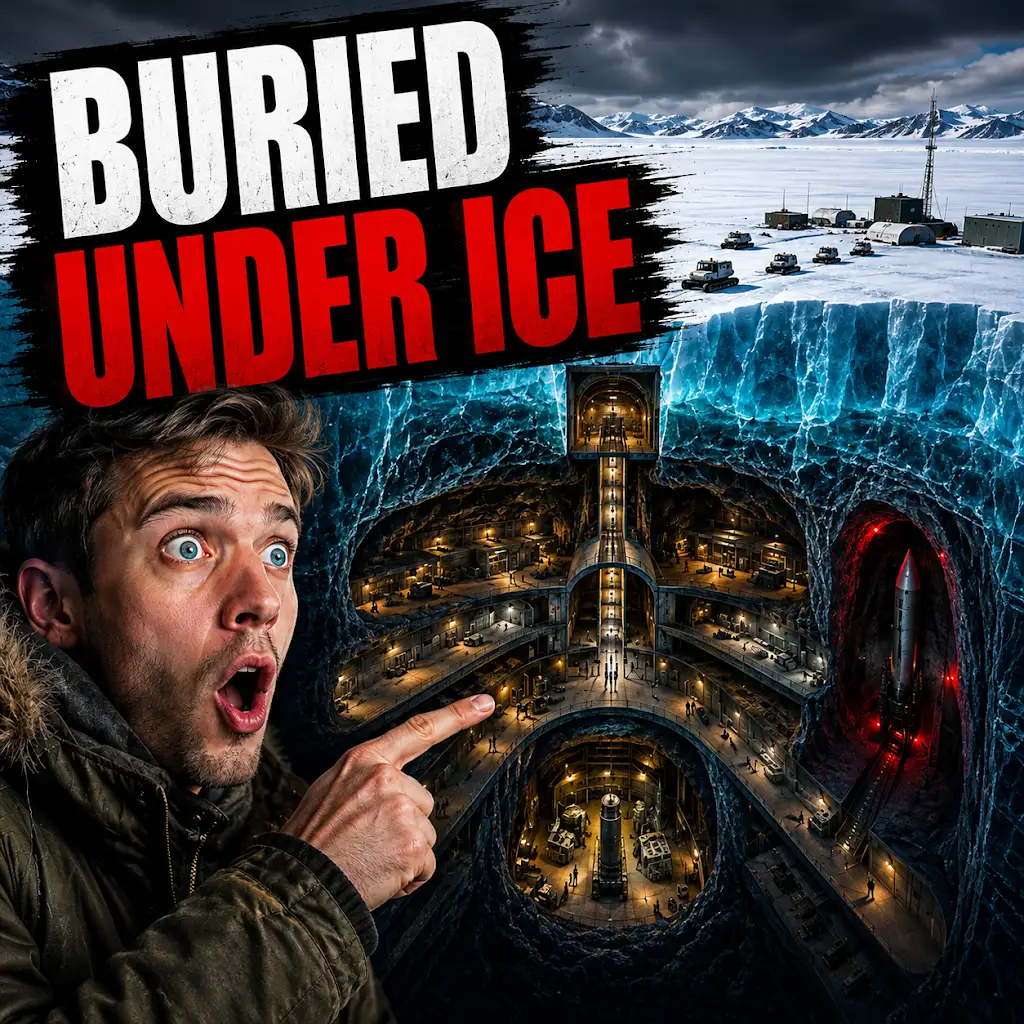
The U.S. Built a Nuclear City Under Greenland. The Ice Won.
FAQs
What were the secret Cold War projects under the ice?
During the Cold War, both the United States and the Soviet Union conducted various secret projects under the ice in polar regions. These projects included military installations, research facilities, and testing sites.
Where were these secret Cold War projects located?
The secret Cold War projects were primarily located in the Arctic and Antarctic regions. The remote and harsh environments provided ideal locations for conducting covert operations and experiments away from prying eyes.
What was the purpose of these secret Cold War projects?
The purpose of these projects varied, but they were primarily aimed at gaining strategic military advantages, conducting scientific research, and testing new technologies in extreme conditions. Some projects also focused on monitoring and surveilling the activities of rival nations.
How were these secret Cold War projects kept hidden?
These projects were kept hidden through a combination of secrecy, camouflage, and misinformation. Many of the installations were designed to blend in with the natural surroundings, and their existence was often denied or kept classified for decades.
What is known about these secret Cold War projects today?
Many of these secret Cold War projects have since been declassified, allowing researchers and historians to uncover details about their purpose, operations, and impact. However, some information remains classified, and the full extent of these projects may never be fully known.