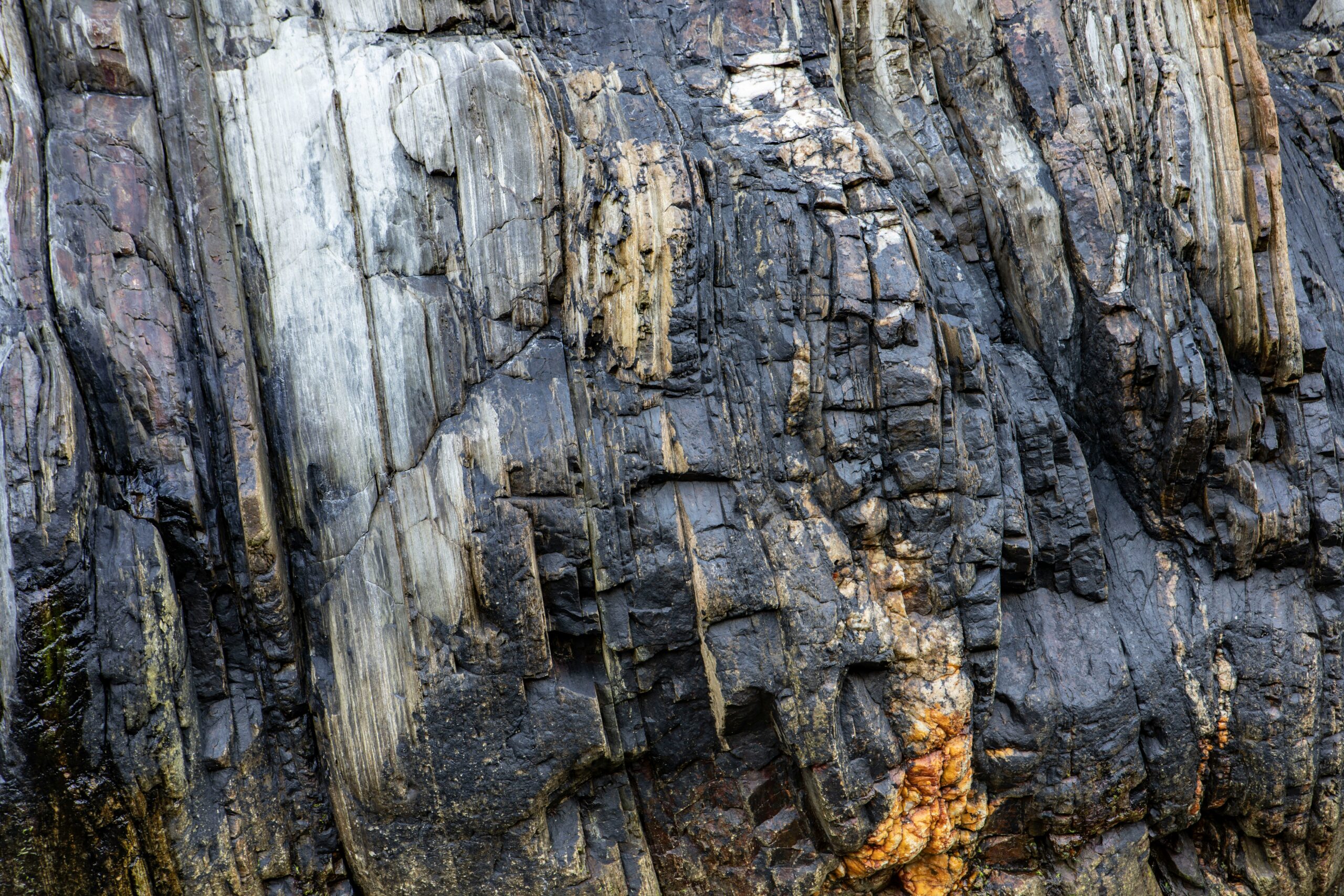
Earth, a planet teeming with life and dynamic geological processes, keeps secrets buried deep within its crust and mantle, remnants of a history stretching back billions of years. Unearthing these hidden chapters of Earth’s past is an ongoing scientific endeavor, a meticulous detective work that employs cutting-edge technology and a keen understanding of geological principles to decipher the planet’s ancient narrative. From the formation of its very core to the evolution of its surface and the origins of life itself, each rock, mineral, and geological formation offers a tantalizing glimpse into a world vastly different from the one we inhabit today. The recent flood of discoveries, published and reported as of June 29, 2026, paints a vivid picture of relentless progress in this field, revealing profound insights into our planet’s deep past.
The story of Earth begins with its formation, a chaotic period of accretion and bombardment that laid the foundation for all subsequent geological and biological evolution. Understanding this nascent stage is crucial for comprehending the planet’s fundamental characteristics and the conditions that eventually gave rise to life. Recent scientific breakthroughs are pushing the boundaries of our knowledge, bringing us closer than ever to understanding Earth’s earliest moments.
The Echoes of Proto Earth
The sheer age of our planet, approximately 4.5 billion years, means that direct evidence of its formative stages is incredibly scarce. However, a groundbreaking discovery by MIT researchers offers a direct window into this primordial era. By analyzing rare chemical signatures found in ancient rocks from Quebec, they have identified material that likely predates the cataclysmic collision with a Mars-sized object, known as Theia, an event widely believed to have formed the Moon. These remnants of a “proto Earth” provide the first tangible evidence of our planet’s earliest composition, before it was significantly altered by this monumental impact. This finding is revolutionizing our understanding of planetary accretion and the very building blocks from which Earth was assembled.
The Dawn of Our Crust: The Hadean Eon Revealed
The Hadean Eon, the Earth’s earliest geological period, is notoriously difficult to study due to the intense geological activity that erased most of the evidence. However, the confirmation of the oldest known rock formation, dating back an astounding 4.16 billion years, also in northern Quebec, is a monumental achievement. These ancient remnants represent Earth’s earliest crust, offering invaluable clues about the conditions that prevailed during this enigmatic epoch. Scientists are meticulously studying these formations, hoping they hold secrets to the planet’s initial cooling, the formation of water, and perhaps even the earliest stirrings of life, suggesting that life might have emerged much sooner than previously thought.
Tracing the Origins of Geological Resources
Beyond the fundamental questions of Earth’s formation and early life, understanding geological history is also crucial for resource exploration. The planet’s internal processes, particularly volcanism, play a significant role in concentrating valuable elements. Recent advancements have provided a powerful new tool for this endeavor.
A Global “Treasure Map” for Rare Earth Elements
A significant development in geological resource exploration is the creation of a global “treasure map” for rare earth elements. These elements, crucial for modern technologies ranging from smartphones to renewable energy systems, are often found in specific types of volcanic rocks. Scientists have developed sophisticated models that predict where these rocks are most likely to form, based on a deep understanding of crustal evolution and magmatic processes. This map promises to significantly streamline the search for these vital resources, reducing the environmental impact of exploration and ensuring future technological advancements.
Exploring hidden geological history can provide valuable insights into the formation and evolution of our planet, as well as the impact of geological events on human civilization. For a deeper understanding of how geological factors influence contemporary issues, including geopolitics in the Middle East, you can read the article on navigating these complexities at Navigating Middle East Geopolitics: Challenges and Opportunities. This article delves into the interplay between geological resources and political dynamics, shedding light on the region’s intricate history.
The Deepest Realms: Unveiling Subsurface Secrets
The Earth’s interior, from its deep crust to its churning mantle, is a realm of immense pressure, heat, and chemical complexity. Geologists and geophysicists employ sophisticated imaging techniques and indirect methods to probe these inaccessible regions, revealing a dynamic and far more intricate planetary interior than previously imagined. Recent discoveries are dramatically reshaping our models of Earth’s internal structure and processes.
Echoes of Subduction: Ancient Worlds in the Mantle
The process of plate tectonics involves the subduction of oceanic crust into the Earth’s mantle. For decades, scientists have assumed that this subducted material is gradually recycled and homogenized within the mantle over geological timescales. However, new seismographic imaging has revealed startling evidence to the contrary. Hidden patches of ancient, subducted crust have been identified deep within the Earth’s mantle, defying previous models of mantle homogeneity. These “sunken worlds” are remnants of ancient oceanic plates that have remained distinct for eons, influencing mantle dynamics and potentially acting as large-scale reservoirs of heat and chemical signatures. Their discovery challenges our understanding of mantle convection and the long-term fate of subducted material.
Beneath the Ice: Hidden Basins of Antarctica
The vast expanse of Antarctica, particularly its East Antarctic ice sheet, conceals a complex and largely unexplored subglacial landscape. Recent discoveries have revealed a massive, interconnected network of hidden subglacial basins beneath the East Antarctic ice. These basins, some potentially larger than previously known, indicate a far more complex subglacial topography than initially believed. Understanding these features is crucial for predicting ice sheet behavior, its contribution to sea-level rise, and the potential for unique subglacial ecosystems that may have persisted in isolation for millions of years.
The Hadal Depths: Life Thrives in the Abyss
The deepest parts of the ocean, the hadal zones, were once thought to be largely devoid of life due to the extreme pressure and lack of sunlight. However, scientific exploration continues to reveal surprising biodiversity in these extreme environments. The discovery of the deepest known methane-ecosystem, a vast community of organisms thriving at depths of 5,800 to over 9,000 meters, is a testament to life’s tenacity. These organisms do not rely on sunlight for energy, but instead feed on methane, a potent greenhouse gas. This ecosystem provides crucial insights into the limits of life and the potential for chemosynthetic life forms to exist in environments previously considered uninhabitable, both on Earth and potentially on other planets.
The Living Past: Fossils, Stromatolites, and Ancient Ecosystems

While rocks and minerals tell a geological story, the fossil record provides direct evidence of past life. More recently, the discovery of living geological structures and vast, ancient biological networks has further blurred the lines between the geosphere and the biosphere, revealing the deep interconnectedness of Earth’s systems.
Living Fossils: Red Sea Stromatolites
The discovery of living stromatolites in the Red Sea is a remarkable find, offering a direct link to Earth’s early life. Stromatolites are layered sedimentary structures produced by the growth of cyanobacteria, and their fossilized forms are among the oldest evidence of life on Earth, dating back as far as 3.48 billion years. Finding these ancient, algae-based geological structures alive today in Saudi Arabia provides an unparalleled opportunity to study the biology, geochemistry, and environmental conditions that supported early life on our planet. These living stromatolites can serve as modern analogs for understanding the origins of life and the evolution of Earth’s atmosphere.
The Hidden Fungal Superhighway
Beneath the surface of terrestrial ecosystems lies a vast and largely unseen network crucial for the health of the planet. Scientists have recently mapped an astonishing underground network of fungi spanning an estimated 110 quadrillion kilometers. This “fungal superhighway” plays a vital role in nutrient cycling, water transport, and communication between plants, effectively sustaining terrestrial life. Understanding the scale and function of this hidden network is fundamental to comprehending ecosystem resilience and the intricate web of life that underpins our planet’s biosphere.
Reshaping Plate Tectonics: The Dance of Continents

Plate tectonics is the fundamental theory explaining the movement of Earth’s lithospheric plates and the geological phenomena associated with them, such as earthquakes and volcanic activity. Reconstructing the past movements and arrangements of these plates is a complex puzzle, but new data and analytical techniques are allowing scientists to refine and even rewrite significant chapters of this history.
The Lost Tectonic Plate “Pontus” Rediscovered
The breakup of the supercontinent Pangaea is a cornerstone of plate tectonic theory, but understanding the precise details of this incredibly complex fragmentation has been an ongoing challenge. New magnetic data has led to the confirmation of a 120-million-year-old lost tectonic plate, dubbed “Pontus,” located near Borneo. The identification and mapping of this plate are reshaping our understanding of Pangaea’s breakup and the subsequent tectonic rearrangements of the Earth’s surface. It provides crucial missing pieces to the grand puzzle of continental drift.
Exploring hidden geological history can reveal fascinating insights into our planet’s past, much like the discoveries discussed in a recent article about ancient cartography and forbidden knowledge. This piece delves into how ancient maps can provide clues about lost civilizations and their understanding of the world around them. For those interested in the intersection of geology and history, this article is a must-read, as it uncovers the layers of knowledge that have shaped our understanding of Earth’s evolution. You can find it here: ancient cartography and forbidden knowledge.
The Anthropocene: A New Geological Epoch?
| Geological Event | Time Period | Description |
|---|---|---|
| Formation of Earth | 4.6 billion years ago | The process of Earth’s formation from cosmic dust and gas. |
| Formation of Continents | 3 billion years ago | The gradual process of continental landmasses forming from tectonic activity. |
| Ice Ages | 2.4 billion years ago to present | Periods of extensive glaciation that have shaped the Earth’s surface. |
| Mass Extinctions | Various periods | Events in which a significant proportion of Earth’s species become extinct, often due to geological or environmental changes. |
As human civilization has expanded its influence across the globe, its impact on the Earth system has become undeniable. Scientists are increasingly considering whether these impacts have been so profound as to mark the beginning of a new geological epoch.
Crawford Lake: A Candidate for the Anthropocene Marker
The sediment layers in Canada’s Crawford Lake are under consideration as a potential global stratotype section and point (GSSP) for the Anthropocene, a proposed new geological epoch characterized by significant human impact on Earth’s geology and ecosystems. The lake’s well-preserved sediment cores offer a clear and distinct record of human-induced changes, including the widespread proliferation of industrial pollutants and the homogenization of plant species, suggesting that humans began to trigger a new geological epoch around the 1950s. The formalization of the Anthropocene would represent a profound shift in how we perceive our place in Earth’s history, acknowledging humanity as a dominant geological force.
In conclusion, the ongoing unearthing of Earth’s hidden geological past is a testament to human curiosity and scientific ingenuity. The latest discoveries, from the remnants of proto Earth to living stromatolites and the potential dawn of the Anthropocene, are not just academic exercises. They are crucial for understanding our planet’s fundamental processes, predicting future geological events, managing vital resources, and ultimately, grasping humanity’s place within the grand, ever-evolving narrative of Earth. Each unearthed secret adds another layer to our comprehension, reminding us that the ground beneath our feet is a living archive, still yielding extraordinary tales of creation, change, and resilience.

The Sahara Won’t Stay a Desert Forever
FAQs
What is hidden geological history?
Hidden geological history refers to the study of the Earth’s past through the examination of rocks, fossils, and other geological features that are not readily visible on the Earth’s surface. This field of study helps scientists understand the processes that have shaped the Earth over millions of years.
How do scientists uncover hidden geological history?
Scientists uncover hidden geological history through various methods, including the analysis of rock layers, the study of fossils, the examination of ancient landscapes, and the use of dating techniques such as radiometric dating. These methods help scientists piece together the Earth’s geological history and understand how it has evolved over time.
Why is hidden geological history important?
Hidden geological history is important because it provides valuable insights into the Earth’s past, including the formation of continents, the movement of tectonic plates, the evolution of life, and the impact of past climate changes. Understanding hidden geological history can also help scientists predict future geological events and better comprehend the Earth’s natural processes.
What are some examples of hidden geological history?
Examples of hidden geological history include the discovery of ancient fossils that provide evidence of past life forms, the analysis of rock formations that reveal past environmental conditions, and the study of ancient landforms that indicate past geological events such as volcanic eruptions or earthquakes.
How does hidden geological history impact our understanding of the Earth?
Hidden geological history impacts our understanding of the Earth by providing a deeper insight into the planet’s past, including its formation, the development of its landscapes, and the evolution of life. This knowledge helps scientists make connections between past geological events and their impact on the Earth’s current state.