The relentless Virginia sun beat down on the sweat-slicked brows of archaeologists, their trowels meticulously scraping away centuries of earth. Beneath their careful hands lay not just dirt and debris, but the fragmented whispers of a story long buried, a narrative of survival, desperation, and ultimately, the enduring resilience of the English spirit in a new world. This was Jamestown, the first permanent English settlement in North America, and its past, once shrouded in the mists of time, was being painstakingly unearthed, bone by bone, artifact by artifact.
For centuries, the story of Jamestown was primarily told through the surviving written records, accounts filtered through the biases and memories of those who lived through its tumultuous early years. The “Starving Time,” the brutal winter of 1609-1610, loomed large in the popular imagination, a stark testament to the immense challenges faced by the early colonists. However, these narratives, while invaluable, offered only glimpses into the lived realities of those who perished. The physical remains of the settlers, their skeletal evidence, offered a more direct and often harrowing connection to their struggles. The discovery and meticulous study of these buried skeletons have transformed our understanding of early colonial life, revealing not just the hardships, but also the surprising health, diet, and even the societal structures of this nascent English community.
The Search for the Forgotten Colony
Jamestown’s rediscovery as a significant archaeological site was not an overnight revelation. For much of its history following abandonment, its precise location and extent were debated. While the historic triangle of Virginia tourism often centered on the reconstructed fort, the true footprint of the original settlement remained elusive. It wasn’t until the early 21st century, with the application of advanced remote sensing technologies and a renewed commitment to historical inquiry, that archaeologists, primarily from Preservation Virginia and the Colonial Williamsburg Foundation, began to systematically explore the area.
Mapping the Foundations of America
The initial focus of these modern excavations was to relocate and understand the physical boundaries of the original James Fort, a palisade structure that had been largely lost to erosion and encroaching development. Ground-penetrating radar and magnetometry revealed the outlines of earthworks and the buried foundations of structures, painting a picture of a fortified settlement that was far more extensive than previously imagined. This mapping was crucial, not only for understanding the spatial organization of the colony but also for guiding the search for the burial sites of its inhabitants.
The Discovery of the Forefathers’ Burial Ground
The breakthrough came in 2013 when, during a routine archaeological dig within the confines of the original fort’s palisade, the team unearthed a series of graves. This discovery was monumental. It suggested that the “Forefathers’ Burial Ground,” a location hinted at in historical documents but never definitively identified, had finally been found. The graves, clustered together, contained the skeletal remains of individuals who had lived and died during the early years of Jamestown. The significance of this find cannot be overstated, as it provided direct access to the physical evidence of the individuals who shaped this crucial chapter in American history.
Unearthing Individual Histories
Each grave represented a unique individual, a life cut short by the harsh realities of colonial existence. The careful excavation of these remains, a process that requires immense precision and specialized knowledge, began to reveal the stories etched in their bones. From the way they were buried to the artifacts found alongside them, every detail offered a clue to their identity, their status, and the circumstances of their death.
Recent archaeological discoveries have shed light on the skeletons buried beneath Jamestown, revealing insights into the lives and deaths of early settlers. These findings not only contribute to our understanding of colonial history but also highlight the fascinating connections between past and present construction techniques. For instance, an intriguing article discusses the remarkable properties of revolutionary Roman concrete, which has been found to possess self-healing capabilities. To explore this topic further, you can read the article here: Revolutionary Roman Concrete: Self-Healing Wonders.
The Starving Time: A Forensic Perspective
The “Starving Time” is perhaps the most infamous period in Jamestown’s history, a desperate winter where starvation and disease ravaged the colony. Historical accounts paint a grim picture of cannibalism, with survivors resorting to unimaginable acts to stay alive. While these accounts were chilling, they were often sensationalized and difficult to corroborate with physical evidence. The unearthing of the skeletons, however, provided a tangible and often horrific confirmation of the extreme measures taken.
Evidence of Desperation in the Bones
Among the skeletal remains, archaeologists discovered clear evidence of cannibalism. Cut marks on bones, specifically on femurs and tibias, indicated that flesh had been removed, a grim testament to the desperation of the starving colonists. These marks were not random; they were consistent with butchery, suggesting that the bodies of the deceased were indeed consumed. The analysis of these cut marks, using microscopic examination and comparative studies with animal butchery, provided undeniable forensic evidence of this abhorrent practice.
The Faces of Famine
Beyond the direct evidence of cannibalism, the skeletons also revealed the pervasive effects of malnutrition and disease. The bones of individuals who lived through the Starving Time often showed signs of severe growth retardation, anemia (evidenced by porotic hyperostosis), and deficiencies in essential nutrients. These physical manifestations painted a poignant picture of lives lived in a state of constant scarcity and suffering, offering a stark contrast to the idealized narratives of exploration and conquest. The fragile nature of some of these skeletons, their bones thin and brittle, spoke volumes about the toll that hunger and sickness had taken.
Beyond Cannibalism: Disease and Trauma
While cannibalism is a particularly gruesome aspect of the Starving Time, it was not the sole cause of death. Disease, rampant in the unsanitary conditions of the early colony, was a constant killer. The skeletons revealed evidence of various ailments, from tuberculosis to influenza, which would have weakened the colonists and made them more susceptible to starvation. Furthermore, trauma, both accidental and potentially violent, was also present in some remains, hinting at the inherent dangers of frontier life.
Unraveling the Web of Mortality
By analyzing the skeletal remains in conjunction with the historical record, archaeologists are able to unravel the complex web of mortality that characterized Jamestown. The presence of certain diseases can be correlated with specific periods of time, and the severity of malnutrition can indicate the intensity of food shortages. This interdisciplinary approach allows for a more nuanced understanding of the Starving Time, moving beyond sensationalism to a scientifically grounded appreciation of the human cost of early colonial endeavors.
The Unveiling of Early Colonial Lives: Beyond the Elite
Historical narratives have often focused on the prominent figures of Jamestown – the leaders, the governors, and those who penned the surviving accounts. The buried skeletons, however, offer a democratic voice to those who were largely invisible in the historical record: the ordinary settlers, the laborers, the women, and even the children. Their bones tell stories of their daily lives, their diets, their health, and their struggles, providing a more complete and inclusive picture of colonial society.
Diet and Health: A Surprising Revelation
Contrary to popular belief, many of the Jamestown skeletons, particularly those from the earlier periods before the worst of the Starving Time, exhibit surprisingly good health and a varied diet. Analysis of their bones and teeth reveals evidence of protein consumption, suggesting that they were able to hunt, fish, and cultivate crops to some extent. This challenges the notion that the early colonists were perpetually on the brink of starvation, at least in the initial years.
Traces of the Table: Isotopic Analysis
Isotopic analysis of skeletal remains has been a game-changer in understanding colonial diets. By examining the ratios of different isotopes of carbon, nitrogen, and strontium in bones and teeth, scientists can determine the types of food consumed and the geographical origins of individuals. This has revealed that while some settlers relied heavily on imported European food, many also incorporated local fauna and flora into their diets, indicating a degree of adaptation and resourcefulness. The presence of marine-based protein in the bones of individuals buried inland, for example, suggests trade networks or successful foraging expeditions.
The Impact of Labor and Social Status
The physical characteristics of the skeletons can also reveal information about the labor and social status of individuals. Evidence of muscle attachment points on bones can indicate the types of physical activities they engaged in. For instance, robust muscle attachments in the arms and shoulders might suggest manual labor, while smoother bone surfaces might indicate a more sedentary lifestyle. Differences in the quality of grave goods and the burial practices themselves also offer insights into social stratification within the colony.
Footprints in the Past: Wear Patterns on Bones
The wear patterns on bones and teeth can tell a story of daily life. The condition of teeth, for example, can indicate the types of food consumed and the prevalence of dental hygiene (or lack thereof). Evidence of arthritis or other joint diseases can shed light on the physical toll of demanding work and the stresses of daily existence. These subtle, yet significant, details provide a tangible connection to the physical realities faced by the colonists.
The Role of Science in Reconstructing the Past
Modern scientific techniques have revolutionized the study of historical human remains. Archaeology, anthropology, paleopathology, and forensic science are now working in tandem to extract as much information as possible from the fragile remnants of Jamestown’s inhabitants. These interdisciplinary approaches allow for a more comprehensive and accurate reconstruction of their lives and deaths.
DNA: Unlocking Genetic Secrets
The analysis of ancient DNA from skeletal remains offers a powerful new window into the past. DNA can provide information about an individual’s ancestry, their susceptibility to certain diseases, and even their familial relationships. While the conditions at Jamestown were not ideal for DNA preservation, ongoing advancements in extraction and sequencing techniques are making it possible to recover and analyze fragmented DNA, offering further insights into the genetic makeup of the early colonists.
Tracing Ancestry and Migrations
By comparing the DNA of Jamestown settlers with modern populations and with DNA from other historical sites, researchers can gain a better understanding of the origins and migrations of the early English colonists. This can help to trace the routes they took to reach North America and to understand the diversity of the population that ultimately shaped the continent.
Paleopathology: Diagnosing the Diseases of Yesteryear
Paleopathology, the study of diseases in ancient populations, plays a crucial role in understanding the health challenges faced by the Jamestown settlers. By examining skeletal lesions, bone deformities, and other pathological indicators, archaeologists can diagnose the presence of various diseases, including infectious diseases, nutritional deficiencies, and degenerative conditions. This allows for a more precise understanding of the mortality rates and the overall health of the colony.
The Silent Testimony of Illness
The bones of the Jamestown settlers speak a silent testimony of the illnesses they endured. Traces of tuberculosis, evidence of bone infections, and the tell-tale signs of malnutrition all contribute to a fuller picture of the health landscape of the early colony. Understanding these diseases not only illuminates the past but can also provide insights into the long-term impact of environmental factors and lifestyle choices on human health.
Recent discoveries of skeletons buried beneath Jamestown have shed light on the early struggles of the settlers in America. These findings provide valuable insights into the health and living conditions of the time, revealing the harsh realities faced by those who established one of the first permanent English colonies. For a deeper understanding of how historical events shape modern economic practices, you can explore this related article on the economic impact of nearshoring. The connection between past and present is often more intricate than it appears, and examining these links can enhance our comprehension of contemporary issues. To read more, visit this article.
The Future of Jamestown Archaeology
| Metric | Data | Details |
|---|---|---|
| Number of Skeletons Discovered | 24 | Skeletons found during 2013 excavation at Jamestown |
| Time Period | 1609-1610 | Known as the “Starving Time” winter |
| Cause of Death | Starvation and disease | Evidence from bone analysis and historical records |
| Age Range of Skeletons | Teenagers to Adults | Varied ages based on skeletal analysis |
| Gender Distribution | Majority Male | Based on pelvic bone and skull features |
| Notable Findings | Signs of cannibalism | Cut marks on bones consistent with butchering |
| Location of Burial | James Fort | Within the original fort site at Jamestown |
The unearthing of Jamestown’s buried skeletons is an ongoing process, and the scientific and archaeological community continues to push the boundaries of what is possible. New technologies, refined methodologies, and a deepening understanding of historical contexts promise to yield even more remarkable discoveries in the years to come.
Preservation and Accessibility: Sharing the Stories
A critical aspect of the ongoing work at Jamestown is the preservation of these invaluable human remains and the artifacts found with them. Ethical considerations surrounding the treatment of ancestral remains are paramount. Efforts are being made to ensure that these individuals are treated with respect and dignity, and that their stories are shared with the public in an accessible and educational manner.
The Living Legacy of the First Settlers
The skeletons of Jamestown are not merely objects of scientific study; they are the tangible remains of the individuals who laid the foundation for what would become the United States. By unearthing their stories, we gain a deeper appreciation for their sacrifices, their struggles, and their enduring legacy. The ongoing archaeological work at Jamestown continues to illuminate this crucial chapter in American history, ensuring that the voices of the past are heard and remembered for generations to come. The careful excavation, meticulous analysis, and ethical stewardship of these buried skeletons are vital for understanding not just the origins of a nation, but the very essence of human resilience in the face of unimaginable adversity.
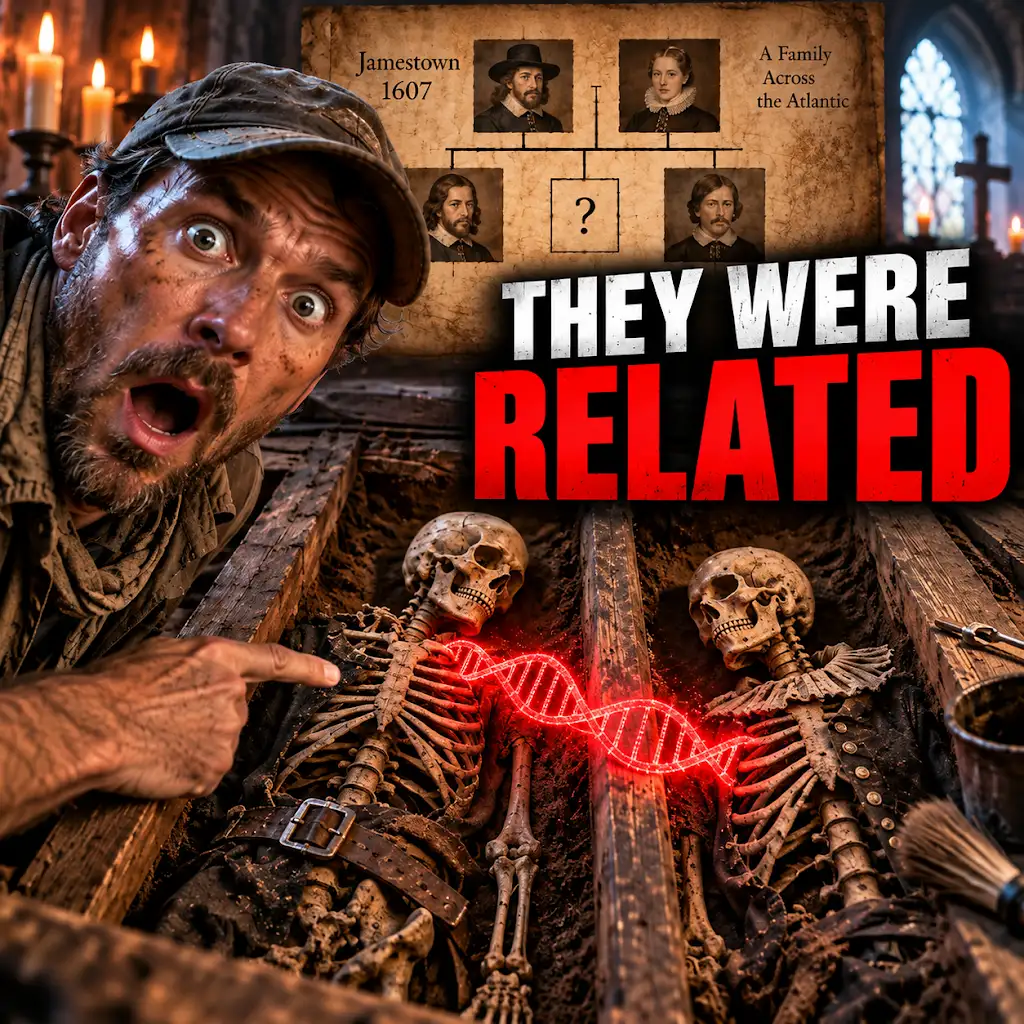
Jamestown DNA Revealed a Family Secret Hidden for 400 Years
FAQs
What is the significance of the skeletons buried beneath Jamestown?
The skeletons buried beneath Jamestown are significant because they provide valuable insights into the lives and deaths of the early settlers who established the first permanent English colony in America.
How were the skeletons discovered in Jamestown?
The skeletons were discovered during archaeological excavations at the historic Jamestown site in Virginia. Archaeologists carefully unearthed and analyzed the remains to learn more about the individuals buried there.
What do the skeletons reveal about life in Jamestown?
The skeletons reveal important information about the health, diet, living conditions, and causes of death of the early Jamestown settlers. They offer clues about the challenges and hardships faced by the colonists in the 17th century.
How are the skeletons studied by archaeologists?
Archaeologists study the skeletons using various scientific techniques, such as DNA analysis, isotopic analysis, and forensic examination. These methods help researchers reconstruct the lives of the individuals buried in Jamestown.
What can we learn from the skeletons buried beneath Jamestown?
By studying the skeletons buried beneath Jamestown, researchers can gain a better understanding of the early colonial period in America, including the struggles, diseases, and social dynamics of the settlers. This knowledge contributes to our understanding of American history and the challenges faced by the early colonists.