
The whispers began subtly, mere academic curiosities at first, then growing into a persistent murmur among collectors of esoteric artifacts and fringe historians. They spoke of a forgotten relic, not of gold or gem, but of something far more profound: the Ancient Magnifying Stone. This was no mere optical device for illuminating manuscripts or for starting fires. Legends, often dismissed as fanciful tales, alluded to its ability to reveal truths hidden from the naked eye, to amplify not just light, but perception itself. It was said to be a key, not to a vault, but to understanding. This article aims to delve into the sparse historical records, the fragmented myths, and the tantalizing archaeological fragments that hint at the existence and potential power of this enigmatic artifact.
The Genesis of a Myth: Early References and Legends
The very origins of the Ancient Magnifying Stone are shrouded in the mists of antiquity, its earliest mentions appearing in texts that predate written history as we understand it. These are not straightforward historical accounts, but rather fragments woven into creation myths, epic poems, and philosophical treatises of long-vanished civilizations. The challenge in studying such a topic lies in discerning factual kernels from metaphorical embellishments, for the societies that might have possessed such an object likely viewed the world through a lens of potent symbolism and spiritual interconnectedness.
Echoes in Sumerian Tablets
One of the earliest potential allusions surfaces in the cuneiform tablets unearthed from the ruins of Sumeria, a civilization renowned for its advanced knowledge in astronomy, mathematics, and early forms of writing. While no explicit mention of a “magnifying stone” exists, certain passages within the Gilgamesh epics and other mythological narratives speak of “lenses of truth” or “crystals that reveal the unseen.” These were often associated with deities or wise sages, objects that granted insights into the divine will or the hidden workings of the cosmos. For instance, some scholars interpret certain descriptions of Enki, the god of wisdom and water, as possessing an artifact that allowed him to perceive the “hearts of men” or the “patterns of destiny.” While this could be metaphorical, the consistent theme of an object that enhances perception, albeit in a spiritual or intellectual context, aligns intriguingly with the concept of the Magnifying Stone. The Sumerians, with their meticulous record-keeping, might have had a material object that served as a physical manifestation of these abstract concepts of enhanced understanding. The difficulty, of course, lies in the linguistic and cultural chasm that separates us from their worldview, making direct translation and interpretation a precarious endeavor. Nevertheless, the recurrence of such imagery suggests a deep-seated human fascination with tools that could amplify our limited sensory and cognitive faculties.
The Egyptian Connection: Light and Enlightenment
Further echoes can be traced to the sophisticated civilization of Ancient Egypt. The Egyptians were masters of optics, developing advanced forms of lenses for their elaborate surveying and astronomical instruments. Their pantheon was rich with deities associated with light, knowledge, and revelation, such as Thoth, the god of writing and wisdom, and Ra, the sun god, the ultimate source of illumination. Within the hieroglyphic inscriptions found in tombs and temples, there are recurring motifs of polished obsidian or crystal fragments that were believed to hold the “essence of the sun” or to facilitate communication with the afterlife. The Book of the Dead, for example, describes rituals involving polished mirrors and luminous stones that were used to guide the deceased through the underworld, implying a belief in their power to reveal hidden paths and dispel darkness. While these might have been primarily religious or funerary artifacts, their emphasis on light and revelation resonates with the proposed function of the Magnifying Stone. The Egyptians’ profound understanding of light, its properties, and its symbolic significance makes it plausible that they would have explored its potential for more than just illumination. The concept of “Ma’at,” the cosmic order and truth, was central to their philosophy, and any object that could help one perceive or align with Ma’at would have been of immense value.
The discovery of ancient magnifying stones has sparked interest among historians and archaeologists, as these artifacts provide insight into the technological advancements of early civilizations. For a deeper understanding of how historical innovations have shaped societies, you can explore the article on Middle Eastern geopolitics, which discusses the challenges and opportunities that arise from the region’s rich history and cultural heritage. To read more, visit this article.
The Philosophical Pursuit: Amplifying Knowledge and Perception
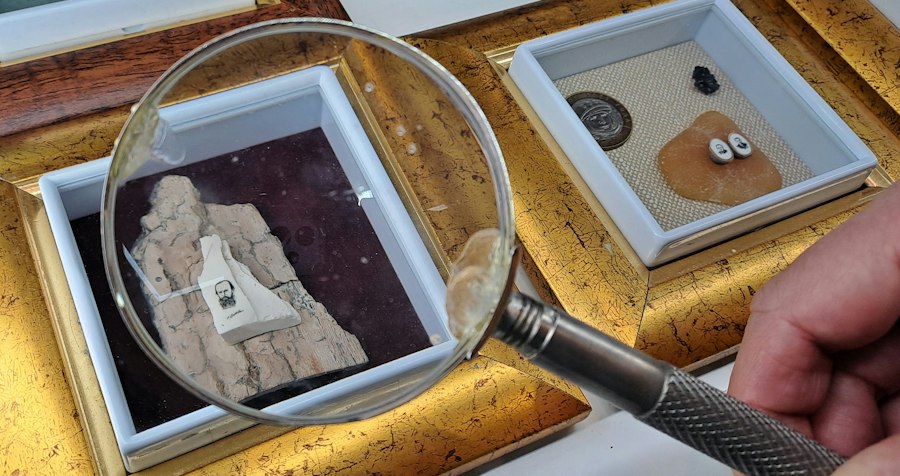
Beyond the realm of myth and early civilization, the concept of an object that amplifies understanding began to permeate philosophical discourse. As societies evolved and abstract thought flourished, the desire to dissect reality, to uncover its underlying principles, and to attain higher states of consciousness intensified. The Ancient Magnifying Stone, in its more esoteric interpretations, becomes a metaphor for these intellectual and spiritual pursuits.
Plato’s Allegory and the Shadow World
The ideas of Plato, particularly his famous Allegory of the Cave, provide a powerful philosophical framework for understanding what the Ancient Magnifying Stone might have represented. Plato posits that humanity is like prisoners chained in a cave, only able to see shadows cast upon the wall by a fire behind them. These shadows represent the limited reality perceived by ordinary senses. The philosopher, in this allegory, is the one who escapes the cave and beholds the true forms, the pure ideals, illuminated by the sun of reason. The Ancient Magnifying Stone can be seen as a metaphorical tool that facilitates this escape from the cave, allowing individuals to move beyond the superficial shadows and perceive the “true forms” of reality. It would be an instrument that sharpens the mind, clarifies perception, and enables one to see the interconnectedness of things, the underlying truths that govern existence. This is not about literal magnification of physical objects, but about an amplification of cognitive and intuitive abilities, enabling a deeper, more profound understanding. The pursuit of knowledge in Plato’s philosophy is a journey from ignorance to enlightenment, and the Magnifying Stone would be the guide, the catalyst for this transformative process.
The Alchemical Quest for Quintessence
In the intricate and often mysterious world of alchemy, the quest for the “quintessence,” the purest, most fundamental essence of a substance, was a central driving force. Alchemists sought not only to transmute base metals into gold but also to achieve spiritual perfection and to unlock the secrets of the universe. Their laboratories were filled with alembics, retorts, and other specialized apparatus, often imbued with symbolic meaning. The Ancient Magnifying Stone, in this context, could be interpreted as a device that allowed alchemists to “magnify” their observations of chemical reactions, to perceive subtle changes in heat, color, and texture that might otherwise be missed. More importantly, it could have been a tool for spiritual magnification, enabling them to focus their intent, to meditate on the fundamental principles of transformation, and to achieve a heightened state of awareness necessary for their Great Work. The alchemical texts are replete with references to esoteric tools and substances that aid in this endeavor, and the Magnifying Stone fits perfectly within this paradigm as a conceptual instrument for achieving clarity and insight in both the material and spiritual realms. The very act of seeking the quintessence requires a profound level of focused observation and deep understanding, qualities that a device designed to “magnify” perception would inherently facilitate.
Archaeological Enigmas: Traces in the Earth

Despite the rich tapestry of myths and philosophical interpretations, tangible evidence for the Ancient Magnifying Stone remains elusive, buried beneath layers of time and sediment. Archaeological finds that could definitively point to its existence are rare and often subject to intense debate and reinterpretation. However, a few intriguing discoveries have fueled speculation and kept the legend alive.
The Lens of Nimrud and its Controversies
One of the most compelling, yet contentious, pieces of evidence is the so-called “Nimrud Lens.” Discovered in the ruins of the Assyrian palace at Nimrud, this polished piece of rock crystal, roughly 3 inches in diameter, dates back to around 750 BCE. Its remarkable clarity and precisely ground surface have led some to believe it was used as a magnifying glass, potentially for astronomical observations or for delicate craftsmanship. However, other scholars propose more prosaic uses, such as a decorative item, a part of a musical instrument, or even a polished reflector. The debate centers on whether the lens is of sufficient quality and curvature to have been functionally a magnifying glass in the modern sense. If it was, it predates the widespread understanding of lenses in Europe by centuries, hinting at a sophisticated optical technology in the ancient Near East. The possibility that this was an early form of an “ancient magnifying stone,” designed for purposes beyond mere magnification, adds another layer of intrigue. Could it have been used for more subtle applications, such as discerning patterns in celestial movements or even for divinatory practices, enhancing the user’s ability to perceive subtle energetic shifts? The very existence of such a finely crafted crystal lens in an era where such technology was not widely assumed raises questions about its intended purpose and the knowledge base it represented.
Unidentified Crystalline Artifacts
Beyond the Nimrud Lens, numerous other crystalline artifacts have been unearthed from various ancient sites across the globe. These include meticulously carved quartz spheres, polished obsidian discs, and fragments of translucent stones that exhibit unusual clarity and internal structures. While many are easily explained as decorative objects or components of ritualistic items, a persistent minority defy simple categorization. Some of these artifacts possess an uncanny ability to refract light in peculiar ways, to create vibrant optical illusions, or to seemingly focus ambient light with an intensity that belies their size. These might be accidental findings, overlooked by archaeologists focused on more conventional interpretations. However, for those who believe in the existence of the Ancient Magnifying Stone, these objects represent potential fragments, pieces of a larger puzzle. Their unique properties, whether intentional or serendipitous, suggest an understanding of light and crystalline properties that may have been applied to purposes we are only beginning to comprehend. The sheer variety of these finds, scattered across different cultures and time periods, could indicate a widespread, albeit perhaps localized and secretive, tradition of crafting objects with enhanced perceptual qualities.
The Esoteric Applications: Beyond Simple Optics
The true power of the Ancient Magnifying Stone, as described in the more mystical and esoteric traditions, lies not in its ability to enlarge objects, but in its capacity to amplify and focus other, less tangible forces. This is where the line between artifact and allegory becomes most blurred, and where the potential applications transcend the purely physical.
Focusing Intent and Amplifying Consciousness
In many spiritual and mystical traditions, the act of focused intention is paramount. Whether for healing, meditation, or spiritual communion, the ability to concentrate one’s mental and emotional energy is seen as a powerful force. It is theorized that the Ancient Magnifying Stone, through its unique crystalline structure and potentially energetic properties, could act as a catalyst for such focused intent. By gazing through the stone, or holding it during meditation, an individual might be able to achieve a heightened state of concentration, allowing their intentions to be amplified and directed with greater efficacy. This is not about magical incantations, but about leveraging the mind’s inherent power through a sophisticated bio-energetic interface. The stone could act as a resonating chamber for consciousness, amplifying subtle energies and allowing the user to perceive and interact with them on a deeper level. This concept aligns with the idea of “mind over matter” and suggests that the ancients may have possessed a more sophisticated understanding of the interplay between consciousness and the physical world.
Discernment of Subtle Energies and Auras
The human body, according to many ancient traditions, is surrounded by an energetic field, often referred to as an aura. These fields are believed to contain information about an individual’s physical, emotional, and spiritual well-being. It is posited that the Ancient Magnifying Stone, when used by an individual with the appropriate sensitivity and training, could enable the user to perceive these subtle energies and auras. This would allow for a more profound understanding of individuals, their health, and their emotional states. It could also extend to perceiving the energetic signatures of places, objects, and even abstract concepts. This ability to “see” beyond the superficial would grant immense insight and potentially facilitate healing and spiritual growth. The stone would not be a passive lens, but an active amplifier, tuning the user’s perception to frequencies and vibrations that are normally imperceptible. This ability to discern subtle energies is a hallmark of many shamanic and mystic traditions, and the Magnifying Stone could have been a technological or energetic tool to aid in this practice, democratizing such insights beyond the realm of rare innate abilities.
The fascinating history of ancient magnifying stones reveals much about early scientific endeavors and the quest for knowledge. These simple yet effective tools were used by various civilizations to enhance vision and study the world around them. For those interested in how such historical advancements might influence future technologies, an intriguing article discusses the challenges of building and defending a lunar base, which can be found here. This connection between ancient tools and modern exploration highlights the enduring human desire to push boundaries and expand our understanding of the universe.
The Legacy and Future of Discovery
| Metric | Details |
|---|---|
| Material | Quartz, Rock Crystal, Glass |
| Diameter | 2 cm to 10 cm |
| Magnification Power | 2x to 6x |
| Era | Ancient Egypt, Mesopotamia, Roman Empire |
| Primary Use | Reading small text, Fire starting, Inspection of small objects |
| Discovery Date | Circa 750 BC |
| Notable Artifact Location | British Museum, Louvre Museum |
The journey to understand the Ancient Magnifying Stone is far from over. Its existence remains largely in the realm of hypothesis, supported by fragmented evidence and persistent legend. However, the allure of such an artifact, with its promise of amplified truth and understanding, continues to inspire researchers and enthusiasts alike.
Reinterpreting Archaeological Finds
As our understanding of ancient technologies and their potential applications evolves, so too does our ability to reinterpret existing archaeological finds. The objects that were once dismissed as mere curiosities or decorative items are now being re-examined through the lens of esoteric knowledge and advanced optical principles. It is possible that within museum collections worldwide lie artifacts that, with the right understanding, could be revealed as fragments of this ancient technology. The interdisciplinary approach, combining archaeology, physics, history, and even comparative mythology, is crucial for unlocking these hidden secrets. Future excavations, guided by a broader perspective, might unearth more definitive evidence. The key lies in recognizing that ancient civilizations might have possessed a different, perhaps more holistic, understanding of optics and perception.
The Enduring Quest for Truth
The allure of the Ancient Magnifying Stone is ultimately the allure of truth. In an age often characterized by information overload and the proliferation of misinformation, the desire for a tool that can cut through the noise and reveal genuine understanding is more potent than ever. Whether the stone was a singular object of immense power or a broader concept representing a way of perceiving the world, its legacy continues to inspire the human quest for knowledge and enlightenment. The search for this ancient relic is not merely an archaeological endeavor; it is a testament to humanity’s enduring desire to see more clearly, to understand more deeply, and to unearth the profound truths that lie just beyond the veil of our ordinary perception. The whispers of its power may have faded into myth, but the quest to understand what it represented, and potentially to rediscover its essence, continues to resonate through the ages.
Did This Ancient Crystal Help People See?
FAQs
What is an ancient magnifying stone?
An ancient magnifying stone is a tool used in ancient times to magnify and enhance the visibility of small objects or text.
How does an ancient magnifying stone work?
An ancient magnifying stone works by using a convex lens to bend light rays and enlarge the image of the object being viewed through it.
What materials were ancient magnifying stones made from?
Ancient magnifying stones were typically made from materials such as glass, crystal, or quartz that had been polished to create a smooth, clear surface for magnification.
What were ancient magnifying stones used for?
Ancient magnifying stones were used for various purposes, such as reading small text, examining intricate details in objects, or starting fires by focusing sunlight.
Are ancient magnifying stones still used today?
While ancient magnifying stones are no longer commonly used due to advancements in technology, they hold historical significance and are sometimes used in educational settings or as collectible items.