The allure of Tyrian purple, a dye so rare and vibrant that it became synonymous with royalty and divinity, has captivated humanity for millennia. Its production was a closely guarded secret, shrouded in myth and legend, making the quest to understand its origins and methods a continuous fascination for historians and archaeologists alike. While ancient texts provide tantalizing glimpses, it is through the painstaking work of archaeological discovery that the tangible evidence of this fabled dye begins to emerge, piecing together the complex narrative of its creation and its profound societal impact. This article delves into the archaeological evidence that allows us to unearth the story of Tyrian purple, moving beyond the whispers of antiquity to the solid ground of scientific inquiry.
The Phoenician Cradle of Color
The story of Tyrian purple is inextricably linked to the Phoenicians, a seafaring civilization whose trading prowess spread across the Mediterranean. Their mastery of dye production, particularly the extraction of the precious purple hue, became a cornerstone of their economic and cultural influence. Archaeological investigations in key Phoenician settlements have provided crucial insights into their sophisticated techniques and the scale of their operation.
Sites of Significance: Where Purple Was Born
The very name “Tyrian” points to the city of Tyre, a major Phoenician metropolis on the coast of modern-day Lebanon, as the epicenter of purple dye production. However, archaeological evidence suggests that the practice was not confined to a single location.
Tyre: The Royal City of Purple
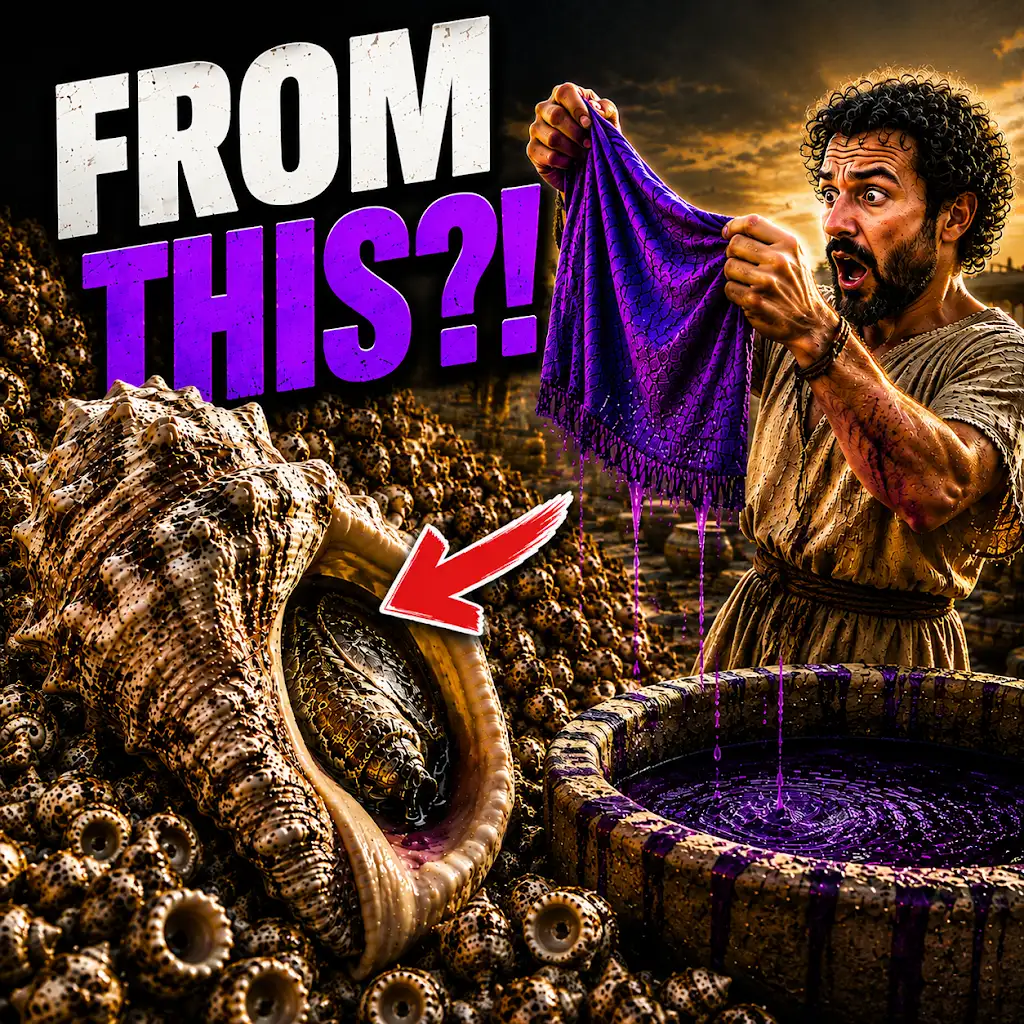
Excavations in Tyre have yielded significant findings that directly relate to the production of Tyrian purple. The sheer quantity of shells and waste material discovered has been instrumental in confirming the molluskan origin of the dye. These refuse heaps, known as murex middens, are the most compelling physical evidence of the industry.
- **The Murex Midden:** The identification and analysis of these shell deposits are paramount. Archaeologists have meticulously cataloged the species of Murex (primarily Bolinus brandaris and Hexaplex trunculus) found in abundance, confirming their role as the source of the purple pigment. The sheer scale of these middens, often found in layers stretching back centuries, speaks to the massive number of mollusks required for even small quantities of dye. This implies a highly organized and resource-intensive industry.
- Industrial Infrastructure: Beyond the shell waste, evidence of the actual production process has been uncovered. This includes the discovery of large, vat-like structures, often carved from stone or constructed with masonry, which are believed to have been used for the extraction and processing of the dye. These vats would have been essential for containing the noxious fumes and liquids involved in the laborious extraction process.
- Tools and Residue: While direct evidence of specific tools used for extracting the dye-producing glands from the mollusks is rare, the presence of broken shells with signs of manipulation, alongside fragments of pottery that might have been used for boiling or storing the dye, offers indirect clues. Residue analysis of these vessels has, in some cases, revealed traces of the characteristic purple pigment, further solidifying their role in the dyeing process.
Sidon and Other Coastal Settlements
Other Phoenician cities, such as Sidon and Arwad, also played significant roles in the purple dye trade, and archaeological evidence from these locations corroborates the findings from Tyre.
- Interconnected Trade Networks: The presence of murex shells and dyeing waste in these other settlements indicates a broader Phoenician network dedicated to the production and distribution of purple dye. This suggests that the expertise and resources were not solely concentrated in Tyre, but rather a decentralized yet coordinated effort.
- Evidence of Dyeing Workshops: Similar to Tyre, workshops with vat structures and waste materials have been identified in Sidon and other coastal sites, reinforcing the idea of established industrial zones dedicated to this lucrative craft.
Recent archaeological discoveries have shed light on the ancient production of Tyrian purple, a highly prized dye in antiquity, often associated with royalty and wealth. For a deeper understanding of how such luxury items influenced trade and military strategies in ancient societies, you can explore the article titled “Guardians of the Moon: A Documentary on Lunar Military Strategy,” which discusses the broader implications of resource control in historical contexts. To read more, visit this article.
The Chemistry of Color: Unlocking the Pigment
While the Phoenicians kept their methods a closely guarded secret, modern archaeological science, particularly chemical analysis, has begun to unlock the chemical secrets of Tyrian purple. This has allowed for a deeper understanding of the complex process and the vibrant hues achieved.
Molluskan Pigments: The Source of the Hue
The purple color itself is not a single compound but a complex mixture of organic molecules. Archaeological analysis has been crucial in identifying these compounds in ancient artifacts.
Identifying the Key Components
- Indigo and Brominated Indigoids: Through techniques like Gas Chromatography-Mass Spectrometry (GC-MS) and High-Performance Liquid Chromatography (HPLC), archaeologists and chemists have been able to identify the primary components of Tyrian purple. These include indigo, a well-known blue dye, and a range of brominated indigo derivatives. The presence of bromine, absorbed from seawater by the Murex mollusks, is crucial for the distinct hues of Tyrian purple, which ranged from deep violet to reddish-purple.
- The “Shades” of Purple: Archaeological analysis of dyed textiles and residues has revealed the incredible range of colors that could be produced. By manipulating the species of Murex used, the temperature of the extraction process, and the concentration of the dye, the Phoenicians could achieve a spectrum of purples. For instance, Bolinus brandaris tended to produce a more reddish-purple, while Hexaplex trunculus yielded bluer shades. The ability to control these variations is a testament to their empirical knowledge.
Analytical Techniques: The Scientist’s Tools
The application of scientific methods to archaeological finds has been revolutionary in understanding Tyrian purple.
- Spectroscopic Analysis: Techniques such as UV-Vis spectroscopy and Raman spectroscopy have been employed to analyze the spectral properties of pigments found in ancient artifacts. These methods can identify the presence of specific organic compounds associated with Tyrian purple, even in minute quantities.
- Isotope Analysis: In some cases, isotopic analysis of residual elements can help pinpoint the geographical origin of the raw materials used in the dyeing process, further linking findings to Phoenician trade routes.
The Process of Extraction: A Laborious Endeavor
The archaeological evidence, combined with scientific analysis, allows us to reconstruct the likely steps involved in the production of Tyrian purple, a process that was undoubtedly demanding and time-consuming.
From Sea to Vat: The Stages of Production
The extraction of the dye involved a series of complex stages, each requiring specialized knowledge and labor.
The Role of the Glands and Fermentation
- Extraction of the Hypobranchial Gland: The dye-producing organ in the Murex mollusk is the hypobranchial gland. Archaeological evidence, particularly the patterned breakage of shells, suggests that these glands were deliberately extracted. This likely involved specialized tools to carefully open the shell and remove the gland.
- Salting and Fermentation: The extracted glands were then typically processed further. Ancient accounts, supported by archaeological findings of salt deposits in dyeing areas, suggest that the glands were salted and allowed to ferment. This fermentation process was crucial for breaking down the mucus and releasing the precursor compounds that would later form the dye. The noxious smell associated with this process, often mentioned in historical texts, is consistent with the breakdown of sulfur-containing compounds.
- Boiling and Concentration: The fermented mass would then be mixed with water and heated, often through boiling. This step would have initiated the chemical reactions that transformed the precursors into the stable dye molecules. The use of large vats, as identified in archaeological excavations, would have been essential for this stage. The careful control of temperature was likely a key factor in achieving the desired color.
Waste Management and Environmental Impact
The sheer scale of Tyrian purple production inevitably left a significant environmental footprint, which is now visible in the archaeological record.
- Shell Midden Stratigraphy: The layering and composition of the murex middens provide information about the duration and intensity of production at different sites. The depth and extent of these deposits are a testament to the vast quantities of mollusks harvested.
- Water Pollution: The dyeing process would have involved significant amounts of water and potentially released byproducts into the surrounding environment. While direct evidence of water pollution from ancient dyeing processes is rare, the concentration of industrial activity along coastlines suggests a potential impact on marine ecosystems.
Tyrian Purple in the Ancient World: Symbolism and Status
The archaeological evidence extends beyond the production sites to reveal the profound impact of Tyrian purple on ancient societies. Its use in textiles, ornamentation, and even as a form of currency underscores its elevated status.
Textiles and Adornment: The Colors of Power
The most visible application of Tyrian purple was in the dyeing of textiles. Archaeological discoveries of dyed fabrics, though rare due to the perishable nature of organic materials, offer invaluable insights.
Surviving Fragments and Impressions
- Woven Fragments: In exceptionally well-preserved archaeological contexts, such as ancient Egyptian tombs or waterlogged sites, fragments of textiles dyed with Tyrian purple have been discovered. Analysis of these fragments confirms the use of the dye and provides direct evidence of its application to various fabrics, including wool and linen.
- Dye Residues on Artifacts: Beyond intact textiles, dye residues have been found on other artifacts, such as statuary, pottery, and even metalwork, suggesting its use in decorative contexts beyond clothing.
- Impression Evidence: In some instances, where organic textiles have long since decayed, impressions of dyed fabric on clay or other materials have survived, offering indirect evidence of the colors and textures of ancient garments.
Legal and Social Restrictions: The Purple of the Elite
The exclusivity of Tyrian purple led to its regulation and restriction, transforming it into a powerful symbol of social hierarchy. Archaeological finds related to trade and taxation can shed light on these practices.
Evidence of Trade and Taxation
- Trade Routes and Distribution: The widespread presence of artifacts associated with Tyrian purple, far from the production centers, indicates extensive trade networks. Archaeological evidence of amphorae and other transport vessels used for shipping dyed goods can help map these ancient trade routes.
- Imperial Decrees and Laws: While often recorded in written sources, the enforcement of laws restricting the use of Tyrian purple to royalty and the highest echelons of society can be indirectly inferred from the archaeological context. The absence of such vibrant purple in the burial goods of commoners, contrasted with its prevalence in the regalia of rulers, speaks volumes.
Recent discoveries in the field of archaeology have shed light on the ancient production of Tyrian purple, a highly sought-after dye in antiquity. This remarkable hue, derived from the murex snail, was not only a symbol of wealth but also a testament to the advanced techniques employed by ancient artisans. For those interested in exploring more about the fascinating intersections of geography and archaeology, a related article can be found here, which delves into shocking discoveries that have reshaped our understanding of ancient trade routes and cultural exchanges.
Challenges and Future Directions in Tyrian Purple Research
Despite significant advances, the study of Tyrian purple remains an ongoing endeavor, with many questions still to be answered. Archaeological research continues to push the boundaries of our understanding, employing new technologies and interdisciplinary approaches.
The Gaps in Our Knowledge
- Precise Techniques: While we have a good understanding of the general process, the exact temperatures, fermentation times, and specific chemical treatments used by the Phoenicians to achieve specific shades of purple remain subjects of ongoing investigation.
- Scale of Production: Quantifying the exact amount of dye produced and the number of mollusks harvested over centuries is challenging, requiring sophisticated modeling based on midden analysis.
- Regional Variations: Understanding the subtle differences in production methods and dye quality across different Phoenician settlements requires further comparative archaeological studies.
Emerging Technologies and Interdisciplinary Collaboration
The future of Tyrian purple research lies in the integration of advanced scientific techniques with rigorous archaeological fieldwork.
- Advanced Chemical Analysis: Continued development of analytical techniques, such as micro-sampling and advanced mass spectrometry, will allow for more detailed chemical characterization of pigments, even from minute archaeological samples.
- Dating Techniques: Improved radiocarbon dating and thermoluminescence dating of materials associated with dyeing processes will provide more precise timelines for production and trade.
- Environmental Archaeology: Collaboration with environmental archaeologists can help assess the broader ecological impact of large-scale mollusk harvesting and dye production on ancient coastal environments.
- Experimental Archaeology: Recreating ancient dyeing processes in a controlled laboratory setting, informed by archaeological findings, can provide invaluable insights into the practicalities and challenges faced by ancient artisans.
In conclusion, the archaeological evidence has transformed our understanding of Tyrian purple from a legendary dye to a tangible product of ancient ingenuity and industry. From the vast shell middens that mark the Phoenician coastlines to the microscopic traces of pigment found on ancient artifacts, each discovery adds another layer to the complex and colorful story of this most coveted of ancient dyes. As research continues, the stones and shells of the past will undoubtedly continue to whisper the secrets of Tyrian purple, further enriching our appreciation of the vibrant tapestry of human history.
The Color That Took Thousands of Snails to Make
FAQs
What is Tyrian purple?
Tyrian purple, also known as royal purple, is a dye that was highly prized in antiquity for its vibrant color. It was made from the mucus of certain species of sea snails found in the eastern Mediterranean.
What is the archaeological evidence for Tyrian purple?
Archaeological evidence for Tyrian purple includes the discovery of ancient dyeing vats, tools used for extracting the dye from sea snails, and remnants of dyed textiles. These findings provide insight into the production and use of Tyrian purple in ancient civilizations.
Where has archaeological evidence for Tyrian purple been found?
Archaeological evidence for Tyrian purple has been found in various locations around the eastern Mediterranean, including modern-day Lebanon, Israel, and Turkey. These areas were known for their production of Tyrian purple in antiquity.
What significance does Tyrian purple hold in history?
Tyrian purple was highly valued in ancient civilizations, particularly among royalty and the elite. It was associated with power, wealth, and prestige, and its use was often restricted by sumptuary laws. The production and trade of Tyrian purple also played a significant role in the economy of the ancient Mediterranean.
How is Tyrian purple used today?
While the production of Tyrian purple from sea snails is no longer practiced, the color continues to be admired and used in various forms of art, fashion, and design. Modern synthetic dyes have been developed to replicate the rich hue of Tyrian purple, allowing its legacy to live on in contemporary applications.