The Sahara Desert, a vast and unforgiving expanse of sand and sun, conjures images of scorpions, camels, and hardy desert flora. It is a landscape that appears antithetical to the very concept of a hippopotamus, those lumbering, aquatic giants. Yet, whispered tales and fleeting sightings have hinted at an improbable reality: hippos, the unlikely residents of this desolate domain. This article delves into the fascinating, and often perplexing, phenomenon of hippos navigating the harsh realities of the Sahara, exploring their origins, survival strategies, and the scientific uncertainties that surround their presence.
For centuries, the idea of hippos in the Sahara was relegated to the realm of folklore and exaggeration. Travelers’ tales, often embellished by the exotic and the unknown, spoke of immense beasts wallowing in what were believed to be hidden oases or subterranean rivers. These accounts, lacking concrete evidence, were largely dismissed by the burgeoning scientific community, which understood hippopotamus biology to be intrinsically tied to water-rich environments like the Nile and African lakes.
Myth vs. Reality: The Disconnect in Perception
The common perception of the Sahara as an utterly arid wasteland, devoid of substantial water sources, created an immediate disconnect with the known habitat requirements of hippos. The visual contrast – a sleek, water-loving mammal against a backdrop of endless dunes – was too stark to readily accept. This inherent disbelief served as a powerful barrier to the genuine exploration and documentation of such a possibility.
The Role of Ancient Rivers and Climate Change
However, the Sahara of today is not the Sahara of antiquity. Geological evidence points to a much wetter past, with ancient river systems and large lakes that would have supported a diverse range of wildlife, including, theoretically, hippos. The gradual desertification of the region over millennia has undoubtedly reshaped its ecosystems. Researchers have begun to consider whether remnants of these ancient waterways, or perhaps pockets of more favorable microclimates, could still harbor unexpected populations.
Oral Traditions and Indigenous Knowledge
Beyond written accounts, the oral traditions of indigenous Saharan communities often hold invaluable, albeit sometimes obscure, ecological knowledge. These stories, passed down through generations, may contain descriptions of animals that, when viewed through a modern, scientific lens, bear striking resemblances to hippos. The challenge lies in deciphering these narratives and verifying their accuracy against observable evidence.
In exploring the unique adaptations of wildlife in extreme environments, one might find it intriguing to consider the presence of hippos in the Sahara Desert, a topic that highlights the resilience of nature. For a deeper understanding of how environmental changes, such as deforestation, impact various ecosystems, you can read more in the article about the deforestation crisis, which discusses the broader implications of habitat loss on wildlife. Check it out here: The Deforestation Crisis: A Looming Catastrophe.
Tracing the Exodus: Potential Origins of Saharan Hippos
The presence of hippos in an environment so drastically different from their typical habitat necessitates a compelling explanation for their arrival. Several theories have been proposed, each with its own set of supporting evidence and remaining questions. These potential origins often involve historical movements, environmental shifts, and perhaps even human intervention.
The Nile Connection: A Lost Branch or Ancient Migration
One of the most plausible theories suggests a connection to the Nile River, the lifeblood of northeastern Africa. It is conceivable that hippos, historically abundant along the Nile, may have followed ancient, now-vanished tributaries or migratory routes that once extended further into what is now arid territory. As the climate shifted and these waterways receded, small populations might have become isolated in pockets of sufficient water.
Divergent Evolution in Isolation?
If isolated, these populations could have undergone a degree of divergent evolution, adapting to the harsher conditions. This doesn’t necessarily imply a new species, but perhaps a subspecies or distinct population with unique physiological or behavioral traits that allow for greater resilience in a semi-arid environment.
The West African Link: A Disconnected Past
Another avenue explores a potential link to West African river systems. While geographically more distant, there might have been historical connections or periods of more favorable climate that allowed for a westward expansion of hippo populations. The Sahara, while largely a barrier today, may have been more navigable or offered different ecological corridors in the distant past.
The Impact of Glacial Cycles
Understanding the impact of past glacial cycles on African climate is crucial. During colder periods, rainfall patterns could have shifted significantly, potentially creating temporary wetlands or more extensive river networks that facilitated the movement of large mammals across regions that are now deserts.
Accidental Introductions and Human Factors
While less likely for establishing sustainable, wild populations, the possibility of accidental introductions by humans cannot be entirely discounted. Historically, trade routes and nomadic movements across the Sahara were extensive. While deliberately introducing hippos to such an environment would be an extraordinary undertaking, the possibility of escaped individuals from ancient menageries or misguided attempts at acclimatization in isolated settlements cannot be entirely dismissed in the absence of definitive proof.
The Challenge of Proof
The primary hurdle for any theory of origin is the lack of concrete, undeniable evidence. Fossil records, if they exist, are scarce. Genetic studies of any observed Saharan hippos would be paramount in tracing their lineage and understanding their relationship to known populations.
The Art of Survival: Adaptations in an Arid World
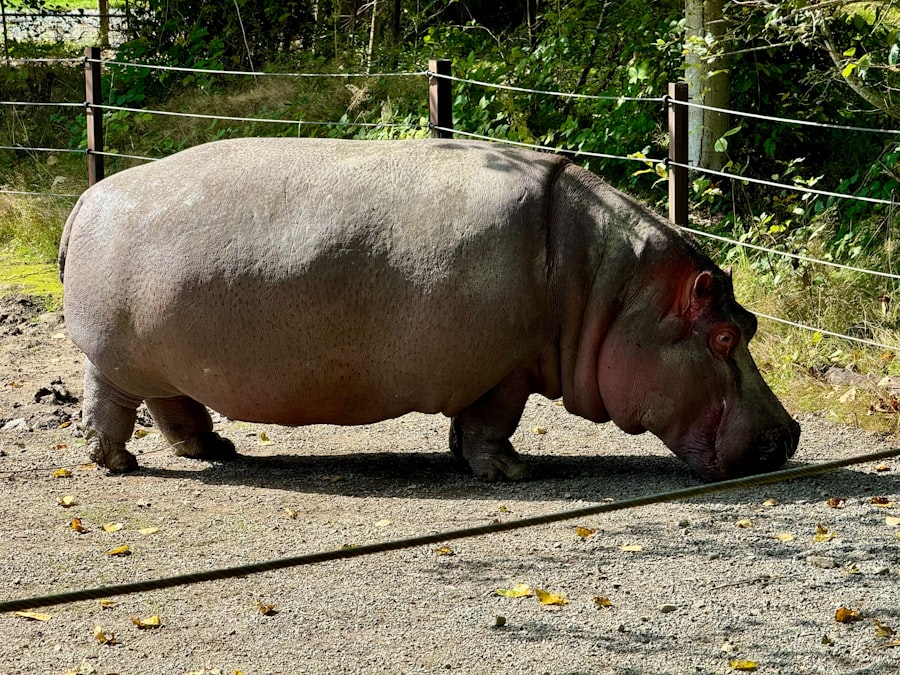
Should hippos indeed exist in the Sahara, their survival would hinge on a remarkable suite of adaptations, both behavioral and potentially physiological. The extreme heat, limited water availability, and scarce vegetation present formidable challenges that would require a departure from the life of their more water-dependent cousins.
Water Reliance: Finding and Conserving Precious Resources
The absolute necessity for water remains a core challenge. Saharan hippos would likely be tied to the most reliable and secluded water sources available. This could include deep wells, hidden springs, or perhaps even underground rivers that breach the surface in specific locations. Their survival would depend on their ability to locate and defend these vital resources.
Nocturnal Activity and Estivation
To mitigate the brutal daytime temperatures, these hippos would almost certainly be predominantly nocturnal, emerging from their watery refuges only at night to graze. During prolonged dry spells, they might exhibit forms of estivation, a state of dormancy akin to hibernation, where they burrow into moist mud or seek out cooler subterranean environments to conserve energy and water.
Social Dynamics and Territoriality
The limited availability of water would likely influence social dynamics. Competition for resources could lead to fiercely defended territories, with smaller, more isolated groups or even solitary individuals being more common than the large, social pods seen in other habitats.
Diet and Foraging: Making the Most of Scarce Vegetation
The Sahara’s vegetation is sparse and often tough. Saharan hippos would need to adapt their diet accordingly, consuming whatever hardy grasses, shrubs, or succulent plants they can find, likely foraging in the cooler hours of the evening and early morning.
Opportunistic Feeding and Grazing Patterns
Their grazing patterns would be dictated by the availability of edible plants, potentially covering much larger distances than hippos in wetter climes. They would likely be highly opportunistic feeders, taking advantage of any transient green growth that appears after rare rainfall.
The Role of Dew and Moisture
It is also plausible that they supplement their water intake by consuming dew-laden vegetation or plants with a high moisture content. This subtle but essential element could be a critical factor in their ability to survive outside of perennial water bodies.
Predation and Defense: A More Vulnerable Existence
While adult hippos are powerful formidable creatures, the challenging Saharan environment might present new threats. The scarcity of water could force them into more exposed areas, making them potentially vulnerable to opportunistic predators like lions or hyenas, though their sheer size would still offer significant protection.
The Importance of Self-Preservation Strategies
Their primary defense would likely remain their formidable physical presence and aggressive nature. However, their isolation in smaller groups might also necessitate heightened vigilance and a more cautious approach to venturing out.
Scientific Scrutiny: The Hunt for Evidence

Despite the intriguing possibilities and anecdotal accounts, definitive scientific proof of hippos residing in the Sahara remains elusive. The challenges of surveying such a vast and inhospitable terrain, coupled with the often secretive nature of these hypothetical populations, make robust scientific investigation incredibly difficult.
The Limitations of Traditional Surveys
Traditional wildlife surveys, which rely on visual sightings, camera traps, and transect counts, are severely hampered in the Sahara. The sheer scale of the desert, extreme heat, and limited accessibility make comprehensive surveys impractical and prohibitively expensive.
The Ghostly Nature of Sightings
The sporadic and often unconfirmed nature of reported sightings adds another layer of difficulty. These fleeting encounters, often from a distance or in challenging conditions, are difficult to document with sufficient detail for scientific validation.
The Role of Remote Sensing and Technology
Advancements in remote sensing technology, such as satellite imagery and drone surveillance, offer new possibilities for detecting large mammals in inaccessible areas. While identifying individual hippos from space or high-altitude drones can be challenging, changes in vegetation or the presence of large tracks near water sources could provide indirect evidence.
The Challenge of Distinguishing from Other Large Mammals
However, distinguishing hippos from other large desert-dwelling mammals, such as wild asses or large antelope, based solely on remote sensing data can be a significant challenge.
Genetic Analysis: The Ultimate Definitive Proof
The most compelling evidence would come from genetic analysis. If any individuals were ever captured or if biological samples (e.g., dung, hair) were found, DNA sequencing could definitively link them to known hippo populations and provide insights into their evolutionary history and migration patterns.
The Difficulty of Obtaining Samples
The primary obstacle here is the extreme difficulty in obtaining such samples from a potentially elusive and potentially non-existent population in one of the world’s harshest environments.
The Ethics of Intervention: Protecting the Unseen
If hippos are present in the Sahara, the ethical considerations surrounding their discovery and potential conservation become paramount. The question arises: should scientists actively seek them out, potentially disturbing their delicate existence, or should they be left to their mysterious survival?
Balancing Scientific Curiosity with Conservation
There’s a delicate balance to be struck between the scientific imperative to understand and document the natural world and the ethical responsibility to protect rare and potentially vulnerable species from human interference.
In a fascinating exploration of wildlife adaptations, researchers have recently examined the surprising presence of hippos in the Sahara Desert, shedding light on how these massive creatures have managed to thrive in such an arid environment. This study highlights the resilience of nature and raises questions about the future of species in changing climates. For those interested in the broader implications of environmental vulnerabilities, you might find it intriguing to read about the challenges faced by lunar habitats in space exploration, as discussed in this article on vulnerability of lunar habitats.
The Future of Saharan Hippos: Preservation and Possibility
| Location | Population | Behavior |
|---|---|---|
| Sahara Desert | Unknown | Adapted to survive in extreme conditions, such as limited water sources and high temperatures |
The enigma of hippos in the Sahara continues to captivate and intrigue. Whether they are a relic of a wetter past, a testament to extreme adaptation, or simply a persistent myth, their potential presence raises important questions about the resilience of life and the uncharted territories of our planet.
Conservation Challenges in an Extreme Environment
If confirmed, the conservation of Saharan hippos would present unparalleled challenges. Their limited water sources would require careful monitoring and protection from human encroachment, poaching, and habitat degradation. The very act of conservation might involve creating or enhancing discreet water sources, a complex undertaking in such an arid landscape.
The Risk of Exploitation
The revelation of such a unique population could also attract unwanted attention from poachers or those seeking to exploit them for private collections, necessitating robust security measures.
The Power of the Unknown and Continued Exploration
The allure of the unknown drives scientific endeavor. The possibility of Saharan hippos serves as a potent reminder that even in the most thoroughly studied regions, surprises can still await. Continued, albeit cautious, exploration and the utilization of advanced technologies may one day shed definitive light on this enduring mystery.
The Inspiration Drawn from Resilience
Regardless of definitive proof, the idea of hippos thriving in the Sahara inspires a sense of wonder and a deep appreciation for the remarkable adaptability of life. It challenges our preconceived notions of ecological boundaries and the potential for survival in the most unexpected of places.
The Sahara’s Hidden Secrets: A Metaphor for Discovery
The Sahara Desert, with its vastness and extreme conditions, has always held a certain mystique. The whispers of hippos add another layer to this enigma, serving as a powerful metaphor for the vastness of undiscovered life and the ongoing journey of scientific discovery. The Sahara may hold many more secrets, and the hippos, if they are truly there, are but one of its most unlikely yet fascinating residents.

The Ancient World Buried Beneath the Sahara
FAQs
1. Are there hippos in the Sahara Desert?
Yes, there are no hippos in the Sahara Desert. Hippos are typically found in sub-Saharan Africa, in areas with abundant water sources such as rivers, lakes, and swamps.
2. What is the natural habitat of hippos?
Hippos are semi-aquatic animals and are primarily found in sub-Saharan Africa, where they inhabit rivers, lakes, and swamps. They spend most of their time in water to keep their skin moist and cool.
3. Can hippos survive in the desert?
Hippos are not adapted to survive in desert environments. They require large amounts of water to keep their skin moist and to regulate their body temperature. The arid conditions of the Sahara Desert would not be suitable for their survival.
4. Have hippos ever been found in the Sahara Desert?
There are no documented cases of hippos being found in the Sahara Desert. Their natural habitat is in sub-Saharan Africa, and they are not known to venture into desert regions.
5. What are the main threats to hippo populations in their natural habitat?
The main threats to hippo populations include habitat loss, poaching for their ivory teeth and meat, and human-wildlife conflict. Additionally, pollution and human encroachment on their natural habitats pose significant risks to their survival.