
The Genetic Compass: Navigating Ancestry’s Impact on Historical Discovery
The tapestry of human history, once meticulously woven from dusty documents, fragmented artifacts, and oral traditions, has gained an unexpected and powerful new thread: DNA. Ancestry DNA, a leading direct-to-consumer genetic testing service, has revolutionized the field of historical research, moving beyond traditional genealogical methods to offer unprecedented insights into lineage, migration patterns, and even the social dynamics of the past. What was once the domain of dedicated archivists and patient researchers is now, in part, accessible through the analysis of a few strands of hair or a cheek swab. This technological leap has democratized historical inquiry, empowering amateur genealogists and seasoned academics alike to unlock secrets buried for centuries. Ancestry DNA’s ability to connect individuals to a global database of genetic information, coupled with its sophisticated algorithms for ethnicity estimation and cousin matching, has fundamentally altered how we understand our own past and the collective human story. This article will delve into the multifaceted ways in which Ancestry DNA is transforming historical research, from tracing ancestral origins to illuminating migration routes and uncovering previously unknown familial connections.
Ancestry DNA testing has revolutionized the way individuals connect with their past, providing insights into family lineage and genetic heritage. For those interested in the intersection of genealogy and historical research, an intriguing article titled “Uncovering Ancient Technology: The Piri Reis Map” delves into the historical significance of ancient cartography and its implications for understanding our ancestors’ journeys. This exploration not only enriches our comprehension of historical navigation but also complements the findings from ancestry DNA tests, as it sheds light on the geographical contexts of our forebears. To read more about this fascinating topic, visit here.
Decoding the Genetic Blueprint: Ethnicity Estimation and its Historical Revelations
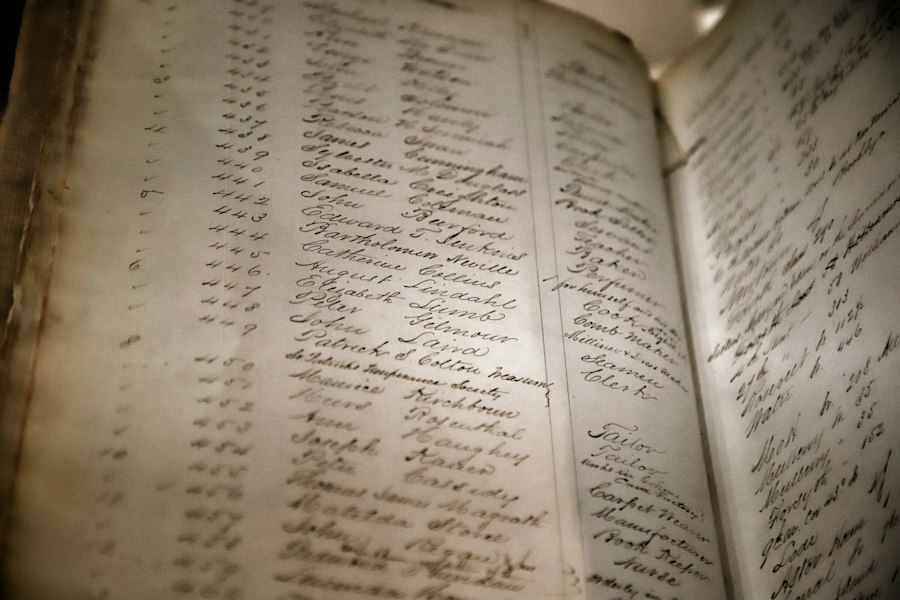
The primary draw for many Ancestry DNA users is the ethnicity estimate, a detailed breakdown of an individual’s genetic heritage across various geographical regions. While these estimates are approximations, they offer a powerful starting point for historical exploration, providing tangible links to ancestral homelands and shedding light on the complex migratory journeys of human populations. These genetic markers, inherited from ancestors, paint a picture of where those individuals lived and intermingled over millennia.
Tracing Ancient Roots: Beyond National Borders
Ancestry DNA’s ethnicity estimates go far beyond simple national categorizations. The service maps genetic markers to broad historical regions, reflecting ancient population movements and the formation of distinct genetic groups. For instance, an individual might discover not just “Irish” heritage, but a blend of “Ireland & Great Britain,” “Western Europe,” and perhaps even traces of “Scandinavia.” This nuanced approach immediately challenges simplistic national identities and encourages a deeper understanding of pre-modern demographic landscapes. Historically, national borders have shifted, populations have been displaced, and extensive intermingling has occurred. Ancestry DNA’s genetic data allows researchers to peer behind these later political divisions and glimpse the more fluid genetic realities of ancient times. The presence of a significant percentage attributed to a region like “The Balkans” might prompt a researcher to investigate historical migrations of Slavic peoples, Ottoman influence, or even earlier Indo-European expansions. Similarly, a surprisingly strong “West African” component in an individual’s profile could unlock avenues of research into the transatlantic slave trade, historical trade routes, or pre-colonial African kingdoms.
Unveiling Migration Narratives: Following the Genetic Trail
The ethnicity estimates are not static snapshots but rather a composite of ancestral journeys. By identifying specific genetic clusters, Ancestry DNA can infer likely migration patterns. For example, a strong connection to “Eastern Europe” might be combined with a significant percentage of “Jewish Peoples – Ashkenazi,” indicating a history of migration within that specific cultural and genetic group. This prompts questions about historical pogroms, the establishment of Jewish communities in Eastern Europe, and their subsequent dispersal. Researchers can use these genetic clues to hypothesize about migration routes, seeking historical records that corroborate these genetic trails. Did a family move to escape conflict, pursue economic opportunity, or as part of a larger demographic shift? The genetic data provides a framework for asking these questions and a starting point for their historical investigation. The presence of unexpected genetic markers can also be incredibly illuminating. A user with a predominantly “European” ethnicity estimate might discover a small but significant percentage of “Indigenous Americas.” This could point to a historical connection, however distant, with indigenous populations, prompting research into colonial-era interactions, adoption, or unions that might have occurred centuries ago. Such discoveries can challenge preconceived notions about family history and necessitate a broader scope of historical inquiry.
The Dynamic Nature of Ethnicity: A Continuous Refinement
It is crucial to understand that ethnicity estimates are not definitive. Ancestry DNA continually refines its reference populations and algorithms as more data becomes available. This means that an ethnicity estimate from several years ago might differ from a current one. This dynamic nature, rather than being a drawback, actually mirrors the fluidity of human history itself. As researchers uncover more historical and genetic information, our understanding of population genetics evolves. For historical researchers, this means that Ancestry DNA provides an evolving tool, constantly offering new perspectives and prompting re-examination of existing theories. The constant update of reference panels also means that Ancestry DNA can increasingly identify more localized and specific ancestral groups, moving from broad regional categories to more refined ancestral communities. This allows for even more granular historical investigations, potentially pinpointing specific villages or micro-regions where ancestral populations resided.
Connecting the Threads: Ancestry DNA’s Role in Genealogical Discovery
Beyond broad ethnicity, Ancestry DNA’s most profound impact on historical research lies in its ability to connect individuals with living relatives who share common ancestors. This “cousin matching” feature has transformed traditional genealogical research, which often relies on painstaking manual sifting of records. The genetic connections provided by Ancestry DNA offer a powerful, often serendipitous, shortcut, opening up new avenues of research and corroborating existing findings.
The Power of the Match: Unlocking Family Secrets
When two Ancestry DNA users share enough DNA, they are identified as genetic relatives, or “matches.” These matches can range from very close relatives (parents, siblings, aunts, uncles) to more distant cousins (third, fourth, or even seventh cousins). For historical researchers, these matches are invaluable. They can provide access to family trees built by other users, potentially filling in missing branches, verifying information, or even uncovering entirely unknown lines of descent. A researcher struggling to find information about a great-great-grandfather might discover a cousin match whose tree contains detailed documentation or photographs of that ancestor. This can be a turning point in years of stalled research. Moreover, these matches often come with contextual clues, such as shared surname hints or geographical connections, further guiding the researcher’s efforts. The collaborative nature of Ancestry DNA’s platform fosters a sense of shared discovery, encouraging users to work together to piece together their collective past.
Bridging the Gaps: From Paper Trails to Genetic Proof
Traditional genealogy often relies on paper trails: birth, marriage, and death certificates, census records, wills, and land deeds. While these records are essential, they can be incomplete, damaged, or even lost. Genetic matches from Ancestry DNA can act as a powerful form of corroboration or even a replacement for missing paper records. If multiple genetic matches share a common ancestor through a specific line, it provides strong evidence for that lineage, even if a definitive document is elusive. This is particularly useful when dealing with historical periods where record-keeping was less consistent or when dealing with marginalized communities whose records may have been overlooked or destroyed. For instance, if a researcher suspects a particular ancestor was adopted or had a child out of wedlock, genetic matches can provide the crucial link to verify these possibilities. The genetic evidence, being a direct inheritance, offers a unique layer of certainty that paper records, subject to human error and interpretation, may not always provide.
The Unexpected Branches: Uncovering Adoptions and Hidden Paternity
One of the most profound impacts of Ancestry DNA on historical research is its ability to shed light on adoptions and instances of hidden paternity or maternity. For individuals who were adopted, or whose family history contains known or suspected cases of unknown parentage, Ancestry DNA can provide clarity and connect them with their biological families. This has immense personal significance, but it also has broader historical implications. By revealing these previously hidden branches of family trees, Ancestry DNA can correct historical narratives, challenge long-held family assumptions, and provide a more accurate understanding of kinship and lineage. These discoveries can also lead to further genealogical research, as individuals seek to understand the historical circumstances surrounding their origins. For example, a discovery of a biological relative might lead to an investigation into the lives of birth parents, their social context, and the reasons for adoption, thus enriching historical understanding of social welfare practices, family structures, and societal norms of the past.
Illuminating the Past: Migration Patterns and Population Dynamics
Ancestry DNA’s vast database and sophisticated analytical tools allow for large-scale pattern recognition that was previously impossible. By aggregating anonymized genetic data, researchers can gain insights into historical migration patterns, population movements, and the genetic makeup of ancient communities on a scale that transcends individual family trees.
Mapping Ancient Journeys: The Global Reach of DNA
When combined with historical and archaeological evidence, Ancestry DNA’s ethnicity data can create detailed maps of ancient human migration. The distribution of specific genetic markers across different populations can reveal how people moved and intermingled over millennia. For example, the spread of certain European genetic markers eastward can be traced through populations in Russia and Central Asia, providing insights into the movements of Indo-European speaking peoples. Similarly, the genetic connections between populations in North Africa and Southern Europe offer evidence of ancient trade routes and cultural exchange. Historical researchers can use this genetic mapping to test and refine hypotheses about historical movements, such as the expansion of the Roman Empire, the Viking explorations, or the Silk Road trade routes. The genetic data provides a complementary dataset that can either validate or challenge existing historical narratives, leading to a more nuanced and accurate understanding of the past.
Population Genetics and Historical Demography: A New Lens
Ancestry DNA’s ability to analyze large datasets allows for the study of population genetics on an unprecedented scale. This has significant implications for historical demography, the study of past populations. By examining the genetic diversity within and between different populations, researchers can infer information about population size, bottlenecks (periods of drastic population reduction), and gene flow (the movement of genes between populations). For instance, a lack of genetic diversity within a particular population might suggest a historical bottleneck, perhaps due to disease, famine, or conflict. Conversely, high genetic diversity could indicate periods of extensive intermingling and gene flow. This genetic information can provide valuable context for understanding historical events such as plagues, migrations, and periods of intermarriage or conflict between distinct groups. It allows historians to move beyond anecdotal evidence and statistical inferences based solely on demographic records, adding a biological dimension to their understanding of past societies.
Reconstructing Ancestral Communities: The Microscopic View of History
While large-scale migration patterns are fascinating, Ancestry DNA also offers the potential to reconstruct smaller, more localized ancestral communities. By identifying individuals who share a significant amount of DNA and also share common surnames or geographical origins within their family trees, researchers can begin to delineate the genetic makeup of villages, towns, or even extended family networks in the past. This can be particularly useful for understanding endogamous communities, where marriage predominantly occurs within the group. By analyzing the genetic similarities among members of such a community, historical researchers can gain insights into their relative isolation, their patterns of interaction with neighboring communities, and the genetic impact of their historical experiences. This granular approach allows for a more detailed and nuanced understanding of social structures and genetic inheritance at a micro-historical level, complementing the broader narratives of national or continental movements.
Ancestry DNA testing has become a valuable tool for historical research, allowing individuals to uncover their genealogical roots and connect with distant relatives. For those interested in exploring the broader implications of ancestry and heritage, a fascinating article discusses the militarization of the Moon’s South Pole and its potential impact on our understanding of history and exploration. You can read more about this intriguing topic in the article here. This intersection of science and history highlights how our past continues to shape our future endeavors.
Challenges and Ethical Considerations: Navigating the Genetic Frontier
| Metric | Description | Relevance to Historical Research | Example Data |
|---|---|---|---|
| Ethnicity Estimate | Percentage breakdown of genetic ancestry by region or population group | Helps identify ancestral origins and migration patterns | 45% Western European, 30% East Asian, 25% Sub-Saharan African |
| Haplogroup | Genetic population group based on mitochondrial DNA (maternal) or Y-chromosome (paternal) | Traces deep ancestral lineage and ancient migrations | Haplogroup R1b (paternal), Haplogroup H (maternal) |
| Genetic Matches | List of individuals sharing significant DNA segments | Identifies relatives and helps reconstruct family trees | 50 matches within 3rd cousin range |
| Shared DNA Segments (cM) | Centimorgans shared between two individuals indicating relatedness | Quantifies degree of kinship for genealogical connections | 120 cM shared with a known 2nd cousin |
| Ancient DNA Comparison | Comparison of user DNA with ancient human samples | Provides insight into prehistoric ancestry and population movements | Matches 3% Neanderthal DNA |
| Migration Timeline | Estimated dates for ancestral population movements | Contextualizes historical events and demographic changes | Migration from Central Asia ~4,000 years ago |
Despite its transformative potential, Ancestry DNA and other genetic testing services are not without their challenges and ethical considerations. Responsible engagement with genetic data requires an understanding of its limitations and a commitment to ethical practices. Historical researchers must approach these tools with a critical eye, always seeking to integrate genetic findings with traditional historical evidence.
The Imperfect Nature of Genetic Data: Limitations and Misinterpretations
It is crucial to remember that ethnicity estimates are approximations, not definitive pronouncements of ancestry. They are based on current scientific understanding and reference populations, which are constantly evolving. Genetic testing cannot pinpoint exact dates or events; it reveals broad ancestral origins and relationships. Furthermore, genetic inheritance is not uniform. An individual receives only half of their DNA from each parent, and only a fraction of their ancestors’ DNA will be passed down. This means that even if an ancestor lived in a particular region, their genetic markers might not be present in a descendant’s DNA. Historical researchers must be wary of over-interpreting genetic data, avoiding sweeping conclusions based solely on DNA results. Genetic findings should always be viewed as a hypothesis to be tested and corroborated with other historical sources. The absence of a specific genetic marker does not necessarily mean an ancestor did not exist in a particular place, and the presence of a marker does not offer definitive proof of a specific event or lineage.
Privacy and Data Security: Protecting Sensitive Information
The privacy and security of personal genetic data are paramount. Ancestry DNA, like other direct-to-consumer genetic testing companies, holds vast amounts of sensitive personal information. While companies generally have robust security measures in place, the potential for data breaches or misuse remains a concern. Historical researchers who utilize Ancestry DNA data, particularly in collaborative projects, must be mindful of data privacy regulations and ethical guidelines. It is essential to obtain informed consent from individuals whose genetic data is being used for research purposes, and to anonymize data whenever possible. The potential for genetic information to reveal sensitive details about an individual’s health or family history necessitates a high degree of caution and responsibility. Furthermore, the use of genetic data in historical research must be transparent, ensuring that individuals understand how their information is being used and for what purpose.
The Ethical Implications of Uncovering Hidden Histories: Navigating Sensitive Discoveries
The power of Ancestry DNA to uncover hidden family secrets, such as adoptions or previously unknown biological relatives, carries significant ethical weight. While these discoveries can be profoundly positive, they can also be emotionally challenging and disruptive for individuals and families. Historical researchers who encounter such sensitive information have a responsibility to handle it with care and empathy. This includes respecting the privacy of individuals involved, avoiding sensationalism, and offering support or resources for individuals navigating these discoveries. Furthermore, the interpretation of genetic findings must be done within a broader historical and social context. For example, uncovering evidence of intermarriage between different ethnic groups might require understanding the historical social norms, prejudices, and laws that governed such relationships. The ethical use of genetic data in historical research demands a nuanced approach that prioritizes human dignity and well-being alongside the pursuit of historical knowledge.
The Future of Historical Inquiry: A Synergistic Approach
Ancestry DNA represents a powerful new tool in the historical researcher’s arsenal, but it is not a replacement for traditional methods. The true strength lies in the synergistic combination of genetic insights with documentary evidence, archaeological findings, and oral histories. By embracing this multidisciplinary approach, historians can unlock a more complete, nuanced, and accurate understanding of the human past.
Integrating Genetic Evidence with Traditional Sources
The most impactful historical research emerges when genetic findings are integrated with traditional documentary evidence, archaeological discoveries, and oral traditions. A genetic match to a specific surname and region, for example, becomes far more powerful when corroborated by census records, land deeds, or even local folklore. Conversely, a gap in a family tree, which might have remained a mystery for generations, can often be illuminated by genetic data that points to a specific ancestral line or geographical area. Historical researchers are increasingly learning to use genetic data as a starting point for new lines of inquiry, prompting them to seek out specific documents or conduct targeted fieldwork that they might not have otherwise considered. This cross-disciplinary approach enriches both the genetic analysis and the historical interpretation, leading to more robust and compelling narratives of the past. The genetic data can provide the “who” and “where” on a broad scale, while traditional sources can often provide the “why” and “how,” offering context and detail to the genetic clues.
Democratizing Historical Research: Empowering the Amateur and the Academic
Ancestry DNA has significantly democratized historical research, making it accessible to a much wider audience. Individuals with no formal training in history or genealogy can now embark on deeply personal and historically significant journeys of discovery. This has led to a surge in amateur genealogists who, armed with genetic tools and a growing understanding of historical methodology, are contributing valuable data and insights to the broader historical record. Simultaneously, academic historians are increasingly incorporating genetic evidence into their research, pushing the boundaries of what is known about migration, population dynamics, and social history. This convergence of amateur enthusiasm and academic rigor promises to accelerate our understanding of the past, uncovering stories and connections that might have remained hidden in the archives. The accessibility of Ancestry DNA fosters a wider public engagement with history, transforming it from an academic pursuit into a personal exploration.
The Evolving Landscape: The Future of Genetic Genealogy and Historical Understanding
As genetic technology continues to advance, its impact on historical research will only grow. Future iterations of Ancestry DNA and similar services may offer even more precise ethnicity estimates, greater resolution in identifying ancestral communities, and perhaps even insights into ancient lifestyles or health predispositions. The ongoing growth of their DNA databases will continue to refine algorithms and unlock new patterns. Historical researchers must remain at the forefront of these developments, adapting their methodologies and critically evaluating the evolving capabilities of genetic science. The future of historical inquiry is intrinsically linked to the responsible and innovative application of genetic data, promising a richer, more detailed, and profoundly personal understanding of our shared human story. The integration of genetic genealogy with established historical disciplines heralds a new era of discovery, where the past is not only read but also, in a sense, lived and understood through our very own biological heritage.

The Lincoln DNA Study: Why the Internet is Wrong
FAQs
1. Can ancestry DNA testing help with historical research?
Yes, ancestry DNA testing can provide valuable information for historical research by revealing genetic connections to specific regions or populations, helping to trace migration patterns, and uncovering potential ancestors.
2. How accurate is ancestry DNA testing for historical research?
Ancestry DNA testing is generally considered to be accurate for determining genetic ancestry and can provide reliable information for historical research. However, the accuracy may vary depending on the testing company and the size of their reference database.
3. What are some limitations of using ancestry DNA for historical research?
Limitations of using ancestry DNA for historical research include the inability to provide a complete family tree, the potential for unexpected or conflicting results, and the fact that genetic ancestry is just one piece of the historical puzzle.
4. How can ancestry DNA results be used in conjunction with traditional historical research methods?
Ancestry DNA results can complement traditional historical research methods by providing genetic evidence to support or refute existing theories, helping to identify unknown ancestors, and offering new insights into migration patterns and population movements.
5. Are there any ethical considerations to keep in mind when using ancestry DNA for historical research?
Ethical considerations when using ancestry DNA for historical research include obtaining informed consent from participants, protecting the privacy of individuals’ genetic information, and being mindful of the potential implications of uncovering sensitive or unexpected family connections.