
The study of ancient solar calendar systems offers a profound glimpse into the ingenuity of past civilizations. These complex mechanisms, far from being mere decorative sundials, represented sophisticated scientific instruments and vital navigational tools. This article will explore the fundamental principles, diverse implementations, and enduring relevance of these ancient solar calendar engines, providing a framework for understanding their operational logic and potential applications in contemporary contexts. By dissecting their construction and methodologies, one can begin to appreciate the intricate relationship between celestial observation, mathematical understanding, and the development of timekeeping upon which societies were built. These ancient calendars are not relics of a bygone era but rather foundational blueprints for our current understanding of temporal rhythm and astronomical cycles.
The Foundational Principles of Solar Timekeeping
At its core, the concept of a solar calendar relies on the Earth’s predictable journey around the Sun. Ancient cultures, through meticulous observation, recognized the cyclical nature of the Sun’s apparent movement across the sky, noting its rising and setting points, its highest elevation at noon, and its gradual shift throughout the year. This fundamental understanding formed the bedrock upon which all solar calendar engines were constructed. The accuracy of these systems directly correlated with the acuity of observation and the sophistication of the mathematical models employed to interpret those observations.
The Earth’s Orbital Mechanics and Solar Cycles
The Earth’s revolution around the Sun, approximately 365.25 days, dictates the seasons and the length of the solar year. Ancient astronomers, through generations of careful data collection, could discern this periodicity. They observed the changes in the Sun’s declination, its angular distance north or south of the celestial equator, which directly influences the length of daylight and the intensity of solar radiation. These observations were crucial for predicting solstices and equinoxes, the turning points of the year that marked critical agricultural and ceremonial periods.
The Solstices: Peaks and Troughs of Solar Influence
The summer solstice, the day with the longest period of daylight, and the winter solstice, the day with the shortest, represented significant markers in the solar year. Ancient cultures often incorporated these events into their religious and societal calendars, associating them with themes of renewal, abundance, or dormancy. The precise calculation of these dates was paramount for agricultural planning, ensuring that planting and harvesting occurred at optimal times, thereby securing food supplies for their communities.
The Equinoxes: The Balance of Light and Darkness
The vernal (spring) and autumnal equinoxes, when day and night are of approximately equal length, held similar importance. These periods signaled transitions in the annual cycle, often coinciding with agricultural cycles of sowing and reaping, as well as periods of migration for both humans and animals. The equinoxes, like the solstices, were not merely astronomical curiosities but fundamental temporal anchors for structured daily life.
The Sun’s Apparent Motion Across the Celestial Sphere
Beyond the annual cycle, ancient observers also tracked the Sun’s daily path across the sky. This apparent motion, caused by the Earth’s rotation, provided the basis for rudimentary timekeeping within a single day. The position of the Sun at any given moment served as a direct indicator of the time, a concept that underpins the functionality of any sundial or related solar instrument.
Zenith and Nadir: The Sun’s Transit and Its Shadow
The zenith, the point directly overhead, and the nadir, the point directly beneath, were conceptual anchors. While the zenith’s position changes with latitude and time of year, the concept of the Sun reaching its highest point in the sky, its meridian transit, was a key observation. The shadow cast by any vertical object would be at its shortest during this transit, offering a consistent daily reference point.
Azimuth and Altitude: Celestial Coordinates in Practice
The azimuth, the horizontal angle of a celestial object, and its altitude, its vertical angle above the horizon, were the fundamental coordinates used by ancient astronomers. By tracking the Sun’s azimuth and altitude throughout the day and across the seasons, they could construct sophisticated models of its movement and, by extension, create accurate timekeeping devices and calendars. These are the fundamental axes of the celestial sphere, and understanding them allows one to grasp the precision of ancient astronomical measurements.
Archaeological Evidence of Ancient Solar Calendar Engines
The tangible remnants of ancient civilizations offer compelling proof of their mastery of solar timekeeping. From grand megalithic structures to intricate portable devices, these artifacts demonstrate a deep understanding of celestial mechanics and a commitment to accurate temporal measurement. The discovery and interpretation of these objects continue to illuminate the intellectual achievements of our ancestors.
Megalithic Structures and Observatories
Throughout the world, the discovery of large-scale stone structures strongly suggests their use as astronomical observatories and calendar devices. These monumental constructions, often aligned with celestial events, served as public and communal timekeepers, integrating astronomical knowledge into the fabric of society.
Stonehenge: A British Astronomical Clockwork
Perhaps the most famous example is Stonehenge in Wiltshire, England. The precise alignment of its stones with the solstices and equinoxes has led archaeologists to theorize its function as a sophisticated solar calendar and observatory. The Heel Stone, for instance, perfectly frames the sunrise on the summer solstice, a vivid demonstration of its astronomical purpose. The meticulous planning and execution of such a massive undertaking underscore the importance of solar cycles to its builders.
Newgrange: An Indo-European Passage Tomb
Newgrange in Ireland is another remarkable example. This Neolithic passage tomb is illuminated by the rising sun on the winter solstice. A beam of light penetrates the passage and illuminates the inner chamber for approximately 17 minutes. This precise alignment suggests a profound understanding of the winter solstice and its significance, likely tied to agricultural cycles and concepts of rebirth.
Sundials and Gnomons: Direct Solar Time Indicators
Simple yet effective, sundials and gnomons represent some of the earliest and most widespread forms of solar calendar engines. These instruments directly utilize the Sun’s shadow to indicate the time of day and, in some more complex forms, the progression of the year.
The Gnomon: The Shadow-Casting Pillar
A gnomon is a simple vertical rod or pillar. As the Sun moves across the sky, the tip of the gnomon’s shadow traces a path. The length and position of this shadow can be used to determine the time of day. Ancient cultures understood that the shadow’s length varied throughout the year, allowing for the estimation of seasonal changes. This is the most basic manifestation of using the Sun’s predictable path to mark time.
Horizontal and Vertical Sundials: Diverse Designs
Over time, gnomons evolved into more sophisticated sundials. Horizontal sundials, with their gnomon casting a shadow onto a flat, marked surface, provided hourly readings. Vertical sundials, often incorporated into the walls of buildings, served a similar purpose. The marked lines on these dials correspond to specific hours, calibrated to the local latitude and the Sun’s apparent path. These were not just timekeepers; they were often works of art, integrated into architecture.
Celestial Alignments in Architecture and Urban Planning
Beyond individual instruments, many ancient civilizations incorporated astronomical alignments into their architectural designs and urban planning. The orientation of temples, cities, and even burial sites often reflected a deep reverence for celestial cycles and a practical understanding of their influence.
Mesoamerican Pyramids: Astronomical Precision Embedded in Stone
The pyramids of Mesoamerica, such as those at Teotihuacan and Chichen Itza, often exhibit precise astronomical alignments. The Temple of Kukulkan at Chichen Itza, for example, famously displays a serpent shadow moving down its staircase during the spring and autumn equinoxes. This architectural marvel is a direct testament to the Maya’s sophisticated calendrical knowledge and their integration of celestial events into their built environment.
Egyptian Temples and the Nile’s Rhythm
Ancient Egyptian temples were often aligned with significant celestial events, such as the heliacal rising of Sirius, which coincided with the annual flooding of the Nile. This flooding was crucial for agriculture, and associating it with a predictable astronomical event allowed for early warning and better resource management. The grand scale of these structures reflects the profound societal importance of celestial observation.
Constructing and Calibrating Ancient Calendars
The creation of a functional solar calendar was a monumental undertaking, requiring a blend of precise observation, mathematical calculation, and often, a deep cosmological understanding. These calendars were not static documents but living systems, continuously refined and recalibrated to maintain their accuracy.
The Leap Year and Seasonal Drift Correction
One of the most significant challenges in solar calendar construction was accounting for the .25 day in the Earth’s orbit. Without correction, the calendar would gradually drift out of sync with the seasons. Ancient civilizations devised ingenious methods to address this, laying the groundwork for the concept of the leap year.
Intercalation and the Need for Adjustment
Various methods of intercalation, or the insertion of extra days or months, were employed to keep the calendar aligned with the solar year. The Egyptians, for example, initially had a 365-day calendar that drifted. Later, they adopted a system closer to our modern understanding, though the precise implementation is a subject of ongoing scholarly debate. The fundamental problem was how to sync a fixed number of days with a slightly longer orbital period.
The Julian and Gregorian Reforms: Echoes of Ancient Solutions
The Roman Julian calendar, with its inclusion of a leap day every four years, is a direct descendant of attempts to solve this seasonal drift problem. This system, though eventually refined by the Gregorian calendar, owes its fundamental principle to the centuries of observation and correction undertaken by earlier civilizations. The Roman solution was a significant leap forward, building upon established astronomical knowledge.
Astronomical Observation Tools and Techniques
Ancient astronomers relied on a variety of tools and techniques to observe the heavens with remarkable precision. These methods, though lacking modern scientific instruments, demonstrated a profound understanding of optical principles and observational geometry.
Astrolabes and Their Forebears: Measuring Celestial Positions
While the astrolabe in its most recognizable form emerged later, earlier instruments existed that served similar functions. Devices for measuring the altitude of celestial bodies, like the dioptra, allowed for accurate recording of positions. The principle was to translate celestial angles into measurable distances on terrestrial instruments.
Celestial Navigation and the Stars as Compasses
Ancient mariners and travelers used the movements of the Sun and stars for navigation. Understanding celestial patterns allowed them to chart courses across vast distances, demonstrating a practical application of astronomical knowledge. The stars were not just markers of time but also literal guides in the physical world.
The Role of Mathematics and Geometry
Accurate astronomical observation is intertwined with sophisticated mathematical and geometrical understanding. Ancient cultures developed numerical systems and geometric principles that enabled them to calculate celestial movements, predict eclipses, and build precise timekeeping devices.
Babylonian Sexagesimal System: A Legacy in Timekeeping
The Babylonian sexagesimal (base-60) numerical system has had a lasting impact on our measurement of time. The division of the hour into 60 minutes and the minute into 60 seconds can be traced back to this ancient mathematical tradition. This system provided a practical framework for dividing continuous celestial motion into manageable units.
The Greeks and the Dawn of Spherical Trigonometry
Greek astronomers, building on Babylonian and Egyptian knowledge, made significant advancements in geometry and trigonometry. They developed methods for calculating distances to celestial bodies and predicting their paths, laying the foundation for later astronomical models. Their work truly elevated astronomy from mere observation to a rigorous scientific discipline.
Diverse Implementations Across Civilizations
The principles of solar timekeeping were universal, but their implementation varied significantly across different cultures, reflecting their unique environments, societal needs, and cosmological beliefs. These diverse approaches highlight the adaptability and ingenuity of human civilizations in their quest to understand and master time.
The Egyptian Calendar: A Blend of Solar and Stellar Cycles
The ancient Egyptian calendar was a sophisticated system that initially relied on a 365-day solar year but also incorporated observations of the star Sirius. The heliacal rising of Sirius, its first appearance on the horizon before sunrise after a period of invisibility, was a critical event that signaled the start of the inundation of the Nile River and thus, the agricultural season. This dual reliance showcases a practical, agriculturally-driven approach to calendrics.
The Civil Calendar: Fixed and Unchanging
The Egyptian civil calendar consisted of 12 months of 30 days each, with five additional epagomenal days at the end of the year. This made for a neat 365-day year. However, this system did not account for the extra quarter day, leading to a slow drift relative to the solar year. Despite this inaccuracy, it remained in use due to its simplicity and established ceremonial uses.
Decans and Stellar Observation: A Refined Temporal Grid
To compensate for the drift of the civil calendar and to track time more precisely during the night, the Egyptians developed a system of decans. These were groups of stars that rose sequentially on the horizon at regular intervals throughout the night. By observing which decan was rising at any given moment, one could ascertain the time. This provided a more granular temporal marker, especially for nocturnal activities.
The Mayan Calendar: Complexity and Interlocking Cycles
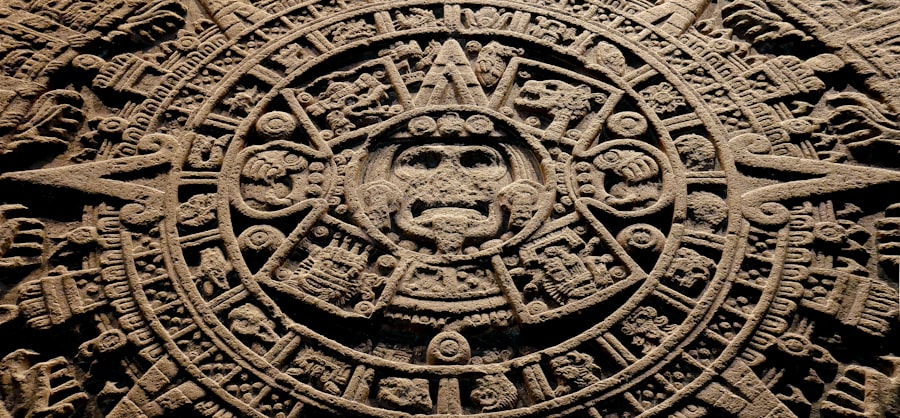
The Mayan civilization developed one of the most complex and accurate calendrical systems known to antiquity. It featured multiple interlocking cycles, including a 260-day sacred calendar (Tzolk’in) and a 365-day solar calendar (Haab’), which together formed a 52-year calendar round. These were further integrated into a Long Count system that tracked time over vast epochs.
The Tzolk’in and Haab’: The Heartbeat of Mayan Time
The Tzolk’in, a ritual calendar of 20 day names combined with 13 numbers, governed ceremonial and divinatory practices. The Haab’, a solar calendar of 18 months of 20 days each, plus a 5-day period called the Wayeb’, approximated the solar year. The combination of these cycles created a rich tapestry of time, with each day having a unique designation derived from both cycles.
The Long Count: An Eon-Spanning Chronology
The Mayan Long Count calendar extended the calculation of time far beyond the 52-year cycle, allowing for the dating of historical events and the prediction of future astronomical phenomena over millennia. This system was essential for their historical records and cosmological understanding, imbuing their civilization with a profound sense of deep time.
The Chaldean and Babylonian Calendars: Astronomical Prowess
The ancient Mesopotamian civilizations, particularly the Babylonians and Chaldeans, were renowned for their advanced astronomical observations and sophisticated calendrical systems. They developed lunar-solar calendars and made remarkable predictions of celestial events.
Lunar-Solar Synchronization: Bridging the Gap
The Babylonian calendar was predominantly lunar, with 12 months of 29 or 30 days. To keep this lunar calendar in sync with the solar year and the seasons, they employed intercalation. By adding an extra month periodically, they ensured that festivals and agricultural cycles remained aligned with the solar progression. This was a practical solution to the inherent mismatch between lunar and solar cycles.
Eclipses and the Prediction of Celestial Events
The Babylonians were pioneers in predicting astronomical events, particularly eclipses. Through centuries of meticulous observation and the development of mathematical models, they could forecast the occurrence of solar and lunar eclipses with remarkable accuracy. This predictive power was attributed to their deep understanding of celestial mechanics and their intricate calendrical calculations.
The Enduring Relevance of Ancient Solar Calendar Engines
The study of ancient solar calendar engines is not merely an academic exercise in historical archaeology. The principles and methodologies developed by past civilizations continue to resonate in our modern world, offering valuable insights and potential applications. Understanding these ancient systems provides a deeper appreciation for our own temporal frameworks and inspires innovative approaches to contemporary challenges.
Foundations of Modern Timekeeping and Astronomy
The development of accurate solar calendars was a crucial step in the evolution of human civilization. It enabled the organization of societies, the coordination of agricultural activities, and the establishment of religious and civic rituals. The very structure of our modern calendars, with their 365 days and leap years, is a direct legacy of these ancient endeavors.
The Leap Year: A Debt to Ancient Forethought
As mentioned, the concept of the leap year, essential for maintaining the synchronicity of our calendar with the Earth’s orbit, has roots in the efforts of ancient astronomers to correct for the fractional portion of the day. Every time we add an extra day in February, we are indirectly acknowledging the centuries of observation and refinement that led to this practice.
Observational Astronomy: A Continuous Lineage
The meticulous nature of ancient astronomical observation laid the groundwork for modern scientific astronomy. The dedication to recording celestial movements, identifying patterns, and developing mathematical models created a continuous lineage of inquiry that has led to our current understanding of the cosmos. These ancient observations are the bedrock upon which all subsequent astronomical knowledge is built.
Inspiration for Modern Scientific and Technological Applications
The ingenuity displayed in the construction and operation of ancient solar calendar engines can serve as a source of inspiration for modern scientific and technological innovation. The principles of precision, adaptation, and harmonious integration with natural cycles are universally applicable.
Precision Engineering and Material Science
The construction of large-scale megalithic structures and the crafting of intricate sundials required a high degree of engineering skill and an understanding of materials. Ancient peoples achieved remarkable precision with the tools available to them, a testament to their ingenuity which can inform modern approaches to construction and design.
Algorithmic Development and Data Analysis
The methods used by ancient civilizations to calculate celestial movements involved implicit algorithms and sophisticated data analysis. By tracking patterns over long periods, they could develop predictive models. This process of observation, pattern recognition, and prediction is a fundamental aspect of modern computational science and artificial intelligence.
Rethinking Our Relationship with Time and Natural Cycles
In an era of constant connectivity and digitally synchronized time, the ancient emphasis on direct observation of natural cycles offers a valuable counterpoint. Re-examining how these ancient cultures perceived and interacted with time can lead to a more mindful and grounded approach to our own temporal experience.
The Rhythms of Nature: A Lost Connection?
Ancient solar calendars were intrinsically linked to the rhythms of nature – the changing seasons, the length of days, the cycles of agriculture. In our modern lives, often divorced from these direct natural connections, there is a growing appreciation for the wisdom embedded in these ancient practices. Understanding these calendars can foster a deeper respect for ecological balance.
Sustainable Practices and Long-Term Planning
The long-term planning inherent in agricultural societies reliant on accurate solar calendars can inform modern approaches to sustainability and resource management. The understanding of cyclical processes and the need for foresight are lessons that remain highly relevant in our current global challenges. The ancient wisdom, writ large across the celestial clockwork, speaks to the importance of thinking in seasons and generations.

WATCH NOW ▶️ WARNING: The Giza Muon Scans Just Changed Everything
FAQs
What is an ancient solar calendar?
An ancient solar calendar is a timekeeping system used by early civilizations that is based on the solar year—the time it takes for the Earth to complete one orbit around the Sun. These calendars track the seasons and are often used to schedule agricultural, religious, and social events.
How did ancient solar calendar schedule engines work?
Ancient solar calendar schedule engines were mechanical or observational tools designed to track the solar year and predict important dates. They often used alignments with the sun, shadows, or celestial markers to mark solstices, equinoxes, and other key points in the solar cycle.
Which civilizations developed ancient solar calendar schedule engines?
Several ancient civilizations developed solar calendar systems and related scheduling devices, including the Egyptians, Mayans, Babylonians, and Chinese. Each culture created unique methods and instruments to measure the solar year and organize their calendars.
What was the purpose of ancient solar calendar schedule engines?
The primary purpose was to accurately track the passage of time throughout the year to plan agricultural activities, religious ceremonies, and civic events. These engines helped societies align their calendars with seasonal changes and celestial events.
Are there any surviving examples of ancient solar calendar schedule engines?
Yes, some ancient solar calendar devices and structures still exist today, such as the Egyptian obelisks, Mayan observatories, and stone circles like Stonehenge. These artifacts provide insight into how ancient peoples measured and scheduled time based on the solar cycle.