Continental crust, the relatively thick and buoyant shell upon which continents ride, holds the key to understanding Earth’s long-term geological evolution, its mineral wealth, and the dynamic processes that shape our planet. For centuries, scientists have relied on surface observations and indirect methods to glean insights into this enigmatic foundation. However, the advent and refinement of scientific drilling have revolutionized our ability to peer directly into its depths, unlocking secrets previously confined to the realm of speculation. By extracting rock cores, monitoring subsurface conditions, and conducting in-situ experiments, these ambitious expeditions offer an unprecedented window into the composition, structure, and history of the continental lithosphere.
The composition of continental crust is a tapestry woven from a diverse array of igneous, metamorphic, and sedimentary rocks. Unlike the relatively uniform oceanic crust, which is primarily basaltic, continental crust is significantly more felsic, characterized by a higher abundance of silica-rich minerals like quartz and feldspar. This fundamental difference in composition directly influences its density and buoyancy, allowing continents to persist while oceanic plates are recycled back into the mantle. Scientific drilling has been instrumental in characterizing this variability, revealing distinct chemical signatures and mineral assemblages at different depths and across various tectonic settings.
Granitic Roots: The Dominant Lithology
At the upper levels of the continental crust, particularly in shield areas and ancient cratons, granitic and related felsic igneous rocks dominate. These rocks, often formed through partial melting of pre-existing crust or magmatic underplating, represent the enduring legacy of numerous tectonic cycles. Drilling campaigns in these stable regions aim to sample these ancient lithologies, providing direct evidence of their age, emplacement conditions, and subsequent alteration. The mineralogical analysis of core samples allows scientists to reconstruct the thermal and pressure regimes under which these rocks formed, offering critical data for models of crustal growth and stabilization over billions of years. Furthermore, isotopic studies on these samples can trace the sources of the magmas and the timing of their differentiation, shedding light on the processes of crustal recycling and reworking throughout Earth’s history.
The Metamorphic Foundation: Resilience and Transformation
Beneath the granitic veneer, the continental crust transitions into a more varied and often intensely deformed metamorphic realm. Here, rocks have been subjected to immense pressures and elevated temperatures, transforming their mineralogy and texture. Scientific drilling in orogenic belts, regions of intense mountain building, has been particularly revealing. Cores extracted from these areas provide invaluable samples of high-grade metamorphic rocks such as gneisses, schists, and granulites. Their study allows geoscientists to reconstruct the complex history of tectonic collision, crustal thickening, and exhumation that defines these dynamic environments. The presence of specific metamorphic minerals and their textural relationships act as geothermometers and geobarometers, offering precise constraints on the temperature and pressure conditions experienced by the rocks during their transformation. Understanding these processes is crucial for deciphering how continents grow and deform over geological timescales.
Sedimentary Overburdens: Records of Surface Processes
While igneous and metamorphic rocks form the bulk of the continental crust, thick sequences of sedimentary rocks often cap these deeper lithologies, particularly in basins and along continental margins. These layered deposits are archives of Earth’s surface history, recording changes in climate, sea level, and erosion patterns. Scientific drilling into these sedimentary sequences provides crucial insights into the depositional environments, the paleoclimate, and the paleobiological history of the regions. Core samples allow for detailed analysis of sedimentary structures, fossil content, and organic matter, which can reveal past ecosystems, reconstruct ancient geographies, and even indicate the presence of hydrocarbons. The study of these shallow crustal deposits is fundamental for understanding processes like basin formation, sediment transport, and the long-term carbon cycle.
Scientific drilling into the continental crust has opened new avenues for understanding Earth’s geological history and processes. A related article discusses how revolutionary technological breakthroughs are transforming our approach to geological research and exploration. This article highlights the significance of these advancements in enhancing our ability to study the Earth’s interior and the implications for various scientific fields. For more insights, you can read the article here: Revolutionary Tech Breakthroughs Changing History.
Probing the Depths: Tectonic Architectures and Structural Complexity
The internal structure of continental crust is far from homogeneous. It is a complex edifice characterized by a bewildering array of faults, shear zones, and intrusive bodies, all reflecting the relentless forces of plate tectonics. Scientific drilling enables direct observation and sampling of these structural features, moving beyond surface interpretations based on geophysics. By penetrating into these deep geological structures, researchers can unravel the mechanisms of crustal deformation, the rheology of the crust under stress, and the pathways for fluid and heat migration.
Faults and Shear Zones: Zones of Weakness and Movement
Faults and shear zones represent planes of weakness within the crust where rocks have fractured and moved. In continental settings, these zones can extend for hundreds or even thousands of kilometers and play a critical role in seismic activity, fluid flow, and the transport of heat and minerals. Scientific drilling projects focused on active fault zones, such as those in Japan or California, allow for the direct examination of fault gouge, cataclasites, and other deformed materials. Analysis of these samples can reveal the slip history, the friction properties of fault zones, and the presence of pore fluids under pressure, which are crucial for understanding earthquake generation. Moreover, drilling into strike-slip, dip-slip, and thrust faults provides invaluable data for understanding the mechanics of continental deformation and the kinematics of large-scale tectonic processes like mountain building.
The Mid-Crustal Conundrum: Anatexis and Delamination
The mid-crustal region remains one of the most enigmatic zones of the continental lithosphere. Here, temperatures and pressures are often high enough to induce partial melting, a process known as anatexis, which can lead to the formation of magmas and influence the rheology of the crust. Scientific drilling has begun to probe these depths, encountering zones of migmatites and intrusive granitic bodies. These investigations aim to understand the conditions under which anatexis occurs, the composition of the generated melts, and their subsequent emplacement or assimilation. Furthermore, the concept of crustal delamination, where the lower, denser portion of the continental crust detaches and sinks into the mantle, is also being investigated through deep drilling. Samples from areas suspected of experiencing delamination can provide clues about the extent and nature of this process.
Igneous Intrusions: Sculpting the Crust from Within
The continental crust is also punctuated by numerous igneous intrusions, ranging from shallow dikes and sills to deep-seated plutons. These magmatic bodies have a profound influence on the thermal regime, structural evolution, and mineral potential of the crust. Scientific drilling into these intrusions allows for detailed petrological and geochemical analysis, revealing the source of the magmas, their emplacement history, and the interactions with the surrounding country rocks. Understanding the plumbing systems of these magmatic intrusions is crucial for deciphering volcanic processes, the formation of ore deposits, and the long-term thermal evolution of continental landmasses. Drilling into exposed plutons, like those found in mountain ranges, offers a direct view of the solidified magma chambers that once resided deep within the crust.
Unveiling the Deep Processes: Heat Flow, Fluid Circulation, and Seismicity
Beyond composition and structure, scientific drilling provides unparalleled opportunities to study the dynamic processes occurring within the continental crust. This includes understanding the Earth’s internal heat engine, the circulation of fluids through the subsurface, and the triggers and mechanisms of earthquakes. These investigations are not only fundamental to geoscience but also have significant implications for resource exploration and hazard assessment.
The Geothermal Gradient: Earth’s Internal Heat at Play
The flow of heat from Earth’s interior through the continental crust is a fundamental driver of many geological processes. Scientific drilling allows for direct measurement of the geothermal gradient, the rate at which temperature increases with depth. By deploying temperature probes in boreholes, scientists can map the distribution of heat flow across different tectonic provinces. Variations in heat flow can indicate the presence of magmatic activity, tectonic thinning, or zones of enhanced fluid circulation. Understanding the geothermal gradient is critical for assessing the potential for geothermal energy resources and for modeling the thermal evolution of the lithosphere. Drilling in volcanic areas, for example, can reveal significantly elevated heat flow values, directly linking the surface to subsurface magmatic systems.
Subsurface Fluid Systems: Pathways and Pressures
Water and other fluids play a crucial role in the evolution of the continental crust, influencing rock properties, chemical reactions, and tectonic processes. Scientific drilling allows for the direct sampling of pore fluids, the measurement of fluid pressures, and the analysis of fluid composition. These investigations reveal intricate subsurface fluid circulation systems, driven by hydrostatic pressure, geothermal gradients, and tectonic forces. Understanding these systems is vital for deciphering the formation of hydrothermal ore deposits, the transport of dissolved elements, and the role of pore pressure in earthquake generation. Drilling into fault zones, for example, has revealed the presence of overpressured fluids, which can significantly reduce the effective normal stress on faults and promote seismic rupture.
Seismogenic Zones: The Roots of Earthquakes
Continental crust is prone to significant seismic activity, and understanding the processes that lead to earthquakes is a paramount goal of geoscience. Scientific drilling into active seismic zones, particularly in subduction zones and continental collision zones, provides direct access to the fault planes where earthquakes initiate. By deploying seismometers and other monitoring instruments within boreholes, scientists can record subtle seismic signals, study slow slip events, and investigate the physical properties of fault zones at depth. This direct observation can shed light on the nucleation of earthquakes, the rupture propagation mechanisms, and the factors that control seismic hazard. Drilling into the seismogenic zones of the San Andreas Fault, for instance, has provided unprecedented data on the stress state and fluid conditions within the active fault.
Continental Crust as a Resource: Mineral Deposits and Hydrocarbon Exploration
The continental crust is a vast repository of valuable mineral resources and hydrocarbons. Scientific drilling has played a pivotal role in the exploration and understanding of these deposits, transforming our ability to locate and extract them more efficiently and sustainably. The direct observation and sampling of subsurface formations are essential for characterizing the geological setting, the mineral assemblages, and the geological controls on resource accumulation.
Ore Genesis: Unraveling the Formation of Mineral Deposits
Many of the world’s most important mineral deposits, including those of copper, gold, silver, and rare earth elements, are hosted within continental crust. Scientific drilling has been instrumental in deciphering the complex processes of ore genesis, which often involve magmatic activity, hydrothermal fluids, and structural controls. By drilling into known or prospective ore bodies, geoscientists can collect core samples that reveal the mineralogy, geochemistry, and textures of the ore-forming systems. This data allows for the reconstruction of the thermal and chemical conditions under which the minerals precipitated, the pathways of fluid migration, and the timing of mineralization. Understanding these processes is crucial for developing more effective exploration strategies and for optimizing mining operations. Drilling into porphyry copper deposits, for example, allows for detailed mapping of the alteration zones and the spatial distribution of economic mineralization.
Hydrocarbon Reservoirs: Insights into Oil and Gas Formation
The vast majority of the world’s hydrocarbon reserves are found within sedimentary basins in continental crust. Scientific drilling, particularly by the oil and gas industry, has provided an enormous wealth of data on the subsurface geology of these basins. Core samples and well logs reveal the stratigraphy, the lithology, the pore space characteristics, and the presence of organic matter that can be the source of hydrocarbons. This information is essential for understanding the processes of hydrocarbon generation, migration, and entrapment, and for identifying potential reservoirs. Furthermore, drilling allows for the direct testing of reservoir properties, such as permeability and porosity, which are critical for estimating resource volumes and designing production strategies. The study of core samples from deep offshore basins, for instance, has revealed the intricate interplay of sedimentation, diagenesis, and hydrocarbon accumulation in extreme environments.
Scientific drilling into the continental crust has revealed significant insights into the Earth’s geological processes and the history of our planet. Recent advancements in drilling technology have allowed researchers to access deeper layers, providing valuable data on tectonic movements and mineral deposits. For a deeper understanding of how external factors can influence geological studies, you might find this article on government property seizures during crises interesting. It discusses the implications of such actions on scientific research and exploration efforts. You can read more about it here.
The Future of Continental Crust Research: Advanced Technologies and Global Initiatives
| Project Name | Location | Depth Drilled (m) | Year Started | Main Objective | Key Findings |
|---|---|---|---|---|---|
| Kola Superdeep Borehole | Kola Peninsula, Russia | 12,262 | 1970 | Study deep continental crust structure | Discovered unexpected rock types and microfossils at depth |
| ICDP San Andreas Fault Observatory | California, USA | 1,200 | 2004 | Investigate fault mechanics and earthquake processes | Insights into fault zone properties and fluid flow |
| Chikyu Deep Drilling Project | Offshore Japan (continental margin) | 2,500 | 2007 | Study seismogenic zone and plate boundary processes | Samples from deep sediments and crustal rocks |
| ICDP KTB Borehole | Germany | 9,101 | 1987 | Investigate deep crustal processes and heat flow | Data on temperature gradients and rock deformation |
| SAFOD (San Andreas Fault Observatory at Depth) | California, USA | 3,000 | 2004 | Direct sampling of active fault zone | Real-time monitoring of fault activity and rock properties |
The scientific drilling of continental crust is a continuously evolving field, driven by advancements in technology and a growing understanding of the planet’s complex systems. Future research will likely focus on even deeper drilling capabilities, more sophisticated sensing technologies, and a greater emphasis on international collaboration to tackle the most pressing questions about our planet.
Deeper and More Precise Drilling: Pushing the Boundaries
Future scientific drilling initiatives aim to penetrate deeper into the continental crust than ever before. This will require the development of new drilling technologies capable of withstanding extreme pressures and temperatures, as well as innovative methods for borehole stability and data acquisition. Projects like the planned drilling into the Icelandic crust or the ongoing efforts to reach the Mohorovičić discontinuity in continental settings represent ambitious endeavors to explore previously inaccessible depths. Advances in drilling fluids, drill bit technology, and real-time data transmission will be crucial for the success of these endeavors. The ability to drill deeper will open up new frontiers in understanding the fundamental processes that govern the evolution of the Earth’s lithosphere.
Integrated Earth Observation: Combining Drilling with Other Technologies
The most comprehensive understanding of continental crust will emerge from integrating scientific drilling data with other Earth observation technologies. This includes seismic imaging, remote sensing, and geophysical surveys. By combining direct subsurface observations with indirect geophysical data, scientists can create highly detailed three-dimensional models of the crust. This integrated approach allows for the validation of geophysical interpretations, the calibration of models, and a more holistic understanding of the complex interplay between different geological processes. For example, seismic data can highlight potential targets for drilling, and drilling results can then be used to refine seismic models.
International Collaboration: Addressing Global Challenges
The study of continental crust is a global endeavor, and international collaboration is essential for addressing the most significant scientific challenges. Large-scale scientific drilling programs, such as those supported by the International Continental Scientific Drilling Program (ICDP), bring together researchers from around the world to conduct ambitious projects. These collaborations foster the sharing of knowledge, resources, and expertise, enabling the pursuit of research questions that are too complex or too expensive for any single nation to undertake alone. By working together, scientists can gain a more comprehensive understanding of continental crust as a global system, its role in plate tectonics, and its impact on the planet’s habitability. The insights gained from these collaborative efforts will be invaluable for addressing challenges related to natural hazards, resource sustainability, and climate change. The continued exploration of continental crust through scientific drilling promises to unlock even more profound secrets about our planet’s past, present, and future.
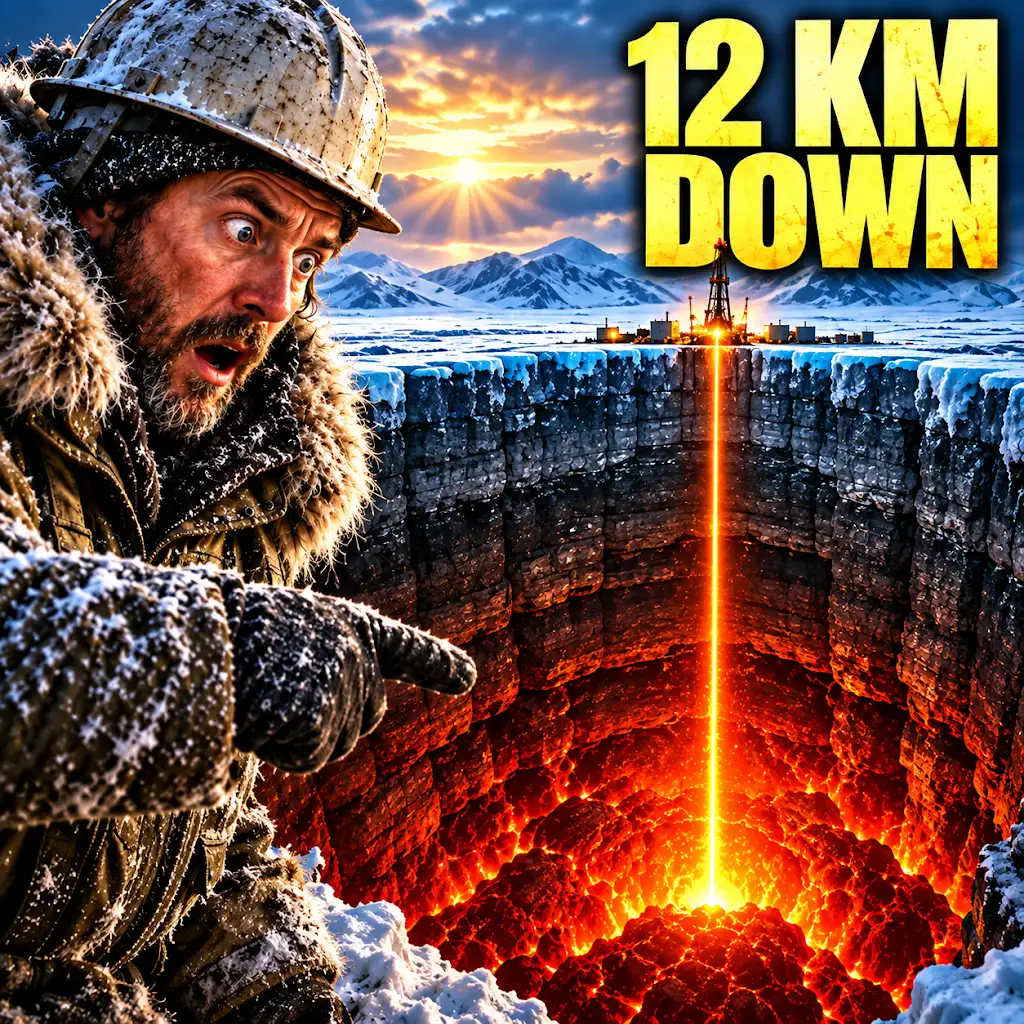
They Drilled 12 KM Into Earth — Then Everything Changed
FAQs
What is scientific drilling into continental crust?
Scientific drilling into continental crust involves extracting core samples from deep within the Earth’s crust to study its composition, structure, and history.
Why is scientific drilling into continental crust important?
This process helps scientists better understand the Earth’s geological processes, such as plate tectonics, mountain building, and volcanic activity. It also provides insights into the Earth’s history and evolution.
How is scientific drilling into continental crust conducted?
Scientific drilling into continental crust is typically done using specialized drilling equipment that can penetrate deep into the Earth’s crust. Core samples are extracted and analyzed to gather valuable data.
What are some of the key findings from scientific drilling into continental crust?
Through scientific drilling, researchers have discovered evidence of past climate change, ancient life forms, mineral deposits, and the presence of fluids and gases within the Earth’s crust.
Where are some of the notable sites for scientific drilling into continental crust?
Some notable sites for scientific drilling into continental crust include the San Andreas Fault in California, the East African Rift Valley, and the Mid-Atlantic Ridge. These locations offer unique opportunities to study different geological processes.