
Vitrified stone, a material forged in the crucible of intense heat, presents archaeologists with enigmatic artefacts that whisper tales of ancient ingenuity and dramatic events. Unlike conventional stone, which retains its original mineral composition and structure, vitrified stone undergoes a transformative process where its constituent minerals melt and fuse together, creating a glass-like or pottery-like substance. This transformation is not an accidental occurrence; rather, it is a direct signature of extreme temperatures, often exceeding 1200 degrees Celsius (2200 degrees Fahrenheit), far beyond the capabilities of typical domestic hearths or even ancient kilns designed for pottery. Unlocking the secrets held within these glassy remnants offers a unique window into the past, shedding light on forgotten technologies, environmental catastrophes, and the socio-cultural contexts of ancient civilizations.
For the archaeologist, vitrified stone is akin to finding fingerprints left at a crime scene, but instead of a perpetrator, the fingerprints point to the fiery forces that shaped human history. Each shard, each fused boulder, is a piece of a puzzle, and understanding its formation is the key to revealing the full picture. This article aims to delve into the multifaceted world of vitrified stone, exploring its formation processes, the diverse contexts in which it is found, the analytical techniques employed to study it, and the profound insights it offers into the human past.
Vitrification, the process by which a substance is converted into glass or a glass-like material, is the bedrock of understanding vitrified stone. This phenomenon is not solely confined to geological events; human activity, intentional or unintentional, plays a significant role in its creation. When materials rich in silica, alumina, and alkalis, commonly found in rocks and soils, are subjected to sufficiently high temperatures, their molecular structure begins to break down. This breakdown allows atoms to rearrange themselves into a disordered, amorphous state characteristic of glass.
Natural Vitrification: The Earth’s Own Furnaces
Nature itself can be a formidable architect of vitrified materials. Lightning strikes, with their immense energy, can superheat soil and sand, creating fulgurites – hollow, glassy tubes that are the direct result of a lightning bolt molten rock. These natural occurrences, while fascinating geological curiosities, demonstrate the fundamental principle of vitrification.
- Lightning Strikes and Fulgurites: The intense electrical discharge of lightning can vaporize sand and rock, causing rapid melting and re-fusion. The resulting fulgurite captures the path of the lightning, providing a tangible record of a fleeting, powerful event.
- Volcanic Activity: Volcanic eruptions, particularly those involving explosive interactions with water (phreatomagmatic eruptions), can generate pyroclastic flows and surges of incredibly high temperatures. These events can vitrify landscapes, fusing rocks and ash into glassy deposits. Silexite, a type of volcanic obsidian, is a prime example of naturally vitrified rock formed under such conditions.
- Meteorite Impacts: Though rarer, meteorite impacts can generate localized zones of extreme heat and pressure, capable of melting and vitrifying surrounding rock. These impact sites are rare but can yield fascinating examples of natural vitrification.
Anthropogenic Vitrification: Human Hands in the Fire
While natural forces can create vitrified landscapes, archaeological contexts often reveal human-induced vitrification, a testament to developing technologies and sometimes destructive events. The deliberate application of heat, or the accidental consequences of ancient practices, can lead to the fusion of earthen materials.
- Ancient Metallurgy and Smelting: The high temperatures required for early metal smelting operations, particularly iron smelting, could inadvertently vitrify surrounding clay soils and hearth linings. Fluxes used in smelting could lower the melting point of silica, exacerbating the vitrification process.
- Intentional Firing of Structures: Some ancient cultures may have intentionally fired certain earthen structures to harden them or imbue them with specific properties. Fortifications or defensive walls made of rammed earth or mudbrick, when subjected to prolonged and intense fires, could become vitrified.
- Conflagrations and Warfare: Accidental fires, or deliberate acts of destruction during warfare, could have led to significant vitrification. The burning of cities, settlements, or large wooden structures could have generated enough heat to fuse the underlying soil and building materials. This is often identified in the archaeological record as a distinct layer of fused earth.
- Early Brick and Pottery Production: While kilns for pottery and brickmaking operated at high temperatures, full vitrification of the surrounding soil was not always the primary goal. However, localized melting and fusion could occur, especially in inefficient kilns or during prolonged firing processes.
Vitrified stone archaeology has revealed fascinating secrets about ancient civilizations and their advanced engineering techniques. For those interested in exploring more about the mysteries of our planet’s history, a related article titled “Uncovering Ancient Wisdom: Earth’s Polar Knowledge” delves into the ancient practices and knowledge that have shaped our understanding of the world. You can read it here: Uncovering Ancient Wisdom: Earth’s Polar Knowledge.
Archaeological Contexts of Vitrified Stone: Where the Past Ignited
The discovery of vitrified stone is never a singular event; it is invariably intertwined with its surrounding archaeological context. This context is crucial for interpreting the nature of the vitrification and the activities it represents. From defensive ramparts to the hearths of ancient dwellings, vitrified stone serves as a silent witness to a spectrum of human endeavors.
Defensive Structures: Walls Against the Flames
One of the most dramatic and widely studied contexts for vitrified stone is within ancient defensive fortifications, particularly in Europe and parts of Asia. The immense heat required to vitrify these structures suggests prolonged and intense fires, often interpreted as the result of deliberate siege warfare or the destruction of settlements.
- Vitrified Forts of Scotland and Northern Europe: These hillforts, often characterized by massive stone walls that have been subjected to extreme heat, are prime examples. The vitrification, sometimes extending several meters into the wall, suggests burning events of incredible intensity, possibly involving the heating of timber structures and their subsequent collapse onto the ramparts.
- Iron Age Settlements: Beyond elaborate forts, many Iron Age settlements exhibit evidence of vitrified mudbrick walls, hearths, or even entire structures. This indicates that fire was not only a destructive force but also potentially a factor in construction or defense.
- Siege Warfare and Arson: The consistent presence of vitrified materials within defensive perimeters strongly suggests an association with conflict. The deliberate use of fire as a weapon to overwhelm and destroy fortified settlements would naturally lead to this phenomenon.
Domestic and Industrial Sites: Hearthstones and Kiln Linings
Vitrified stone is not solely found in scenes of destruction; it also appears in the more mundane settings of daily life and ancient industry, offering insights into technological advancements and domestic practices.
- Ancient Hearths and Ovens: Repeated use and intense heat within domestic hearths or baking ovens, especially those using wood as fuel, can lead to the gradual vitrification of the surrounding clay or stone. This layering of vitrified material can provide a chronological sequence of use.
- Pottery and Brick Kilns: The internal linings of ancient kilns, designed to withstand high temperatures, often show signs of vitrification. The degree of vitrification can indicate the typical firing temperatures achieved by the kiln operators and the sustainability of their kiln technology.
- Metallurgical Workshops: Evidence of early metalworking, such as bloomery furnaces for iron production, frequently contains vitrified slag and furnace linings. The analysis of these materials can reveal the types of ores used, the smelting techniques employed, and the temperatures reached.
Accidental Fires and Natural Disasters: Traces of Catastrophe
Occasionally, vitrified stone serves as a stark reminder of catastrophic events, both human-induced and natural, that reshaped landscapes and erased settlements from existence without intentionality.
- Wildfires: In arid or semi-arid environments, intense wildfires can cause significant vitrification of soils and rock formations. Archaeological evidence found within such vitrified landscapes can preserve the imprint of human activity before the natural disaster.
- Geological Fires: While less common in direct archaeological association, ancient geological events like coal seam fires, where underground coal deposits ignite, can lead to extensive vitrification of the overlying strata.
- Burnt Food Remains: In some extreme cases, the vitrification of food residues, such as grains or plant materials, can occur when they are subjected to exceptionally high temperatures, often in association with the burning of structures.
Analytical Techniques: Deciphering the Glassy Record
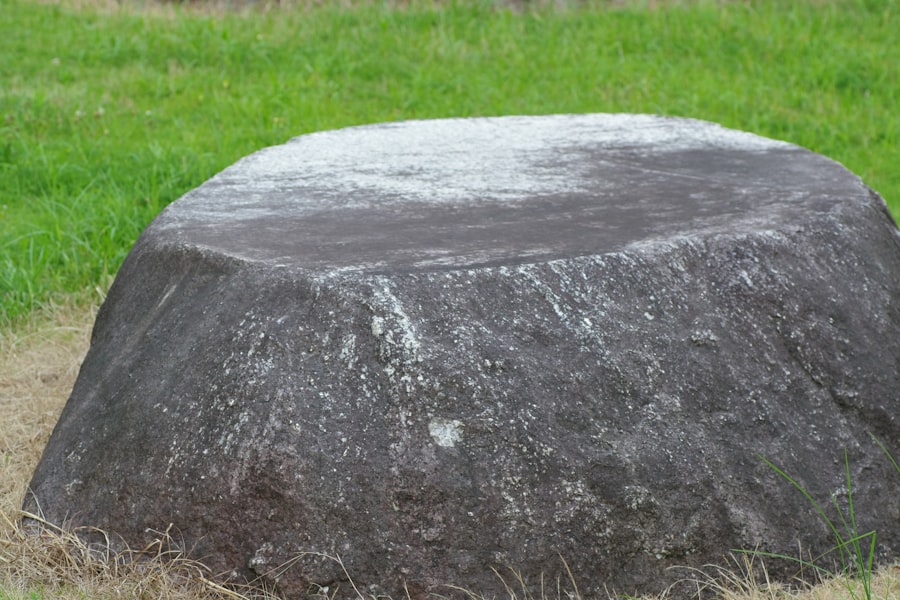
The interpretation of vitrified stone relies on a suite of sophisticated analytical techniques that allow archaeologists to peer into the material’s composition, structure, and thermal history. These methods transform the seemingly inert glassy material into a narrative of its formation.
Petrography and Microscopy: The Microscopic Fingerprints
Visual examination under a microscope is the foundational step in analyzing vitrified stone. Petrography involves the detailed study of rock and mineral samples, revealing the mineralogical changes that have occurred.
- Optical Microscopy: This technique allows archaeologists to identify the original mineral grains (e.g., quartz, feldspar, clay minerals) and observe how they have been altered, melted, and reformed into a glassy matrix. Signs of devitrification – the recrystallization of glass – can also be observed.
- Scanning Electron Microscopy (SEM): SEM provides much higher magnifications than optical microscopy, revealing finer details of the microstructures and grain boundaries within the vitrified material. It can help differentiate between fully vitrified glass and partially melted materials.
Geochemistry: Unmasking the Elemental Story
Understanding the chemical composition of vitrified stone is crucial for deducing the original materials and the thermal processes involved in its formation. Analytical geochemistry provides the elemental and isotopic signatures.
- X-ray Fluorescence (XRF): XRF is a non-destructive technique that determines the elemental composition of the sample. By comparing the elemental ratios of vitrified samples to those of surrounding unvitrified soils or rocks, archaeologists can infer the original composition and identify any additions or losses during the vitrification process.
- Electron Probe Microanalysis (EPMA): EPMA provides elemental composition data at a microscopic level, allowing for the analysis of specific minerals and phases within the vitrified matrix. This can reveal segregation of elements during melting and cooling.
- Mass Spectrometry (MS): Techniques like Inductively Coupled Plasma Mass Spectrometry (ICP-MS) can provide highly accurate quantitative elemental analysis, detecting even trace elements. Isotope analysis can also be used to trace the origin of materials or to understand specific geological or atmospheric conditions during formation.
Thermoluminescence (TL) and Optically Stimulated Luminescence (OSL) Dating: Unlocking the Timepiece
While not directly dating the vitrification event itself, luminescence dating techniques can provide an age for the sediments that were subjected to the high temperatures. The heat effectively “resets” the geological clock, allowing for an age determination of the last time the material was exposed to significant heat.
- Thermoluminescence Dating: When minerals are heated, they release stored energy in the form of light. By measuring the amount of light emitted when a sample is reheated in a laboratory, archaeologists can estimate the time elapsed since it was last exposed to high temperatures, such as those involved in vitrification events.
- Optically Stimulated Luminescence Dating: Similar to TL, OSL uses light to stimulate the release of trapped energy. It is often used for dating younger sediments than TL and can provide complementary age estimates.
Magnetic Properties: Evidence of Fire’s Passage
The magnetic properties of materials can change significantly when they are heated. Analyzing these changes can provide further evidence of high-temperature events.
- Thermomagnetic Analysis: This technique involves heating and cooling a sample in a controlled magnetic field to observe changes in its magnetic susceptibility. The presence of specific magnetic minerals, such as magnetite, and their magnetic behavior at different temperatures can indicate the peak temperatures reached during vitrification.
Interpretive Insights: What Vitrified Stone Reveals About the Past

The analysis of vitrified stone is not merely an academic exercise; it unlocks profound insights into the capabilities, challenges, and dramatic moments of ancient human societies. It transforms abstract historical narratives into tangible evidence of past lives and events.
Technological Prowess and Innovation: Masters of the Flame
The presence of vitrified stone can highlight the sophisticated technological understanding of ancient peoples, particularly concerning heat management and material transformation.
- Advanced Metallurgy: The ability to generate and control temperatures high enough to cause partial or complete vitrification indicates a mastery of furnace design, fuel management, and the understanding of material properties essential for early metallurgy.
- Construction Techniques: The vitrification of defensive walls suggests deliberate firing to harden structures, a practice requiring controlled application of heat over extended periods. This speaks to an understanding of material science and construction engineering.
- Resource Management: The scale of vitrification evident in some fortifications implies the mobilization of significant fuel resources and organized labor, suggesting complex societal structures capable of undertaking monumental projects.
Warfare and Societal Conflict: The Scars of Siege
Vitrification in defensive contexts is a powerful indicator of the prevalence and intensity of ancient warfare. It provides physical evidence of destruction and the desperation or determination of ancient combatants.
- Siege Warfare Tactics: The nature of vitrification can offer clues about siege tactics. For instance, if timber structures are found fused with ramparts, it suggests that the attackers may have used fire as a primary weapon to overcome defenses.
- Destruction Layers and Chronological Markers: Vitrified layers can serve as distinct stratigraphic markers, helping archaeologists to date destruction events and understand the sequence of occupation and abandonment at a site.
- Social Disruption and Resilience: The widespread vitrification of settlements can indicate periods of significant social upheaval and the resilience of communities in rebuilding or adapting to destructive forces.
Environmental Interactions and Adaptations: Living with Fire
The unintentional vitrification caused by natural disasters or the gradual effects of domestic fires offers insights into how ancient peoples interacted with and were influenced by their environment.
- Awareness of Fire Hazards: The recurrence of vitrified hearths and ovens demonstrates a long-standing relationship with fire, and the potential for both utility and danger.
- Adaptability to Fire-Prone Environments: Finding vitrified materials in areas prone to wildfires suggests that ancient populations developed strategies for living in and adapting to these challenging ecological conditions.
- Impact of Human Activities: The evidence of vitrification due to intentional or accidental burning highlights the significant impact human activities could have on the landscape even in pre-industrial times.
Ritualistic Practices and Belief Systems: The Sacred Fire?
In some cases, the intentional vitrification of materials might have had ritualistic or symbolic significance, going beyond purely practical applications.
- Ritualistic Burning: Certain cultures might have employed intense fires in religious ceremonies or burials, leading to the vitrification of offerings or grave goods.
- Symbolic Hardening or Transformation: The glassy, enduring nature of vitrified stone could have been imbued with symbolic meaning in certain belief systems, representing permanence, purification, or transformation.
Recent discoveries in vitrified stone archaeology have unveiled fascinating secrets about ancient civilizations and their advanced technologies. For those interested in how these findings relate to modern developments, an insightful article discusses Mexico’s strategic development and industrial zone plan, shedding light on how historical innovations can influence contemporary infrastructure. You can read more about this intriguing connection in the article here.
The Future of Vitrified Stone Research: Unlocking Further Secrets
| Metric | Description | Example Site | Estimated Age | Research Status |
|---|---|---|---|---|
| Vitrification Temperature | Approximate temperature required to melt and fuse stone walls | Fort of Dun Mac Sniachan, Scotland | ~1000°C | Under study; debated whether natural or human-made |
| Wall Thickness | Thickness of vitrified stone walls | Hillfort of Finavon, Scotland | 1.5 – 3 meters | Measured and documented |
| Stone Types | Types of stones commonly vitrified | Various Scottish hillforts | N/A | Granite and basalt most common |
| Purpose Hypotheses | Proposed reasons for vitrification | Multiple sites | Iron Age to Early Medieval | Defensive, ritualistic, or accidental |
| Archaeological Finds | Artifacts found in vitrified forts | Craig Phadrig, Scotland | 6th – 9th century AD | Iron tools, pottery shards |
The study of vitrified stone is an ongoing endeavor, with new discoveries and analytical advancements continually refining our understanding of the past. As archaeological methodologies evolve and our scientific toolkit expands, the enigmas held within these fiery artifacts will continue to be unraveled.
- Advanced Material Science Applications: The application of cutting-edge material science techniques, such as high-resolution electron microscopy and advanced spectroscopy, can provide even finer detail about the microstructural evolution and chemical processes during vitrification.
- Computational Modeling: Sophisticated computational modeling can simulate the thermal dynamics of ancient fires and forge processes, helping archaeologists to reconstruct the conditions that led to vitrification with greater accuracy.
- Interdisciplinary Collaboration: Increased collaboration between archaeologists, geologists, material scientists, and archaeometallurgists will foster a more holistic understanding of vitrified stone, bridging the gap between the interpretation of archaeological contexts and the precise scientific analysis of materials.
- Digital Archiving and Data Sharing: The creation of comprehensive digital databases of vitrified stone finds, coupled with open data sharing initiatives, will allow for global comparative studies and the identification of broader patterns and trends in its occurrence and significance across different cultures and time periods.
Vitrified stone, a fascinating byproduct of intense heat, is far more than just a curious material. It is a key that unlocks the doors to understanding ancient technologies, the realities of warfare, the daily lives of our ancestors, and their profound interactions with the transformative power of fire. Each piece of vitrified stone is a testament to human ingenuity and the dramatic forces that have shaped our world, waiting patiently for us to decipher its ancient, fiery tale.
FAQs
What is vitrified stone in archaeology?
Vitrified stone refers to rock that has been subjected to intense heat, causing it to partially melt and fuse together. In archaeology, vitrified stones are often found in ancient fortifications or structures where the walls show evidence of having been exposed to high temperatures.
How were vitrified stones created in ancient times?
The exact methods are still debated, but vitrified stones were likely created by deliberately setting large fires against stone walls or structures, reaching temperatures high enough to melt the rock surfaces. This process could have been intentional for strengthening walls or accidental due to warfare or destruction.
Where are vitrified stones commonly found?
Vitrified stones are commonly found in ancient forts and hillforts across parts of Europe, especially in Scotland, Ireland, and France. These sites often show evidence of vitrification in their defensive walls.
What can vitrified stones tell us about ancient societies?
The presence of vitrified stones can provide insights into the construction techniques, defensive strategies, and even the events of conflict or destruction experienced by ancient communities. Studying these stones helps archaeologists understand the technological capabilities and historical context of the societies that created them.
Are vitrified stones unique to any particular culture or period?
Vitrified stones are not exclusive to a single culture or time period but are most commonly associated with Iron Age hillforts in Europe. However, similar vitrification processes have been observed in other ancient contexts worldwide, indicating that the phenomenon is a result of specific environmental or human activities rather than cultural uniqueness.