Archaeology, the diligent excavation of the past, has consistently unveiled fragments of forgotten worlds, piecing together narratives that shape our understanding of human civilization. These revelations, often emerging from dust-laden tombs or submerged cities, do more than simply satisfy curiosity; they challenge existing paradigms, rewrite historical accounts, and illuminate the enduring ingenuity and shared experiences of our ancestors. The process of unraveling ancient mysteries is an ongoing testament to human perseverance, scientific innovation, and the profound desire to connect with those who walked the earth millennia before us.
The very beginnings of organized human society represent one of archaeology’s most compelling frontiers. From nomadic hunter-gatherer bands to the first settled agricultural communities, the transition marked a fundamental shift in human existence, laying the groundwork for all subsequent civilizations. Archaeological digs meticulously reconstruct these nascent societies, providing tangible evidence of early innovations and cultural practices.
The Fertile Crescent: Cradle of Civilization
The lands encompassing modern-day Iraq, Syria, Jordan, Lebanon, Israel, and Palestine have long been recognized as the “Fertile Crescent,” a region where many of the earliest complex societies flourished. Here, groundbreaking discoveries have illuminated the development of agriculture, urbanization, and sophisticated social structures.
Göbekli Tepe: A Monumental Enigma
Perhaps one of the most astonishing discoveries of recent decades is Göbekli Tepe in southeastern Turkey. Predating Stonehenge by thousands of years, this vast complex of megalithic structures, featuring intricately carved stone pillars, challenges conventional timelines for the development of organized religion and monumental architecture. Its existence suggests that sophisticated ritualistic practices may have preceded settled agriculture, a notion that has sent ripples through the archaeological community. The sheer scale and artistic achievement of Göbekli Tepe suggest a level of social organization and communal effort heretofore unexpected for its era. The purpose of these imposing structures remains a subject of intense debate, with theories ranging from astronomical observatories to ceremonial gathering places.
Catalhöyük: A Neotihic Metropolis
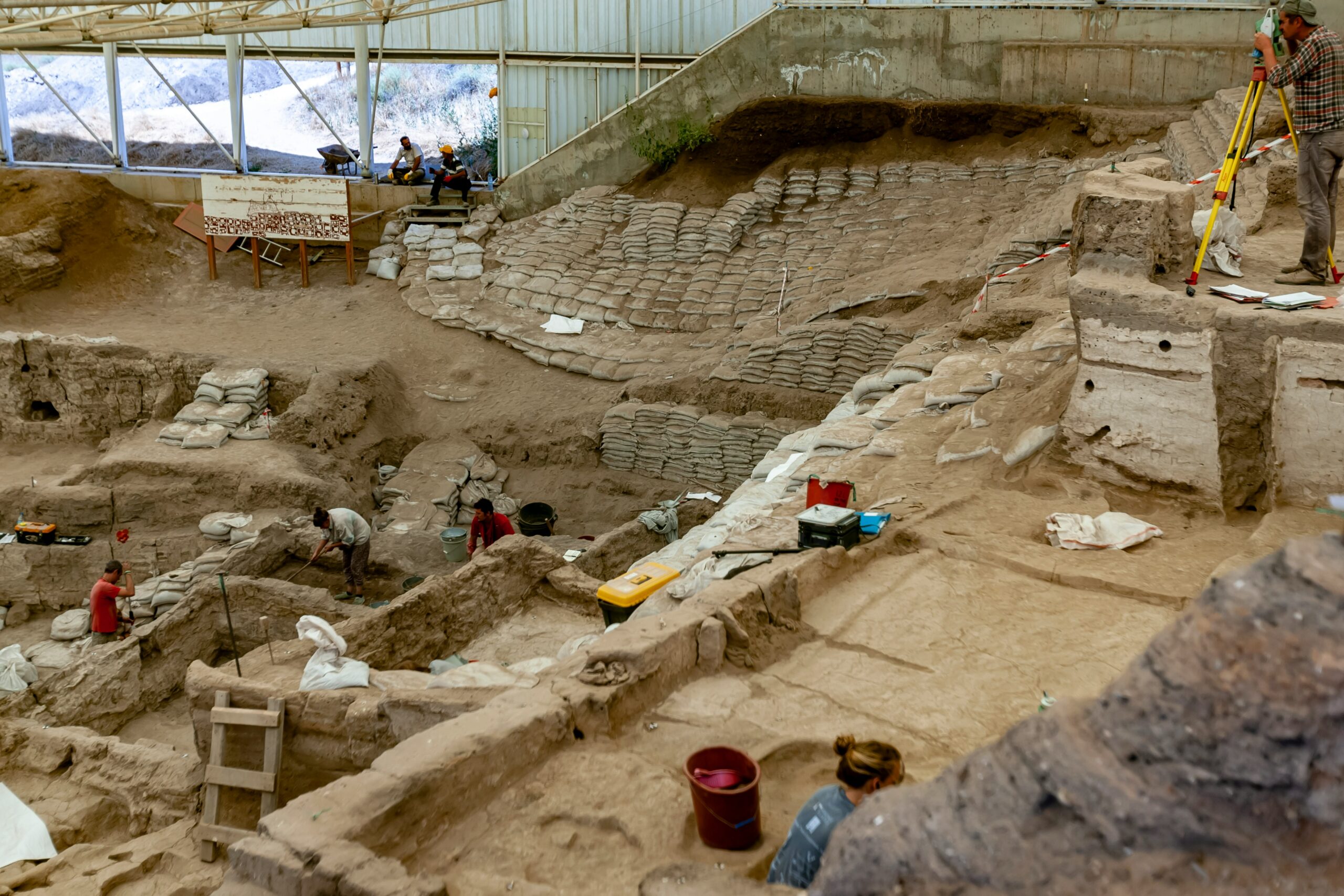
The ancient settlement of Çatalhöyük, also in Turkey, offers a unique glimpse into neolithic life. This densely packed city, where houses were interconnected and entered through the rooftops, provides a remarkable picture of community living, early art, and burial rituals. The detailed murals, the presence of obsidian tools, and the careful interments of the deceased offer insights into the spiritual beliefs and daily lives of its inhabitants. The lack of clearly defined streets and public spaces, coupled with the interconnectedness of dwellings, suggests a highly communal and perhaps egalitarian society.
The Indus Valley Civilization: A Sophisticated Urban Network
The vast and enigmatic Indus Valley Civilization, flourishing in what is now Pakistan and northwestern India, presents another testament to early urban planning and societal complexity. Its well-organized cities, characterized by advanced sanitation systems and standardized brick sizes, speak to a remarkable level of social and administrative control.
Mohenjo-daro and Harappa: Lost Cities Rediscovered
The meticulously excavated cities of Mohenjo-daro and Harappa, with their grid-like street layouts, sophisticated drainage systems, and public baths, demonstrate an unparalleled level of urban planning for their time. The discovery of seals bearing an as-yet undeciphered script hints at a complex writing system and trade networks stretching across vast distances. The absence of monumental palaces or grand temples, often indicative of hierarchical societies elsewhere, has led to speculation about the nature of Indus Valley governance, with some suggesting a more decentralized or even matriarchal structure. The precise reasons for the civilization’s eventual decline also remain a captivating mystery.
Ancient mysteries continue to captivate our imagination, and recent archaeological discoveries shed light on these enigmatic pasts. A fascinating article discusses how archaeologists have uncovered a sealed chamber in an ancient city, revealing artifacts that could change our understanding of the civilization that once thrived there. To learn more about this intriguing find, you can read the full article here: Ancient City Sealed Chamber Discovery.
Empires Rise and Fall: Echoes of Power and Governance
The rise and fall of great empires represent pivotal chapters in human history, and archaeology has been instrumental in reconstructing their grandeur, their societal structures, and the forces that led to their demise. The tangible remnants of these civilizations – colossal structures, intricate artifacts, and inscribed texts – provide invaluable insights into the exercise of power, the lives of rulers and commoners alike, and the complex mechanisms of governance and conquest.
The Nile Valley: Pharaohs and Pyramids
Ancient Egypt, with its enduring legacy of pharaonic rule and monumental architecture, has captivated imaginations for millennia. Archaeological discoveries along the Nile have not only revealed the majesty of its rulers but also provided a detailed understanding of its complex social hierarchy, religious beliefs, and technological achievements.
The Pyramids of Giza: Engineering Marvels and Royal Tombs
The iconic pyramids of Giza are not merely tombs but enduring symbols of the pharaohs’ power and their belief in an afterlife. The sheer engineering feat of constructing these colossal structures, utilizing thousands of laborers and precise astronomical alignment, continues to inspire awe and scholarly investigation. Modern archaeological techniques, including ground-penetrating radar and laser scanning, are further unraveling the construction methods and the internal complexities of these ancient wonders. The intricate hieroglyphic inscriptions found within the pyramids and surrounding tombs offer invaluable insights into their religious beliefs, funerary practices, and the Egyptian pantheon.
The Tomb of Tutankhamun: A Glimpse into Royal Opulence
Howard Carter’s discovery of Tutankhamun’s nearly intact tomb in 1922 was a watershed moment in Egyptology. The dazzling array of treasures, from golden sarcophagi to intricate jewelry, offered an unparalleled glimpse into the wealth and artistry of the New Kingdom. Beyond the material splendors, the tomb provided crucial information about Tutankhamun himself, his brief reign, and the political landscape of his era. The meticulous documentation of the excavation and the preservation of the tomb’s contents continue to serve as a model for archaeological practice.
The Cradle of Democracy: Ancient Greece
Ancient Greece, with its profound contributions to philosophy, art, and political thought, has been extensively explored through archaeological endeavors. The remnants of its city-states, temples, and theaters offer a tangible connection to the intellectual and cultural foundations of Western civilization.
The Acropolis of Athens: A Symbol of Classical Brilliance
The Acropolis of Athens, crowned by the majestic Parthenon, stands as a testament to the golden age of Athenian democracy and art. Archaeological excavations have revealed the intricate planning of this sacred citadel, the sophisticated engineering of its structures, and the artistic mastery of its sculptures. The ongoing restoration efforts, guided by careful archaeological analysis, aim to preserve this iconic site for future generations. The discovery of numerous votive offerings and pottery shards further illuminates the religious practices and daily life of the Athenians.
Olympia and the Birth of the Games
The ancient site of Olympia, the birthplace of the Olympic Games, provides concrete evidence of the athletic prowess and cultural significance of these panhellenic festivals. Archaeological excavations have uncovered the stadium, the training grounds, and the temples dedicated to Zeus and Hera, offering a vivid picture of the rituals and competitions that brought Greeks together. The interpretation of inscriptions and artistic depictions has helped reconstruct the rules, the athletes, and the broader social context of these ancient contests.
Mysteries of the Americas: Pre-Columbian Civilizations Unveiled

The Americas, once considered a “New World” by European explorers, are in fact home to ancient civilizations that rival those of the Old World in their complexity, ingenuity, and grandeur. Archaeology has been instrumental in uncovering the rich tapestry of pre-Columbian cultures, revealing sophisticated societies that flourished for millennia before European contact.
The Maya: Astronomers, Architects, and Cryptographers
The Maya civilization, flourishing in Mesoamerica, is renowned for its advanced understanding of astronomy, its intricate hieroglyphic writing system, and its monumental architectural achievements. Archaeological sites across present-day Mexico, Guatemala, Belize, Honduras, and El Salvador offer a glimpse into their complex calendar systems, their sophisticated understanding of mathematics, and their cyclical worldview.
Tikal and Palenque: Lost Rainforest Cities
The sprawling Maya cities of Tikal in Guatemala and Palenque in Mexico, reclaimed from the jungle, showcase the awe-inspiring scale of their urban centers. The towering pyramids, ornate temples, and elaborately carved stelae reveal a highly stratified society with a deep connection to cosmology and dynastic lineage. The decipherment of Maya hieroglyphs, a monumental undertaking, has unlocked narratives of kings, wars, and religious beliefs, transforming our understanding of this enigmatic civilization. The development of sophisticated water management systems within these rainforest environments also demonstrates remarkable engineering prowess.
Chichen Itza: A Blend of Cultures
Chichen Itza, another prominent Maya site, exhibits a fascinating blend of Maya and Toltec influences, suggesting a complex history of cultural exchange and migration. The iconic El Castillo pyramid, with its astronomical alignments, and the Great Ballcourt showcase the Maya’s mastery of architecture and their enduring cultural traditions. The discovery of the Cenote Sagrado, a sacred sinkhole used for sacrifices, offers a sobering glimpse into their religious practices.
The Inca: Empire Builders of the Andes
The Inca Empire, the largest empire in pre-Columbian America, stretched along the western coast of South America. Their remarkable achievements in engineering, administration, and road construction are vividly illustrated by archaeological discoveries throughout the Andes.
Machu Picchu: The Lost Citadel
Machu Picchu, the iconic Inca citadel nestled high in the Andes Mountains, remains one of the most breathtaking archaeological sites in the world. Its sophisticated stone masonry, its integration with the natural landscape, and its precise astronomical alignments speak to the Inca’s mastery of engineering and their deep reverence for nature. The purpose of Machu Picchu – whether a royal estate, a religious sanctuary, or a strategic outpost – continues to be a subject of archaeological debate. The sheer ingenuity required to construct such a complex settlement in such a challenging environment is a testament to their skill.
The Road System: Connecting an Vast Empire
The Inca road system, a network of an estimated 40,000 kilometers, was a marvel of ancient engineering that facilitated communication, trade, and troop movement across their vast empire. Archaeological studies of these ancient highways, some of which are still in use today, reveal the sophisticated construction techniques and the logistical organization required to maintain such an extensive network. The parallel development of tambos (rest stops) along these routes further highlights their administrative capabilities.
Underwater Archaeology: Unlocking Secrets Beneath the Waves
The vast majority of our planet is covered by water, and beneath its surface lie countless submerged historical sites, shipwrecks, and even entire lost cities. Underwater archaeology, a specialized and often challenging field, is steadily revealing these hidden treasures, offering unique perspectives on maritime history, trade, and ancient life.
The Mediterranean: A Highway of Ancient Civilizations
The Mediterranean Sea has been a cradle of civilization for millennia, serving as a vital artery for trade and cultural exchange. Shipwrecks dot its depths, offering a treasure trove of information about ancient seafaring, commerce, and the lives of those who traveled its waters.
The Antikythera Mechanism: An Ancient Computer?
The discovery of the Antikythera wreck off the coast of Greece yielded the astonishing Antikythera Mechanism, an ancient Greek analog computer. This intricate device, dating back to the 2nd century BCE, could predict astronomical positions, eclipses, and even the timing of the Olympic Games. Its complexity has revolutionized our understanding of ancient technological capabilities and the sophistication of Hellenistic science. The intricate gearing and precise craftsmanship of this artifact suggest a level of mechanical understanding far beyond what was previously assumed for the era.
Ancient Ports and Sunken Cities
Numerous ancient ports and even entire cities have been discovered submerged beneath the waves of the Mediterranean. Sites like Port Royal in Jamaica, swallowed by an earthquake in the 17th century, and the submerged city of Pavlopetri in Greece, dating back to the Bronze Age, provide invaluable insights into urban planning, architecture, and daily life in coastal communities. The preservation of these sites underwater, often in anoxic conditions, can be remarkably good, yielding remarkably intact artifacts and architectural features.
The Black Sea: Preserving the Past in Oxygen-Depleted Waters
The anoxic (oxygen-depleted) waters of the Black Sea have proved to be a remarkable preservation medium for ancient shipwrecks. These underwater sites have yielded remarkably intact vessels, preserved for millennia, offering unprecedented insights into ancient shipbuilding techniques and the cargo they carried.
The Mystery of the “Baths of the Sea”
Recent discoveries in the Black Sea have unearthed an astonishing number of ancient shipwrecks remarkably preserved due to the lack of oxygen at deeper levels. These vessels, some dating back over 2,400 years, offer a unique window into ancient seafaring technology and trade routes. The sheer volume of these finds is unparalleled, suggesting that the Black Sea was a much more active maritime region than previously understood. The cargo found onboard these wrecks – amphorae filled with wine, olive oil, or grain – provides direct evidence of ancient trade and economies.
Ancient mysteries have long captivated the imagination, and recent archaeological discoveries continue to shed light on these enigmatic pasts. For instance, the exploration of ancient civilizations often reveals unexpected connections to modern industries, such as the growing role of Mexico in electric vehicle manufacturing. This fascinating intersection of history and contemporary innovation is discussed in a related article that delves into how ancient practices can inform current technological advancements. To learn more about this intriguing topic, you can read the full article here.
The Unfinished Story: The Future of Archaeological Revelation
| Archaeological Discovery | Ancient Mystery Explained |
|---|---|
| The Rosetta Stone | Helped decipher Egyptian hieroglyphs |
| The Antikythera Mechanism | Revealed advanced ancient Greek technology |
| The Terracotta Army | Provided insight into ancient Chinese burial practices |
| The Nazca Lines | Believed to be related to religious rituals and astronomy |
Archaeology is not a static discipline confined to the past; it is a dynamic field constantly pushing the boundaries of discovery. Advances in technology, new theoretical frameworks, and the opening of previously inaccessible regions promise to unveil even more profound mysteries in the years to come.
Technological Innovation: Expanding the Horizon
The advent of sophisticated technologies is revolutionizing archaeological fieldwork and analysis. LiDAR (Light Detection and Ranging) technology, for example, can penetrate dense vegetation to reveal hidden structures and settlements, as seen in the mapping of vast Maya urban centers. Satellite imagery allows for the identification of potential sites from afar, while advanced dating techniques, such as radiocarbon dating and luminescence dating, provide increasingly precise timelines for past events. Drones equipped with high-resolution cameras are also proving invaluable for aerial surveying and documentation.
Ethnoarchaeology and Comparative Studies: Insights from the Present
Ethnoarchaeology, the study of living cultures to inform our understanding of the past, provides crucial context for archaeological interpretations. By observing current practices of tool use, settlement patterns, and social organization among traditional societies, archaeologists can gain valuable insights into the behavioral patterns of their ancient counterparts. Comparative studies across different cultures and time periods also help to identify universal human trends and unique cultural developments.
The Ethics of Excavation and Preservation
As archaeology uncovers more of humanity’s shared heritage, the ethical considerations surrounding excavation and preservation become increasingly paramount. The repatriation of cultural artifacts, respectful engagement with descendant communities, and the sustainable management of archaeological sites are crucial aspects of responsible archaeological practice. The challenge lies in balancing the scientific imperative to discover with the ethical imperative to protect and respect the cultural legacy of the past. The ongoing dialogue surrounding these issues ensures that the unraveling of ancient mysteries remains a responsible and respectful endeavor.

Could Humanity Remember a World That No Longer Exists?
FAQs
What are some examples of ancient mysteries that have been explained by archaeology?
Some examples of ancient mysteries that have been explained by archaeology include the construction techniques of the Egyptian pyramids, the purpose of Stonehenge, the disappearance of the Mayan civilization, and the origins of the Easter Island statues.
How does archaeology help in explaining ancient mysteries?
Archaeology helps in explaining ancient mysteries by providing physical evidence and artifacts that can be analyzed to understand the culture, technology, and beliefs of ancient civilizations. Through excavation and analysis, archaeologists can piece together the puzzle of ancient mysteries.
What are some common methods used by archaeologists to uncover ancient mysteries?
Archaeologists use a variety of methods to uncover ancient mysteries, including excavation, surveying, radiocarbon dating, remote sensing technologies, and analysis of artifacts and ancient texts. These methods help archaeologists to reconstruct the past and solve mysteries.
What are some misconceptions about ancient mysteries and archaeology?
One common misconception is that archaeology can provide definitive answers to all ancient mysteries. In reality, some mysteries may never be fully explained due to the limitations of available evidence. Another misconception is that ancient civilizations were primitive, when in fact they had advanced knowledge and technology.
Why is it important to understand ancient mysteries through archaeology?
Understanding ancient mysteries through archaeology is important because it provides insight into the development of human societies, the evolution of technology and culture, and the interconnectedness of ancient civilizations. It also helps to preserve and protect ancient sites for future generations.