The Earth, our seemingly solid planetary home, is a realm of profound and persistent mystery. Beneath the familiar landscapes of mountains, plains, and oceans lie geological enigmas that have captivated scientists for centuries. These are not simply academic puzzles; they are fundamental questions about our planet’s formation, its dynamic processes, and the very forces that shape its destiny. Unraveling these hidden geological enigmas is a continuous journey of discovery, pushing the boundaries of our understanding and revealing the awe-inspiring complexity of the Earth’s interior.
The Earth’s mantle, a vast layer of hot, dense rock occupying over 80% of the planet’s volume, represents one of the most significant frontiers in geological research. Its immense depth, extending from the base of the crust to the outer core, makes direct observation nearly impossible. Yet, it is here that the engine of plate tectonics churns, driving continental drift, fueling volcanic activity, and shaping the planet’s surface over geological timescales. Understanding the mantle’s composition, its temperature variations, and the intricate flow patterns within it is crucial for comprehending the Earth’s evolution and its present-day geological phenomena.
The Dynamic Flow: Convection Currents and Mantle Plumes
The mantle is not a static reservoir of rock. Instead, it is in constant, albeit slow, motion. This motion is driven by convection currents, where hotter, less dense material from deeper within the Earth rises, cools, and then sinks, creating a continuous cycle. These currents are the fundamental force behind the movement of tectonic plates on the Earth’s surface. The speed and patterns of these currents are incredibly difficult to measure directly, leading to ongoing debates about their precise nature and variability. Variations in these currents can lead to periods of increased or decreased tectonic activity and volcanic eruptions.
Furthermore, the concept of mantle plumes – upwelling columns of exceptionally hot rock from the deep mantle – offers another layer of complexity. These plumes are theorized to be responsible for volcanic hotspots, such as Hawaii and Yellowstone, which defy the typical plate boundary model of volcanism. The origin of these plumes, their exact trajectory through the mantle, and their impact on the overlying lithosphere remain subjects of intense investigation.
Compositional Puzzles: From Peridotite to Exotic Minerals
The exact composition of the mantle is another persistent enigma. While we infer its properties from seismic waves that travel through it, and from xenoliths – fragments of mantle rock brought to the surface by volcanic activity – a complete picture remains elusive. The dominant mineral, peridotite, is understood, but deeper in the mantle, immense pressures and temperatures force minerals into different, often exotic, crystalline structures. Mineral physics laboratories attempt to replicate these extreme conditions to understand how common minerals transform, but the sheer variety of potential compositions and phases presents a significant challenge. The presence of water and other volatiles within the mantle also plays a critical role in its viscosity and melting behavior, but quantifying their abundance and distribution is a complex task.
The Transition Zone: A Crucial Boundary
Situated between the upper and lower mantle, the transition zone at around 410 and 660 kilometers depth, is a particularly intriguing region. Here, seismic wave velocities change dramatically due to phase transitions in the mineral olivine, the dominant component of the upper mantle. These transitions create distinct layers within the mantle, influencing the path of seismic waves and potentially acting as barriers to convection. Understanding the precise mechanisms and implications of these phase changes is key to understanding how heat and material are transported through the mantle.
Hidden geological mysteries continue to captivate researchers and enthusiasts alike, particularly in the context of ancient maps and their implications for our understanding of Earth’s history. One intriguing article that delves into this topic is titled “Antarctica Revealed: 1513 Map Unveils Ice-Free Continent,” which explores how a centuries-old map may provide insights into the continent’s geological past. To read more about this fascinating subject, visit the article here: Antarctica Revealed.
Subterranean Seas: The Mystery of Earth’s Deep Water Reserves
The abundance of water on Earth’s surface is obvious. However, the possibility of vast quantities of water locked away within the planet’s interior, particularly within the mantle, has emerged as a revolutionary geological enigma. This internal water, far from being in oceans, exists in a dissolved or chemically bound form within minerals at high pressures. Its presence has profound implications for mantle dynamics, volcanism, and even the generation of Earth’s magnetic field.
Hydrated Minerals: Water Trapped in Rock
Minerals in the mantle, particularly those found in the transition zone and deeper, can incorporate significant amounts of water into their crystal structures. These are known as hydrous minerals, and their presence can dramatically alter the physical properties of the rock, reducing its viscosity and lowering its melting point. This means that even small amounts of water can significantly influence the flow of mantle material and the likelihood of melting to produce magma. Determining the precise types of hydrous minerals present at different mantle depths and the amount of water they contain is a significant challenge, heavily reliant on laboratory experiments and indirect seismic measurements.
The Water Cycle’s Deepest Link
The concept of deep-water reservoirs within the Earth suggests a far more extensive and complex water cycle than previously imagined. Water might be transported into the mantle through subduction zones, where oceanic plates slide beneath continental plates, carrying seawater along with them. Conversely, water can be released from the mantle through volcanic outgassing. Understanding this deep circulation of water is crucial for understanding the long-term evolution of Earth’s oceans and atmosphere. Quantifying the net balance between water entering and leaving the mantle is a key aspect of this ongoing investigation.
Implications for Geodynamics
The presence of significant amounts of water in the mantle has far-reaching implications for understanding fundamental geodynamic processes. For instance, it could influence the viscosity of the mantle, affecting the speed and style of plate movements. It may also play a role in the generation of melt beneath mid-ocean ridges and in hotspots, leading to more localized and intense volcanic activity than predicted by a purely dry mantle model. Some theories even suggest that deep mantle water could contribute to the conductivity of certain mantle regions, indirectly influencing the geodynamo responsible for Earth’s magnetic field.
Continental Genesis: The Enigma of First Landmasses
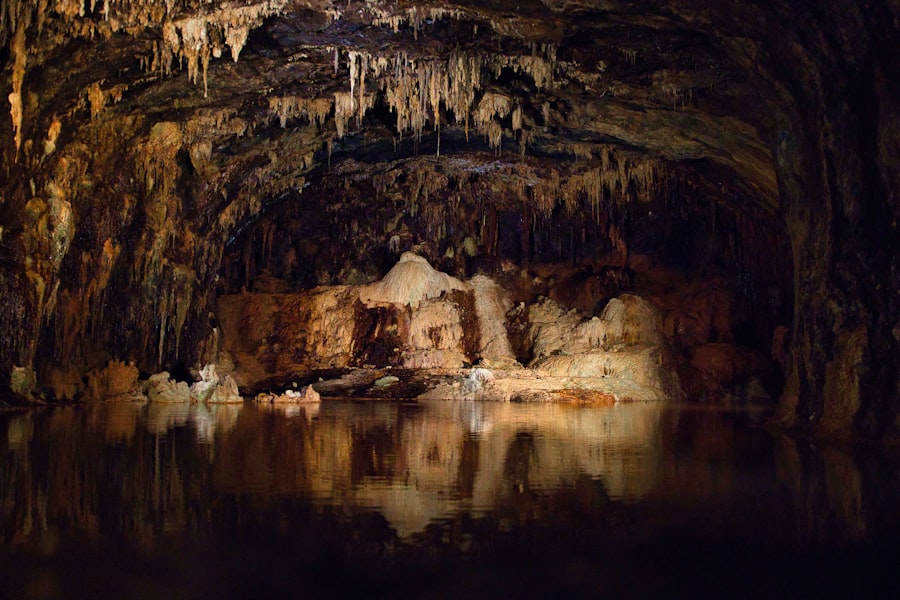
The formation of the continents, the vast landmasses that rise above sea level, is a story of immense geological time and complex processes. Yet, the very origins of the first continental crust remain one of the most profound unresolved geological enigmas, dating back to the Hadean and Archean eons, the earliest periods of Earth’s history. Understanding how these buoyant, felsic (rich in silica and aluminum) crustal blocks emerged from the denser, mafic (rich in magnesium and iron) oceanic crust and mantle is fundamental to understanding the planet’s geological evolution.
The Missing Archean Record
Much of the geological evidence from early Earth has been obliterated by billions of years of erosion, subduction, and tectonic recycling. This leaves a significant gap in our understanding of how the first stable continental fragments formed. While some ancient zircon crystals, incredibly resistant minerals, provide tantalizing clues about the existence of continental crust as early as 4.4 billion years ago, the processes by which this crust stabilized and thickened remain unclear.
Mechanisms of Crustal Growth
Several hypotheses attempt to explain continental genesis. One involves the differentiation of mafic magma through fractional crystallization, where denser minerals crystallize and settle, leaving behind a more silica-rich melt that can form continental crust. Another proposes that magma generated at subduction zones, where oceanic plates melt as they descend into the mantle, could ascend and accumulate to form early continents. The role of mantle plumes in producing large volumes of felsic melt also remains a contender. Pinpointing the dominant process or combination of processes responsible for the initial outpouring of continental crust is a central geological challenge.
The Evolution of Continental Architecture
Once formed, early continental crust underwent further evolution. The processes of accretion, where smaller continental fragments collide and merge, and orogeny, the formation of mountain ranges, built up the larger continental masses we see today. However, understanding the mechanisms driving these early accretionary processes and the specific tectonic regimes present in the Archean and Proterozoic eons is crucial for piecing together the complete story of continental formation.
Earth’s Magnetic Shield: The Enigma of the Geodynamo

The Earth’s magnetic field, a vital protective shield that deflects harmful solar radiation, is generated by the geodynamo, a complex process occurring in the planet’s liquid outer core. While we know the field exists and its essential role, the precise mechanisms driving this dynamo and explaining its observed behaviors, such as reversals and fluctuations, remain a profound geological enigma.
The Liquid Outer Core: A Conductive Ocean
The outer core is composed primarily of molten iron and nickel, an electrically conductive fluid. The motion of this fluid, driven by heat convection and rotation, generates electrical currents that, in turn, create the planet’s magnetic field. However, the exact way in which these complex fluid dynamics translate into a stable, dipole-like magnetic field is still a subject of intense research, involving intricate modeling and theoretical physics.
Magnetic Field Reversals: A Mysterious Flip
Perhaps one of the most perplexing features of Earth’s magnetic field is its tendency to reverse polarity. Over geological time, the north magnetic pole has switched to become the south magnetic pole, and vice versa, multiple times. The timing of these reversals is irregular, and the process by which they occur is not fully understood. Theories suggest that these reversals might be triggered by instabilities within the geodynamo, perhaps related to the growth of the solid inner core or significant variations in fluid flow.
The Inner Core’s Role
The solid inner core, also composed of iron and nickel, is thought to play a crucial role in strengthening and stabilizing the geodynamo. Heat escaping from the inner core contributes to convection in the outer core. Furthermore, the crystallization of the inner core might release latent heat and lighter elements, driving further convection. The precise influence of the inner core’s growth and its interaction with the outer core on the generation and behavior of the magnetic field is an active area of investigation.
Exploring hidden geological mysteries can lead to fascinating discoveries about our planet’s history and structure. For instance, recent research has shed light on the enigmatic formations found deep beneath the Earth’s surface, revealing clues about tectonic activity and ancient ecosystems. If you’re interested in how international treaties, such as the Outer Space Treaty, may impact our understanding of Earth’s resources and beyond, you can read more in this insightful article on the topic. Check it out here.
Deep Earthquakes and Seismic Anomalies: Unmasking the Unseen
| Geological Mystery | Location | Explanation |
|---|---|---|
| The Great Unconformity | Various locations worldwide | An unusual gap in the geological record where billions of years of history are missing. |
| The Taos Hum | Taos, New Mexico, USA | A low-frequency humming sound of unknown origin that can only be heard by some people. |
| The Hessdalen Lights | Hessdalen Valley, Norway | Mysterious lights that appear in the valley with no clear explanation. |
| The Devil’s Kettle | Minnesota, USA | A waterfall where half of the water disappears into a deep hole with unknown destination. |
Beyond the familiar earthquakes that shake the Earth’s surface, seismic activity extends to depths far beyond our direct reach. The study of deep earthquakes and other seismic anomalies provides invaluable insights into the extreme conditions and processes occurring in the mantle and even the core-mantle boundary. Unraveling the mysteries of these deep seismic events helps refine our understanding of Earth’s interior.
Deep Earthquakes: A Puzzle of Pressure
Earthquakes typically occur in the brittle upper crust. However, earthquakes have been recorded at depths of up to 700 kilometers or more, within the mantle. The extreme pressures and temperatures at these depths would normally cause rocks to deform plastically, rather than fracture and rupture seismically. The mechanisms by which these deep earthquakes are initiated and propagate are still debated, with theories involving the rapid dehydration of hydrous minerals or the transformation of minerals into denser phases under pressure.
Seismic Wave Reflections and Refractions: Probing the Depths
Seismic waves, generated by earthquakes or artificial sources, travel through the Earth’s interior, reflecting and refracting at boundaries between different layers and materials. By analyzing the travel times and characteristics of these waves, seismologists can create detailed maps of Earth’s internal structure. However, the presence of subtle variations in seismic velocity and the existence of anomalous zones, such as regions of anomalously slow or fast seismic wave propagation, represent geological enigmas that point to complex compositional or thermal variations within the mantle. These anomalies are crucial clues for understanding mantle plumes, subduction zone structures, and the broad patterns of mantle convection.
The Core-Mantle Boundary: A Realm of Interaction
The boundary between the outer core and the mantle, approximately 2,900 kilometers beneath the surface, is a zone of intense interaction and mystery. Seismic waves exhibit dramatic changes in behavior as they pass through this boundary, indicating significant differences in density and composition. Anomalies observed here, such as large provinces of seismically slow material, are thought to be remnants of ancient subducted oceanic plates or massive mantle plumes. Understanding the chemical and thermal exchange at this boundary is critical for comprehending the evolution of both the mantle and the geodynamo.
The journey to unravel Earth’s hidden geological enigmas is far from over. Each solved puzzle opens up new avenues of inquiry, revealing the planet as a continuously evolving and dynamic entity. From the churning depths of the mantle to the enigmatic origins of continents and the protective dance of our magnetic field, these mysteries underscore the profound complexity of our home planet. Scientists continue to deploy advanced technologies, refine theoretical models, and collaborate across disciplines, driven by an insatiable curiosity to understand the forces that have shaped Earth and will continue to mold its future. The secrets buried within our planet’s geology are not merely academic curiosities; they are fundamental to our understanding of Earth’s past, present, and future.

Scientists Found Earth’s Hidden Timestamp
FAQs
What are hidden geological mysteries?
Hidden geological mysteries are unexplained or little-understood geological phenomena that have puzzled scientists and researchers. These mysteries often involve unusual geological formations, processes, or events that are not fully understood.
What are some examples of hidden geological mysteries?
Examples of hidden geological mysteries include the formation of enigmatic geological structures such as the Fairy Circles in Namibia, the Moeraki Boulders in New Zealand, and the Sailing Stones in Death Valley. Other mysteries may involve unexplained seismic activity, unusual rock formations, or geological events that defy current scientific understanding.
Why are hidden geological mysteries important?
Hidden geological mysteries are important because they challenge our current understanding of geological processes and phenomena. By studying and attempting to solve these mysteries, scientists can gain new insights into the Earth’s geological history, processes, and potential hazards.
How do scientists investigate hidden geological mysteries?
Scientists investigate hidden geological mysteries through a combination of fieldwork, laboratory analysis, and advanced imaging techniques. They may also use computer modeling and simulations to better understand and explain these enigmatic geological phenomena.
What are some potential explanations for hidden geological mysteries?
Potential explanations for hidden geological mysteries may include unique geological processes, environmental factors, or even extraterrestrial influences. Scientists continue to explore and research these mysteries in order to uncover the underlying causes and mechanisms behind these puzzling geological phenomena.