
Uncovering the Shadows: Marilyn Monroe’s Elusive Ancestry
Marilyn Monroe, the iconic Hollywood star, remains a figure perpetually shrouded in a mystique that extends beyond her captivating performances and tragic end. Her personal life, often a subject of intense public scrutiny, was marked by a complex and often painful childhood, characterized by instability and a fractured sense of family. While her public persona radiated glamour and confidence, the reality of her early years was a stark contrast, tinged with the absence of consistent parental figures and a limited understanding of her own lineage. The very details of her birth and upbringing were often veiled in secrecy or outright falsehoods, contributing to a persistent genealogical fog that has intrigued historians, biographers, and dedicated fans for decades.
Born Norma Jeane Mortenson, her mother, Gladys Eleyne Monroe, struggled with mental health issues, and her father, an absentee figure named Martin Edward Mortenson, was a largely unknown entity in her life. This early disruption meant that Norma Jeane, later Marilyn, was largely raised by a series of foster parents and in an orphanage. The absence of a stable paternal line, coupled with her mother’s own fragmented family history, left a significant void in her understanding of her roots. This lack of concrete genealogical information was not merely a biographical curiosity; for Monroe herself, it was a source of deep-seated insecurity and a yearning for a sense of belonging that she rarely found. The stories surrounding her father’s identity were contradictory, shifting, and ultimately unconfirmed for much of her life and even after her death. This article delves into the painstaking efforts to unravel these hidden family roots, piecing together fragments of information to illuminate the often-obscured branches of Marilyn Monroe’s genealogical tree.
The genealogical mystery surrounding Marilyn Monroe has captivated many, as researchers continue to explore her family history and potential connections to notable figures. For those interested in unraveling historical enigmas, a related article discusses the intriguing Piri Reis map and its implications for understanding our past. You can read more about this fascinating topic in the article titled “Debunking the Piri Reis Map: Why It’s Impossible” at this link.
The Maternal Branch: Gladys Monroe’s Tangled Lineage
The maternal side of Marilyn Monroe’s family tree, though seemingly more accessible, presents its own set of challenges and revelations. Gladys Eleyne Monroe, Marilyn’s mother, was herself a woman whose life was deeply affected by familial discord and mental health struggles. Understanding Gladys’s own upbringing is crucial to understanding the environment in which Marilyn was raised and the inherent difficulties in tracing this maternal line. Gladys’s relationship with her parents, Della Mae Monroe and Otis Elmer Monroe, was strained, and her childhood was marked by instability. Della Mae, Marilyn’s grandmother, was a formidable figure, but her own parenting style was reportedly harsh, and she grappled with her own issues, which in turn impacted Gladys.
Tracing the Monroe Surname: A Story of Migration and Resilience
The Monroe surname itself carries a history of migration and adaptation. Tracing this line back requires navigating records from various states, reflecting the itinerant nature of many American families in the late 19th and early 20th centuries. Della Mae Monroe’s maiden name was Mortensen, a fact that would later become a critical piece of the puzzle in identifying Marilyn’s paternal heritage. This overlap in surnames, however, does not indicate a direct familial connection between Marilyn’s parents but rather a commonality in their respective family backgrounds. The Monroe line, through Della Mae, points to a lineage that, while not overtly prominent in historical records, demonstrates the resilience of ordinary families building lives across America. Efforts to reconstruct this branch involve sifting through census data, birth and death certificates, and occasionally anecdotal evidence from distant relatives. The sheer volume of records and the commonality of names often present significant hurdles, demanding meticulous cross-referencing and a keen eye for detail. This methodical approach has helped to shed light on the individuals who comprised Gladys’s family, revealing their struggles and their contributions to the fabric of American society.
Gladys’s Siblings and Their Scattered Lives
Gladys had at least two siblings, Robert and Berniece, whose lives, like her own, were often marked by hardship. Understanding their trajectories provides a broader context for the emotional and social landscape of Marilyn’s early years. Berniece, in particular, played a more consistent, albeit still limited, role in Marilyn’s life during her adolescence. However, the relationship was often complicated by Gladys’s own volatile mental state and Berniece’s own familial responsibilities. The scattered nature of these siblings’ lives, their marriages, children, and geographic movements, further complicates a complete genealogical reconstruction. Each individual’s life story adds another layer to the complex tapestry of Marilyn’s maternal ancestry.
The Paternal Puzzle: The Elusive Martin Mortenson

The mystery surrounding Marilyn Monroe’s paternal lineage has been a source of endless speculation and debate. Her birth certificate, as well as her mother’s accounts, provided conflicting information, leaving the identity of her father as a significant unknown for much of her life. The name “Martin Mortenson” is the most frequently cited paternal figure, but even this has been subject to doubt and revision. The inherent difficulty in confirming this identity stems from the lack of any meaningful paternal involvement in Norma Jeane’s life and the limited records available concerning Martin Mortenson himself.
The Case of Martin Edward Mortenson: A Ghost in the Records
The prevailing theory, supported by significant genealogical research, identifies Martin Edward Mortenson as Marilyn’s biological father. Gladys Monroe claimed to have had an affair with a man named Martin Mortenson, a co-worker at a film processing laboratory. However, concrete evidence of his existence and his direct relationship with Gladys has been notoriously difficult to pin down. The Mortenson surname itself points to a Danish or Norwegian origin, suggesting an immigrant background, a common theme in early 20th-century America. Tracing Martin Mortenson involves navigating fragmented records, often relying on indirect evidence and the corroboration of Gladys’s own fragmented accounts. The lack of a significant paper trail directly linking him to Gladys or their daughter is the primary obstacle. It is possible that he was unaware of Norma Jeane’s existence, or that societal norms and circumstances prevented any formal acknowledgment. The very elusiveness of his presence in the historical record mirrors the absence he represented in Marilyn’s life.
The “Baker” Theory and Other Contenders
Over the years, various other theories and individuals have been proposed as potential fathers. One prominent contender was a man named Martin Baker, a claim that emerged from later genealogical investigations. This theory also hinges on the possibility of an affair between Gladys and Baker during a period when her relationship with Mortenson was less clear. The process of evaluating these competing theories involves rigorous genealogical methodology, cross-referencing timelines, locations, and any available witness testimonies. The challenge lies in distinguishing speculation from verifiable fact. Each proposed individual represents a potential branch of Marilyn’s paternal tree, and the quest to identify the true progenitor has become a complex historical detective story. The differing claims and the lack of definitive proof underscore the profound uncertainty that surrounded this aspect of her parentage.
Genetic Clues and Genealogical Breakthroughs
The advent of DNA technology has revolutionized genealogical research, offering new avenues to resolve long-standing mysteries. For a figure as historically significant and personally impacted by familial unknowns as Marilyn Monroe, the application of genetic science has held immense promise. While Marilyn Monroe is deceased, DNA samples from her known maternal relatives have been instrumental in indirectly shedding light on her paternal lineage.
The Maternal DNA Contribution: Establishing a Baseline
By analyzing the DNA of known maternal relatives, researchers can establish a genetic baseline for Marilyn’s maternal line. This involves comparing genetic markers with those of Gladys’s parents and siblings, if identifiable and willing to participate. This process, while not directly revealing her father, provides a crucial foundation. It allows for the confirmation of maternal lineage and can help to rule out certain paternal candidates based on incompatibilities in expected genetic inheritance patterns. The success of this approach hinges on the availability of viable DNA samples and the willingness of living relatives to contribute to this scientific endeavor. The meticulous collection and analysis of this data are paramount to ensuring the accuracy of any subsequent deductions.
Unlocking the Paternal Line: The Mortenson DNA Connection
The most significant breakthrough in unraveling Marilyn Monroe’s paternal mystery came through the analysis of DNA samples. Researchers focused on obtaining DNA from individuals whose lineage could be traced back to the Mortenson family, specifically those who might be distant relatives of Martin Edward Mortenson. By comparing these samples to the established maternal DNA of Marilyn, and through statistical analysis of genetic markers, it has become possible to infer the likelihood of a paternal connection. These findings, often published in reputable genealogical journals or presented by recognized experts, have provided strong circumstantial evidence pointing towards the Mortenson lineage. While direct DNA evidence from Marilyn herself is impossible, the convergence of genealogical records, historical accounts, and now genetic data has significantly strengthened the case for Martin Edward Mortenson as her biological father. This scientific validation offers a profound sense of closure to a chapter of her life that was defined by so much uncertainty.
The genealogical mystery surrounding Marilyn Monroe has intrigued many, leading to various theories about her ancestry and connections. For those interested in exploring how historical events and rituals can shape family legacies, a fascinating article discusses ancient practices for abundance during times of famine. You can read more about these intriguing traditions in the article here, which provides insight into how our past can influence our present, much like the ongoing fascination with Monroe’s lineage.
The Impact of Unanswered Questions on Marilyn’s Life
| Aspect | Details |
|---|---|
| Full Name | Norma Jeane Mortenson (later Baker) |
| Birth Date | June 1, 1926 |
| Birth Place | Los Angeles, California, USA |
| Mother | Gladys Pearl Baker |
| Father | Unknown; multiple theories exist |
| Genealogical Mystery | Uncertainty about biological father; no definitive records |
| Mother’s Marriages | Married multiple times; father identity possibly linked to one of these husbands |
| DNA Testing | No public DNA tests confirming paternal lineage |
| Known Relatives | Maternal half-siblings and extended family on mother’s side |
| Impact of Mystery | Contributes to ongoing public and scholarly interest in her origins |
The genealogical mysteries surrounding Marilyn Monroe were not merely academic puzzles; they had a profound and tangible impact on her personal life, shaping her identity, her relationships, and her emotional well-being. The absence of a stable paternal figure and the instability of her maternal home created a deep-seated yearning for belonging and a constant search for validation.
The Orphan’s Longing: Seeking Roots and Recognition
Growing up without a consistent father figure and experiencing multiple foster homes left Norma Jeane with a profound sense of being adrift. This lack of a defined paternal lineage contributed to feelings of insecurity and a perceived lack of identity. She often spoke of feeling like an outsider, a feeling that was likely exacerbated by the unanswered questions about her origins. This longing for roots and recognition manifested in her adult life through her search for stable relationships and a desire for a sense of family that she never truly experienced. The very act of creating the persona of Marilyn Monroe can be seen, in part, as an attempt to construct an identity where her biological origins were so uncertain.
The Search for Belonging: Relationships and Self-Perception
Marilyn’s romantic relationships, often tumultuous and short-lived, can be viewed through the lens of her early experiences. Her marriages to James Dougherty, Joe DiMaggio, and Arthur Miller, while complex for various reasons, can also be interpreted as attempts to find stability and a sense of belonging. Her desire for children, a dream she never fully realized, further underscores this deep-seated need for familial connection. The unanswered questions about her father likely played a role in her self-perception, contributing to insecurities that she grappled with throughout her life. The mystique surrounding her origins, while adding to her allure, also represented a deeply personal wound. The unveiling of her genealogical roots, even in its partial completion, offers a more complete understanding of the woman behind the icon.
The genealogical mystery surrounding Marilyn Monroe continues to captivate researchers and fans alike, as they delve into her family history and uncover surprising connections. For those intrigued by the complexities of ancestry and the unexpected twists it can reveal, a fascinating article on ancient inventions offers a unique perspective on how history often intertwines with our understanding of the past. You can explore this intriguing topic further in the article about unbelievable ancient inventions, which highlights the remarkable ways in which innovation has shaped our lives and perceptions over time.
Conclusion: A Legacy Revealed Through Ancestral Threads
The journey to unravel Marilyn Monroe’s genealogical mystery has been a long and complex one, spanning decades of biographical research, historical investigation, and more recently, the application of advanced genetic science. While absolute certainty remains elusive in some aspects, the collective efforts have significantly illuminated the often-obscured branches of her family tree. The maternal line, though fraught with its own challenges due to Gladys Monroe’s struggles, has been traced through the resilience of the Monroe family’s migrations and their efforts to build lives across America. The paternal puzzle, a far more enigmatic aspect of her heritage, has been significantly advanced by the identification of Martin Edward Mortenson as the likely biological father.
The convergence of historical documents, anecdotal evidence, and compelling genetic data has provided a strong foundation for understanding this crucial element of her parentage. The impact of these unanswered questions on Marilyn’s life, from her childhood insecurities to her adult relationships, cannot be overstated. Her profound yearning for belonging and her search for recognition were undoubtedly shaped by the very mysteries that defined her origins. The genealogical revelations, therefore, are not merely historical footnotes; they offer a deeper, more nuanced understanding of the woman behind the enduring legend. By piecing together these ancestral threads, we gain a more complete and empathetic perspective on Marilyn Monroe’s complex life and her enduring legacy, a legacy now more firmly rooted in the understanding of her true, albeit once hidden, family history.
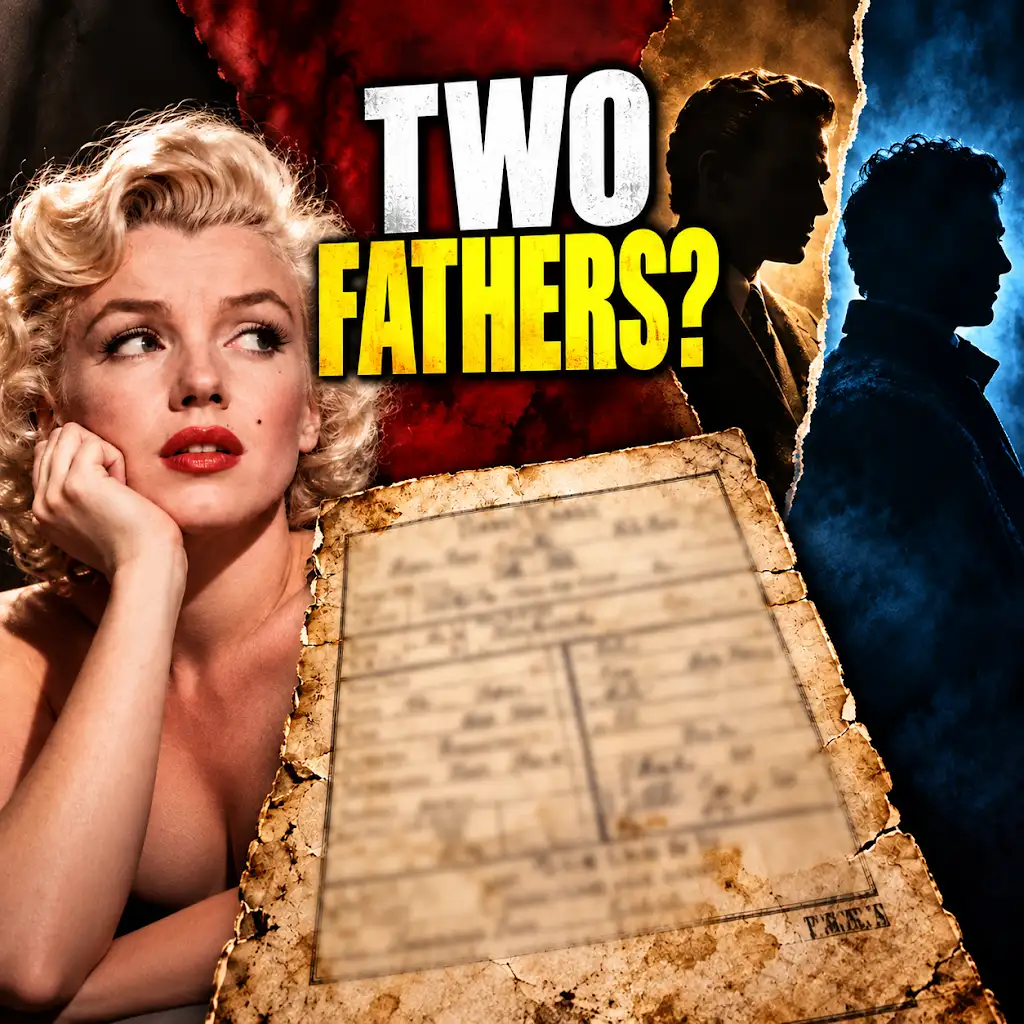
Marilyn Monroe’s Birth Certificate Named One Man. DNA Pointed to Another
FAQs
1. Who was Marilyn Monroe’s biological father?
Marilyn Monroe’s biological father was never definitively identified. Her mother, Gladys Pearl Baker, was known to have had affairs with several men around the time of Marilyn’s conception, including a man named Charles Stanley Gifford and a man named C. Stanley Gifford. However, there is no concrete evidence to confirm the identity of Marilyn’s biological father.
2. What is the “Marilyn Monroe genealogical mystery”?
The “Marilyn Monroe genealogical mystery” refers to the ongoing debate and speculation surrounding Marilyn Monroe’s ancestry and the identity of her biological father. Despite various claims and theories, the true lineage of Marilyn Monroe remains uncertain and continues to be a subject of interest for genealogists and historians.
3. Have DNA tests been conducted to solve the mystery of Marilyn Monroe’s paternity?
Yes, DNA tests have been conducted in an attempt to determine Marilyn Monroe’s paternity. In 2018, a sample of Marilyn Monroe’s DNA was compared to that of a man claiming to be her half-brother, but the results were inconclusive. The mystery of Marilyn Monroe’s biological father remains unsolved.
4. Are there any living relatives of Marilyn Monroe who could provide more information about her genealogy?
While Marilyn Monroe had half-siblings and other relatives, many of them have passed away. However, there may still be living relatives of Marilyn Monroe who could potentially provide more information about her genealogy. Efforts to trace and connect with these relatives continue in the hopes of shedding light on Marilyn Monroe’s mysterious family history.
5. How does the uncertainty surrounding Marilyn Monroe’s genealogy impact her legacy?
The uncertainty surrounding Marilyn Monroe’s genealogy adds an air of intrigue and mystique to her already legendary status. The mystery of her ancestry has fueled speculation and interest in her personal life, contributing to the enduring fascination with Marilyn Monroe as an iconic figure in Hollywood history.