Tracing Echoes in Your Blueprint
Imagine holding a thread, impossibly fine, that stretches back not just to your parents, but to their parents, and their parents before them, for centuries, millennia, even eons. This thread isn’t made of silk or cotton; it’s woven from the very essence of life itself: DNA. You carry within your cells a vast library of genetic information, a silent chronicle of your lineage. Unraveling the DNA inheritance from distant ancestors is like embarking on an epic genealogical quest, one that delves beyond faded photographs and cherished family stories to uncover the deep history etched into your very being.
This journey isn’t about deciphering a linear family tree. It’s about understanding how the genetic material passed down from countless individuals, many of whose names you’ll never know, has shaped you. It’s about recognizing the subtle whispers of ancient migrations, the echoes of forgotten civilizations, and the enduring legacy of human evolution that reside within your unique genetic code. You are a living testament to a vast, interconnected web of life, and by exploring your DNA, you can begin to understand the stories it tells.
DNA inheritance from distant ancestors is a fascinating topic that sheds light on our genetic connections to the past. For those interested in understanding how our lineage can influence our traits and health, a related article provides essential insights. You can explore more about this intriguing subject in the article found here: Preparing Your Home for National Emergencies: Essential Tips. This resource not only discusses practical preparedness but also touches on the importance of understanding our heritage in the context of survival and resilience.
The Foundation of Your Genetic Legacy

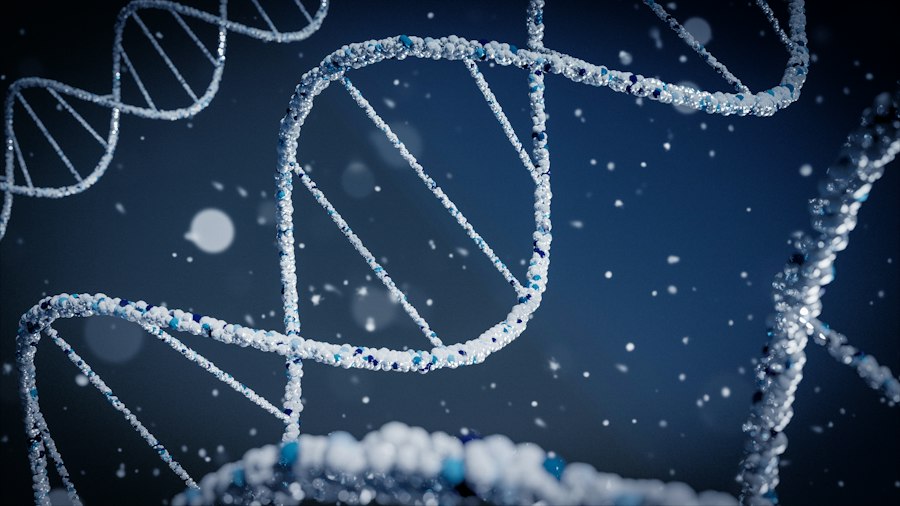
Your DNA, deoxyribonucleic acid, is the fundamental instruction manual for your existence. It’s a double helix, a twisted ladder of molecular building blocks called nucleotides. These nucleotides, adenine (A), thymine (T), guanine (G), and cytosine (C), are arranged in specific sequences that form genes. Genes are the blueprints for proteins, the workhorses of your body, responsible for everything from your eye color and hair texture to the intricate functions of your organs.
The Double Helix: A Universal Blueprint
At its core, the structure of DNA is remarkably consistent across all living organisms, from the smallest bacterium to the largest whale, and, of course, to you. This universal nature speaks to a shared origin, a common ancestor from which all life on Earth has diverged. The elegant simplicity of the double helix, with its base pairing rules (A always pairs with T, and G always pairs with C), ensures the accurate replication and transmission of genetic information from one generation to the next. This fidelity is paramount for maintaining the integrity of your genetic code over vast stretches of time.
Chromosomes: Organized Archives of Your Genes
Your DNA isn’t a jumbled mess; it’s meticulously organized into structures called chromosomes. Humans typically have 23 pairs of chromosomes, housed within the nucleus of each cell. You inherit one set of 23 chromosomes from your mother and another set of 23 from your father. These chromosomes are essentially packages containing thousands of genes, each carrying specific instructions. The particular combination of genes you receive from your parents is what makes you genetically unique, and it’s the foundation upon which your inherited traits are built.
Genes: The Units of Inheritance
Genes are the functional units of inheritance. Each gene has a specific role, coding for a particular protein or regulating cellular processes. When we talk about inheriting traits, we’re often referring to the expression of certain genes. For example, the gene for blood type, the genes that influence your height, or those that contribute to your susceptibility to certain diseases are all passed down from your ancestors. Understanding your genes is the first step in understanding the genetic inheritance that shapes you.
The Journey of Inheritance: Passing the Baton
Inheritance is a continuous process, a relay race where genetic material is passed from one generation to the next. However, it’s not a simple photocopy. Each time a new generation is created, a unique shuffling and combining of genetic material occurs, leading to variations that are crucial for adaptation and evolution.
Meiosis: The Art of Genetic Recombination
The process by which reproductive cells (sperm and egg) are formed is called meiosis. During meiosis, your chromosomes undergo a remarkable process of shuffling. Homologous chromosomes (those that carry the same genes) pair up and exchange segments of DNA in a process called crossing over. This means that each sperm and egg cell receives a unique combination of genetic material from your original set of chromosomes. Consequently, the DNA you pass on to your children is not identical to your own, but rather a mosaic of your parents’ DNA, further mixed and matched. This recombination is a key driver of genetic diversity.
Autosomal DNA: The Bulk of Your Ancestry
The vast majority of your DNA, approximately 98-99%, is found in your autosomal chromosomes (chromosomes 1 through 22). This autosomal DNA is inherited equally from both your mother and father. When you take a direct-to-consumer genetic test, the DNA analysis primarily focuses on your autosomal DNA. This is because it provides the broadest picture of your ancestral heritage, encompassing contributions from a multitude of ancestors across many generations. It’s the richest source of information for tracing your lineage back into the distant past.
Mitochondrial DNA: The Maternal Lineage
In addition to nuclear DNA, you also inherit mitochondrial DNA (mtDNA). Mitochondria are the powerhouses of your cells, and they contain their own small, circular DNA molecule. Crucially, mtDNA is exclusively inherited from your mother. Your father’s sperm contributes very little to the egg’s cytoplasm, and therefore, his mitochondria are not passed on to his offspring. This makes mtDNA a powerful tool for tracing your maternal lineage exclusively, stretching back tens of thousands of years. Every person alive today can trace their mtDNA back to a common female ancestor, often referred to as “Mitochondrial Eve.”
Y-Chromosome DNA: The Paternal Lineage
Similarly, males inherit the Y chromosome exclusively from their fathers. The Y chromosome is one of the two sex chromosomes (X and Y). Females have two X chromosomes, while males have one X and one Y. The Y chromosome contains genes that determine maleness and also carries paternal lineage information. Thus, Y-chromosome DNA analysis can trace a direct paternal line, from father to son, back through many generations. This complements the information gained from mtDNA, offering a more complete picture of your deep ancestral past.
Unearthing Ancient Connections: Genetic Ancestry Testing
The advent of genetic ancestry testing has revolutionized our ability to explore our heritage. These tests analyze specific markers in your DNA to identify segments that are common to particular ancestral populations. By comparing your genetic profile to vast databases of reference populations, these companies can provide estimates of your ethnic origins and even suggest potential geographic regions where your ancestors may have lived.
Autosomal DNA Analysis: A Window into the Past
Autosomal DNA testing is the most common type offered. It examines hundreds of thousands of single nucleotide polymorphisms (SNPs) – variations in a single DNA building block – across your autosomal chromosomes. These SNPs act like genetic “fingerprints.” By identifying which of these SNPs you possess and comparing them to the known SNP profiles of different ancestral groups, the testing company can infer the proportion of your ancestry that likely originates from each group. This allows you to see percentages of your DNA that might be linked to populations from Europe, Africa, Asia, Indigenous Americas, and Oceania.
Haplogroups: Tracing Ancient Migrations
Beyond broad ethnic percentages, DNA testing can also reveal your haplogroup. A haplogroup is a genetic population group of people who share a common ancestor on the Y-chromosome or in the mitochondrial DNA. Haplogroups are identified by specific sets of Y-DNA or mtDNA mutations. These haplogroups represent ancient lineages that can be traced back tens of thousands of years, often correlating with major human migration routes out of Africa. For example, certain Y-DNA haplogroups are associated with early human migrations across Asia and into Europe, while others are linked to the peopling of the Americas. Similarly, mtDNA haplogroups can reveal ancient maternal migration paths. Understanding your haplogroup provides a powerful insight into the deep history of your ancestors and their journeys across the globe.
Understanding the Limitations and Nuances
It’s important to remember that genetic ancestry tests provide estimates, not definitive pronouncements. The accuracy of these results depends on the quality and size of the reference databases used by the testing company. As these databases grow and improve, so do the accuracy and granularity of the results. Furthermore, human populations have always migrated and intermixed, making neat ethnic categories often an oversimplification. Your DNA may reflect a complex tapestry of intermingled ancestries, rather than a single, pure origin. It’s also crucial to understand that these tests reveal probabilities and tendencies, not certainties.
Recent studies have shed light on how DNA inheritance can reveal connections to distant ancestors, providing fascinating insights into our genetic heritage. For those interested in exploring the implications of these findings, a related article discusses the broader impacts of historical lineage on modern identity and societal structures. You can read more about this intriguing topic in the article found here. Understanding our ancestral roots not only enriches our personal narratives but also enhances our comprehension of human evolution as a whole.
Beyond Percentages: What Your DNA Reveals About You
| Ancestor Generation | Approximate Years Ago | Expected DNA Inheritance (%) | Number of Ancestors at Generation | Notes |
|---|---|---|---|---|
| Parents (1st generation) | ~25-30 years | 50% | 2 | Direct parents, half DNA from each |
| Grandparents (2nd generation) | ~50-60 years | 25% | 4 | Each grandparent contributes roughly 25% |
| Great-grandparents (3rd generation) | ~75-90 years | 12.5% | 8 | DNA inherited halves each generation |
| 4th Generation Ancestors | ~100-120 years | 6.25% | 16 | DNA segments become smaller and more recombined |
| 5th Generation Ancestors | ~125-150 years | 3.125% | 32 | Some DNA may not be inherited due to recombination |
| 10th Generation Ancestors | ~250-300 years | ~0.1% | 1024 | Many ancestors contribute negligible or no DNA |
| 20th Generation Ancestors | ~500-600 years | ~0.0001% | 1,048,576 | Most DNA from these ancestors is not present in descendant |
Your genetic inheritance isn’t just a collection of numbers or geographic origins. It’s also intrinsically linked to your physical traits and even predispositions to certain health conditions. While your genes are a significant factor, it’s important to remember that your environment and lifestyle also play a crucial role in how these genetic predispositions are expressed.
Physical Traits: The Genetic Canvas
Many of your observable physical characteristics are directly influenced by your inherited genes. Your eye color, hair color and texture, skin pigmentation, and even your facial features are all manifestations of the genetic instructions passed down from your ancestors. For instance, variations in the MC1R gene are responsible for differences in red hair and freckles, while multiple genes contribute to the complex inheritance of skin tone. These are tangible expressions of your genetic legacy, visible to you every time you look in the mirror.
Health Predispositions: A Glimpse into Potential Risks
Genetic ancestry testing, and more advanced genetic health tests, can offer insights into your predisposition to certain health conditions. Certain genetic variations, inherited from your ancestors, can increase or decrease your risk of developing conditions like heart disease, type 2 diabetes, certain cancers, or Alzheimer’s disease. However, it’s vital to interpret these results with caution. Having a genetic predisposition does not guarantee you will develop a condition. Lifestyle factors, environmental influences, and other genetic interactions all play a significant role in determining your overall health outcomes. These insights are best discussed with a healthcare professional who can provide personalized advice and risk assessment.
The Interplay of Nature and Nurture
Your DNA is not your destiny; it’s a set of instructions that interact with your environment. This is the essence of the nature versus nurture debate. Even if you inherit genes that predispose you to a certain condition, a healthy lifestyle, a supportive environment, and proactive health management can significantly mitigate those risks. Conversely, a healthy genetic inheritance can be undermined by poor lifestyle choices. Your DNA provides the canvas, but your life experiences and choices paint the picture of your health and well-being.
Weaving the Tapestry: Embracing Your Ancestral Story
Unraveling your DNA inheritance from distant ancestors is a profound and deeply personal journey. It’s an opportunity to connect with a history far grander than your immediate family tree, to understand the incredible migrations and adaptations of humankind, and to appreciate the shared humanity that binds us all.
Connecting with the Past
By delving into your genetic ancestry, you gain a tangible link to the past. You can begin to imagine the lives of those who carried these same genetic markers, the challenges they faced, the journeys they undertook. This can foster a deeper sense of belonging and a greater appreciation for the resilience and adaptability of the human spirit. You are not just an individual; you are a living thread in a vast and ancient tapestry.
Understanding Your Place in Humanity
Your DNA tells a story that transcends borders and cultures. It reveals your participation in the grand saga of human evolution and migration. It can highlight the interconnectedness of all people and challenge simplistic notions of ethnic or racial purity. You are a product of countless generations, a testament to the shared journey of our species.
A Continuous Exploration
The field of genetic ancestry is constantly evolving. New research, larger databases, and improved analytical techniques are continually refining our understanding of human genetics and ancestral connections. Your genetic journey is not a destination, but an ongoing exploration. Embracing this continuous learning can lead to new discoveries and a deeper, richer understanding of yourself and your place in the grand narrative of life. By looking inward at your DNA, you unlock a universe of ancestral stories, waiting to be discovered, understood, and ultimately, embraced.

Can Your Feet Reveal Cherokee Ancestry? Check the Evidence
FAQs
What is DNA inheritance from distant ancestors?
DNA inheritance from distant ancestors refers to the genetic material passed down from ancestors who lived several generations ago. This genetic information can influence various traits and characteristics in individuals today.
How far back can DNA inheritance from distant ancestors be traced?
DNA inheritance from distant ancestors can be traced back several generations, even up to hundreds or thousands of years. Advances in genetic testing and analysis have made it possible to uncover ancestral connections from distant past.
What are some common methods used to trace DNA inheritance from distant ancestors?
Common methods used to trace DNA inheritance from distant ancestors include DNA testing kits, such as autosomal DNA testing, mitochondrial DNA testing, and Y-chromosome DNA testing. These tests can provide insights into one’s genetic ancestry and connections to distant relatives.
Can DNA inheritance from distant ancestors impact health and traits?
Yes, DNA inheritance from distant ancestors can impact health and traits in individuals today. Certain genetic variations and predispositions passed down from distant ancestors can influence susceptibility to certain diseases, physical characteristics, and other traits.
How does DNA inheritance from distant ancestors differ from more recent genetic inheritance?
DNA inheritance from distant ancestors differs from more recent genetic inheritance in that it involves genetic material passed down from ancestors who lived several generations ago, as opposed to immediate family members. While recent genetic inheritance plays a significant role in shaping an individual’s traits, DNA from distant ancestors can provide a broader perspective on one’s genetic heritage.