
The sands of Mesopotamia have long held their secrets, whispering tales of a civilization that laid the very foundations of human society. Among its most profound legacies are the enigmatic Sumerian tablets, clay canvases etched with a script that once pulsed with the lifeblood of a sophisticated culture. For millennia, these artifacts lay buried, their messages veiled in the dust of ages, prompting generations of scholars to embark on a monumental quest to unravel their secrets. This journey is not merely one of deciphering ancient symbols; it is an exploration into the dawn of writing, of law, of astronomy, and of the very human impulse to record and understand the world.
The Dawn of Cuneiform: A Revolution in Communication
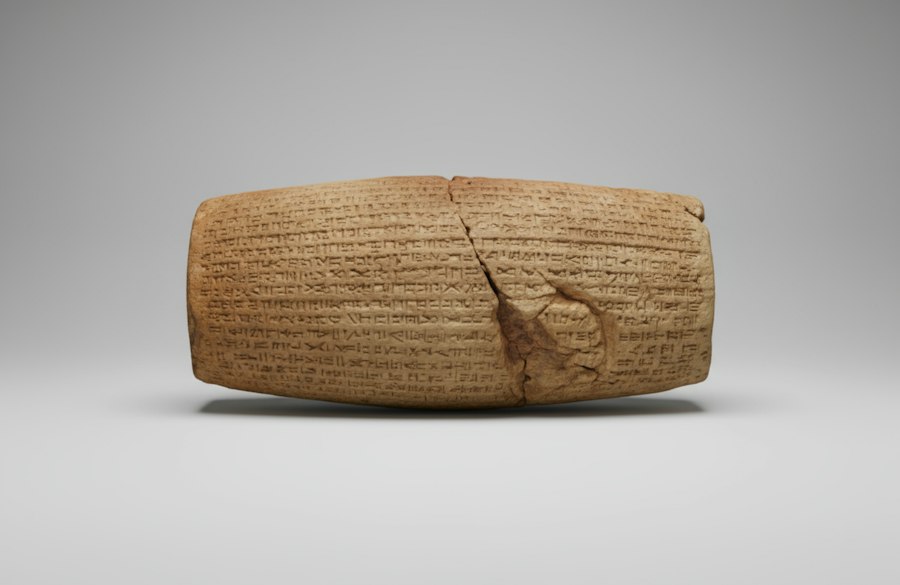
The emergence of writing in Sumer, around the late 4th millennium BCE, stands as one of humanity’s most significant intellectual leaps. The Sumerian script, known as cuneiform, was not born fully formed but evolved from a system of pictographs used for accounting and administrative purposes. These early symbols, simple drawings representing objects, were gradually abstracted and stylized, transforming into the wedge-shaped impressions pressed into wet clay with a reed stylus. This evolution marked a crucial transition from mere pictorial representation to a sophisticated system capable of conveying complex ideas, sounds, and grammatical structures. The transition from pictographic to a more abstract, syllabic form was a monumental shift, allowing for the recording of spoken language with unprecedented fidelity. This development was not solely driven by the needs of trade and administration, though these were undoubtedly significant catalysts. It also reflects a growing desire to preserve knowledge, to codify laws, and to transmit narratives and religious beliefs across generations.
From Tokens to Tablets: The Genesis of a Script
The earliest precursors to cuneiform are found in small clay tokens, impressed with symbols that represented commodities. These tokens were often enclosed in clay envelopes, or bullae, which also bore impressions of the tokens within. This practice, known as “enclosure,” served as an early form of security and inventory control. As the complexity of transactions and administrative needs grew, so did the need for a more efficient and versatile recording system. The transition to impressed signs on clay tablets, and eventually to incised signs, allowed for a greater density of information and a more standardized form of writing. This development was not a sudden invention but a gradual process, refined over centuries by scribes who meticulously worked to improve the system’s expressiveness and efficiency. The very nature of clay as a medium, its plasticity and durability when fired, made it an ideal canvas for this nascent form of writing.
The Rosetta Stone of Mesopotamia: Unlocking the Lexicon
The decipherment of cuneiform was a long and arduous process, comparable in its significance to the decipherment of Egyptian hieroglyphs. For centuries, the wedge-shaped marks remained an impenetrable enigma. The breakthrough came in the mid-19th century with the discovery of trilingual inscriptions, most famously the Behistun Inscription. This colossal rock relief, carved by Darius the Great of Persia, bore inscriptions in Old Persian, Elamite, and Babylonian cuneiform. Scholars like Henry Rawlinson, through painstaking comparison of the three versions, were able to identify proper names and gradually unlock the phonetic and semantic values of the cuneiform signs. This painstaking work, akin to piecing together a colossal jigsaw puzzle with missing pieces, opened the floodgates to a vast trove of Sumerian literature, history, and daily life. The “Rosetta Stone” of Mesopotamia, in essence, was not a single artifact but a series of bilingual and trilingual texts that provided the critical keys to understanding this ancient script.
The mysteries hidden within Sumerian tablets continue to captivate researchers and enthusiasts alike, as they offer insights into one of the earliest civilizations known to humanity. These ancient artifacts contain a wealth of information, from administrative records to mythological tales, prompting ongoing debates about their significance and interpretation. For those interested in exploring how historical narratives can influence contemporary issues, a related article discusses the implications of government actions during crises, which can be found at this link.
Echoes of the Past: The Content of the Tablets
The sheer volume and diversity of Sumerian tablets unearthed paint a vibrant portrait of a complex and dynamic society. These clay artifacts are not merely dry records; they are windows into the lives, thoughts, and aspirations of a people who lived thousands of years ago. From epic poems that resonate with universal themes of heroism and mortality to meticulously detailed administrative records, the tablets offer an unparalleled glimpse into the human experience at its earliest stages. They reveal a society with sophisticated legal systems, intricate religious beliefs, and a keen interest in the natural world. The content ranges from mundane economic transactions to grand pronouncements of kings and the profound musings of poets.
The Epic of Gilgamesh: A Universal Saga
Perhaps the most famous literary work to emerge from the Sumerian civilization is the Epic of Gilgamesh. This epic poem, written in Akkadian but drawing heavily on earlier Sumerian tales, recounts the adventures of the semi-divine king of Uruk. Gilgamesh’s quest for immortality, his friendship with the wild man Enkidu, and his confrontations with gods and monsters have captivated readers for millennia. The poem delves into profound themes of mortality, the search for meaning, and the nature of friendship, making it a timeless testament to the human condition. Its influence can be seen in later literary traditions, demonstrating the enduring power of Sumerian storytelling. The tablets containing the Epic of Gilgamesh are not just historical documents; they are literary masterpieces that continue to speak to us across the ages, exploring fundamental questions about life and death.
Laws, Literature, and Daily Life: A Microcosm of Society
Beyond the grand narratives, countless tablets offer intimate glimpses into the daily lives of ordinary Sumerians. Legal codes, such as the Code of Ur-Nammu, predate Hammurabi’s more famous code, illustrating an early development of jurisprudence and social order. Marriage contracts, divorce settlements, property deeds, and business agreements reveal the intricate workings of Sumerian commerce and family life. Religious hymns and myths provide insights into their pantheon of gods, their understanding of the cosmos, and their rituals. Even mundane receipts for barley, beer, and livestock contribute to a rich tapestry, allowing scholars to reconstruct economic systems, agricultural practices, and social hierarchies. These seemingly small fragments of information, when pieced together, create a remarkably detailed picture of a functioning and complex civilization. The administrative tablets, in particular, highlight the importance of record-keeping and bureaucracy in maintaining order and facilitating the operations of the state.
Decoding the Cosmos: Sumerian Astronomy and Mathematics
The Sumerians possessed a remarkable understanding of the celestial sphere and developed sophisticated mathematical systems that underpinned their astronomical observations and practical applications. Their interest in the stars was not purely theoretical; it was deeply intertwined with religious beliefs, agricultural cycles, and the desire to predict and understand the future. The precise and consistent observation of celestial phenomena allowed them to develop calendars and to mark the passage of time with a remarkable degree of accuracy for their era.
Celestial Observations and Calendrical Systems
Sumerian astronomers meticulously tracked the movements of the sun, moon, and planets. They developed a lunisolar calendar, which attempted to reconcile the lunar cycles with the solar year. This involved the periodic intercalation of extra months to keep the calendar aligned with the seasons, a feat that required careful observation and calculation. The identification of constellations and the naming of stars also demonstrate a sophisticated understanding of the night sky. These celestial observations were not confined to academic pursuits; they had profound practical implications for agriculture, dictating planting and harvesting seasons. The influence of Sumerian calendrical systems can be traced through later Babylonian and even Hellenistic astronomical traditions, highlighting their foundational role in the development of scientific inquiry.
The Birth of Numeracy: Sexagesimal System and Early Algebra
The Sumerians developed a base-60 (sexagesimal) number system, a legacy that still endures in our measurement of time (60 seconds in a minute, 60 minutes in an hour) and angles (360 degrees in a circle). This system, with its inherent divisibility, proved remarkably practical for calculations. Furthermore, evidence from the tablets suggests that Sumerians were grappling with basic algebraic concepts. They devised methods for solving equations, calculating areas and volumes, and dealing with problems involving unknown quantities. These early mathematical advancements laid the groundwork for future developments in mathematics and science, demonstrating the Sumerians’ intellectual prowess and their ability to abstract and manipulate numerical relationships.
Legacies and Enduring Influence: The Sumerian Footprint
The impact of Sumerian civilization extends far beyond the Fertile Crescent, its innovations and ideas rippling outwards to influence subsequent cultures and shaping the trajectory of human development. The concepts and practices that originated in Sumer laid the groundwork for many of the institutions and systems that define our modern world. Their contributions were not confined to a single domain but permeated various aspects of human endeavor, leaving an indelible mark on history.
The Foundations of Civilization: Law, Governance, and Urbanism
Sumer is widely recognized as one of the earliest urban civilizations. The development of city-states like Uruk, Ur, and Lagash, with their complex social structures, monumental architecture, and sophisticated administrative systems, served as a blueprint for urban living. The establishment of codified laws, even in their nascent forms, provided a framework for social order and justice, influencing legal traditions for millennia. Their advancements in irrigation, agriculture, and trade fostered economic growth and enabled the support of large populations, setting precedents for future societal organization. The very concept of organized governance, with rulers, officials, and a structured bureaucracy, can be traced back to these early Mesopotamian city-states.
The Eternal Flame of Knowledge: Writing and the Transmission of Ideas
The invention of writing, perhaps the Sumerians’ most profound legacy, revolutionized the way humans stored, transmitted, and disseminated knowledge. Cuneiform tablets allowed for the preservation of history, literature, scientific discoveries, and religious texts, ensuring that these intellectual achievements would not be lost to the vaguest of oral traditions. This ability to record and share information across time and space was fundamental to the accumulation of knowledge and the advancement of civilization. The transmission of Sumerian texts to subsequent Mesopotamian cultures like the Akkadians, Babylonians, and Assyrians ensured the continuity of their intellectual heritage, forming a continuous chain of knowledge that would eventually reach the Western world.
The ancient Sumerian tablets have long been a source of fascination for historians and archaeologists, as they contain a wealth of knowledge about early civilization and its mysteries. One intriguing aspect of ancient maps and their significance can be explored further in the article about the Piri Reis map, which delves into the secrets of cartography from a time when the world was still largely uncharted. To learn more about this captivating subject, you can read the full article here.
The Ongoing Quest: Future Discoveries and Unanswered Questions
| Mystery | Description | Tablet Name/Number | Estimated Date | Significance |
|---|---|---|---|---|
| Creation Myth Variations | Different versions of the creation story involving gods like Enki and Enlil | Eridu Genesis | c. 2300 BCE | Provides insight into early Mesopotamian cosmology and theology |
| Flood Narrative | Early account of a great flood similar to the Biblical story of Noah | Epic of Gilgamesh Tablet XI | c. 2100 BCE | Shows cultural transmission of flood myths across civilizations |
| Lost Language and Script | Deciphering the Sumerian language and cuneiform script remains partially incomplete | Various tablets | c. 3000-2000 BCE | Challenges understanding of early written communication and administration |
| Mathematical Knowledge | Advanced arithmetic and geometry concepts encoded in tablets | Plimpton 322 | c. 1800 BCE | Indicates sophisticated mathematical understanding predating Greek mathematics |
| Medical Prescriptions | Early medical treatments and herbal remedies documented | Diagnostic Handbook | c. 2100 BCE | Reveals early practices in medicine and healing |
Despite centuries of diligent work, the decipherment and interpretation of Sumerian tablets remain an ongoing endeavor. New discoveries are continuously made, and existing texts are re-examined with fresh perspectives and advanced analytical tools, promising to further illuminate this ancient civilization. The sheer volume of unearthed artifacts suggests that many more secrets lie buried beneath the Mesopotamian soil, waiting to be brought to light. The ongoing quest to understand the Sumerians is a testament to the enduring fascination with the origins of human civilization and the power of the written word to connect us to our distant past.
The Uncharted Territories: Ongoing Excavations and New Insights
Archaeological expeditions continue to unearth vast quantities of cuneiform tablets, adding new layers of understanding to Sumerian history and culture. Each new discovery presents fresh challenges and opportunities for scholars. The application of digital technologies, such as advanced imaging techniques and data analysis, is revolutionizing the way these texts are studied, allowing for more accurate transcriptions, improved contextualization, and the identification of previously unseen patterns. The quest is far from over, and the potential for groundbreaking revelations remains immense, promising to deepen our appreciation for this foundational civilization.
The Lingering Mysteries: Gaps in the Record and Interpretational Debates
While much has been learned, significant gaps remain in our understanding of Sumerian civilization. The precise nature of their political structures, the full extent of their religious practices, and the intricacies of their daily lives are still subjects of ongoing research and debate. Many tablets are fragmented or damaged, making complete interpretation a formidable task. Furthermore, the inherent subjectivity of translation and interpretation means that different scholars may arrive at slightly different understandings of the same text. The ongoing dialogue and scholarly debate surrounding these enigmatic artifacts are a vital part of the unraveling process, ensuring a nuanced and evolving understanding of the Sumerian legacy. The pursuit of these answers continues to drive archaeological endeavors and scholarly research, reminding us that the past is not a static entity but a continuously unfolding narrative.

The Anunnaki Origin Story Changes When You Read the Tablets
FAQs
What are Sumerian tablets?
Sumerian tablets are ancient clay tablets inscribed with cuneiform script, the earliest known form of writing. They were used by the Sumerians, who lived in Mesopotamia around 3,500 BC.
What kind of information do Sumerian tablets contain?
Sumerian tablets contain a wide range of information, including administrative records, legal documents, religious texts, literature, and historical accounts. They provide valuable insights into the culture, society, and beliefs of the ancient Sumerians.
What mysteries are hidden in Sumerian tablets?
Some of the mysteries hidden in Sumerian tablets include references to advanced astronomical knowledge, descriptions of mythical creatures and gods, and accounts of ancient rituals and practices that are not fully understood by modern scholars.
How are Sumerian tablets deciphered?
Sumerian tablets are deciphered by experts in the field of Assyriology, who study the cuneiform script and language of ancient Mesopotamia. By comparing and analyzing different tablets, scholars are able to piece together the meanings of the texts.
Why are Sumerian tablets important for understanding ancient history?
Sumerian tablets are important for understanding ancient history because they provide firsthand accounts of life in one of the earliest known civilizations. They offer valuable insights into the development of writing, law, religion, and other aspects of Sumerian society.