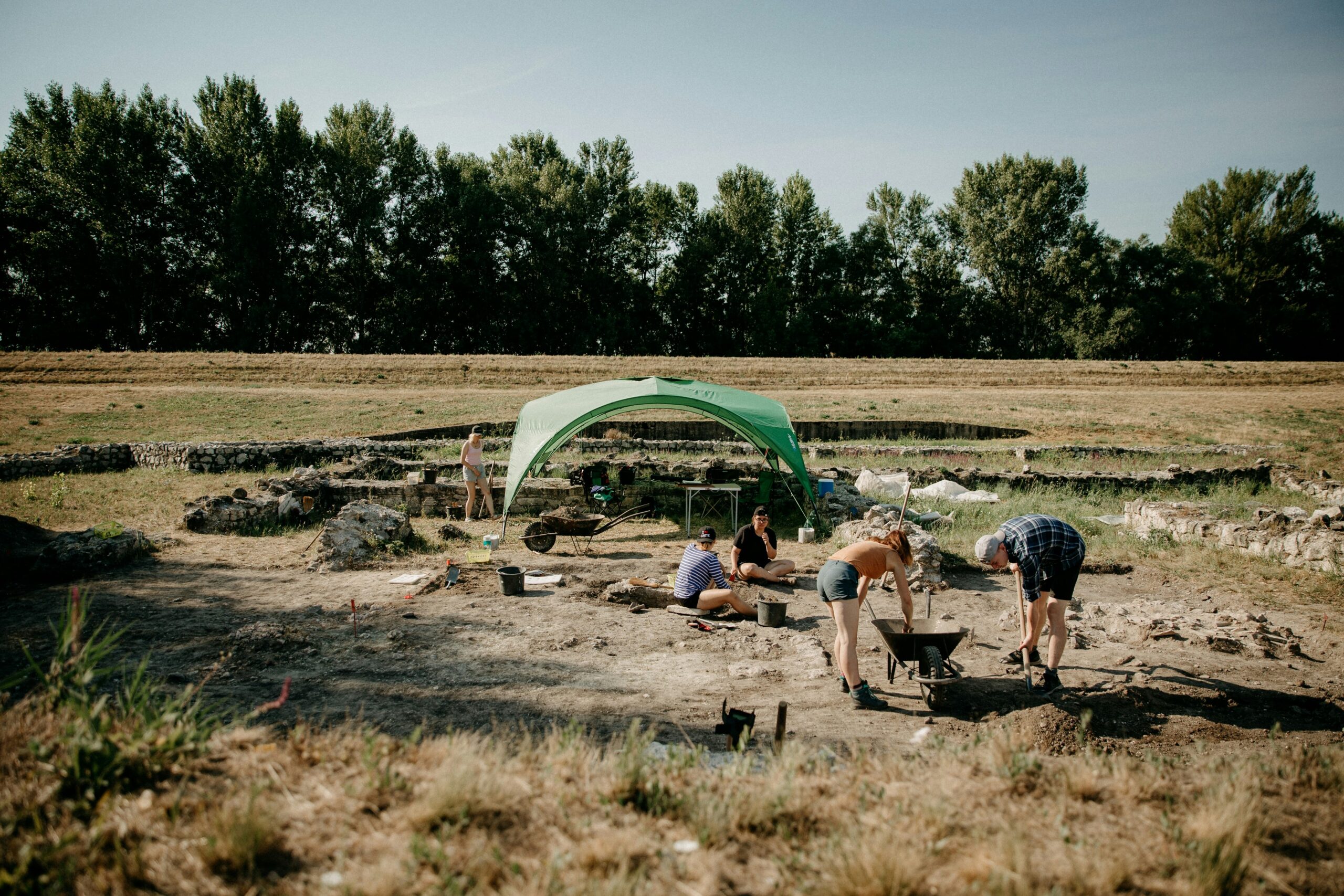
The dust has settled from a seismic tremor that shook the foundations of American archaeology, leaving a wake of fierce debate and renewed scrutiny. At the heart of this scholarly tempest lies Monte Verde, a seemingly unassuming site nestled in southern Chile, and the audacious claim that rewrites our understanding of when humans first set foot on the American continents. This controversy is not a new skirmish; it’s an ongoing, often acrimonious, battleground where established timelines clash with groundbreaking, and often deeply contested, new interpretations. It represents the frontline of a broader struggle within archaeology, a discipline tasked with piecing together humanity’s past using fragments of evidence, a process inherently susceptible to passionate disagreement.
For decades, the prevailing narrative in American archaeology centered around the “Clovis First” theory. This model posited that the Clovis culture, characterized by its distinctive fluted projectile points, represented the earliest widespread human presence in the Americas, dating back approximately 13,000 years. The discovery and excavation of Monte Verde under the leadership of Tom Dillehay, however, began to challenge this long-held dogma.
The Significance of Monte Verde
The initial excavations at Monte Verde revealed a remarkably well-preserved settlement dating to around 14,500 years ago. This date was pivotal because it predated the Clovis culture by a significant margin, implying that people had migrated to the Americas much earlier than previously believed. This conclusion was not immediately embraced by all. Archaeological consensus, like any scientific consensus, is built on rigorous evidence and peer review. However, the sheer weight of the findings at Monte Verde—including hearths, tools, botanical remains, and even preserved structures—made it increasingly difficult for the Clovis First model to stand.
The Pre-Clovis Paradigm Shift
The acceptance of Monte Verde as a legitimate pre-Clovis site was a monumental shift in archaeological thought. It opened the floodgates to the possibility of earlier migrations, likely via a coastal route along the Pacific Rim, rather than solely through an ice-free corridor that would have opened up later. This shift fundamentally altered textbooks, research agendas, and the very questions archaeologists asked about early human settlement. It suggested a more complex and dynamic peopling of the Americas, with multiple waves of migration and a longer history of human adaptation to diverse environments. The implications stretched beyond mere chronology, touching upon the cognitive abilities, technological innovations, and navigational skills of these early peoples.
In exploring the most controversial theory in archaeology, it is essential to consider the broader implications of how private interests can influence scientific research and historical narratives. A related article that delves into the intersection of private companies and military infrastructure is available at this link. This piece highlights the role of private entities in shaping not only military capabilities but also the potential impact on archaeological sites and historical preservation, raising questions about who controls the narrative of our past.
The Bombshell: A New Study Challenges the Age of Monte Verde
The painstaking work and the subsequent acceptance of Monte Verde’s age were seemingly cemented in the archaeological record. However, the landscape of scientific understanding is rarely static. In March 2026, a new study emerged, authored by archaeologist Dr. Todd Surovell, which aimed to dismantle the established dating of Monte Verde. This study not only questioned the accuracy of previous assessments but also proposed a radically different and significantly younger age for the site.
Dr. Surovell’s Claims and Methodologies
Dr. Surovell’s central argument revolved around the dating methodologies previously employed at Monte Verde. He asserted that the original dating, based primarily on radiocarbon dating of organic materials, was flawed due to the effects of soil erosion. According to his research, the layers where human artifacts were found were not as distinct or temporally isolated as previously assumed. Instead, he proposed that soil movement over millennia had obscured the true stratigraphy, leading to an overestimation of the site’s age.
The Role of Tephra in the New Dating
Crucially, Surovell’s study introduced newly identified volcanic ash (tephra) layers as a key piece of evidence. Tephra, being geological markers, can provide independent and often more reliable chronological anchors for archaeological sites. By analyzing these tephra layers in conjunction with the soil strata, Surovell’s team concluded that the human occupation of Monte Verde was not 14,500 years old, but rather dated to a much later period, between 6,000 and 8,000 years ago. This re-dating had profound implications, potentially relegating Monte Verde to a post-Clovis era, thereby undermining its significance as evidence for early pre-Clovis occupation.
Initial Reactions and the Stirring of Doubt
The publication of Surovell’s study immediately sent ripples of concern and, in some quarters, excitement through the archaeological community. While many remained steadfast in their belief in the original dating, others acknowledged the need for careful examination of the new evidence. The introduction of tephra dating, if sound, could indeed offer a powerful refutation of older methods. The controversy, therefore, was not just about the age of a single site but about the reliability of the scientific methods used to establish that age, and by extension, the very timeline of human history in the Americas.
The Scientific Counteroffensive: A Unified Rebuttal
The archaeological world is a collegial, yet fiercely critical, domain. When a significant challenge is posed to deeply entrenched findings, the response can be swift and comprehensive. In the case of Dr. Surovell’s study, the response by the scientific community was nothing short of a full-scale mobilization. Within months of the study’s publication, a formidable array of counterarguments and re-analyses emerged, demonstrating a collective commitment to defending the established understanding of Monte Verde.
The Three Scientific Letters: A Monumental Response
By June 2026, the scientific community had rallied with an impressive and coordinated effort. Three distinct scientific letters, totaling over 100 pages, were published. These were not mere opinion pieces; they were rigorous, detailed, and systematically structured rebuttals that meticulously addressed each of Dr. Surovell’s claims. The sheer volume of these letters underscored the seriousness with which the archaeological establishment viewed the challenge, and their commitment to providing a thorough and evidence-based counterargument.
Dismantling Surovell’s Conclusions: Evidence and Analysis
These letters systematically dismantled Surovell’s arguments by re-examining his data, re-interpreting the stratigraphy, and re-evaluating the role of the newly identified tephra layers. The authors of the rebuttal letters presented their own analyses, highlighting what they considered to be flaws in Surovell’s methodology and interpretation. They pointed to discrepancies in his stratigraphic correlations and offered alternative explanations for the presence and deposition of the tephra. The core of their refutation lay in demonstrating that Surovell’s evidence did not, in fact, invalidate the original dating.
The Power of Soil Samples and Genetic Studies
Furthermore, the rebuttal emphasized the robust nature of existing evidence. The soil samples from Monte Verde, painstakingly collected and analyzed over years, were argued to exhibit clear evidence of distinct occupational layers, unaffected by significant erosional disturbance. More compellingly, the letters referenced ongoing genetic studies. These studies, which analyze ancient DNA from human remains and environmental samples, provided independent lines of evidence that supported a much older human presence in the Americas, aligning with the 14,500-year age of Monte Verde. Genetic data, being less susceptible to the geological interpretations of stratigraphy, offered powerful ancillary support.
The Shadow of Pseudoscience: Broader Implications of the Debate
The controversy surrounding Monte Verde, while a legitimate scientific debate, has also cast a long shadow, drawing attention to, and inadvertently amplifying, more fringe and unsubstantiated theories about the deep past. The intensity of the discussion, particularly after being featured in popular platforms, has provided a fertile ground for “pseudoarchaeological” claims to gain traction, even as mainstream scientists work to debunk them.
Graham Hancock and the “Lost Civilization” Narrative
One of the most prominent figures associated with these alternative theories is Graham Hancock. Hancock, a writer and journalist rather than a trained archaeologist, has long promoted the idea of a sophisticated, advanced civilization that existed in antiquity, predating known historical civilizations by millennia. He argues that evidence for this lost civilization, including sites like Easter Island statues and Göbekli Tepe, has been deliberately overlooked or misinterpreted by mainstream science due to a dogmatic adherence to established timelines.
Challenging Established Timelines: The Comet Impact Hypothesis
Hancock and his followers often propose that this advanced civilization was wiped out by a cataclysmic event, such as comet impacts, around 12,800 years ago. This date aligns with the Younger Dryas boundary, a period of abrupt climate change that has been a subject of scientific interest. However, Hancock’s theories attribute much more far-reaching and advanced societal structures and technological capabilities to these hypothesized ancient peoples than the archaeological record, as conventionally understood, supports. The dating of key sites such as Göbekli Tepe is a central point of contention, with Hancock claiming dates of 11,000+ years for its construction, a claim that, while significant, falls within a different explanatory framework than the more dramatic “lost civilization” narrative.
Dismissal by Mainstream Archaeology
These “pseudoarchaeological” theories are widely dismissed by mainstream archaeologists. The dismissal is not based on a closed-minded resistance to new ideas, but on a fundamental difference in methodology and evidentiary standards. While archaeologists are open to revolutionary discoveries, they rely on rigorous fieldwork, meticulous dating techniques, peer-reviewed research, and the principle of Occam’s Razor—that simpler explanations are generally to be preferred. Hancock’s theories, by contrast, often involve cherry-picking data, speculative interpretations, and a disregard for well-established methods of dating and artifact analysis. The Monte Verde debate, by bringing the timeline of early American settlement into sharp focus, inadvertently provides a stage upon which these fringe ideas can appear to be related to legitimate scientific inquiry, even when they are built on entirely different foundations.
The most controversial theory in archaeology often sparks intense debates among scholars and enthusiasts alike, particularly regarding the origins of ancient civilizations. For those interested in exploring how modern industries can influence historical narratives, a fascinating article on the growth of Tijuana’s manufacturing sector can provide valuable insights. You can read more about this topic in the article here, which highlights the interplay between contemporary economic developments and their potential implications for understanding past societies.
The Mobilization of Mainstream Archaeology: Education and Defense
| Controversial Theory | Arguments For | Arguments Against |
|---|---|---|
| Out of Africa Theory | Genetic evidence supports the theory that modern humans originated in Africa. | Some archaeological findings suggest that there may have been multiple migration events out of Africa. |
| Younger Dryas Impact Hypothesis | Some evidence suggests a comet or asteroid impact may have caused the Younger Dryas cooling period. | Other scientists argue that the evidence for an impact is not conclusive. |
| Ancient Alien Theory | Some proponents point to ancient structures and artifacts as evidence of extraterrestrial influence. | Mainstream archaeologists argue that there is no credible evidence to support this theory. |
The recent surge in controversial claims, amplified by high-profile public platforms, has spurred a proactive response from the archaeological community. Recognizing the potential for misinformation to spread rapidly in the digital age, many archaeologists are stepping outside the traditional ivory tower to engage directly with the public and rigorously defend the scientific integrity of their discipline.
Engaging the Public Through Social Media and Podcasts
The landscape of public discourse has shifted dramatically. Archaeologists are increasingly utilizing social media platforms, such as X (formerly Twitter) and Instagram, to share accessible explanations of archaeological methods, debunk pseudoarchaeological claims with concise facts, and foster dialogue. Podcasts, once a niche medium, have become powerful tools for in-depth discussions, allowing archaeologists to present complex arguments in an engaging and understandable format. This direct engagement aims to bypass the sensationalism often found in less rigorous outlets and provide the public with accurate, evidence-based information.
Debunking Claims and Educating on Rigorous Methods
The active mobilization involves not just reacting to controversial claims but also proactively educating the public about what constitutes sound archaeological practice. This includes explaining the importance of stratigraphy, the principles of radiocarbon dating, the use of multiple dating methods (like tephra and luminescence dating), and the critical role of peer review. By highlighting the painstaking, meticulous nature of archaeological research, these efforts aim to equip the public with the critical thinking skills necessary to distinguish between credible scientific inquiry and unsubstantiated speculation. The goal is to foster a greater appreciation for the scientific process and to ensure that the public’s understanding of our shared past is grounded in evidence and rigorous analysis, rather than sensationalism and unfounded conjecture. The Monte Verde controversy, in its own dramatic fashion, has become a catalyst for this vital educational mission.

The Black Layer That Shouldn’t Exist
FAQs
What is the most controversial theory in archaeology?
The most controversial theory in archaeology is the idea of ancient aliens or ancient astronauts, which suggests that extraterrestrial beings visited Earth in ancient times and had a significant impact on human history and development.
What evidence supports the ancient aliens theory?
Proponents of the ancient aliens theory point to various ancient artifacts, structures, and texts as potential evidence of extraterrestrial influence. These include the construction of ancient monuments like the pyramids of Egypt, as well as depictions of otherworldly beings in ancient art and writings.
What do mainstream archaeologists and historians say about the ancient aliens theory?
Mainstream archaeologists and historians generally reject the ancient aliens theory, citing a lack of credible evidence and the presence of alternative explanations for the phenomena cited by proponents of the theory. They argue that attributing human achievements to extraterrestrial intervention diminishes the ingenuity and capabilities of ancient civilizations.
How has the ancient aliens theory gained popularity?
The ancient aliens theory has gained popularity through television programs, books, and online media that present speculative interpretations of ancient history and archaeology. These platforms often sensationalize the theory, attracting a wide audience and contributing to its widespread recognition.
What impact does the ancient aliens theory have on the field of archaeology?
The ancient aliens theory has sparked debate and controversy within the field of archaeology, with some scholars expressing concern that it undermines the rigorous study of ancient civilizations and promotes pseudoscientific ideas. However, it has also generated public interest in archaeology and ancient history, leading to increased engagement with these subjects.