
The Ancient Enigma of Cahuachi: A Gateway to the Nazca Desert
Nestled in the arid plains of southern Peru, the Nazca Desert conceals one of the world’s most enduring archaeological puzzles: the Nazca Lines. These colossal geoglyphs, etched into the earth by a sophisticated ancient civilization, have captivated scholars and tourists alike for decades. Yet, the key to understanding these enigmatic designs may lie not solely in their aerial perspective, but in the sprawling ceremonial center of Cahuachi, a lost city that served as the religious and administrative heart of the Nazca culture. Cahuachi, a vast adobe metropolis, once dominated the landscape, its pyramids and plazas serving as the focal point for rituals and celebrations that likely inspired and were celebrated by the lines themselves. Unraveling the mysteries of Cahuachi is intrinsically linked to deciphering the purpose and meaning of the Nazca Lines, offering a tantalizing glimpse into a society that profoundly interacted with its environment and the cosmos.
For many years, the Nazca Lines were the sole focus of attention, their sheer scale and artistic precision sparking a multitude of theories, from astronomical calendars to extraterrestrial landings. However, archaeological investigations in recent decades have increasingly highlighted the paramount importance of Cahuachi. This ancient city, covering an impressive area of over 24 square kilometers, was not merely a collection of humble dwellings but a monumental ceremonial complex. Its construction, primarily from adobe bricks, speaks to an organized labor force and a sophisticated understanding of local materials. The sheer volume of pottery fragments found at Cahuachi, numbering in the millions, indicates a vibrant community and a hub of extensive social and religious activity. The site’s strategic location, overlooking the river valleys that sustained the Nazca people, further emphasizes its central role in their lives.
Discovering Cahuachi: From Desert Sands to Scholarly Focus
The exploration of Cahuachi has been a gradual process, with early archaeological expeditions primarily concentrating on the more striking Nazca Lines. It was not until the mid-20th century that the true significance of Cahuachi began to be recognized. Early explorers and archaeologists, while documenting the geoglyphs, often noted the presence of extensive ruins in the vicinity. However, the sheer scale and the arid conditions that preserved them made systematic excavation a formidable challenge. It was the work of researchers like Giuseppe Orefici who, through extensive fieldwork and meticulous mapping, began to paint a comprehensive picture of Cahuachi as a major urban and ceremonial center. His efforts, spanning decades, laid the foundation for understanding the site’s architectural complexity and its relationship to the Nazca Lines.
The arid climate of the Nazca region, while harsh, has proven to be a blessing for archaeologists. The lack of rainfall has preserved ancient structures and artifacts with remarkable fidelity. Cahuachi, built predominantly from sun-dried adobe bricks, would have rapidly deteriorated in wetter climates. Instead, the desert environment has kept these structures standing for centuries, offering a tangible link to the past. The slow erosion of the adobe and the shifting sands have also contributed to the site’s mysterious aura, with parts of the city being re-covered and rediscovered over time, adding to the ongoing process of unveiling its secrets.
The Urban Fabric of Cahuachi: Pyramids, Plazas, and Daily Life
Cahuachi was not a homogeneous settlement but a complex urban landscape characterized by distinct architectural features. The most prominent structures were the monumental pyramids, built from thousands upon thousands of adobe bricks. These stepped platforms, some reaching significant heights, were clearly designed for religious ceremonies and public gatherings. Their presence suggests a hierarchical society with a strong priestly or ruling class that commissioned and oversaw such ambitious constructions. The sheer labor involved in their creation points to a well-organized society capable of mobilizing and sustaining a large workforce.
Beyond the pyramids, Cahuachi boasted extensive plazas, open spaces designed for communal activities and possibly market functions. These plazas would have been the nexus of social life, where people gathered for festivals, rituals, and daily interactions. The intricate network of residential areas, workshops, and storage facilities surrounding these public spaces further illustrates the site’s multifaceted nature. Evidence of agriculture, such as the presence of irrigation channels and agricultural tools, suggests that Cahuachi was not solely a ceremonial center but also supported a significant population involved in food production. The careful planning and layout of the city, with its distinct functional zones, indicate a sophisticated level of urban design.
The Nazca ceremonial line network at Cahuachi has long fascinated researchers and historians, as it offers insights into the spiritual and cultural practices of the ancient Nazca civilization. While exploring the significance of these geoglyphs, one might also find it intriguing to consider other ancient artifacts and their purposes, such as the enigmatic Baghdad Battery. For a deeper understanding of this mysterious device and its potential uses in ancient times, you can read more in the article titled “Unlocking the True Purpose of the Baghdad Battery” available at this link.
The Nazca Lines: Whispers from the Desert Floor
The Nazca Lines remain the most iconic legacy of this ancient civilization, a testament to their ingenuity and their deep connection to the surrounding landscape. Etched into the reddish-brown surface of the desert, these geoglyphs are created by removing the darker topsoil to expose the lighter soil beneath. The sheer scale of these designs, some stretching for hundreds of meters, is staggering, and their precision is remarkable, especially considering the limited tools available to their creators. From the air, they reveal a breathtaking gallery of animals, plants, geometric shapes, and what appear to be anthropomorphic figures.
The longevity of these geoglyphs is a testament to the unique environmental conditions of the Nazca region. The lack of wind and rain has preserved the lines for over two millennia, a feat that continues to amaze. The arid climate, the stable ground, and the natural pigments of the soil have all contributed to their remarkable preservation. However, understanding their purpose has proven to be a far more challenging endeavor, sparking a multitude of theories that continue to be debated and explored by researchers.
Decoding the Designs: Theories and Interpretations of the Geoglyphs
The interpretation of the Nazca Lines has been a source of fascination and debate since their discovery. Early theories often leaned towards astronomical interpretations, suggesting that the lines served as a giant calendar or observatories, aligning with celestial bodies. Maria Reiche, a German mathematician and archaeologist, was a prominent proponent of this view, meticulously mapping and studying the lines for decades. She believed that the figures and geometric shapes represented constellations and astronomical events, guiding agricultural cycles and religious observances.
Other theories propose that the lines were part of religious rituals, created by priests and pilgrims as offerings or pathways to the divine. The act of creating and maintaining these massive designs could have been a form of pilgrimage itself, a communal endeavor undertaken to appease the gods or ensure fertility and good harvests. The sheer effort involved suggests a profound spiritual or cosmological significance. Anthropologist Johan Reinhard has put forth the theory that many of the lines relate to water, a vital resource in the arid Nazca desert, connecting them to rituals aimed at ensuring the flow of water and agricultural success.
More speculative theories, though less scientifically supported, include ideas of communication with extraterrestrial beings or ancient flying machines. While these notions capture the imagination, they lack substantial archaeological evidence and are generally dismissed by mainstream scholarship. The ongoing research, focusing on the integration of Cahuachi and the lines, is gradually shifting the focus towards more grounded interpretations rooted in the Nazca people’s daily lives, their beliefs, and their relationship with their environment.
The Creation Process: Engineering Marvels of the Ancient World
The creation of the Nazca Lines represents a significant feat of engineering and organization for an ancient civilization. The process involved carefully removing the dark desert varnish, a layer of iron and manganese oxides that forms on rocks exposed to sunlight and atmospheric conditions. This action exposed the lighter, underlying soil, creating the stark contrast that defines the geoglyphs. The Nazca people likely used simple tools, such as sharpened stones and wooden stakes, to outline and excavate the designs.
The precision of the lines, particularly the straight lines that stretch for kilometers, suggests sophisticated surveying techniques. It is believed that they may have used ropes, stakes, and possibly sighting instruments to maintain accuracy over vast distances. The repetitive nature of many of the designs, such as the zigzags and trapezoids, indicates a systematic approach to their creation. The fact that these lines have endured for so long is also a testament to the stability of the Nazca plain and the careful selection of the location for their creation.
The sheer scale of the undertaking, requiring the coordinated efforts of many individuals over extended periods, points to a highly organized society with strong leadership and a shared cultural purpose. The construction of the lines was not a fleeting endeavor but a sustained cultural practice that spanned generations.
The Symbiotic Relationship: Cahuachi and the Nazca Lines
The most compelling understanding of the Nazca Lines arises from recognizing their intimate connection with Cahuachi. It is increasingly evident that the ceremonial center and the geoglyphs were not independent entities but were deeply intertwined, each serving to enhance and reinforce the other. Cahuachi likely served as the point of origin for many rituals and ceremonies that were visually expressed through the Nazca Lines.
The placement of many of the lines, particularly the larger geometric figures and animal representations, appears to be strategically positioned in relation to Cahuachi. Some lines extend outwards from the city, suggesting they might have been pathways or markers used during processions and ceremonies. Others are situated in prominent locations visible from the city, perhaps serving as backdrops or focal points for ritual performances. The very act of creating and maintaining these lines could have been a continuous religious offering, a way to maintain a connection with the gods and the natural world.
Ritualistic Pathways and Ceremonial Hubs
It is widely believed that Cahuachi served as a primary ceremonial hub for the Nazca people, a place where major religious festivals and gatherings took place. The vast plazas and monumental pyramids within Cahuachi were designed to accommodate large numbers of people and facilitate elaborate rituals. The Nazca Lines, in this context, may have served as integral components of these ceremonies.
Some researchers suggest that specific lines acted as ritual pathways, used by pilgrims and priests to traverse the desert landscape during specific ceremonies. The act of walking these lines, perhaps in a particular order or direction, could have held profound spiritual significance. The animal figures, such as the hummingbird, monkey, and spider, may have been representations of deities or spirits invoked during these rituals, with the lines serving as a way to connect with these entities. The geometric patterns could have represented abstract concepts or cosmic forces, further enhancing the spiritual resonance of the Nazca landscape.
The Landscape as a Sacred Text
The Nazca people likely viewed their entire environment, including the desert floor, as a sacred text. The creation of the Nazca Lines was an act of inscribing their beliefs and cosmology onto this sacred canvas. Cahuachi, as the center of their religious and social life, provided the context and impetus for this inscription. The lines were not mere decorations but served as a visual language, communicating profound ideas about their worldview, their relationship with the natural world, and their place in the cosmos.
The integration of Cahuachi with the Nazca Lines offers a more holistic understanding of this ancient civilization. It moves beyond the sensationalism of the lines themselves and delves into the cultural, religious, and social fabric of the people who created them. The city and the geoglyphs together paint a picture of a society deeply attuned to its environment, with a sophisticated understanding of ritual, symbolism, and the art of monumental expression.
Challenges and Ongoing Discoveries at Cahuachi
Despite decades of dedicated research, Cahuachi continues to present archaeologists with significant challenges. The sheer size of the site, coupled with the delicate nature of adobe structures and the ongoing forces of natural erosion, makes comprehensive excavation and preservation a monumental undertaking. Furthermore, the remote location and the harsh desert environment present logistical hurdles for researchers.
The preservation of Cahuachi is a critical concern. The adobe structures are vulnerable to natural decay, and the impact of tourism, while economically beneficial, requires careful management to prevent damage. Ongoing efforts focus on stabilizing existing structures, conducting further non-invasive surveys, and developing sustainable tourism practices that allow visitors to experience the site without compromising its integrity.
Preservation Efforts and Future Research Directions
The future of Cahuachi’s exploration hinges on innovative archaeological techniques and a commitment to conservation. Advanced remote sensing technologies, such as LiDAR (Light Detection and Ranging), are proving invaluable in mapping the vast extent of the site and identifying buried structures without the need for extensive excavation. This technology can reveal subtle topographical features and architectural elements that might otherwise remain hidden beneath the sands.
Further research will likely focus on understanding the social organization and daily life within Cahuachi. Detailed analysis of ceramic assemblages, burial practices, and evidence of craft production can provide insights into the diet, health, social stratification, and economic activities of the Nazca people. Comparative studies between Cahuachi and other contemporaneous settlements in the region can also shed light on broader regional interactions and cultural developments.
The relationship between Cahuachi and the Nazca Lines will undoubtedly remain a central focus. New discoveries within Cahuachi may reveal additional evidence of ritual practices, ceremonial objects, or iconography that directly correlates with specific geoglyphs, providing further clues to their meaning and function. The ongoing unraveling of Cahuachi’s mysteries promises to enrich our understanding of this remarkable ancient civilization and the enigmatic lines they left behind.
The Enduring Legacy of the Nazca Culture
The Nazca culture, with its extraordinary achievements at Cahuachi and its enigmatic geoglyphs, has left an indelible mark on human history. Their ability to manipulate their environment, create monumental art, and express complex cosmological beliefs through their creations continues to inspire awe and wonder. Cahuachi, once a vibrant center of Nazca life, now stands as a silent testament to their ingenuity and their enduring connection to the desert landscape.
The ongoing exploration of Cahuachi and the Nazca Lines is more than just an academic pursuit; it is a journey into the heart of a civilization that possessed a unique worldview and an extraordinary capacity for artistic expression. As researchers continue to peel back the layers of sand and time, the whispers from the Nazca desert grow louder, offering ever-deeper insights into the minds and the lives of a people who mastered their world and etched their legacy into the very earth. The combined study of Cahuachi and the Nazca Lines is crucial for a comprehensive understanding, demonstrating that the true power of these ancient creations lies not just in their aerial spectacle but in the rich cultural context from which they emerged.
The Nazca ceremonial line network at Cahuachi has long fascinated researchers and enthusiasts alike, as it offers insights into the spiritual and cultural practices of the ancient Nazca civilization. A related article explores the intriguing connections between ancient civilizations and their environments, shedding light on how these societies interacted with their surroundings. For those interested in understanding the broader context of such archaeological wonders, you can read more about it in this article on the mysteries of ancient cultures.
Connecting the Dots: The Nazca Lines as Sacred Narratives
| Metric | Details |
|---|---|
| Location | Nasca Desert, Peru |
| Site Name | Cahuachi |
| Type | Ceremonial center within Nazca line network |
| Estimated Age | 200 BCE to 600 CE |
| Area Covered | Approximately 24 square kilometers |
| Number of Lines | Over 800 straight lines and 300 geometric figures in the Nazca network |
| Main Features | Large adobe pyramids, plazas, and ceremonial platforms |
| Purpose | Religious and ceremonial activities, possibly related to water and fertility rituals |
| UNESCO World Heritage Status | Designated in 1994 |
The Nazca Lines, viewed through the lens of Cahuachi’s ceremonial function, can be understood as a grand, three-dimensional sacred narrative etched into the earth. These geoglyphs were not merely abstract designs but were likely imbued with deep symbolic meaning, representing deities, cosmic forces, and important narratives within the Nazca belief system. The act of creating and interacting with these lines was likely a form of storytelling, a way to engage with and reinforce their worldview.
The precise alignment of some lines with astronomical events, as proposed by earlier researchers, can be re-contextualized within the framework of Cahuachi’s rituals. These alignments may not have been solely for calendrical purposes but for timing specific ceremonies or channeling celestial energies. The anthropomorphic figures, often depicted with animalistic features, could represent shamanic transformations or divine intermediaries, figures central to the spiritual practices conducted at Cahuachi.
The Animal Kingdom and its Cosmic Significance
The prevalence of animal figures in the Nazca Lines – the hummingbird, condor, monkey, spider, lizard, and others – is particularly striking. These creatures were not randomly chosen; they likely held significant cultural and symbolic meaning for the Nazca people, potentially representing deities, ancestral spirits, or aspects of the natural world that were vital for their survival. The hummingbird, for instance, with its association with nectar and pollination, might have been linked to fertility and abundance. The spider, with its intricate webs, could symbolize creation or interconnectedness.
The massive scale of these animal figures suggests they were intended to be seen and revered, perhaps by a divine audience or as manifestations of powerful spiritual forces. Their placement and orientation, often in relation to Cahuachi or other significant geographical features, further suggests a deliberate arrangement meant to convey specific messages or facilitate particular spiritual connections. The lines may have served as conduits for these animal spirits, allowing them to traverse the land or interact with the human realm.
Geometric Patterns: Order and the Cosmos
Beyond the zoomorphic figures, the Nazca Lines also feature a significant number of geometric shapes, including trapezoids, rectangles, triangles, and spirals. The interpretation of these patterns is more challenging, but they likely represent fundamental principles of Nazca cosmology and social order. The large trapezoidal shapes, for instance, have been interpreted as ceremonial platforms or stages for rituals. Their vast size suggests they were meant for communal gatherings and large-scale ceremonies.
Spirals and concentric circles could represent cyclical time, the journey of the soul, or the fundamental structure of the universe. The precision with which these geometric forms were executed points to a sophisticated understanding of geometry and spatial reasoning, further underscoring the advanced nature of Nazca culture. When viewed in conjunction with Cahuachi, these geometric patterns might have served as symbolic representations of the cosmos, with the city acting as the earthly anchor of this sacred order. The entire landscape, transformed by these geoglyphs and centered around Cahuachi, became a living, breathing manifestation of their beliefs.
The Enduring Mystery and the Future of Understanding
Despite the significant progress made in understanding Cahuachi and its connection to the Nazca Lines, many questions remain unanswered. The exact nature of their religious practices, the specific meanings attributed to each geoglyph, and the precise reasons for their abandonment are still subjects of intense scholarly debate and ongoing investigation. The Nazca culture remains a testament to human ingenuity and the enduring power of mystery.
The archaeological evidence uncovered at Cahuachi has dramatically shifted our perception of the Nazca Lines. They are no longer seen as isolated artistic feats but as integral components of a complex religious and ceremonial system centered on a monumental urban complex. This integrated approach allows for a more nuanced and comprehensive understanding of this ancient civilization, moving beyond speculative theories and grounding interpretations in tangible archaeological evidence.
The Lessons of Cahuachi and the Nazca Lines for Today
The study of Cahuachi and the Nazca Lines offers profound lessons for contemporary society. It highlights the importance of understanding our relationship with the natural environment, the power of collective action, and the enduring human need to imbue our lives with meaning and purpose. The Nazca people, in their creation of these monumental geoglyphs, demonstrate a deep respect for their surroundings and a profound connection to the cosmos.
Furthermore, the ongoing preservation efforts at Cahuachi underscore the responsibility we have to protect our shared cultural heritage. The fragile adobe structures and the delicate lines of the desert are a reminder that the past is not a static entity but a living legacy that requires our care and attention. By continuing to explore and understand these ancient wonders, we not only gain knowledge about past civilizations but also enrich our own understanding of what it means to be human. The Nazca desert, with Cahuachi at its heart, continues to whisper its secrets, urging us to listen and to learn.
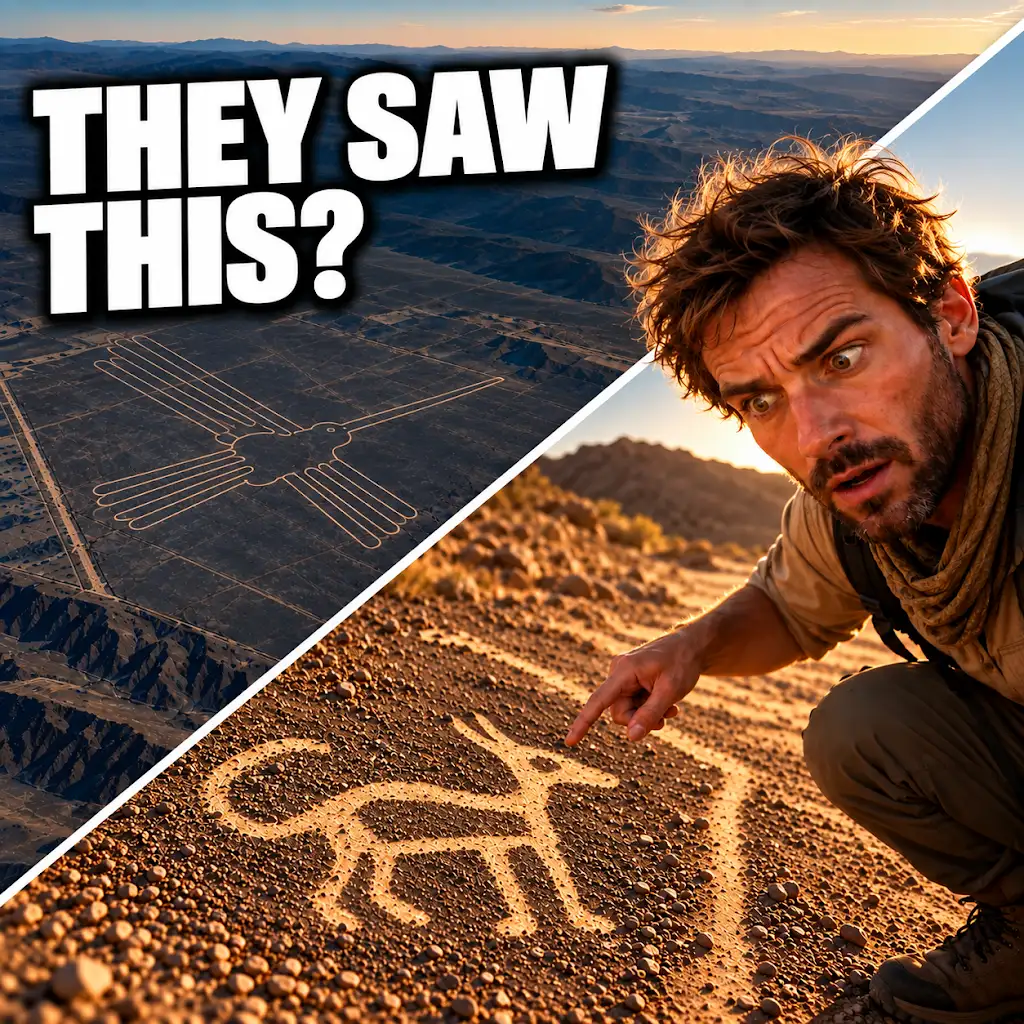
AI Found New Nazca Drawings—Could People See Them from the Ground?
FAQs
What is the Nazca ceremonial line network Cahuachi?
The Nazca ceremonial line network Cahuachi is an ancient archaeological site located in the Nazca Desert of Peru. It was a major ceremonial center for the Nazca culture, known for its extensive system of lines, geoglyphs, and pyramids.
When was the Nazca ceremonial line network Cahuachi built?
The Nazca ceremonial line network Cahuachi was built by the Nazca culture between 1 AD and 500 AD, making it over 1,500 years old.
What is the significance of the Nazca ceremonial line network Cahuachi?
The Nazca ceremonial line network Cahuachi is believed to have been a religious and ceremonial center for the Nazca culture, where rituals, ceremonies, and offerings were made to the gods. It is also thought to have been a pilgrimage site for the Nazca people.
How were the Nazca lines created at Cahuachi?
The Nazca lines at Cahuachi were created by removing the reddish-brown iron oxide-coated pebbles that cover the surface of the Nazca Desert, revealing the lighter-colored earth underneath. This process created the iconic lines and geoglyphs that are visible from above.
Is the Nazca ceremonial line network Cahuachi open to visitors?
Yes, the Nazca ceremonial line network Cahuachi is open to visitors who can explore the ancient ruins, pyramids, and ceremonial platforms. However, visitors are encouraged to respect the site and its fragile archaeological remains.