The dust of millennia settles on the sun-baked plains of Mesopotamia, yet within the cuneiform inscriptions and fragmented clay tablets, a cosmic drama unfolds. The Sumerian creation myth, particularly the narrative surrounding the Anunnaki, offers a glimpse into a worldview profoundly different from our own, one where gods, demigods, and humanity are interwoven in a complex tapestry of existence. To unravel this ancient story is to embark on a journey into the very origins of consciousness, labor, and divine ambition. It is a tale that speaks of celestial beings, their desires, and the consequences of their actions, ultimately leading to the genesis of humankind.
The Cosmic Progenitors: Who Were the Anunnaki?
The Anunnaki, a pantheon of deities in ancient Sumerian, Akkadian, Babylonian, and Assyrian mythology, represent the principal divine council. Their name itself, often translated as “those of royal blood” or “those descended from the sky,” immediately positions them as beings of immense power and celestial origin. Unlike the more anthropomorphic gods of later Greek or Roman pantheons, the Anunnaki often retained a more abstract and awe-inspiring presence, though they were depicted with human-like characteristics when interacting with the mortal realm.
The Primordial Landscape of Divine Existence
Before the emergence of humanity, the Anunnaki occupied a cosmic realm defined by its own internal dynamics and hierarchies. Their existence was not static but characterized by a constant interplay of duties, conflicts, and aspirations. The earliest Sumerian texts suggest a vast and complex pantheon, with various interpretations and roles assigned to different Anunnaki deities over time and across different city-states. These deities were not simply passive observers; they actively shaped the cosmos and intervened in its unfolding.
The Hierarchy of the Divine Council
Within the Anunnaki, there existed a discernible hierarchy, though its exact structure could vary. Figures like Anu, the sky god and father of the gods, and Enlil, the god of wind, air, and the earth, held positions of paramount importance. Other prominent Anunnaki included Enki (later Ea), the god of wisdom, magic, and freshwater, and Ninhursag, the mother goddess. Their relationships and their assigned responsibilities formed the bedrock of the Sumerian cosmic order. Their pronouncements and decisions were considered immutable laws that governed both the celestial and terrestrial spheres.
The Sumerian Anunnaki creation myth offers a fascinating glimpse into ancient beliefs about the origins of humanity and the divine. For those interested in exploring how historical narratives can influence modern economic concepts, a related article discusses the impact of nearshoring on inflation, highlighting how shifts in production and labor dynamics can reshape economic landscapes. You can read more about this intriguing connection in the article available at The Impact of Nearshoring on Inflation.
The Genesis of Labor and Human Creation
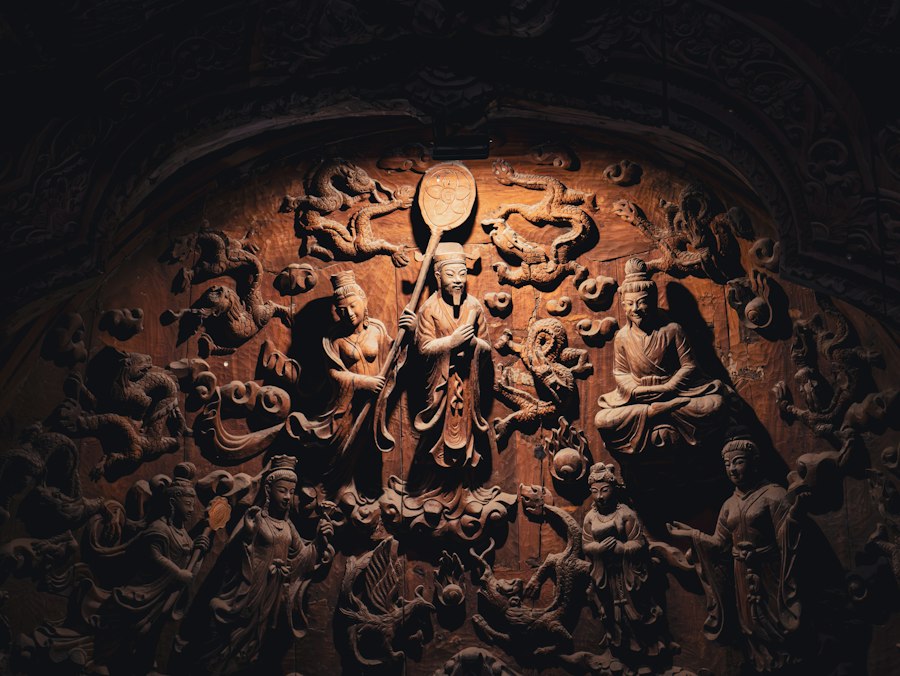
The Anunnaki creation myth, as most famously preserved in the Babylonian Epic of Atrahasis and related texts, presents a unique and somewhat startling reason for the creation of humanity: labor. This narrative diverges significantly from many other creation stories, where humanity is often created out of love, as companions, or as objects of worship. For the Anunnaki, it was a practical, almost utilitarian, necessity that drove their decision.
The Burdens of the Gods
According to the myth, the Anunnaki were initially tasked with the arduous labor of extracting resources and maintaining the cosmos. This involved digging canals, farming the land, and performing all the physically demanding tasks required to sustain their celestial existence. This divine toil was not a joyful endeavor but a source of immense discontent and rebellion. The younger gods, weary of the ceaseless drudgery, began to grumble and eventually revolted against their superiors, particularly Enlil.
The Divine Solution: A New Workforce
Faced with this divine insubordination, the Anunnaki sought a solution that would alleviate their own burdens. It was Enki, the god of wisdom, who proposed the creation of a new race – humanity – to take over the laborious tasks. This decision was not born of altruism but of a calculated need to re-establish order and ease the divine workload. The creation of humans was thus a direct response to a crisis within the divine realm, a testament to the Anunnaki’s focus on their own well-being and the maintenance of their cosmic authority.
The Art of Anthropogenesis: Clay and Divine Essence
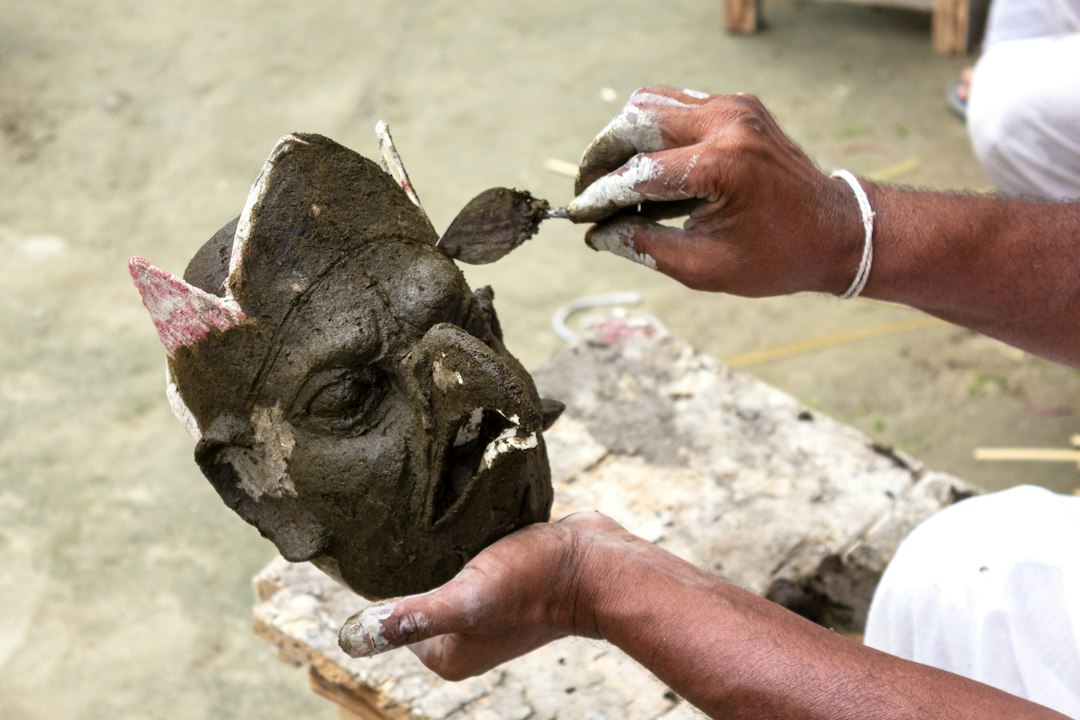
The actual creation of humans involved a mixture of divine essence and earthly materials. In many accounts, the gods, led by Enki and Ninhursag, took clay from the earth and mixed it with the blood of a slain god, often Geshtu-e, whose intelligence was then imbued into the new beings. This act of mixing divine and earthly elements symbolized the dual nature of humanity – bound to the physical world yet possessing a spark of the divine. The creation was not a singular event but a process, involving the shaping, breathing life into, and ultimately assigning roles to the first humans. This highlights the deliberate and intricate nature of their genesis.
The Purpose and Role of Humankind

Once created, humanity was not intended to be a free and independent entity. Their existence was fundamentally tied to the Anunnaki and their needs. The purpose for which they were brought into being dictated their roles and their relationship with their divine creators. This perspective offers a stark contrast to modern notions of individual autonomy and self-determination.
The Service of the Gods
The primary purpose of humankind, as established by the Anunnaki, was to serve the gods. This service encompassed a wide range of activities, from agricultural labor and construction to tending to the divine needs. The humans were expected to cultivate the land, build temples, offer sacrifices, and perform all the necessary tasks that the Anunnaki had once undertaken. Their lives were, in essence, dedicated to the perpetuation of divine comfort and the smooth functioning of the cosmic order as defined by the Anunnaki.
The Burden of Sacrifice and Appeasement
A significant aspect of human service involved the offering of sacrifices. These offerings, ranging from agricultural produce to animal sacrifices, were intended to appease the gods, gain their favor, and ward off their displeasure. The Anunnaki, like any powerful beings, were susceptible to anger, and the rituals of sacrifice were a crucial mechanism for maintaining a balance and ensuring the continued benevolence of the divine. This also meant that human lives were often lived under the constant shadow of divine judgment and the need for constant appeasement.
The Imposed Order: Kingship and Social Structures
The Anunnaki did not just create humans; they also imposed an order upon them. The concept of kingship, for instance, is often depicted as being divinely bestowed, with the first kings receiving their authority directly from the gods. This established a clear social hierarchy with the divine at the apex, followed by the divinely appointed rulers, and then the rest of humanity. This divinely sanctioned social structure was designed to maintain order and prevent the kind of unrest that had plagued the Anunnaki themselves.
Divine Intervention and the Great Floods
The relationship between the Anunnaki and humanity was not a static one. The Sumerian myths are replete with instances of divine intervention, both benevolent and destructive. The most dramatic of these interventions were the great floods, events that served as divine purges and re-founding moments for humanity.
The Discontent of Enlil and the Great Deluge
The most significant of these divine interventions is the Great Flood narrative, which appears in various forms across Mesopotamian literature. In the Epic of Gilgamesh, for instance, the god Enlil becomes increasingly displeased with the clamor and unrest of humanity, perceiving them as an annoyance. While other gods, like Enki, often advocated for restraint or found ways to preserve a select few, Enlil’s wrath could be absolute. He decided to wipe out humanity with a catastrophic flood. This highlights the capricious nature of the Anunnaki and their ability to wield immense destructive power.
The Role of Enki and the Preservation of Life
Despite Enlil’s decree, the god Enki, often portrayed as a more compassionate or pragmatic deity, found a way to circumvent the divine judgment. In the Epic of Atrahasis, Enki secretly warns a pious human named Atrahasis of the impending flood and instructs him to build a great ark to save himself, his family, and pairs of all living creatures. This recurring motif of a benevolent deity intervening to save a chosen few underscores the complex internal dynamics within the Anunnaki and their varied attitudes towards humankind.
The Aftermath: A Renewed Covenant and New Restrictions
Following the flood, the surviving humans were tasked with rebuilding and continuing their existence. However, the Anunnaki, having witnessed the destructive potential of unchecked humanity, imposed new restrictions and covenants. These often involved increasing the rate of human mortality through disease, famine, and shorter lifespans. The intention was to keep the human population in check and prevent them from becoming too numerous or too powerful to control, thus ensuring that the divine order was never again threatened by human growth.
The Sumerian Anunnaki creation myth offers fascinating insights into ancient beliefs about the origins of humanity and the cosmos. For those interested in exploring the broader implications of ancient narratives and their relevance to modern discussions, a related article examines the ongoing significance of international agreements like the Outer Space Treaty. This treaty, which addresses the use of outer space, raises questions about humanity’s responsibilities beyond Earth and can be viewed through the lens of ancient myths that reflect our quest for understanding. To read more about this intriguing connection, visit this article.
Enduring Echoes and Modern Interpretations
| Aspect | Description | Significance | Source Text |
|---|---|---|---|
| Origin of Anunnaki | Deities born from An, the sky god, and Ki, the earth goddess | Represents divine lineage and cosmic order | Sumerian creation myths, Enuma Elish |
| Role in Creation | Shaped humans from clay mixed with the blood of a slain god | Explains human origin and divine purpose | Epic of Atrahasis |
| Number of Anunnaki | Varies, often cited as seven or fifty | Symbolizes completeness and divine council | Various Sumerian texts |
| Function | Govern natural forces, judge human affairs, and maintain order | Reflects ancient worldview of divine control over life | Sumerian hymns and prayers |
| Human Purpose | Created to serve the gods by performing labor | Justifies human toil and social hierarchy | Epic of Atrahasis |
The Sumerian Anunnaki creation myth, despite its ancient origins, continues to resonate in various forms. Its profound themes of divine power, the nature of creation, and the origins of human society have attracted considerable attention and diverse interpretations, some of which venture far beyond the confines of traditional academic scholarship.
Scholarly Perspectives on Mesopotamian Cosmology
Academic scholars meticulously study these myths through the lens of archaeology, linguistics, and comparative mythology. They analyze the cuneiform tablets, seeking to understand the historical and cultural context in which these stories emerged. These scholarly endeavors aim to reconstruct the Sumerian worldview, explore the evolution of their deities and narratives, and understand the complex societal structures that these myths reflect. The focus is on the internal logic of the myths and their relationship to the historical Mesopotamian civilizations.
Alternative and Esoteric Interpretations
Beyond academic discourse, the Anunnaki myth has been embraced by various esoteric and fringe theories. Some interpretations posit that the Anunnaki were extraterrestrial beings who visited Earth in antiquity, influencing human civilization and even engaging in genetic manipulation to create humankind. These theories often draw parallels between ancient texts and modern scientific concepts, leading to imaginative but scientifically unsubstantiated narratives. These interpretations often seek to explain the advanced knowledge and monumental achievements of ancient civilizations as evidence of extraterrestrial intervention.
The Human Condition Reflected in Ancient Narratives
Ultimately, the enduring power of the Anunnaki creation myth lies in its exploration of fundamental questions about existence. While the specifics of divine beings and their motivations may seem alien, the underlying themes of creation, purpose, the struggle against hardship, and the search for meaning are profoundly human. The myth, in its intricate portrayal of beings grappling with their own needs and desires, and their subsequent creation of a subservient race, offers a stark and thought-provoking reflection on the human condition and our perennial quest to understand our place in the cosmos. It serves as a reminder that the stories we tell about our origins often reveal more about ourselves than about the distant past.
The Anunnaki Origin Story Changes When You Read the Tablets
FAQs
What is the Sumerian Anunnaki creation myth?
The Sumerian Anunnaki creation myth is one of the oldest recorded creation stories, originating from ancient Sumer in Mesopotamia. It describes how the Anunnaki, a group of deities, created the world and humanity.
Who are the Anunnaki in Sumerian mythology?
In Sumerian mythology, the Anunnaki are a group of deities who were believed to be the creators of humanity. They were considered to be powerful beings who came to Earth from the heavens.
What is the significance of the Sumerian Anunnaki creation myth?
The Sumerian Anunnaki creation myth is significant because it provides insights into the beliefs and cosmology of the ancient Sumerians. It also influenced later Mesopotamian and Babylonian myths, as well as aspects of other ancient religions.
How does the Sumerian Anunnaki creation myth differ from other creation myths?
The Sumerian Anunnaki creation myth differs from other creation myths in that it features multiple gods working together to create the world and humanity. It also includes elements of conflict and struggle among the deities.
What are some key themes in the Sumerian Anunnaki creation myth?
Some key themes in the Sumerian Anunnaki creation myth include the idea of divine beings shaping the world and humanity, the concept of order emerging from chaos, and the role of gods in determining the fate of humanity.