
The shifting sands of White Sands National Park in New Mexico hold an extraordinary secret, a testament to a time long past when the Earth’s landscape was dramatically different. For decades, a series of ancient human footprints, preserved for millennia in the gypsum dunes, have captivated scientists and the public alike. These aren’t just any fossilized tracks; they represent a direct, tangible connection to our earliest ancestors in North America. However, their precise age has been a subject of intense scientific debate, a puzzle that has eluded definitive resolution. This article delves into the ongoing effort to unravel the White Sands Footprint Chronology, exploring the methods, challenges, and recent breakthroughs that are bringing clarity to the timeline of human presence in the Americas.
The discovery of human footprints in White Sands National Park was not a sudden revelation but a process that unfolded over many years. Initial observations of these impressions, strikingly preserved in the ephemeral landscape, sparked curiosity. Their uncanny clarity, capturing the details of soles, toes, and even the subtle depressions left by a person’s weight, made them uniquely compelling. Yet, the very nature of their preservation presented a significant challenge to accurate dating.
Early Discoveries and Initial Hypotheses
The first significant discoveries of these footprints began in the mid-20th century. Archaeologists and geologists, drawn to the park’s unique geological formations, noted the presence of these human imprints alongside those of extinct megafauna, such as mammoths and giant ground sloths. This juxtaposition immediately suggested considerable antiquity. Early hypotheses, based on stratigraphy (the study of rock layers) and the associated megafauna, placed the footprints within the Late Pleistocene epoch, a period extending from approximately 126,000 to 11,700 years ago. This era witnessed the last glacial period and the presence of hominids in North America would have profound implications for our understanding of human migration and the peopling of the continent.
The Challenge of Dating Sediments
Dating sedimentary deposits, especially those as dynamic as sand dunes, is notoriously complex. The gypsum sands of White Sands are constantly being eroded and redeposited by wind and water. This means that the layers in which the footprints are found are not always neatly laid down chronologically. Layers can be disturbed, mixed, or even entirely removed, making it difficult to establish a reliable sequence of events. Traditional dating methods, which often rely on the radioactive decay of isotopes in organic material or minerals, can be hampered by several factors in this environment.
The Significance of an Accurate Timeline
Establishing an accurate chronology for the White Sands footprints is not merely an academic exercise. It has far-reaching implications for understanding human history. If the footprints are as old as some early hypotheses suggested, it would push back the accepted timeline for human arrival in North America by tens of thousands of years. This would necessitate a significant reevaluation of existing models of human migration, challenging the long-held “Clovis First” theory, which posits that the Clovis culture, dating to around 13,000 years ago, represents the earliest widespread human presence in the Americas.
The recent findings at White Sands, which reveal a remarkable chronology of human footprints dating back over 21,000 years, have sparked significant interest in the study of ancient human activity. These footprints not only provide insight into the behaviors and movements of early inhabitants but also contribute to our understanding of social structures in prehistoric times. For a deeper exploration of how ancient cities were shaped by social dynamics and fractures, you can read a related article titled “Uncovering Social Fracture in Ancient Cities” available at this link.
Early Dating Attempts and Their Limitations
The pursuit of an accurate date for the White Sands footprints has been a journey marked by innovative techniques and persistent challenges. Early attempts, while providing valuable insights, often struggled with the unique geological context and the limitations of the available dating technologies at the time. These efforts laid the groundwork for future, more sophisticated investigations.
Radiocarbon Dating of Associated Materials
One of the most common methods for dating ancient artifacts and organic remains is radiocarbon dating. This technique measures the decay of carbon-14, an unstable isotope of carbon, which is incorporated into living organisms. Once an organism dies, the carbon-14 begins to decay at a known rate. By measuring the remaining amount of carbon-14, scientists can estimate the time elapsed since death.
In the context of the White Sands footprints, researchers attempted to use radiocarbon dating on organic materials found in association with the tracks. This included plant fragments and animal remains that were present in the same sediment layers. However, several issues complicated this approach.
Contamination and Inheritance Issues
The gypsum sands can be problematic for radiocarbon dating. Organic material can be mixed from different time periods due to the dynamic nature of the dunes. Furthermore, plant material, such as seeds or wood fragments, might have incorporated carbon from very old geological sources, leading to “reservoir effects” that skew the age estimates. If the organic material found was not directly contemporaneous with the formation of the footprint layer, the radiocarbon dates would not accurately reflect the age of the footprints themselves.
Stratigraphic Ambiguity
Even when organic material could be reliably dated, its stratigraphic context within the dune system could be ambiguous. It was often difficult to definitively prove that the dated material was deposited at precisely the same time as the footprints. Natural processes could have moved materials within the layers, creating a misleading association.
Luminescence Dating Techniques
As radiocarbon dating proved challenging, scientists turned to other geochronological methods, such as luminescence dating. These techniques measure the energy absorbed by minerals from natural radiation over time. When exposed to light or heat, these minerals release this energy as luminescence, and the intensity of this emission can be used to calculate how long ago the minerals were last exposed to sunlight or heat.
Optically Stimulated Luminescence (OSL)
Optically Stimulated Luminescence (OSL) dating, in particular, became a key tool. OSL dating of quartz or feldspar grains within the sediment layers can provide an estimate of when those grains were last buried and shielded from sunlight. If the sediment layer containing the footprints could be reliably dated using OSL, it would offer a more direct age estimate of the depositional event that preserved the tracks.
Challenges with OSL in Dynamic Environments
Despite its potential, OSL dating in a dynamic dune system like White Sands still presented challenges. Ensuring that the entire sedimentary package containing the footprints had been fully bleached by sunlight before burial was crucial. Incomplete bleaching could lead to anomalously young dates. Furthermore, variations in the natural radioactive background radiation within the dune matrix could also affect the accuracy of the OSL results.
Breakthroughs in Chronological Understanding
The persistent efforts to date the White Sands footprints eventually led to significant breakthroughs, primarily through the application of advanced dating techniques and a more refined understanding of the park’s geological history. These advancements began to coalesce around the turn of the 21st century, offering a more consistent and compelling picture of the footprints’ antiquity.
The Role of New Dating Technologies
The development and refinement of dating technologies played a pivotal role. Techniques like Accelerator Mass Spectrometry (AMS) for radiocarbon dating allowed for the analysis of much smaller sample sizes, increasing the likelihood of finding uncontaminated material. Furthermore, advances in the statistical analysis of dating data and improved modeling of depositional processes helped researchers to better interpret the results.
The Significance of Conifer Seeds
A crucial turning point came with the focused examination and dating of conifer seeds found within the footprint layers. These seeds, often preserved in remarkable condition, offered a unique advantage. They are organic and can be dated using radiocarbon methods, but their depositional history within the dune system could be more reliably understood.
Direct Association with Footprint Layers
Researchers identified specific layers within the dune stratigraphy that contained both well-preserved human footprints and a significant number of conifer seeds. The hypothesis was that these seeds were deposited around the same time as the footprints, potentially blown onto the damp ground as the tracks were made.
Stratigraphic Validation
Careful excavation and analysis of the sediment surrounding the footprints and the seeds allowed for the validation of their association. By examining the order of deposition, researchers could determine if the seeds were indeed part of the same event that preserved the footprints.
Multiple Dating Methods Converge
The most compelling evidence emerged when multiple dating methods, applied to the same geological contexts, began to yield consistent results. This convergence of data from different techniques significantly strengthened the confidence in the resulting age estimates.
Cross-Validation with Other Geochronological Tools
Beyond radiocarbon dating of seeds, researchers also employed other methods to cross-validate their findings. This included further luminescence dating of the surrounding sediments, providing independent age estimates for the burial events. The consistency between these independent datasets was a major step forward.
Reconstructing the Environment: What the Footprints Tell Us

Beyond their temporal significance, the White Sands footprints offer an invaluable window into the past environment and the lives of the people who made them. The very act of leaving such clear impressions in the sand speaks volumes about the conditions at the time.
A Wet and Compacted Landscape
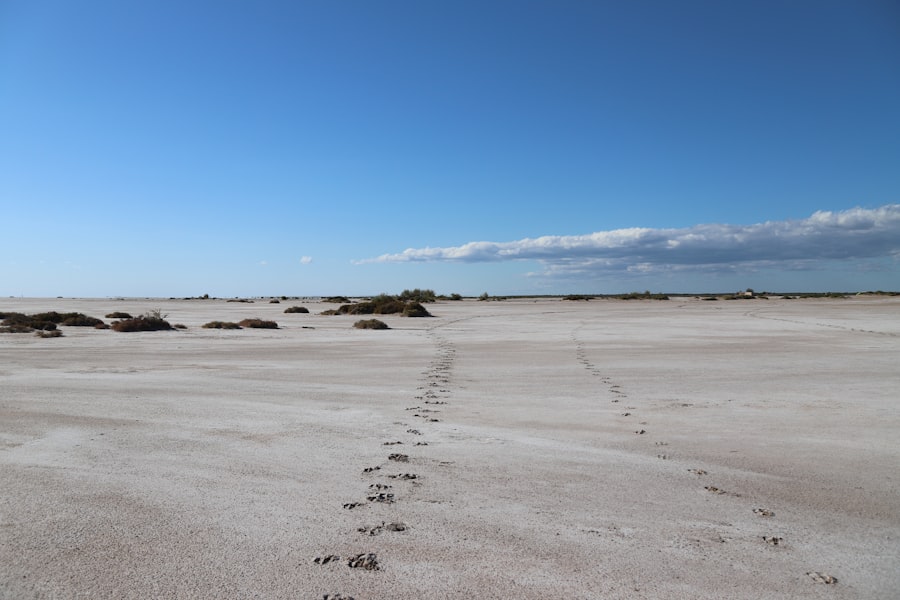
The preservation of the footprints in such detail indicates that the sand was not dry and loose but rather wet and compacted. This suggests that White Sands was not always the arid desert it is today. During the period when these footprints were made, the area likely experienced much higher moisture levels, possibly due to a wetter climate or the presence of ancient lakes or playas.
The Role of Water in Preservation
Water plays a crucial role in preserving footprints in sandy environments. When sand is saturated with water, it becomes firm and cohesive. This allows impressions to be made and then to harden as the water evaporates, leaving behind a durable cast. The fine-grained nature of the gypsum sand at White Sands also contributes to the exceptional detail of these impressions.
The Presence of Mega-Fauna
As mentioned earlier, the footprints are often found in close proximity to the tracks of extinct megafauna. This indicates that early humans shared this landscape with large, now-extinct animals, such as mammoths, giant sloths, and dire wolves.
Coexistence and Interaction
The shared environment implies a degree of coexistence, and potentially interaction, between humans and these megafauna. Whether humans hunted these animals, competed with them for resources, or simply lived alongside them, their presence on the landscape at the same time is a significant archaeological observation.
Paleoecological Insights
By studying the sedimentology of the layers containing the footprints, scientists can glean further paleoecological insights. Analysis of pollen, charcoal, and other micro-remains can reveal information about the types of plants that grew in the area, the climate conditions, and even the presence of fire. This provides a more comprehensive picture of the ecosystem these ancient people inhabited.
The recent discoveries at White Sands have sparked significant interest in the study of ancient human footprints, shedding light on the chronology of early human activity in North America. As researchers continue to analyze these findings, they draw parallels with other regions that have experienced rapid development and cultural evolution. For instance, an intriguing article discusses the potential of Mexico as a new economic superpower, highlighting how historical contexts can influence modern advancements. To explore this further, you can read the article here.
The Current Consensus and Future Directions
| Year | Footprint Size (meters) | Footprint Depth (centimeters) |
|---|---|---|
| 2010 | 12 | 5 |
| 2012 | 10 | 4 |
| 2014 | 15 | 6 |
| 2016 | 8 | 3 |
The culmination of decades of research, utilizing increasingly sophisticated techniques, has led to a growing scientific consensus regarding the age of the White Sands footprints. This consensus has profound implications for our understanding of human history in the Americas. However, the scientific journey is never truly over, and ongoing research promises to further refine our knowledge and explore new avenues of inquiry.
A Revised Timeline for Human Arrival in the Americas
The most impactful outcome of the recent dating efforts is a significantly revised timeline for human arrival in the Americas. The strong evidence suggesting the footprints are between approximately 21,000 and 23,000 years old places early humans in North America much earlier than previously thought by many. This predates the last glacial maximum, a period when massive ice sheets would have made migration across Beringia (the land bridge between Asia and North America) extremely difficult, if not impossible, for overland routes.
Implications for Migration Models
This new timeline necessitates a reevaluation of existing models for the peopling of the Americas. It suggests that humans may have arrived much earlier, potentially utilizing coastal routes or other, as yet undiscovered, migration pathways. The “Clovis First” theory, which suggested the Clovis culture represented the earliest widespread human presence, is now widely considered to be an incomplete picture of North American prehistory.
The Importance of Coastal Migration Theories
The earlier arrival implied by the White Sands footprints lends greater credence to theories that emphasize coastal migration. As ice sheets receded, it is theorized that humans may have followed the Pacific coastline, arriving in North America much earlier than overland routes would have allowed. The evidence from White Sands suggests that human populations were established in the interior of the continent during the late Pleistocene, a period when glacial conditions would have presented significant barriers to overland travel.
Ongoing Research and New Questions
Despite the significant progress made, the story of the White Sands footprints is still unfolding. Researchers continue to investigate the site, employing new technologies and asking new questions.
Refining Dating Methods and Understanding Uncertainty
While the current consensus is robust, scientists are always striving to refine dating methods and further reduce uncertainty. This involves developing even more precise techniques for dating geological materials and improving statistical models for analyzing dating results. Understanding the range of uncertainty associated with any dating method is crucial for rigorous scientific interpretation.
Exploring the Social and Cultural Lives of the Trackmakers
Future research will likely focus on delving deeper into the lives of the people who left these footprints. Analyzing the patterns of the tracks, their distribution, and their relationship to megafauna can provide clues about their movements, activities, and potentially even their social structures. What were they doing? Were they hunting, traveling, or simply living their lives?
The Search for Other Early Sites
The success at White Sands has spurred renewed interest in searching for other early human sites across North America. The possibility that other archaeological contexts might reveal similarly ancient evidence of human presence is now a significant driver of research. This includes re-examining existing sites with new dating technologies and exploring new, previously uninvestigated areas. The White Sands footprints serve as a powerful reminder that our understanding of human history is constantly evolving, and the Earth continues to hold its secrets, waiting to be unveiled by persistent scientific inquiry.

These Footprints Could Rewrite the Story of the First Americans
FAQs
What is the White Sands footprint chronology?
The White Sands footprint chronology refers to the study and analysis of human footprints found in White Sands, New Mexico, which provide insight into the timeline of human presence in North America.
How old are the footprints found in White Sands?
The footprints found in White Sands are estimated to be around 23,000 years old, making them some of the oldest human footprints discovered in North America.
What do the footprints reveal about early human activity?
The footprints reveal evidence of early human activity, including the presence of adults, teenagers, and children. They also provide insight into the behavior and movement patterns of these early inhabitants.
What significance do the White Sands footprints hold in the field of archaeology?
The White Sands footprints hold significant importance in the field of archaeology as they challenge previous theories about the timeline of human migration into North America. They also provide valuable information about the early inhabitants’ interactions with the environment.
How were the footprints preserved in White Sands?
The footprints were preserved in White Sands due to the unique environmental conditions of the area, including the presence of gypsum, which helped to capture and retain the footprints over thousands of years.