The sun beat down relentlessly on the dusty plains, a familiar adversary for those who toiled in the earth. Yet, their task was not one of conquest or of building monuments to kings. Theirs was a quieter, more fundamental dominion: the dominion of water. These were the unsung heroes of antiquity, the ancient irrigation workers, whose sweat and ingenuity carved life from arid landscapes, laying the foundation for civilizations that would echo through millennia. Their stories, largely lost to the grand narratives of empires and battles, are woven into the very fabric of human progress, a testament to their indispensable contribution.
The Genesis of Engineered Hydration
The necessity of irrigation arose with the dawn of settled agriculture. As humans transitioned from nomadic hunter-gatherer lifestyles to sedentary farming communities, the limitations of rainfall became acutely apparent. Reliance on capricious weather patterns meant unpredictable harvests, leading to famine and instability. The desire to control this most vital resource, water, sparked the earliest forms of engineered hydration. From the nascent settlements along the Nile and the Tigris-Euphrates to the arid plains of the Indus Valley, the concept of directing and storing water for agricultural purposes began to take root. This was not merely about digging a ditch; it was about understanding natural flows, predicting seasonal variations, and manipulating the environment on a scale previously unimagined.
Early Water Management in Mesopotamia
Mesopotamia, the “land between the rivers,” is often cited as the cradle of civilization, and its agricultural success was inextricably linked to sophisticated irrigation systems. The Sumerians, and later the Babylonians and Assyrians, faced the challenge of a region with a temperate climate but inconsistent rainfall. Their solution was a vast network of canals, reservoirs, and dikes. These were not haphazard constructions; they were meticulously planned and executed. The workers, often conscripted laborers or skilled artisans, would clear river channels, dig extensive canal networks extending miles from the main water sources, and build earthen embankments to prevent flooding and direct water to the fields. The Tigris and Euphrates, while life-giving, were also prone to destructive floods. The irrigation workers were instrumental in mitigating these risks, constructing elaborate flood control systems that protected settlements and agricultural lands. Their understanding of hydraulics, though perhaps not formally codified, was profound. They learned to anticipate the ebb and flow of the rivers, the best times for construction, and the most effective methods for channeling the water. The sheer scale of these early Mesopotamian irrigation projects is staggering, requiring immense coordination and sustained effort over generations.
The Nile’s Bounty: Egypt’s Lifeline
In ancient Egypt, the Nile River was the undisputed source of life. The annual inundation, a predictable flood that deposited fertile silt, was the cornerstone of their agricultural calendar. However, even this seemingly benevolent flood needed management. Irrigation workers in Egypt were crucial in optimizing the use of this natural gift. They dug basin irrigation systems, essentially large rectangular plots surrounded by dikes, designed to capture and hold the floodwaters for a controlled period. This allowed the water to soak into the soil and nourish the crops. Beyond the flood season, they maintained smaller canals and ditches to carry water to fields further from the riverbanks and to supplement rainfall during drier spells. The development of the shaduf, a simple lever mechanism for lifting water from the river or canals to higher ground, was a significant innovation attributed to these workers, greatly enhancing their ability to irrigate more land. The sheer number of hands involved in maintaining and expanding these systems, from the pharaoh’s decrees to the daily labor of countless individuals, highlights the central role of water management in Egyptian society.
Ancient irrigation workers played a crucial role in the development of early agricultural societies, enabling civilizations to thrive in arid regions. Their innovative techniques not only transformed landscapes but also laid the groundwork for future advancements in farming. For a fascinating exploration of how early human migration patterns influenced agricultural practices, you can read the related article on prehistoric human migration to Antarctica at this link.
The Laborers and Their Craft

The individuals who physically constructed and maintained these ancient irrigation systems were the backbone of their societies. Their lives were defined by the rhythm of the seasons and the demands of the water. These were not the kings or generals whose deeds filled the annals of history, but the farmers, the laborers, the artisans, and the overseers whose collective efforts made civilization possible. Their tools were rudimentary, their labor arduous, yet their impact was monumental.
Tools and Techniques of the Ancient Builders
The primary tools of the ancient irrigation worker were simple yet effective. Shovels and spades, often made of wood or bronze, were used for digging. Mud bricks and stones were employed for lining canals and building dikes. For moving earth and materials, baskets and simple wheeled carts, or even the backs of laborers, were utilized. The construction of larger projects, like dams or reservoirs, involved quarrying stone and transporting it over considerable distances, a testament to the organizational capacity and sheer manpower available. The techniques employed were often born of generations of trial and error. They understood the properties of different soils, the optimal angles for canal gradients to ensure water flow without excessive erosion, and the best methods for compacting earth to create watertight embankments. The construction of aqueducts, though more common in later Roman times, had precursors in ancient times, with workers developing methods to carry water across uneven terrain using elevated channels. The knowledge passed down from master craftsman to apprentice, from father to son, was a critical component of their success.
The Social Fabric of Water Management
The social organization of irrigation work varied across cultures and time periods. In many societies, it was a communal endeavor, with villagers contributing labor to maintain local canals and watercourses. This fostered a sense of shared responsibility and interdependence. In larger, more centralized states, irrigation projects often became state-sponsored undertakings, with labor supplied through corvée systems, taxation in the form of labor, or the employment of a dedicated workforce. Overseers and engineers, likely individuals with a deeper understanding of hydraulics and surveying, directed these efforts. The control and distribution of water were often significant sources of social and political power. Those who managed the water held considerable influence, and disputes over water rights could lead to conflict. The workers themselves occupied a crucial but often low rung on the social ladder, their essential contribution frequently overlooked in favor of the elites who commanded their labor and benefited from the resulting agricultural surplus.
Enduring Legacies: Irrigation and Civilizational Growth
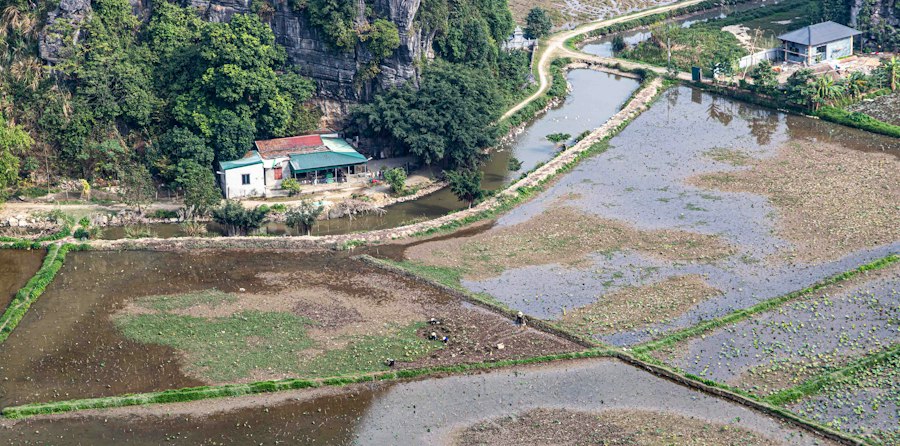
The impact of ancient irrigation systems extended far beyond providing water for crops. They enabled the growth of larger populations, the development of specialized crafts and trades, the rise of cities, and the flourishing of complex societies. The surplus food produced through irrigation was the engine that powered these advancements, freeing individuals from the constant struggle for sustenance and allowing for the pursuit of other endeavors.
Supporting Population Growth and Urbanization
The ability to reliably produce food in arid and semi-arid regions allowed for unprecedented population growth. Where rainfall was insufficient to support settled agriculture, irrigation transformed these landscapes into breadbaskets. This demographic expansion, in turn, fueled the growth of villages into towns and eventually into cities. These urban centers, dependent on a steady supply of food from surrounding irrigated farmlands, became hubs of trade, culture, and governance. The infrastructure required to support these burgeoning cities, including the extensive irrigation networks that fed them, demonstrates the symbiotic relationship between water management and urban development. Without the work of countless individuals ensuring a consistent water supply, the great metropolises of the ancient world simply could not have existed.
Fostering Trade, Specialization, and Innovation
The agricultural surpluses generated by irrigation systems had a profound impact on the economic and social development of ancient societies. This surplus meant that not everyone had to be directly involved in food production. This liberation of labor allowed for the specialization of skills. Artisans could focus on pottery, metalworking, weaving, and other crafts. Merchants could dedicate themselves to trade, exchanging goods over long distances. Scribes and scholars could pursue knowledge, developing writing systems, mathematics, and astronomy. The development of complex irrigation systems also spurred innovation. The need to manage water more effectively led to advancements in engineering, surveying, and material science. The construction of canals, reservoirs, and aqueducts required a sophisticated understanding of geometry, physics, and logistics, pushing the boundaries of what was technologically possible at the time.
The Silent Architects of Resilience
The foresight and labor of ancient irrigation workers were not merely about immediate agricultural gains; they were about building resilience. They created systems that could withstand periods of drought and ensure a measure of stability in unpredictable environments. Their work provided a buffer against the vagaries of nature, allowing communities to survive and thrive even in challenging circumstances.
Mitigating Drought and Ensuring Food Security
Droughts have always been a recurring threat to agricultural societies. Ancient irrigation systems provided a crucial defense against these periods of scarcity. By storing water in reservoirs and canals, societies could draw upon reserves during dry spells, preventing crop failure and widespread famine. This ability to buffer against environmental shocks was essential for long-term stability and prosperity. The workers who maintained these systems were, in effect, safeguarding the very survival of their communities. Their diligent work ensured that the stored water would be available when most needed, a lifeline in times of extreme hardship. The sheer dedication required to keep these systems operational, often in remote and challenging locations, speaks volumes about their commitment to the well-being of their people.
Water as a Strategic Resource and Tool of Statecraft
In many ancient societies, control over water resources was synonymous with power. The ability to direct water to one’s own lands while denying it to others was a potent tool of statecraft. Irrigation projects were often undertaken or supported by rulers to consolidate their authority, reward loyal subjects, and exert influence over neighboring territories. The construction and maintenance of large-scale irrigation networks required significant organization and resources, often falling under the purview of the state. This strategic importance meant that the irrigation workers, though often low in status, were involved in an enterprise that was vital to the functioning and survival of the state itself. Their labor, therefore, had implications that extended far beyond the immediate needs of the harvest, influencing political alliances, territorial disputes, and the very concept of state power.
Ancient irrigation workers played a crucial role in the development of early agricultural societies, enabling civilizations to thrive in arid regions. Their innovative techniques laid the groundwork for modern farming practices, which continue to evolve today. For those interested in understanding how historical practices influence contemporary economic opportunities, a fascinating article discusses the potential of Monterrey as a nearshoring investment opportunity. You can read more about it in this insightful piece on Monterrey.
The Forgotten Hands
| Region | Period | Type of Irrigation | Primary Workers | Tools Used | Estimated Workforce Size | Purpose |
|---|---|---|---|---|---|---|
| Mesopotamia | 3000 BCE – 1000 BCE | Canal Irrigation | Farmers, Laborers, Engineers | Shovels, Buckets, Wooden Plows | Thousands per city-state | Crop irrigation, flood control |
| Ancient Egypt | 3100 BCE – 30 BCE | Nilometer and Basin Irrigation | Farmers, Slaves, Skilled Artisans | Shaduf, Canals, Dikes | Several thousand | Annual Nile flood management |
| Indus Valley | 2600 BCE – 1900 BCE | Canal and Well Irrigation | Farmers, Laborers | Wells, Canals, Simple Tools | Unknown, likely hundreds to thousands | Crop irrigation and water storage |
| Ancient China | 2000 BCE – 221 BCE | Terrace and Canal Irrigation | Farmers, Laborers, Engineers | Wooden Pumps, Canals, Terraces | Thousands | Rice cultivation and flood control |
| Pre-Columbian Americas | 1000 BCE – 1500 CE | Terrace and Canal Irrigation | Farmers, Community Laborers | Stone Tools, Canals, Terraces | Varied by region, hundreds to thousands | Crop irrigation in arid regions |

Did This Ancient Crystal Help People See?
FAQs
1. What were ancient irrigation workers responsible for?
Ancient irrigation workers were responsible for designing, constructing, and maintaining irrigation systems to ensure the efficient distribution of water to agricultural fields.
2. What tools and techniques did ancient irrigation workers use?
Ancient irrigation workers used tools such as shovels, hoes, and picks to dig canals and ditches. They also utilized techniques like slope irrigation, diversion dams, and aqueducts to control the flow of water.
3. How did ancient irrigation workers impact agriculture and society?
Ancient irrigation workers played a crucial role in increasing agricultural productivity by providing a reliable water supply for crops. This led to the growth of civilizations, the development of urban centers, and the establishment of trade networks.
4. What regions of the world were known for their ancient irrigation systems?
Ancient irrigation systems were prominent in regions such as Mesopotamia, Egypt, the Indus Valley, China, and the Americas. Each of these civilizations developed sophisticated irrigation networks to support their agricultural activities.
5. What is the legacy of ancient irrigation workers in modern times?
The legacy of ancient irrigation workers can be seen in the continued use of irrigation systems around the world today. Their innovations and techniques have been passed down through generations and continue to be essential for global food production.