
The ancient Greeks, renowned for their philosophical prowess and architectural marvels, also possessed a significant, albeit often understated, understanding of celestial mechanics. This understanding manifested in their ability to predict eclipses, a feat requiring not only meticulous observation but also sophisticated mathematical and observational techniques. The unravelling of these ancient methodologies offers a glimpse into a civilization deeply intertwined with the cosmos, its rhythms and its mysteries.
Before delving into the specifics of eclipse prediction, it is crucial to understand the broader astronomical context within which these predictions were made. Greek astronomy, unlike some earlier Mesopotamian systems, evolved into a more theoretical and geometrically oriented discipline.
Early Astronomical Observations: A Sky Full of Signs
From the earliest periods, Greek thinkers observed the sky with keen interest. Homeric epics contain references to various constellations and the cycles of stars, indicating a foundational familiarity with the celestial sphere. These early observations were primarily for practical purposes, such as timekeeping, navigation, and agricultural planning. The rising and setting of certain stars, for instance, marked key seasonal changes.
The Rise of Rational Inquiry: From Mythology to Mathematics
A pivotal shift occurred with the Presocratic philosophers. Figures like Thales of Miletus are often credited with being among the first to move away from purely mythological explanations of celestial phenomena towards more rational and mathematical interpretations. Thales, according to historical accounts, even predicted a solar eclipse, though the details and authenticity of this claim remain debated. This era marked the beginning of a systematic approach to understanding the heavens, where geometric models began to replace divine whims.
The Development of Geocentric Models: Earth at the Center
A cornerstone of Greek astronomy was the geocentric model, which posited the Earth as the stationary center of the universe, with all other celestial bodies revolving around it. While ultimately incorrect, this model, particularly as refined by Eudoxus of Cnidus and later by Ptolemy, provided a remarkably effective framework for predicting celestial events, including eclipses. Eudoxus’s system of homocentric spheres, though complex, attempted to explain the seemingly irregular motions of planets by embedding them within a series of nested, rotating spheres.
Ancient Greek astronomers were remarkable in their ability to predict eclipses, utilizing a combination of observational techniques and mathematical calculations. A fascinating article that delves into the intricacies of this ancient technology can be found at this link. The article explores how figures like Hipparchus and Ptolemy contributed to the understanding of celestial events, laying the groundwork for future astronomical studies.
The Saros Cycle: A Timeless Predictor
Central to the Greek ability to predict eclipses was their understanding and application of the Saros cycle. This remarkable astronomical period, likely inherited and refined from Babylonian knowledge, served as a powerful tool for forecasting these dramatic celestial events.
The Discovery of the Saros: A Rhythmic Repetition
The Saros cycle, spanning approximately 18 years, 11 days, and 8 hours (or 223 synodic months), describes the near-periodic recurrence of eclipses. After one Saros period, the Earth, Moon, and Sun return to approximately the same relative geometry, leading to remarkably similar eclipses in terms of their type (solar or lunar), duration, and location. While the Saros cycle does not predict the exact geographical path of a solar eclipse, it reliably indicates when an eclipse of a particular type is likely to occur. The Babylonians are generally credited with its initial discovery, based on extensive observational records. The Greeks, as a culture adept at synthesizing knowledge, integrated this cyclical understanding into their own astronomical framework.
The Mechanics of the Saros: A Confluence of Cycles
The predictive power of the Saros cycle stems from the confluence of three distinct lunar cycles:
- Synodic Month: The period between two successive new moons (approximately 29.53 days), which governs the phases of the Moon. Eclipses can only occur during new moon (solar) or full moon (lunar).
- Draconic Month: The period it takes for the Moon to pass through the same lunar node (the points where the Moon’s orbit crosses the ecliptic) twice (approximately 27.21 days). Eclipses can only occur when the Moon is near one of these nodes.
- Anomalistic Month: The period it takes for the Moon to go from perigee (closest to Earth) to perigee again (approximately 27.55 days). This cycle affects the apparent size of the Moon and thus the type of solar eclipse (total, annular, or partial).
The Saros cycle harmonizes these periods, ensuring that after 223 synodic months, 242 draconic months, and 239 anomalistic months, the conditions for an eclipse are closely replicated.
Limitations of the Saros: Not a Perfect Crystal Ball
While incredibly powerful, the Saros cycle was not an infallible predictor. The “8 hours” in its duration meant that subsequent eclipses in a Saros series occurred approximately one-third of the way around the Earth’s circumference to the west. This made precise geographical prediction challenging for ancient astronomers. Furthermore, the Saros cycle predicts a series of eclipses, but each individual eclipse within a series gradually shifts in its characteristics before eventually ceasing. Therefore, more refined models were necessary for detailed forecasting.
The Antikythera Mechanism: A Mechanical Calculus

Perhaps the most astonishing testament to Greek eclipse prediction capabilities is the Antikythera Mechanism, an unparalleled technological artifact recovered from a shipwreck. This intricate device, often dubbed the world’s first analog computer, demonstrates an extraordinary level of astronomical and mechanical sophistication.
Discovery and Initial Assessment: A Glimpse into the Past
Discovered in 1901 by sponge divers off the coast of Antikythera, the mechanism initially bewildered researchers. Its sophisticated gear trains and inscriptions hinted at a purpose far beyond that of a simple timepiece or navigational instrument. For decades, its full functionality remained a subject of intense scientific scrutiny.
Decoding the Mechanism’s Purpose: An Astronomical Calculator
Subsequent analysis, involving X-ray tomography and meticulous deciphering of its inscriptions, revealed the Antikythera Mechanism to be a highly complex astronomical calculator. Its myriad gears and dials were designed to track the positions of the Sun, Moon, and possibly the planets, as well as to predict lunar and solar eclipses with remarkable accuracy. It incorporated not only the Saros cycle but also other astronomical periods, such as the Metonic cycle (which aligns lunar phases with the solar year) and the Callippic cycle.
Eclipse Prediction Capabilities: A Clockwork Oracle
The mechanism featured a dedicated Saros dial, which displayed the dates of predicted solar and lunar eclipses. It accounted for the 8-hour shift inherent in the Saros cycle, suggesting an advanced understanding of the complexities of eclipse recurrence. By physically modeling the celestial motions, the Antikythera Mechanism offered a tangible, mechanical means to forecast these awe-inspiring events, moving beyond mere abstract calculations to a functional, predictive instrument. Its existence challenges the conventional view of ancient technology, demonstrating a level of mechanical engineering previously thought to be impossible for that era.
The Role of Mathematical Models and Observational Data: The Blueprint of the Cosmos
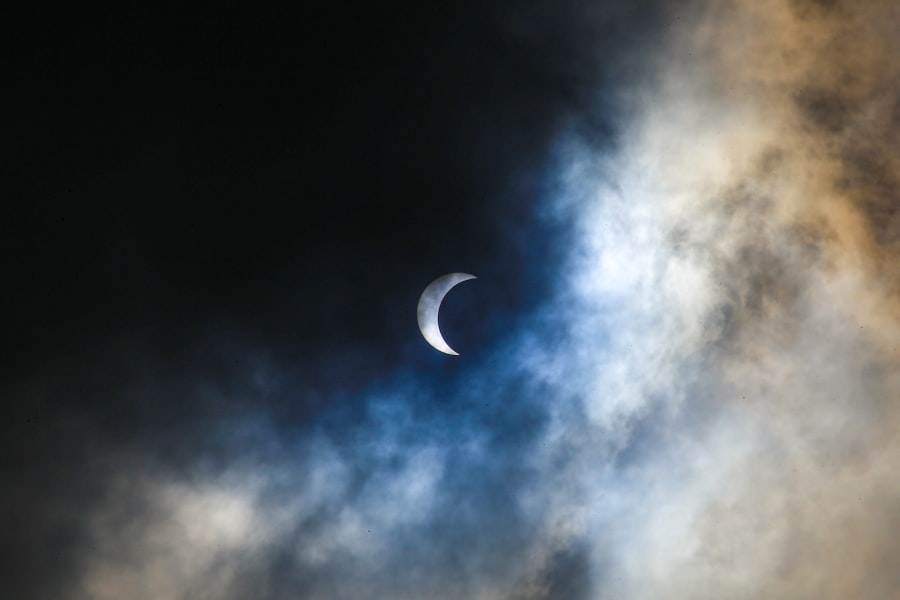
Beyond cycles and mechanisms, the Greeks employed increasingly sophisticated mathematical models, coupled with relentless observational data, to refine their understanding of celestial motions and to sharpen their predictive capabilities. This symbiotic relationship between theory and observation was crucial.
Thales and Anaximander: Early Conceptualizations
As mentioned earlier, Thales is associated with an early eclipse prediction. While the specifics are elusive, it suggests that even in archaic Greece, observation of patterns was leading to nascent predictive attempts. Anaximander offered cosmological models that, though rudimentary by later standards, sought to explain celestial phenomena through physical principles rather than purely mythological ones. Their contributions laid the groundwork for a more empirical approach.
Hipparchus of Nicaea: The Giant of Greek Astronomy
Hipparchus, living in the 2nd century BCE, stands as one of the most significant figures in ancient Greek astronomy. His contributions were immense and transformative.
- Catalogue of Stars: He compiled a comprehensive star catalogue, meticulously recording the positions of hundreds of stars, a monumental undertaking that profoundly aided in positional astronomy.
- Discovery of Precession of the Equinoxes: Hipparchus also discovered the precession of the equinoxes, the slow wobble of the Earth’s axis, a phenomenon demonstrating an incredibly keen observational eye and sophisticated data analysis.
- Lunar Theory: Crucially for eclipse prediction, Hipparchus developed a sophisticated lunar theory, incorporating epicycles and eccentrics to explain the Moon’s seemingly irregular motion. His models greatly improved the accuracy of predicting the Moon’s position relative to the Sun and the Earth’s shadow, essential for precise eclipse forecasting. He is credited with calculating the length of the synodic month with an error of less than one second, an astonishing achievement without modern instruments.
Ptolemy and The Almagest: The Zenith of Ancient Greek Astronomy
Claudius Ptolemy, active in the 2nd century CE, solidified and expanded upon Hipparchus’s work in his monumental treatise, The Almagest. This encyclopedic work became the authoritative text on astronomy for over a millennium.
- Refinement of Geocentric Model: Ptolemy further refined the geocentric model, incorporating a system of epicycles, deferents, and equants to explain the observed motions of planets, including their retrograde loops, which had previously defied simpler models.
- Detailed Eclipse Calculations: The Almagest contains detailed procedures for calculating the timings and circumstances of both solar and lunar eclipses. These methods relied heavily on the accurate determination of mutual planetary positions, particularly those of the Sun, Moon, and Earth, using the elaborate geometric models he inherited and enhanced. His calculations for the Moon’s parallax and the apparent diameter of the Sun and Moon were critical for assessing the type and extent of an eclipse.
Ancient Greek astronomers developed remarkable techniques for predicting eclipses, showcasing their advanced understanding of celestial mechanics. Their methods were often based on meticulous observations and mathematical calculations, which laid the groundwork for future astronomical studies. For a deeper exploration of this fascinating topic, you can read more about these ancient practices in this insightful article on eclipse prediction technology. Discover how these early scientists shaped our understanding of the cosmos by visiting this link.
The Cultural and Societal Impact of Eclipse Prediction: More Than Just Science
| Aspect | Description | Key Figures | Accuracy | Tools/Methods |
|---|---|---|---|---|
| Prediction Method | Use of the Saros cycle to predict lunar and solar eclipses | Hipparchus, Thales | Moderate; could predict timing within days | Observation records, Saros cycle (approx. 18 years 11 days) |
| Mathematical Models | Geometric models of the Sun, Moon, and Earth positions | Hipparchus | Improved prediction of eclipse timing and location | Trigonometry, chord tables |
| Historical Records | Systematic recording of eclipse events for pattern recognition | Babylonian influence, Greek astronomers | Enabled cycle identification | Clay tablets, written chronicles |
| Technological Instruments | Use of armillary spheres and astrolabes for celestial measurements | Hipparchus, later Greek astronomers | Enhanced observational accuracy | Armillary sphere, astrolabe |
| Limitations | Inability to predict exact location and magnitude of eclipses | All ancient Greek astronomers | Predictions often approximate | Lack of precise orbital mechanics knowledge |
The ability to predict eclipses was not merely an intellectual exercise for the ancient Greeks; it had profound cultural, religious, and political implications.
Omens and Portents: Heavenly Signs
For many ancient cultures, including the Greeks, eclipses were often viewed as omens, powerful signs from the gods that could foretell disaster, famine, or significant political change. A sudden darkening of the sun or a blood-red moon could inspire widespread fear and superstition. Being able to predict these events offered a degree of control and understanding over phenomena that otherwise seemed capricious.
The Power of Knowledge: Priests and Philosophers
Those who possessed the knowledge to predict eclipses, typically priests or trained philosopher-astronomers, held a position of considerable authority and influence. Their ability to “foresee” events that others considered divine interventions could be used to enhance religious authority, bolster political power, or simply to alleviate public fear. Consider the story of Thales again; his supposed prediction of an eclipse, whether historical or legendary, would have undoubtedly cemented his reputation as a sage.
Integration into Calendrical Systems: Organizing Time
The understanding of celestial cycles, including those governing eclipses, was intrinsically linked to the development of sophisticated calendrical systems. Greek calendars, often lunisolar, sought to reconcile the lunar month with the solar year. Predicting eclipses provided crucial data points for refining these calendars and ensuring their accuracy, which was vital for agricultural cycles, religious festivals, and civic administration. The Metonic cycle, for example, which harmonizes 19 solar years with 235 lunar months, was fundamental to the Greek calendar and was directly related to the periodicity of eclipses.
In conclusion, the ancient Greeks’ journey into eclipse prediction stands as a testament to their intellectual curiosity, their dedication to observation, and their remarkable ingenuity. From foundational observations to the intricate gears of the Antikythera Mechanism and the advanced mathematical models of Hipparchus and Ptolemy, they meticulously constructed a framework for understanding and forecasting these celestial spectacles. This mastery of the cosmos, though built upon a geocentric foundation, allowed them to decipher the intricate dance of the heavenly bodies, turning potential omens into predictable phenomena and revealing a civilization deeply attuned to the rhythmic clockwork of the universe. Their legacy continues to inspire, reminding us that even with rudimentary tools, profound understanding is attainable through persistent inquiry and creative thought.

STOP: This One Artifact Rewrites Everything
FAQs
What methods did the ancient Greeks use to predict eclipses?
The ancient Greeks primarily used the Saros cycle, a period of approximately 18 years, 11 days, and 8 hours, to predict eclipses. By observing and recording past eclipses, they identified this cycle and could forecast future occurrences with reasonable accuracy.
Who were some key figures in ancient Greece involved in eclipse prediction?
Notable figures include Thales of Miletus, who is credited with predicting a solar eclipse around 585 BCE, and Hipparchus, who made significant contributions to understanding lunar and solar cycles and improving eclipse prediction methods.
What tools or instruments did the ancient Greeks use for eclipse observations?
The ancient Greeks used simple observational tools such as gnomons (vertical sticks to measure shadows), water clocks, and early forms of astronomical instruments like the astrolabe to track celestial movements and time eclipses.
How accurate were ancient Greek eclipse predictions?
While not as precise as modern calculations, ancient Greek predictions based on the Saros cycle were surprisingly accurate for their time, allowing them to forecast eclipses within a day or so, which was remarkable given their limited technology.
Why was eclipse prediction important in ancient Greek society?
Eclipse prediction held both scientific and cultural significance. It helped ancient Greeks understand celestial phenomena, contributed to the development of astronomy, and was often linked to religious or superstitious beliefs, influencing decisions and events in society.