The rhythmic clang of hammer against anvil, the searing heat of the forge, the alchemical dance of ore and fire – these are the sensory echoes of an ancient art that shaped civilizations and continues to fascinate us today: metallurgy. For millennia, humanity has bent, shaped, and transformed metals, unlocking their potential to create tools, weapons, adornments, and structures that defined their existence. This journey into the heart of ancient metallurgy reveals a profound understanding of the natural world, remarkable ingenuity, and an artistic expression that transcended mere utility.
The transition from the Stone Age to the Metal Age marked a pivotal shift in human technological and social development. It was not a sudden leap but a gradual evolution, driven by the serendipitous discovery and deliberate manipulation of metallic ores. The earliest encounters with metal likely involved native copper, which, being malleable, could be hammered into shape without the need for smelting. This offered a significant advantage over stone, providing tools that were sharper, more durable, and capable of more intricate work.
Early Discoveries and Native Metals
The whispers of early metallurgy are found in archaeological sites across the globe, hinting at a widespread and independent emergence of metalworking. In regions rich with natural copper deposits, such as the Near East and the Balkans, evidence of simple copper objects dating back to the Neolithic period has been unearthed. These early pieces, often ornaments or small tools, demonstrate a rudimentary understanding of how to work with the metal. The inherent malleability of native copper meant that early craftspeople could pound and shape it using stone hammers, a technique that required no advanced knowledge of heat or chemical processes. This initial engagement with metal sowed the seeds for more complex metallurgical practices to come.
The Charm of Copper: An Accessible Beginning
Copper, with its relatively low melting point and its tendency to occur in native form, served as humanity’s gateway into the world of metals. Its discovery was likely accidental, perhaps observed when certain colorful rocks were heated near fires. The discovery that these rocks could yield a soft, workable metal would have been revolutionary. Early craftspeople would have experimented with heating copper, observing its transformation and learning to control its properties through annealing – the process of heating and cooling to reduce brittleness and improve workability. This foundational understanding of copper laid the groundwork for the subsequent exploitation of other metals.
The Transformative Power of Smelting: Unlocking New Possibilities
While native metals were a crucial starting point, the true revolution in metallurgy arrived with the mastery of smelting – the process of extracting metals from their ores using heat. This required a deeper understanding of the chemical reactions involved and the development of furnaces capable of reaching temperatures high enough to liberate the metal. The discovery of smelting opened up a vast new realm of metallic possibilities, allowing access to metals that did not occur in native form and leading to the creation of stronger and more versatile materials.
Furnaces and Fuels: Harnessing the Heat
The development of effective furnaces was central to the success of early smelting. These were not the sophisticated blast furnaces of later eras but rudimentary structures built from clay, stone, or adobe. Early smelters would have likely used a variety of fuels, including charcoal, wood, and even animal dung, to reach the necessary temperatures. The design of these furnaces would have evolved over time, with innovations aimed at improving heat retention and efficiency. The realization that crucibles – heat-resistant containers – were necessary to hold the molten metal and prevent contamination was another crucial step in this evolutionary process, leading to a purer and more workable metal. The consistent application of heat and the understanding of how to control airflow to regulate the fire were key skills developed by these early metallurgists.
The Alchemical Dance: Ore to Metal
The transformation of ore into metal was a process that, to ancient peoples, must have seemed almost magical. They observed that certain rocks, when subjected to intense heat, yielded precious metals. The selection of appropriate ores, the understanding of their composition, and the ability to identify and crush them into fine particles were all critical skills. The smelting process itself involved carefully controlled heating, often within a crucible, where the desired metal would be separated from the impurities (gangue) within the ore. This was a hands-on chemical reaction, where the metallurgist acted as both scientist and artist, guiding the transformation through skill and observation. The resulting molten metal would then be poured into molds to create desired shapes.
Ancient metallurgy played a crucial role in the development of early civilizations, as it allowed societies to create tools, weapons, and decorative items from metals. For a deeper understanding of how trade agreements, such as NAFTA and USMCA, have evolved and impacted modern economies, you can explore the article on the evolution of these trade agreements. This historical context can provide insight into how the exchange of goods, including metal resources, has shaped economic relationships over time. To read more about this topic, visit this article.
The Bronze Age Revolution: An Alloy of Innovation
The advent of bronze casting heralded a new era of technological advancement and societal change. The intentional alloying of copper with tin, or sometimes arsenic, created a material significantly harder and more durable than pure copper. This innovation had a profound impact on warfare, agriculture, and daily life, leading to the rise of complex societies and the spread of civilizations.
The Magic of Alloying: Creating Bronze
The discovery of bronze was a monumental achievement. While copper was valuable, its softness limited its applications. The accidental or intentional mixing of copper with tin, often found in close proximity in nature, resulted in a metal that was stronger, held a sharper edge for longer, and was more resistant to corrosion. This alloying process was not well understood in chemical terms by ancient peoples, but they developed empirical knowledge of precise proportions through trial and error. The resulting metal, bronze, was a game-changer.
Proportion and Purity: The Art of the Mix
The success of bronze casting depended heavily on the correct proportion of copper to tin. Too little tin and the alloy would be too soft; too much and it would become brittle. Ancient metallurgists likely discovered the optimal ratios through repeated experimentation. The purity of both copper and tin was also of paramount importance. Impurities in the raw materials could negatively affect the properties of the final bronze, leading to a weaker or less consistent product. This demanded an understanding of how to refine ores and ensure the quality of the constituent metals before alloying. The ability to consistently produce high-quality bronze became a hallmark of advanced metallurgical centers.
The Art of Casting: Shaping Molten Bronze
Bronze was not solely worked by hammering like copper. Its properties lent themselves exceptionally well to casting, a process that allowed for the creation of intricate and complex shapes. This involved creating molds, a testament to the ingenuity of ancient craftsmen.
Lost-Wax Casting: Precision and Detail
One of the most sophisticated ancient casting techniques was lost-wax casting, also known as cire perdue. This method allowed for the creation of highly detailed and complex objects. First, a wax model of the desired object was meticulously sculpted. This wax model was then coated in a layer of clay or other refractory material, forming a mold. When the mold was heated, the wax melted and ran out (hence “lost-wax”), leaving a hollow cavity. This cavity was then filled with molten bronze. Once the bronze cooled and solidified, the clay mold was broken away, revealing a precise replica of the original wax model. This technique was used to create everything from delicate jewelry and statuary to intricate armor and tools.
Open and Closed Molds: Versatility in Form
Beyond lost-wax casting, simpler casting methods also employed open and closed molds. Open molds, often carved from stone or baked clay, were used for simpler, often flat objects like axe heads or blades. These were essentially impressions into which molten metal was poured. Closed molds, typically made in two or more parts that fitted together, allowed for the creation of more three-dimensional objects. These molds, meticulously crafted and often decorated, were essential for the mass production of certain items, and their design showcased a deep understanding of fluid dynamics and solidification processes. The careful closure and sealing of these molds were critical to prevent leakage of the molten metal.
Iron’s Embrace: A Harder, Sharper World
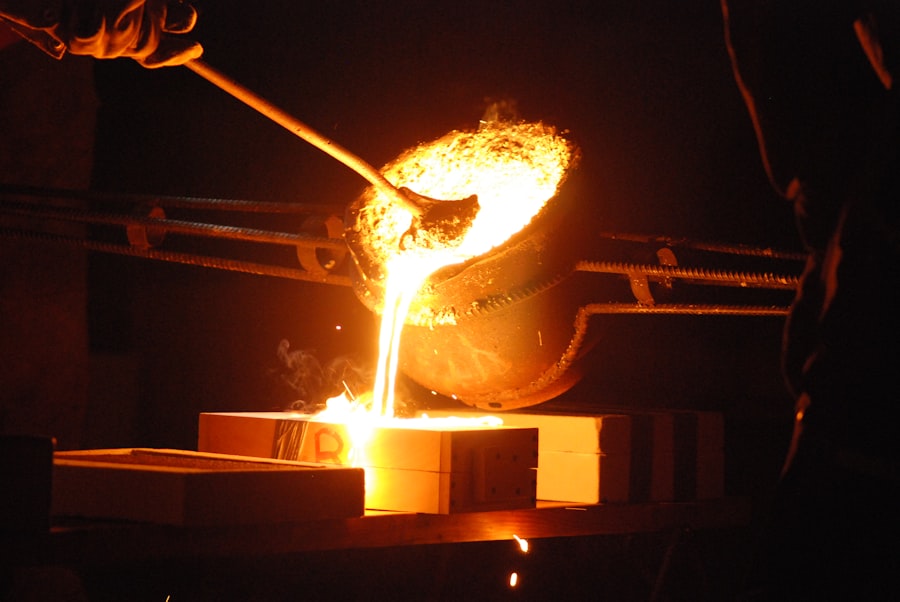
The Iron Age marked another significant leap forward, characterized by the widespread adoption of iron as a primary material. Iron ore was more abundant than copper or tin, and when properly worked, iron produced tools and weapons that were far stronger and more durable, fundamentally altering the course of human history.
The Challenge of Iron: Mastering High Temperatures
Unlike copper, iron has a much higher melting point. This meant that early ironworkers could not simply melt and cast iron in the same way they did bronze. The initial stages of ironworking, therefore, involved direct reduction – a process of heating iron ore in a furnace with charcoal to remove impurities and reduce it to a spongy, malleable mass of iron, rather than a liquid. This required a greater understanding of heat control and furnace design.
Bloomery Furnaces: Forging the Base
The bloomery furnace was the cornerstone of early iron production. These were typically shaft furnaces, often built into hillsides for efficient airflow. Iron ore and charcoal were layered within the furnace, and the resulting intensely hot fire forced the reduction of the iron oxides. The product was a “bloom” – a porous mass of iron mixed with slag (impurities). This bloom needed to be repeatedly heated and hammered (forging) to consolidate the iron, drive out the slag, and achieve a useful metal. This iterative process of heating, hammering, and folding was crucial for creating a more homogeneous and stronger iron.
Forging and Tempering: The Art of Shaping Iron
Once the bloom of iron was obtained, the real work of shaping it began through forging. This involved heating the iron to a glowing temperature and then hammering it into the desired form on an anvil. The ability to control the temperature, the force of the hammer blows, and the rhythm of the process were all essential skills for the blacksmith. Crucially, ancient smiths also developed the art of tempering. This involved heating the forged iron and then rapidly cooling it in water or oil. This process imparted hardness and strength to the metal, making it ideal for cutting edges and durable tools. Different heating and cooling cycles could produce different temperaments, allowing for a range of properties in the final product.
The Spread of Iron Technology: A Global Transformation
The relative abundance of iron ore and the development of efficient ironworking techniques led to the widespread adoption of iron across diverse cultures. This had profound implications for warfare, agriculture, and social organization.
Warfare and Weapons: The Sharp Edge of Power
The superior strength and durability of iron weapons gave those who wielded them a significant advantage. Iron swords, spears, and armor replaced their bronze predecessors, leading to more devastating conflicts and the rise of new military powers. The ability to produce iron tools also facilitated the clearing of forests and the cultivation of larger agricultural areas, supporting larger populations and more complex societies. The strategic importance of iron production centers often dictated the rise and fall of ancient kingdoms.
Agriculture and Construction: Building a Better World
Beyond warfare, iron played a transformative role in everyday life. Iron plows, sharper and more durable than their stone or bronze counterparts, allowed for deeper tilling of the soil, increasing agricultural yields and supporting population growth. Iron tools such as axes, saws, and chisels revolutionized construction, enabling the building of more substantial structures and the creation of more intricate wooden artifacts. The widespread availability of iron tools democratized access to more efficient ways of working, impacting everything from the household to large-scale public works.
Precious Metals and Decorative Arts: Beauty and Status in Metal

While utility was a driving force behind much of ancient metallurgy, the allure of precious metals like gold and silver led to the creation of exquisite decorative objects. These metals, valued for their lustrous beauty, rarity, and resistance to corrosion, became symbols of wealth, status, and divine favor.
Gold and Silver: The Gleam of Royalty and Religion
Gold and silver, with their inherent radiance and malleability, were prized by ancient societies for centuries. Their resistance to tarnish meant that objects crafted from these metals retained their beauty over time, making them ideal for conveying enduring value.
Native Occurrence and Early Extraction
Like copper, gold and silver were often found in native form, making them accessible for early manipulation. Nuggets of gold and wires of silver could be found in riverbeds or exposed rock formations. Early methods of extraction would have involved simple panning and crushing of ore. The discovery of techniques to purify these metals, often involving washing or heating with fluxes, was essential for achieving the high levels of sheen and quality that made them so desirable. Their malleability allowed for intricate hammering, repoussé work, and filigree, creating delicate and highly ornamental pieces.
Symbols of Power and Adornment
In virtually every ancient civilization, gold and silver were associated with royalty, divinity, and the elite. They were used to create crowns, scepters, ceremonial vessels, and intricate jewelry. These objects not only served as personal adornments but also as powerful visual statements of wealth, power, and social standing. The intricate craftsmanship displayed in these objects often reflected immense skill and patience, and the value placed on them ensured their meticulous preservation, providing archaeologists with invaluable insights into ancient cultures.
Techniques of Ornamentation: Crafting Beauty
Beyond the intrinsic value of precious metals, ancient artisans developed a range of sophisticated techniques to further enhance their beauty and create stunning works of art.
Filigree and Granulation: Delicate Intricacy
Filigree work involved drawing out thin threads of metal, which were then twisted or coiled and soldered onto a surface to create intricate patterns. Granulation, another highly skilled technique, involved creating tiny spheres of metal, often of uniform size, which were then applied to a surface to form elaborate designs. Both filigree and granulation required immense precision, dexterity, and a deep understanding of soldering. These techniques allowed for the creation of delicate and visually stunning ornamentation, often seen in ancient jewelry and decorative objects associated with the highest levels of society.
Inlay and Overlay: Combining Materials for Effect
The technique of inlay involved embedding pieces of contrasting material – such as precious stones, enamel, or other metals – into recesses carved into the metal surface. Overlay, on the other hand, involved hammering a thin sheet of metal onto the surface of another object, often to create decorative patterns or to add thickness and strength. These techniques allowed for the creation of visually rich and complex surfaces, combining the textures and colors of different materials to create works of exceptional beauty and artistry. The careful selection of materials and the meticulous execution of these techniques underscore the sophisticated aesthetic sensibilities of ancient metalworkers.
Ancient metallurgy is a fascinating subject that explores the techniques and innovations used by early civilizations to manipulate metals for tools, weapons, and art. For those interested in how historical practices can inform modern financial strategies, a related article discusses the importance of safeguarding assets during uncertain times. You can read more about this topic in the article on protecting your 401k in an economic collapse, which highlights the significance of understanding historical trends in resource management. This connection between ancient practices and contemporary financial wisdom provides valuable insights into the importance of resilience in both metallurgy and personal finance. For more information, visit this article.
The Legacy of Ancient Metallurgy: Echoes in the Modern World
| Metallurgical Technique | Explanation |
|---|---|
| Smelting | The process of extracting metal from its ore by heating and melting it in a furnace. |
| Alloying | Combining two or more metals to create a new material with improved properties. |
| Casting | Pouring molten metal into a mold to create a specific shape or object. |
| Forging | Shaping metal by hammering or pressing it into a desired form. |
The achievements of ancient metallurgists were not merely historical footnotes; they laid the very foundations of modern industrial society. The principles of extracting, refining, and working with metals that they pioneered continue to inform our technologies, while the artistic expressions of their craft inspire us to this day.
From Ancient Crafts to Industrial Might
The evolution of metalworking from rudimentary hammering and smelting to the complex alloys and mass production methods of today is a direct lineage. The fundamental understanding of material properties, the development of furnaces, and the mastery of shaping techniques that began in ancient times provided the essential blueprints for the Industrial Revolution and subsequent technological advancements. The pursuit of stronger, more durable, and more versatile materials, a hallmark of ancient metallurgy, remains a driving force in modern materials science and engineering.
The Unending Quest for Better Materials
The ancient pursuit of improved metallic properties fuels contemporary research. The development of new alloys, advanced manufacturing processes, and sophisticated analytical techniques can all be traced back to the fundamental questions that drove ancient craftspeople. Whether seeking sharper blades, more resilient armor, or more conductive materials, the underlying ambition to harness the power of metals for human benefit echoes across millennia. The understanding of crystalline structures, phase transformations, and the effects of impurities, while now explained by advanced science, were intuitively grasped and empirically honed by ancient metallurgists.
Artistic Inspiration and Cultural Heritage
Beyond its practical applications, ancient metallurgy left behind a rich artistic legacy. The exquisite craftsmanship of ancient metal objects continues to inspire artists, designers, and jewelers. These artifacts are not only historical documents but also testament to the enduring power of human creativity and the profound connection between art, technology, and culture. They offer a tangible link to the past, allowing us to appreciate the ingenuity, skill, and aesthetic sensibilities of our ancestors.
Preserving the Past, Informing the Future
The study of ancient metallurgy offers invaluable insights into the technological capabilities, social structures, and cultural practices of past societies. Archaeological discoveries continue to unveil new methods and innovations, expanding our understanding of human ingenuity. By preserving and studying these ancient artifacts and techniques, we not only honor the achievements of our ancestors but also gain a deeper appreciation for the long and transformative journey of metallurgy, a profound art that continues to shape our world. The ongoing exploration of ancient sites and the meticulous analysis of metal objects provide an unbroken narrative of human innovation, a story forged in fire, sculpted by hand, and polished by time.

The Greatest Technology Humanity Ever Lost
FAQs
What is ancient metallurgy?
Ancient metallurgy refers to the process of extracting and working with metals in ancient times, typically before the Middle Ages. This includes techniques for mining, smelting, and shaping metals such as copper, bronze, iron, and gold.
What were the main metals used in ancient metallurgy?
The main metals used in ancient metallurgy were copper, bronze, iron, and gold. Copper and bronze were among the earliest metals to be used, followed by iron, which revolutionized metalworking due to its strength and durability.
What were the techniques used in ancient metallurgy?
Ancient metallurgists used various techniques such as mining, smelting, and forging to extract and work with metals. Mining involved extracting ores from the earth, while smelting involved heating the ores to extract the metal. Forging was used to shape the metal into tools, weapons, and other objects.
What were some of the advancements in ancient metallurgy?
Some of the advancements in ancient metallurgy included the development of bronze, which is an alloy of copper and tin, and the discovery of iron smelting. These advancements led to the creation of stronger and more durable tools and weapons, which had a significant impact on ancient societies.
How did ancient metallurgy contribute to the development of civilizations?
Ancient metallurgy played a crucial role in the development of civilizations by providing tools, weapons, and other metal objects that improved agriculture, trade, and warfare. It also led to the rise of specialized metalworking professions and the establishment of trade networks for metal ores and finished goods.