Unveiling Earth’s Depths: Can Humans Reach the Mantle?
The Earth, our familiar blue marble, presents a facade of solid ground and vast oceans, concealing a universe of unimaginable extremes beneath its surface. While humanity has ventured to the moon and plumbed the ocean’s trenches, the vast interior of our planet remains largely an enigma. The mantle, a colossal layer of silicate rock comprising approximately 84% of Earth’s volume, lies between the crust and the core, a realm of immense heat and pressure where rock behaves like a viscous fluid over geological timescales. The question of whether humans can ever truly “reach” this alien frontier is a captivating one, pushing the boundaries of our scientific understanding and technological aspirations. It’s a journey not measured in miles traveled, but in the sheer audacity of confronting forces that dwarf our earthly existence.
The sheer physical and environmental hurdles to penetrating the Earth’s mantle are, at present, insurmountable. They represent a fundamental conflict between the fragile nature of human biology and the brutal realities of planetary interiors.
Immense Pressure: A Crushing Embrace
As one descends into the Earth, the weight of the overlying rock and water exerts an ever-increasing pressure. This pressure is not a gentle squeeze but a relentless, all-encompassing force. At the base of the crust, roughly 30-70 kilometers below the surface, pressures already exceed those found at the deepest ocean trenches by orders of magnitude. By the time one approaches the mantle, the pressure is millions of times that of atmospheric pressure at sea level. Imagine the weight of entire mountain ranges pressing down on a single point – this is the kind of force we are talking about. Human bodies, evolved for the relatively stable pressure of the surface, would be instantly and catastrophically crushed by such forces. Even the most robust submarines, designed to withstand the crushing depths of the ocean, are utterly incapable of enduring the pressures of the upper mantle, let alone its deeper reaches.
Scorching Temperatures: A Fiery Inferno
Complementing the crushing pressure is an equally formidable foe: heat. The Earth’s interior is a furnace, with temperatures steadily rising as one descends. The geothermal gradient, the rate at which temperature increases with depth, varies but generally hovers around 25 degrees Celsius per kilometer in the crust. By the time we reach the Moho, the boundary between the crust and mantle, temperatures can be in the hundreds of degrees Celsius. As we venture deeper into the mantle, these temperatures escalate dramatically. The upper mantle, where the asthenosphere lies, can reach temperatures exceeding 1,000 degrees Celsius, hot enough to melt most metals. Deeper still, approaching the core-mantle boundary, temperatures can soar to well over 4,000 degrees Celsius. These are temperatures that would vaporize any known material used in conventional construction or submersible design, rendering human survival utterly impossible without radically novel approaches.
The Fluidity of Rock: Navigating a Viscous Landscape
The mantle, while composed of solid rock, is not rigid in the way we perceive solid ground. Over geological timescales, it behaves as a highly viscous fluid. This phenomenon, known as plasticity, is crucial for plate tectonics, driving the movement of continents and the formation of mountains. However, for a hypothetical human explorer, this fluidity presents a unique and treacherous challenge. Imagine trying to navigate a landscape where the ground beneath you is slowly, inexorably flowing. Conventional drilling techniques, designed to penetrate solid rock, would struggle against this yielding, flowing medium. Furthermore, the convection currents within the mantle, driven by heat from the core, would create unpredictable and powerful forces, like a slow-motion ocean of molten rock.
Material Science Limitations: Building the Impossible
Our current understanding of material science offers no immediate solutions for constructing a vessel capable of withstanding the combined onslaught of extreme pressure, heat, and corrosive chemical environments found within the mantle. Steel, titanium, and even the most advanced ceramics would degrade rapidly under such conditions. The very atoms within these materials would be forced closer together, weakening their structural integrity, and chemical reactions at these temperatures and pressures could lead to their disintegration. Developing alloys or composite materials that could maintain their strength and form under these unprecedented stresses is a monumental undertaking, requiring breakthroughs in fundamental physics and chemistry.
The possibility of drilling to Earth’s mantle has long fascinated scientists and geologists, as it could provide invaluable insights into the planet’s formation and the dynamics of its interior. A related article discusses the implications of technological advancements on our understanding of Earth’s geology and the potential societal impacts of such explorations. For more information on how emerging technologies, including artificial intelligence, might influence our approach to deep Earth drilling, you can read the article here: The Rise of Artificial Intelligence and Societal Collapse.
Echoes from the Deep: How We “See” the Mantle
While direct human exploration of the mantle remains a distant dream, humanity has developed ingenious indirect methods to probe its secrets, effectively “seeing” into Earth’s depths through the whispers and rumbles of seismic activity. These methods, born from scientific curiosity and fueled by technological innovation, allow us to construct a picture of this unseen world.
Seismology: Listening to the Earth’s Heartbeat
The most powerful tool in our arsenal for understanding the Earth’s interior is seismology. When earthquakes occur, they generate seismic waves that travel through the Earth’s layers. By analyzing the speed, reflection, and refraction of these waves at different points on the Earth’s surface, scientists can infer the density, composition, and physical state of the materials they encounter. Different types of seismic waves, P-waves (compressional) and S-waves (shear), behave differently when passing through solids and liquids, allowing seismologists to distinguish between these states. The discovery of the Earth’s liquid outer core, for instance, was largely based on the inability of S-waves to travel through it. By meticulously mapping the paths of thousands of seismic waves from countless earthquakes, scientists have built detailed three-dimensional models of the Earth’s interior, revealing the boundaries between the crust, mantle, and core, as well as variations within these layers.
Geochemistry and Petrology: Clues from the Surface
The study of rocks and minerals found on the Earth’s surface, particularly those brought up from deep within the Earth through volcanic activity, provides invaluable clues about the mantle’s composition. Xenoliths, fragments of mantle rock ejected by volcanoes, offer direct samples of materials that once resided deep below. Analyzing the chemical composition and mineralogy of these xenoliths allows geochemists and petrologists to deduce the original conditions under which they formed. Additionally, studying the isotopic signatures of elements in surface rocks can reveal the history of material recycling between the mantle and the crust, providing insights into long-term mantle dynamics.
High-Pressure Experiments: Simulating the Deep Earth
To bridge the gap between surface observations and the extreme conditions of the mantle, scientists conduct sophisticated laboratory experiments. Using devices like diamond anvil cells and multi-anvil presses, they can recreate the immense pressures and high temperatures found deep within the Earth. By subjecting small samples of minerals to these simulated conditions, researchers can observe how their properties change, such as their phase transitions, melting points, and elastic moduli. These experiments are crucial for validating seismic models and understanding the physical processes that govern mantle behavior.
Gravity and Magnetic Field Anomalies: Indirect Signatures
Subtle variations in Earth’s gravitational and magnetic fields, detected by satellites and ground-based instruments, can also provide indirect information about the deep Earth. These anomalies can be caused by differences in the density of materials beneath the surface. For example, regions with denser mantle material might exert a slightly stronger gravitational pull. Similarly, variations in the Earth’s magnetic field can be influenced by the movement of conductive materials in the mantle. While these are less direct than seismic data, they contribute to the overall picture of Earth’s internal structure.
The Deepest We’ve Been: Reaching the Edge of the Unknown
While the mantle remains largely out of reach, humanity has made remarkable strides in penetrating the Earth’s crust, bringing us tantalizingly close to its boundary. These feats of engineering represent the pinnacle of our current capabilities in subterranean exploration.
The Kola Superdeep Borehole: A Monument to Perseverance
The Kola Superdeep Borehole in Russia stands as a testament to human ambition and perseverance. This scientific drilling project, initiated in 1970 and continuing for over two decades, reached a staggering depth of 12,262 meters (nearly 7.6 miles). While this is a remarkable achievement, it barely scratched the surface of the Earth’s crust, let alone venturing into the mantle. The project aimed to study the Earth’s crustal structure and investigate the potential for mineral resources. However, the extreme temperatures encountered, reaching over 180 degrees Celsius at the bottom, and the technological challenges associated with drilling through increasingly fractured and high-pressure rock, ultimately led to the project’s cessation. The data gathered, however, provided invaluable insights into the composition and physical properties of the upper crust.
Other Deep Drilling Projects: Expanding the Frontier
Numerous other deep drilling projects around the world have contributed to our understanding of the Earth’s crust. From oil and gas exploration wells that delve several kilometers deep to scientific boreholes investigating geothermal energy or geological faults, each project pushes the boundaries of our drilling capabilities. These endeavors, though not reaching the mantle, provide crucial data on rock formations, fluid circulation, and the geothermal gradient, all of which are essential for understanding the conditions at the crust-mantle boundary.
The Ocean Floor: A Different Kind of Depth
While not penetrating the Earth’s crust in the same way as boreholes, deep-sea drilling platforms have explored the Earth’s crust beneath the ocean floor. These projects, such as the Ocean Drilling Program (ODP) and its successor, the International Ocean Discovery Program (IODP), have drilled through miles of ocean water and thousands of feet of sediment and oceanic crust. These operations provide samples of the oceanic crust, which is thinner and younger than continental crust, offering a glimpse into processes occurring at mid-ocean ridges where new crust is formed. This exploration, while focusing on the upper layers, offers insights into the dynamic nature of Earth’s lithosphere.
The Future of Deep Exploration: Technological Leaps and Theoretical Possibilities
The dream of reaching the mantle fuels ongoing research and innovation. While direct human entry is currently science fiction, future technological advancements may offer new, albeit indirect, avenues for exploration.
Advanced Materials: Forging the Unbreakable
The development of revolutionary new materials is paramount. Imagine materials with self-healing properties, capable of withstanding extreme temperatures and pressures, or even materials that can change their state to adapt to the surrounding environment. Research into meta-materials, with properties not found in nature, and advanced ceramics with incredible heat and wear resistance could pave the way for future deep-submergence vehicles or drilling equipment. The quest for materials that can endure the mantle’s inferno and crushing weight is a long and arduous one, but not an impossible one.
Nanotechnology and Robotics: Unmanned Infiltration
Perhaps the most promising avenue for “reaching” the mantle lies in the realm of advanced robotics and nanotechnology. Instead of sending humans, we might deploy fleets of highly sophisticated, autonomous robots. These robots, equipped with miniaturized sensors and drilling capabilities, could be designed to withstand extreme conditions and operate remotely, transmitting data back to the surface. Nanobots, smaller than a grain of sand, could even be injected into the Earth and act as distributed sensing networks, providing unprecedented granular data about mantle processes. The challenge here is in powering these devices and ensuring their long-term survivability and communication in such a hostile environment.
Modified Drilling Techniques: Rethinking the Approach
Current drilling methods are largely designed for solid rock. To penetrate the viscous mantle, entirely new drilling techniques might be required. Perhaps methods that involve melting or dissolving the rock ahead of the drill, or techniques that utilize focused energy to create temporary pathways. The concept of “subterranean submarines” that can navigate through flowing rock is still firmly in the realm of speculative fiction, but future innovations could blur this line.
Unconventional Propulsion and Energy Sources: Powering the Impossible
Reaching the mantle would require energy sources far beyond anything we currently employ for deep drilling. Perhaps portable fusion reactors or advanced geothermal energy harvesting could provide the necessary power. Propulsion systems that can move through a viscous, high-pressure medium are also a significant hurdle. Concepts like directed energy or even controlled manipulation of gravitational forces, while highly theoretical, highlight the need for radical rethinking of energy and propulsion for such extreme environments.
The prospect of drilling to Earth’s mantle has long fascinated scientists and researchers, as it could provide invaluable insights into our planet’s formation and geological processes. A recent article discusses the challenges and potential breakthroughs in this ambitious endeavor, highlighting the technological advancements needed to reach such extreme depths. For those interested in exploring the implications of deep Earth drilling, you can read more about it in this related article. Understanding the mantle could unlock secrets about seismic activity and the Earth’s magnetic field, making this a critical area of study for geologists worldwide.
The Scientific Imperative: Why We Must Explore the Mantle
| Metric | Value | Notes |
|---|---|---|
| Depth to Earth’s Mantle | ~35 km (continental crust average) | Varies between 5-10 km under oceans and up to 70 km under some mountain ranges |
| Deepest Drill Hole | 12.3 km | Kola Superdeep Borehole, Russia |
| Temperature at Mantle Boundary | 400-500 °C at crust-mantle boundary | Increases with depth, reaching over 1000 °C deeper in mantle |
| Pressure at Mantle Boundary | ~1.3 GPa (13,000 atmospheres) | High pressure complicates drilling technology |
| Current Drilling Technology Limit | ~12 km | Limited by heat, pressure, and rock hardness |
| Estimated Time to Drill to Mantle | Decades to centuries | Based on current technology and challenges |
| Primary Challenges | Extreme heat, pressure, rock hardness, equipment durability | Also includes cost and engineering limitations |
The desire to reach Earth’s mantle is not merely an act of hubris or a quest for the extreme. It is driven by a fundamental scientific imperative to understand our planet’s origins, its present dynamics, and its future evolution. The mantle is the engine room of our planet, and unraveling its secrets holds the key to unlocking many of Earth’s most profound mysteries.
Understanding Plate Tectonics: The Driving Force of Geology
The movement of tectonic plates, responsible for earthquakes, volcanic eruptions, and the formation of mountains, is directly driven by convection currents within the mantle. By understanding the flow patterns, the heat distribution, and the composition of the mantle, we can gain a far more accurate model of plate tectonics. This understanding is crucial for predicting natural disasters, assessing geological risks, and even for comprehending the long-term geological evolution of our planet.
Origin of Life and Planetary Formation: Echoes of the Beginning
The Earth’s mantle played a crucial role in the formation of our planet and the potential emergence of life. Understanding the chemical composition and thermal history of the mantle can provide insights into the early Earth’s differentiation processes, the outgassing of volatiles that formed our atmosphere and oceans, and the initial conditions that might have allowed for the genesis of life. By studying the mantle, we can glean clues about the formation of other rocky planets in our solar system and beyond.
Geohazards and Resource Management: Predicting and Preparing
A deeper understanding of the mantle’s dynamics could revolutionize our ability to predict and mitigate geohazards. By better understanding the processes that drive volcanic eruptions and earthquakes, we can improve forecasting models and develop more effective early warning systems. Furthermore, the mantle likely contains vast, untapped mineral resources. While extraction is currently impossible, understanding their distribution and accessibility could inform future resource management strategies and technological development.
Climate Change and Earth’s Long-Term Stability: A Holistic View
The Earth’s interior plays a role, albeit a slower one, in regulating our planet’s climate over geological timescales. Processes like the recycling of carbon through the mantle and the release of volcanic gases can influence atmospheric composition. Understanding these deep-Earth processes provides a more holistic view of Earth’s climate system and its long-term stability, offering context to current anthropogenic climate change.
The Ultimate Frontier: The Innate Human Drive to Explore
Ultimately, the drive to explore the mantle is deeply ingrained in the human spirit. We are a species that constantly seeks to push the boundaries of our knowledge and capabilities. The Earth’s mantle represents one of the last truly unexplored frontiers on our own planet. The scientific rewards are immense, but the sheer challenge and the profound implications of understanding our planet from its deepest depths are what truly beckon. While direct human visitation remains a distant, perhaps even unattainable, goal, the continuous pursuit of knowledge about Earth’s interior, through increasingly sophisticated indirect methods, is a journey that will undoubtedly continue to unveil the profound secrets hidden beneath our feet.
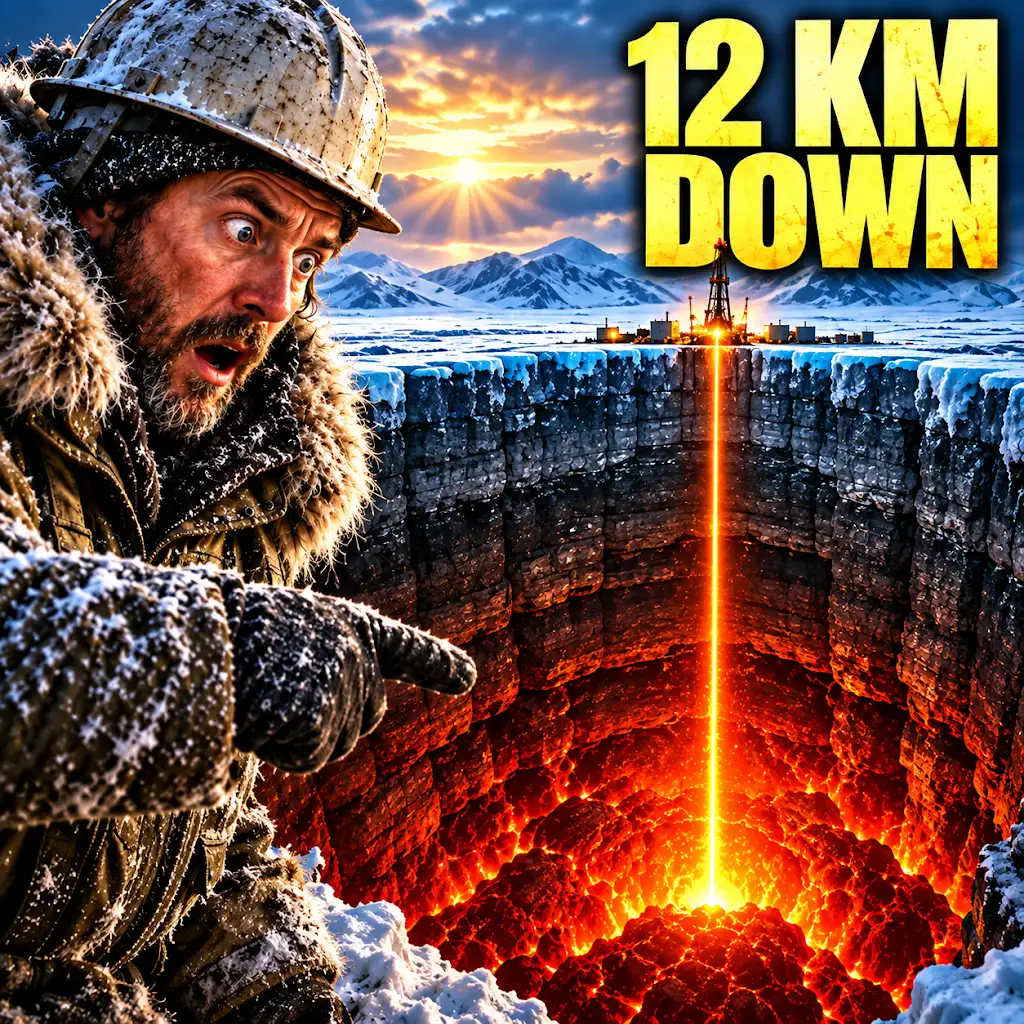
They Drilled 12 KM Into Earth — Then Everything Changed
FAQs
What is Earth’s mantle?
The Earth’s mantle is a layer of rock located between the Earth’s crust and core. It makes up about 84% of the Earth’s volume and is composed of silicate minerals rich in iron and magnesium.
How deep is the Earth’s mantle?
The Earth’s mantle extends from the base of the crust, which is about 5-70 kilometers deep, to a depth of approximately 2,900 kilometers. The boundary between the mantle and the core is known as the core-mantle boundary.
Why do scientists want to drill to the Earth’s mantle?
Scientists are interested in drilling to the Earth’s mantle to study the composition, structure, and dynamics of this layer. By obtaining samples from the mantle, researchers hope to gain a better understanding of the Earth’s formation and evolution.
Has anyone attempted to drill to the Earth’s mantle before?
No, as of now, no one has successfully drilled to the Earth’s mantle. The deepest hole ever drilled, the Kola Superdeep Borehole in Russia, reached a depth of about 12 kilometers, which is only a fraction of the way to the mantle.
What are the challenges of drilling to the Earth’s mantle?
Drilling to the Earth’s mantle poses numerous technical challenges, including extreme heat and pressure as well as the need for advanced drilling technologies. Additionally, the cost of such a project would be immense, making it a significant barrier to attempting to reach the mantle.