The Soviet Union, a nation often characterized by its grand industrial ambitions and its relentless pursuit of scientific and technological supremacy, also harbored a less-publicized but equally significant drive: the exploration of Earth’s deepest secrets. While the Sputnik satellite and the cosmonaut program captured global imagination, Soviet geologists and engineers were quietly pushing the boundaries of drilling technology, venturing into realms previously thought inaccessible. This article will delve into the often-overlooked achievements of the Soviet Union in advanced deep drilling, exploring the motivations, methodologies, and profound implications of their endeavors.
The Strategic Imperative: Why Dig So Deep?
The Soviet Union’s decision to invest heavily in deep drilling was not a mere scientific curiosity; it was a strategic imperative driven by a confluence of factors, primarily economic and geopolitical.
Resource Acquisition and National Security
The vast expanse of the Soviet Union was known to possess immense mineral wealth, but accessing these resources efficiently and reliably was a constant challenge. Deep drilling offered a pathway to untapped reserves of oil, natural gas, and critical minerals, vital for fueling the Soviet economy and sustaining its industrial might.
- Energy Independence: The Soviet leadership recognized the strategic importance of energy self-sufficiency. Deep drilling aimed to secure a domestic supply of hydrocarbons, reducing reliance on international markets and insulating the nation from geopolitical pressures related to energy trade. This was particularly crucial during periods of heightened Cold War tensions.
- Mineral Exploration: Beyond energy, the Soviet Union sought to discover and exploit deep-seated deposits of precious metals, rare earth elements, and other critical minerals essential for its defense industry and technological development. The ability to access these resources from within its own borders was a significant national security advantage.
Scientific Exploration and Geological Understanding
While resource acquisition was a primary driver, a genuine scientific curiosity also fueled the Soviet deep drilling program. Understanding the Earth’s crust and mantle was crucial for advancing various scientific disciplines.
- Seismic Research and Earthquake Prediction: Deeper access to geological formations allowed for more sophisticated seismic monitoring and research. This was intended to improve the understanding of tectonic plate movements and, ideally, lead to more accurate earthquake prediction, a critical concern for a nation with seismically active regions.
- Earth’s Interior Studies: The Soviet Union was ambitious in its desire to understand the composition, temperature, and pressure conditions within the Earth’s mantle. Deep drilling provided direct access to samples and data that could refine existing geological models and contribute to a more comprehensive understanding of planetary formation and dynamics.
- Geothermal Energy Potential: While not as extensively pursued as other goals, there was an underlying interest in assessing the potential of geothermal energy sources that might be accessible through deep drilling.
Soviet deep drilling technology has long been a subject of fascination, particularly due to its implications for resource extraction and geological research. An insightful article that explores the legal frameworks surrounding nationalization and the protection of sovereign interests in resource-rich nations can be found here: Legal Frameworks for Nationalization: Protecting Sovereign Interests. This piece provides a comprehensive overview of how nations can safeguard their resources, which is particularly relevant when considering the advancements made in drilling technologies during the Soviet era.
The Technological Hurdles: Overcoming the Extremes
The pursuit of subterranean depths presented formidable technological challenges that the Soviet Union had to overcome. The immense pressures, extreme temperatures, and abrasive rock formations demanded innovative solutions.
Material Science and Drilling Bit Innovations
The ability to withstand the harsh conditions of deep drilling necessitated significant advancements in material science and the design of drilling equipment.
- High-Strength Alloys: The Soviets developed and employed specialized high-strength steel alloys for drill pipes and casings, capable of resisting immense axial and torsional stresses. These alloys were engineered to maintain their integrity under pressures that would deform or fracture conventional materials.
- Diamond and Carbide Impregnated Bits: Traditional drilling bits struggled to penetrate the hard, abrasive rock encountered at extreme depths. Soviet engineers pioneered the development of advanced drill bits, often incorporating synthetic diamonds or tungsten carbide particles. These were designed for enhanced wear resistance and cutting efficiency.
- Rotary-Percussive Drilling Techniques: To accelerate penetration rates, the Soviets explored and refined rotary-percussive drilling techniques. This involved combining the rotational motion of the drill string with a percussive hammering action at the drill bit, effectively breaking apart hard rock more efficiently.
Downhole Power and Control Systems
Transmitting power and maintaining control over drilling operations at extreme depths presented a unique set of engineering problems.
- Downhole Motors (PDM – Positive Displacement Motors): The Soviets made significant contributions to the development and application of downhole motors. These compact, high-torque motors were placed directly behind the drill bit, eliminating the need to rotate the entire drill string from the surface. This reduced friction, improved directional drilling capabilities, and allowed for faster penetration in certain formations.
- Advanced Mud Circulation and Logging: The drilling fluid (mud) used in deep drilling is crucial for cooling the bit, removing cuttings, and stabilizing the borehole. Soviet engineers developed sophisticated mud circulation systems capable of handling higher temperatures and pressures. They also invested in advanced downhole logging tools that could transmit real-time data on formation properties, temperature, and pressure back to the surface.
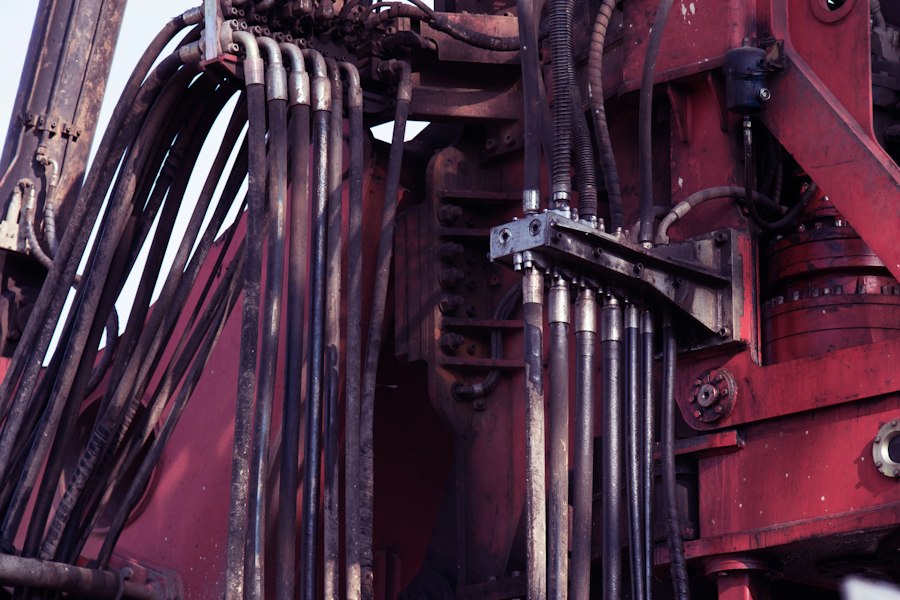
- Hydraulic and Pneumatic Control Systems: Maintaining precise control over drilling parameters like weight on bit, rotation speed, and mud flow at such depths required robust and reliable control systems. The Soviets developed sophisticated hydraulic and pneumatic systems to manage these critical functions, often incorporating redundancies to ensure operational safety.
Iconic Projects: The Deepest Holes Ever Drilled
The Soviet Union’s commitment to deep drilling is perhaps best exemplified by its ambitious drilling projects, which pushed the boundaries of what was previously considered possible.
Soviet deep drilling technology has long fascinated researchers and engineers, particularly due to its ambitious projects aimed at exploring the Earth’s crust. One notable example is the Kola Superdeep Borehole, which reached a depth of over 12 kilometers and provided invaluable insights into geology. For those interested in the broader implications of such technological advancements, a related article discusses the intriguing history and challenges faced in urban environments, which can be found here. This exploration not only highlights the engineering feats of the past but also sheds light on the ongoing quest for knowledge beneath our feet.
The Kola Superdeep Borehole: A Window into the Mantle
The Kola Superdeep Borehole (SG-3) stands as a testament to Soviet ambition and engineering prowess, holding the record for the deepest artificial point on Earth for many years.
- Unprecedented Depth and Scientific Yield: Reaching a staggering depth of 12,262 meters (approximately 7.6 miles), the Kola Superdeep Borehole was primarily a scientific endeavor. The project’s main objective was to study the Earth’s crust and upper mantle, providing unprecedented samples and data.
- Challenges of Extreme Conditions: Drilling through granite and other hard rock formations at such depths encountered temperatures exceeding 180°C (356°F) and pressures over 2,000 atmospheres. The Soviets had to develop specialized equipment and techniques to overcome these extreme conditions, including heat-resistant drilling fluids and reinforced casings.
- Unexpected Discoveries: The geological data retrieved from Kola revealed surprising findings. For instance, at depths previously thought to be devoid of life, scientists discovered fossilized microorganisms, challenging existing theories about the limits of life. The borehole also provided insights into the composition and seismic properties of the Earth’s crust, leading to revised geological models.
- Technological Demonstrations: The success of the Kola Superdeep Borehole was a powerful demonstration of Soviet technological capabilities in materials science, drilling engineering, and downhole instrumentation. It served as a proving ground for many of the advanced techniques and equipment discussed earlier.
Other Significant Deep Drilling Endeavors
While Kola garnered the most international attention, the Soviet Union engaged in numerous other deep drilling projects across its vast territory, each contributing to the overall advancement of the field.
- Urengoy Gas Field Exploration: The exploitation of the massive Urengoy natural gas field in Siberia involved extensive deep drilling operations to access reserves at significant depths. This project was crucial for fulfilling Soviet energy demands and export contracts.
- Sakhalin Island Oil and Gas Projects: The offshore and onshore drilling activities on Sakhalin Island to extract oil and gas also pushed the envelope of deep drilling technology, particularly in challenging Arctic and sub-Arctic environments.
- Geothermal Research Projects: Beyond Kola, other smaller-scale geothermal research boreholes were drilled in various regions to assess the potential for harnessing Earth’s internal heat as an energy source.
The Legacy and Impact: A Lasting Influence
The Soviet Union’s advanced deep drilling technology, though often overshadowed by other achievements, left a lasting legacy on the global oil and gas industry, scientific research, and engineering innovation.
Advancements in the Oil and Gas Sector
The technologies and methodologies developed for Soviet deep drilling directly influenced and accelerated advancements in the international oil and gas sector.
- Enhanced Recovery Techniques: The knowledge gained from drilling in difficult formations and at extreme depths contributed to the development of more effective techniques for extracting hydrocarbons from challenging reservoirs worldwide.
- Directional Drilling Innovations: The Soviets’ work on downhole motors and precise control systems significantly improved the capabilities of directional drilling, allowing for more efficient reservoir access and reduced environmental impact.
- Safety Protocols and Risk Management: The experiences gained from operating under extreme conditions led to the refinement of safety protocols and risk management strategies, crucial for high-pressure, high-temperature drilling operations globally.
Contributions to Earth Sciences and Geophysics
The data and samples obtained from Soviet deep drilling projects provided invaluable insights into the Earth’s structure and processes.
- Refinement of Plate Tectonics Theory: Seismic data and rock samples from deep boreholes contributed to a more nuanced understanding of tectonic plate interactions and the structure of the Earth’s crust.
- Understanding of Subsurface Fluid Dynamics: The study of fluids encountered at deep levels provided crucial information about subsurface hydrology and the potential for groundwater contamination or resource management.
- Biogeochemical Cycles at Depth: The discovery of microbial life at extreme depths opened new avenues of research into the limits of life and the biogeochemical cycles operating within the Earth’s interior.
A Foundation for Future Exploration
The pioneering spirit and technological breakthroughs of the Soviet deep drilling program laid the groundwork for continued exploration and innovation in the years that followed.
- Inspiration for International Collaboration: The sheer ambition of projects like Kola inspired international scientific collaboration and a renewed focus on deep Earth exploration.
- Development of Advanced Instrumentation: The demand for robust and sophisticated downhole instrumentation spurred innovation in sensor technology, data acquisition, and telecommunications, benefiting not only the energy sector but also other scientific disciplines.
- Continued Research and Development: The ongoing quest to understand our planet and harness its resources continues to build upon the foundational knowledge and technological advancements pioneered by the Soviet Union in its ambitious deep drilling endeavors.
In conclusion, the Soviet Union’s pursuit of advanced deep drilling technology was a multifaceted endeavor driven by strategic needs and scientific curiosity. The nation’s engineers and geologists, often working in isolation, achieved remarkable feats of innovation, overcoming immense technological hurdles. The legacy of these efforts can be seen not only in the deepest holes ever drilled but also in the lasting impact on the global energy sector, Earth sciences, and the ongoing human quest to unravel the mysteries hidden beneath our feet.

They Drilled 12 KM Into Earth — Then Everything Changed
FAQs
What is Soviet deep drilling technology?
Soviet deep drilling technology refers to the advanced drilling techniques and equipment developed by the Soviet Union for drilling deep boreholes into the Earth’s crust.
When was Soviet deep drilling technology developed?
Soviet deep drilling technology was developed in the 1960s and 1970s as part of the Soviet Union’s scientific research efforts to study the Earth’s crust and geology.
What were the main goals of Soviet deep drilling technology?
The main goals of Soviet deep drilling technology were to study the Earth’s crust, geothermal gradients, seismic activity, and to explore the possibility of extracting natural resources from deep within the Earth.
What were some notable achievements of Soviet deep drilling technology?
One of the most notable achievements of Soviet deep drilling technology was the Kola Superdeep Borehole, which reached a depth of over 12 kilometers (7.5 miles) in 1989, making it the deepest borehole ever drilled.
How did Soviet deep drilling technology contribute to scientific knowledge?
Soviet deep drilling technology contributed significantly to our understanding of the Earth’s crust, geothermal gradients, seismic activity, and the behavior of rocks at extreme depths. It also provided valuable data for geologists, seismologists, and other scientists studying the Earth’s structure and processes.