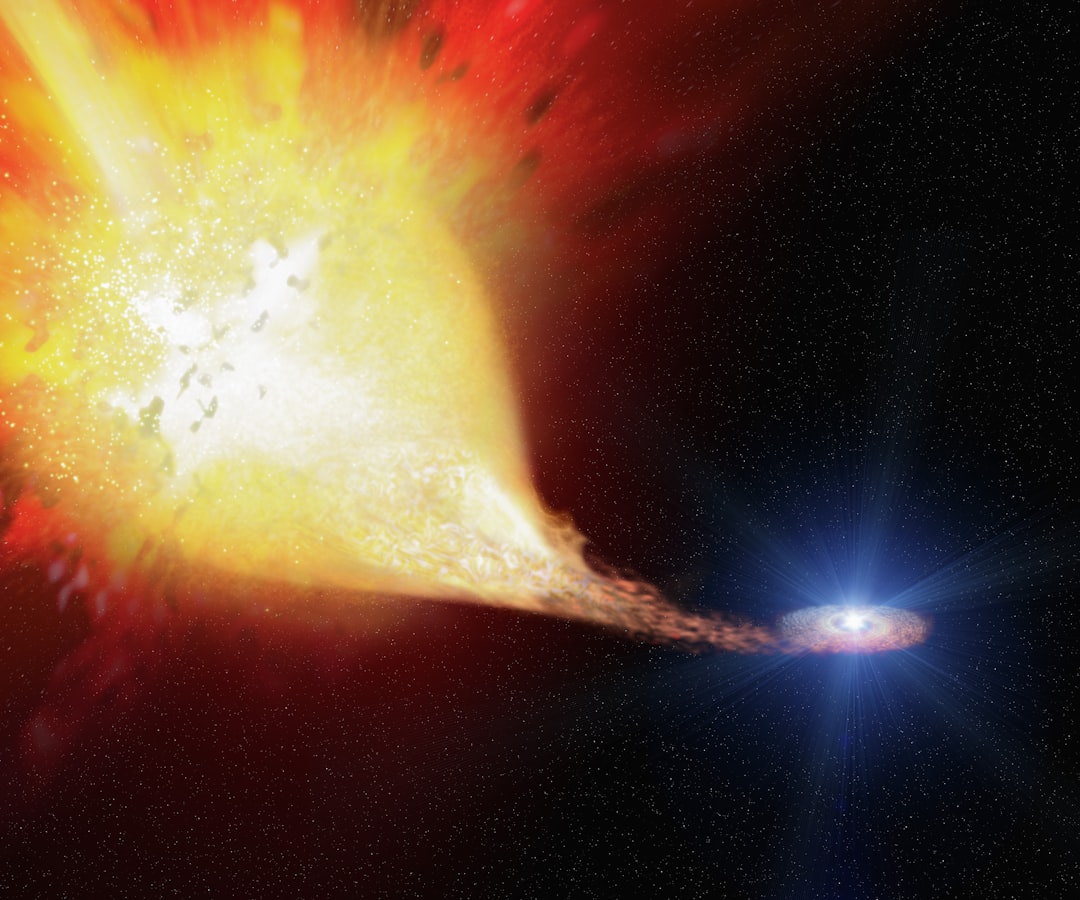
The nebulae of gas and dust, vast cosmic nurseries where stars and planets are born, are not serene cradles of creation. Instead, they are arenas of unimaginable violence, where celestial bodies, from microscopic dust grains to planet-sized behemoths, collide with ferocious energy. This fundamental understanding, the bedrock of the Cosmic Impact Theory, posits that impacts – the collisions of celestial objects – have been the driving force behind the evolution of the universe, shaping everything from the formation of galaxies and stars to the very existence and characteristics of planets, including our own Earth. Far from being mere destructive events, these cosmic crashes are now understood as the sculptors of the cosmos, orchestrating a grand ballet of creation and transformation that has played out over billions of years.
The Big Bang and the Dawn of Structure
The Cosmic Impact Theory finds its earliest roots in the aftermath of the Big Bang. While the Big Bang itself describes the explosive expansion of space and the creation of the fundamental building blocks of matter, it did not immediately conjure the organized structures we observe today. The early universe was a state of near-uniformity, a hot, dense plasma. The emergence of structure, the clumping of matter into galaxies, stars, and planets, was a direct consequence of subtle quantum fluctuations amplified by gravity, and crucially, by the early, frequent, and energetic impacts between nascent clumps of matter.
Quantum Fluctuations and Gravitational Instability
The initial moments after the Big Bang were characterized by immense energies and rapid expansion. However, at a microscopic level, quantum mechanics dictates that there were tiny, random fluctuations in the distribution of energy and matter. These fluctuations, while insignificant initially, possessed the seeds of future structure. As the universe cooled and expanded, gravity began to exert its influence, pulling matter together. Regions with slightly higher densities, born from these quantum fluctuations, possessed a stronger gravitational pull.
The Role of Dark Matter
Crucial to this burgeoning structure is the pervasive influence of dark matter. This enigmatic substance, which interacts only through gravity, played a pivotal role in the early universe. Its gravitational pull acted as scaffolding, attracting ordinary matter into large halos. Without dark matter, the formation of the first galaxies would have been significantly delayed, if it occurred at all. These dark matter halos provided the gravitational wells into which gas and dust accumulated, setting the stage for the formation of stars and galaxies.
The First Stars and Proto-Galaxies
The first gravitational collapses within these dark matter halos led to the formation of the first stars, known as Population III stars. These were massive, metal-poor giants that burned brightly and eventually exploded as supernovae. These explosions were not just spectacular cosmic events; they were instrumental in enriching the interstellar medium with heavier elements – a crucial step in the subsequent formation of more complex structures.
Early Mergers and Galactic Genesis
The universe in its infancy was a much more dynamic place, with proto-galaxies frequently colliding and merging. These galactic mergers were not gentle embraces but cataclysmic events that triggered intense bursts of star formation, redistributed matter, and fundamentally reshaped the nascent galaxies. The gravitational chaos of these early mergers played a vital role in the hierarchical growth of galaxies, where smaller structures coalesced to form larger ones. The violent interactions churned gas and dust, fueling new generations of stars and contributing to the complex morphologies of galaxies we observe today.
The Cosmic Impact Theory suggests that extraterrestrial events, such as asteroid collisions, have played a significant role in shaping Earth’s geological and biological history. For a deeper understanding of how such cosmic events can influence technological advancements on Earth, you might find the article on Mexico’s skilled engineering talent insightful. It explores how innovative minds in engineering can help mitigate the risks associated with cosmic impacts and contribute to space exploration efforts. You can read more about it here: Mexico’s Skilled Engineering Talent.
The Birth of Stars: A Fiery Collision
The formation of stars, the luminous engines of galaxies, is a process intrinsically linked to the Cosmic Impact Theory. While gravity is the primary architect, it is the accumulation of matter and the triggers of collapse, often facilitated by impacts or shockwaves, that initiate stellar genesis.
Protostellar Collapse and Accretion
Stars are born within dense molecular clouds, vast reservoirs of gas and dust. When a region within these clouds becomes sufficiently dense, gravity overcomes the internal pressure, initiating a collapse. This collapse is not always a smooth, uniform process. It can be triggered or accelerated by external forces.
Shockwaves from Supernovae
Supernova explosions, the violent deaths of massive stars, send shockwaves rippling through the interstellar medium. These shockwaves compress nearby gas and dust clouds, increasing their density and potentially initiating the gravitational collapse necessary for star formation. Thus, the death of one star can herald the birth of many more.
Galactic Encounters and Starbursts
When galaxies collide or pass close to one another, the gravitational interactions can trigger immense bursts of star formation, known as starbursts. The tidal forces exerted by the interacting galaxies can compress gas clouds, leading to a rapid and prolific birth of new stars. These starburst events are powerful manifestations of how cosmic impacts can directly influence stellar populations.
Planet Formation: A Celestial Smashing Ground
The formation of planets, from rocky terrestrial worlds to gas giants, is perhaps the most compelling testament to the Cosmic Impact Theory. The accretion of dust and gas in protoplanetary disks surrounding young stars is a process punctuated by countless collisions, both constructive and destructive.
The Protoplanetary Disk: A Cosmic Whirlpool
When a star forms, it is typically surrounded by a disk of gas and dust, the remnants of the parent molecular cloud. Within this protoplanetary disk, dust grains, initially microscopic, begin to stick together through electrostatic forces. As they grow larger, their gravitational self-attraction becomes significant, leading to the formation of planetesimals.
Accretion and Planetesimal Growth
The growth of planetesimals is a direct consequence of collisions. These kilometer-sized bodies collide and merge, gradually building up larger objects. This process is not always smooth; it involves a delicate balance between accretion (growth through collisions) and disruption (fragmentation due to energetic impacts). The composition and structure of the final planets are heavily influenced by the nature and frequency of these early collisions.
The Role of Giant Impacts in Planetary Evolution
The formation of planets is not a singular event but a protracted process of collisions. For terrestrial planets like Earth, the theory of giant impacts is a cornerstone. It is believed that early in its history, Earth experienced a colossal impact with a Mars-sized object, now known as Theia. This cataclysmic collision is thought to have been responsible for the formation of the Moon, the ejection of significant material from Earth’s mantle, and potentially plays a role in Earth’s molten core.
Differentiation and Compositional Shaping
The energy released by these numerous impacts played a crucial role in the differentiation of planetary bodies. Early, hot, and molten planets allowed denser materials, such as iron and nickel, to sink to the core, while lighter silicate materials formed the mantle and crust. The composition of a planet, its atmospheric makeup, and the presence of certain minerals are all echoes of the impacts it endured during its formative years.
Volatile Delivery and the Origins of Water
The delivery of volatiles, such as water and organic molecules, to planetary surfaces is also attributed, in part, to cosmic impacts. Comets and asteroids, icy bodies originating from the outer solar system, are thought to have bombarded the early Earth, delivering the essential ingredients for life as we know it. These impacts were not just destructive; they were foundational for the habitability of our planet.
Earth’s Violent Past: A History Written in Craters
The history of Earth is a vivid chronicle of cosmic impacts. From the formation of the Moon to the extinction events that have reshaped life, impacts have left an indelible mark on our planet’s geological and biological evolution.
The Giant Impact Hypothesis and Lunar Formation
The leading scientific explanation for the formation of the Moon is the Giant Impact Hypothesis. This theory posits that a Mars-sized protoplanet, Theia, collided with the early Earth. The immense energy of this collision ejected a vast amount of material from both bodies into orbit around Earth. This debris then coalesced under gravity to form the Moon. The composition of lunar rocks, remarkably similar to Earth’s mantle, provides strong evidence for this cataclysmic event.
Evidence from Lunar Rocks and Isotopic Signatures
The analysis of lunar samples brought back by the Apollo missions has provided critical data supporting the Giant Impact Hypothesis. The isotopic composition of elements found in lunar rocks closely matches that of Earth’s mantle, suggesting a common origin. Furthermore, the depletion of volatile elements in the Moon and the presence of a small iron core are consistent with the formation scenario envisioned by the impact theory.
Mass Extinction Events: Cosmic Interruptions
Throughout Earth’s history, life has been punctuated by catastrophic mass extinction events, periods where a significant proportion of species on Earth disappeared. Many of these events are strongly linked to the impacts of asteroids or comets.
The Cretaceous-Paleogene (K-Pg) Extinction Event
The most famous of these is the K-Pg extinction event, which wiped out the non-avian dinosaurs approximately 66 million years ago. The discovery of the Chicxulub crater in the Yucatán Peninsula, Mexico, a massive impact structure dating to this period, provides compelling evidence that a large asteroid or comet struck Earth, triggering a chain of devastating environmental consequences, including global wildfires, tsunamis, and a prolonged impact winter that plunged the planet into darkness and cold.
Other Impact-Related Extinctions
While the K-Pg event is the most well-known, geological evidence suggests that other extinction events may also have been triggered by cosmic impacts. Studying impact craters and analyzing geological layers for extraterrestrial material can shed light on these past cataclysms and their role in the ebb and flow of life on Earth.
The Cosmic Impact Theory suggests that significant events in Earth’s history, such as mass extinctions, may have been triggered by asteroid or comet collisions. This theory has gained traction as scientists uncover more evidence supporting the idea that celestial bodies can have profound effects on our planet. For those interested in how groundbreaking discoveries can reshape our understanding of history, a fascinating article discusses various revolutionary tech breakthroughs that are changing our perception of the past. You can read more about it in this insightful piece on revolutionary tech breakthroughs.
Beyond Our Solar System: A Universe of Collisions
The Cosmic Impact Theory is not confined to our solar system. Observations of exoplanetary systems and distant galaxies reveal that collisions and energetic interactions are the norm throughout the universe.
Exoplanetary Debris Disks: Signs of Ongoing Impacts
Observations from space telescopes like Hubble and James Webb have revealed abundant debris disks around young stars. These disks are composed of dust and rock, remnants of planet formation. The presence of such disks, often with gaps and structures, indicates ongoing collisions and the continued evolution of planetary systems.
Rings and Gaps in Protoplanetary Disks
The existence of distinct rings and gaps within protoplanetary disks is strong evidence for the gravitational influence of forming planets. These features can also be sculpted by the accretion of material and the gravitational stirring caused by large, colliding bodies. The dynamic processes occurring within these disks are a direct manifestation of impact physics.
Galactic Collisions and Their Cosmic Consequences
Galaxies, too, are not static entities but are in a constant state of gravitational interaction. Collisions between galaxies are some of the most energetic events in the universe, profoundly influencing their evolution and the star formation rates within them.
Mergers and the Transformation of Galaxies
When galaxies collide, they can merge to form larger, more massive galaxies. These mergers can trigger intense bursts of star formation, fuel supermassive black holes at their centers, and dramatically alter the morphology of the interacting galaxies. The Andromeda galaxy, for instance, is on a collision course with our own Milky Way, a cosmic event that will reshape our galactic neighborhood billions of years from now.
The Role of Impacts in Galaxy Evolution and Structure
The hierarchical model of galaxy formation, where smaller galaxies merge to form larger ones, is heavily reliant on the concept of cosmic impacts. These collisions are not just destructive; they are instrumental in the assembly of large-scale structures in the universe, including galaxy clusters and superclusters. The distribution and evolution of galaxies across cosmic time are intricately linked to the frequency and nature of these gravitational encounters.
The Cosmic Impact Theory, therefore, offers a unifying framework for understanding the universe. It moves beyond the perception of impacts as mere destructive forces and reveals them as fundamental agents of creation, shaping the very fabric of the cosmos. From the birth of stars to the evolution of planets and the grand dance of galaxies, collisions have been, and continue to be, the relentless sculptors of the universe we inhabit. As our observational capabilities continue to advance, further evidence will undoubtedly emerge, solidifying the profound and pervasive influence of cosmic impacts on the grand tapestry of existence.

This Crater Was Supposed to Rewrite Human History… It Didn’t
FAQs
What is the cosmic impact theory?
The cosmic impact theory suggests that major extinction events in Earth’s history, such as the extinction of the dinosaurs, were caused by the impact of large celestial bodies, such as asteroids or comets.
What evidence supports the cosmic impact theory?
Evidence supporting the cosmic impact theory includes the discovery of impact craters that coincide with major extinction events, as well as the presence of impact-related materials, such as shocked quartz and iridium, in sediment layers corresponding to these events.
How does the cosmic impact theory explain mass extinctions?
According to the cosmic impact theory, when a large celestial body collides with Earth, it can release massive amounts of energy, leading to widespread environmental devastation, including wildfires, tsunamis, and a “nuclear winter” effect caused by debris blocking out sunlight.
What are some examples of cosmic impact events in Earth’s history?
One of the most well-known examples of a cosmic impact event is the Chicxulub impact, which is believed to have caused the extinction of the dinosaurs around 66 million years ago. Other examples include the impact that may have led to the Permian-Triassic extinction event, the largest mass extinction in Earth’s history.
How does the cosmic impact theory impact our understanding of Earth’s history and future?
The cosmic impact theory has significant implications for our understanding of Earth’s history, as it suggests that catastrophic events from space have played a major role in shaping the planet’s biodiversity. Additionally, studying cosmic impact events can help us better prepare for potential future impacts and develop strategies for planetary defense.