The vast, arid plains of the Nazca Desert in southern Peru hold a secret etched into their very surface, a collection of colossal figures and geometric designs known as the Nazca Lines. For centuries, these geoglyphs, ranging from hummingbirds and monkeys to intricate trapezoids and spirals, have baffled archaeologists, anthropologists, and enthusiasts alike. Their immense scale makes them largely incomprehensible from the ground, prompting the enduring question: how were they created, and, perhaps more intriguingly, how were they meant to be seen? This article delves into the mysterious visibility patterns of the Nazca geoglyph group, exploring the theories that attempt to unravel the enigma of their intended perception.
The Scale and the Sky: A Ground-Level Perspective
The sheer immensity of the Nazca Lines is their most striking characteristic. Created by removing the reddish-brown iron oxide-coated pebbles that cover the desert surface to expose the lighter soil beneath, many of these geoglyphs stretch for hundreds of meters. Figures like the Spider, estimated to be over 45 meters long, or the Condor, with a wingspan of over 130 meters, are simply too vast to be fully appreciated by someone standing within their boundaries. The experience of walking among the lines is one of awe and disorientation. One might see the elongated form of a hummingbird’s beak or the curve of a monkey’s tail, but grasping the entirety of the creature, its proportions and posture, remains a challenge. This inherent limitation of ground-level viewing has been the bedrock of much speculation about the geoglyphs’ purpose.
The Illusion of the Ground
From a human perspective on the desert floor, the Nazca Lines can create optical illusions. The stark contrast between the removed stones and the exposed earth, combined with the immense scale, can distort perceptions of size and shape. A seemingly simple straight line can appear to waver or curve when viewed over a great distance. Similarly, the precise angles and lengths of geometric designs become difficult to assess accurately without an elevated vantage point. This phenomenon contributes to the feeling that the geoglyphs are not fully “present” when experienced solely from the ground.
The Problem of Purpose and Perception
The difficulty in comprehending the full form of most geoglyphs from ground level immediately raises questions about their intended audience and purpose. If they were primarily functional, serving as agricultural calendars or territorial markers, their design suggests a need for a viewpoint that allows for a holistic understanding of their entirety. This has led many to hypothesize that the creators of the Nazca Lines possessed a method of aerial observation, or at least a conceptual understanding of perspective that transcended the immediate ground.
The visibility patterns of the Nazca geoglyphs have long intrigued researchers, leading to various studies aimed at understanding their purpose and significance. A related article that explores the broader implications of visibility and perception in cultural contexts can be found at Charting the Future of US-Mexico Trade Relations. This piece delves into how visibility and representation play crucial roles in shaping international relations, much like the way the Nazca lines may have served as markers or messages within their ancient environment.
Theories of Aerial Observation: From Towers to Flight

The most prevalent explanation for the visibility of the Nazca Lines centers on the idea of aerial observation. The inability to see the complete designs from the ground necessitates an elevated perspective, leading to various theories about how this might have been achieved. These theories range from the plausible to the more speculative, each attempting to address the fundamental problem of scale and perception.
Ancient Observation Towers
One of the more grounded theories proposes the existence of constructed observation towers. While no definitive remnants of such structures have been unequivocally identified in direct association with every geoglyph, the possibility remains. It is conceivable that simple, temporary structures made of wood or other perishable materials could have been erected at strategic points to provide the necessary elevated viewpoint. These towers would have allowed individuals to oversee the creation process and to view the completed designs in their entirety. The sheer number and distribution of the geoglyphs, however, would have required a significant network of such observation points, raising questions about the logistical feasibility and the evidence for their widespread use.
Natural Vantage Points
Another plausible explanation involves the use of existing natural features. The Nazca plateau is not entirely flat; it features some elevated areas and ridges that could have offered limited, but still significant, aerial perspectives. Certain geoglyphs might have been specifically oriented or designed to be best viewed from these natural high points. This theory avoids the need for extensive construction and relies on the ingenious use of the existing landscape. However, the precise alignment required for some of the more complex and detailed figures might be difficult to achieve solely through natural vantage points.
The Hypothesis of Human Flight
Perhaps the most captivating, and controversial, theory involves the possibility of human flight in ancient Nazca. Proponents of this idea suggest that the Nazca people may have possessed rudimentary flying devices, such as gliders or hot air balloons, enabling them to gain the aerial perspective needed to create and appreciate their massive artworks. While there is no direct archaeological evidence to support the existence of such technologies, the sheer scope and precision of the geoglyphs, particularly the more complex biomorphs, have led some to consider this possibility. This theory often draws parallels with ancient myths and legends of flight found in various cultures worldwide.
Exploring the Evidence for Early Flight
The debate surrounding ancient flight is fueled by various interpretations of artistic depictions and fragmented artifacts. Some scholars point to certain pottery designs or carved objects that they believe depict rudimentary flying machines or figures in flight. Skeptics, however, often attribute these interpretations to pareidolia or a misunderstanding of symbolic representations. The lack of concrete technological remnants, such as wings, harnesses, or evidence of propulsion systems, makes this theory difficult to substantiate archaeologically.
The “Stairway to Heaven” Concept
Some researchers have proposed that certain geoglyphs, particularly the long, straight lines, might have served as pathways or runways. The idea is that these lines, when viewed from a specific distance or angle, create an illusion of leading somewhere, perhaps to a spiritual realm or a celestial destination. This concept is less about the visual perception of the entire geoglyph and more about the symbolic journey it represents. The alignment of some lines with astronomical events further supports this notion of a connection between the earthbound creations and the celestial sphere.
Astronomical Alignments and Celestial Navigation

A significant body of research has focused on the potential astronomical significance of the Nazca Lines. Many of the geoglyphs, especially the straight lines, appear to be precisely aligned with celestial phenomena such as solstices, equinoxes, and the rising or setting of certain stars. This suggests a sophisticated understanding of astronomy and a potential use of the geoglyphs as astronomical markers or calendars. The visibility patterns, in this context, might be directly linked to the position of the sun, moon, or stars at specific times of the year.
The Sun’s Role in Visibility
The path of the sun across the sky provides a daily and seasonal basis for the changing visibility of the geoglyphs. During certain times of the year, the sun’s angle might cast shadows that accentuate specific lines or figures, enhancing their perceived clarity. Conversely, at other times, the same shadows could obscure details. This dynamic interplay between light, shadow, and the geoglyphs’ etched surfaces suggests a deliberate manipulation of these elements to create specific visual effects that might have been tied to agricultural cycles or ritualistic observances.
The Influence of Star Patterns
Beyond the sun, the patterns of the stars would have also played a crucial role. Constellations, their movements, and their appearance on the horizon at different times of the night could have been mirrored or represented by the geoglyphs. The visibility of a particular geoglyph might have been amplified or contextualized by the appearance of a specific star or constellation overhead. This would have transformed the desert floor into a terrestrial planetarium, where the earthbound designs resonated with the celestial tapestry above.
The Serpent and the Stars: A Cosmic Connection
The theory of astronomical alignment is particularly compelling when considering figures like the Serpent geoglyph. Its sinuous form, when viewed from a specific elevation, can be seen to mimic the arc of certain celestial bodies or even the winding path of a river in the landscape. If the Nazca people were skilled astronomers, they may have designed these figures to align with significant celestial events, making their visibility intrinsically linked to the timing of these cosmic occurrences.
Ritualistic and Religious Interpretations: The Sacred Landscape
The most enduring interpretations of the Nazca Lines lean towards their religious and ritualistic significance. Rather than purely utilitarian functions, the geoglyphs are often seen as offerings, prayers, or pathways to the divine. In this context, their visibility patterns become integral to their sacred purpose, designed to be perceived by deities or to facilitate spiritual communication.
Communication with the Gods
If the geoglyphs were intended for divine eyes, then their creation from an elevated perspective aligns perfectly with the concept of gods residing in the heavens. The act of creating vast images on the earth could be interpreted as a form of plea, a visible testament to devotion, or a means of drawing the attention of celestial beings. The precise way in which these figures are revealed or obscured by light and shadow could have held ritualistic meaning, dictating when and how these sacred messages were to be “read.”
Processional Pathways and Sacred Journeys
Many of the larger geoglyphs, particularly the straight lines and trapezoids, are theorized to have served as processional pathways. These might have been used for religious ceremonies, where participants would walk along these lines, perhaps during specific astronomical events or festivals. The visibility of the surrounding geoglyphs from these pathways would have been a crucial element of the ritual, guiding participants and imbuing the landscape with spiritual significance. The experience of moving along these lines, with the colossal figures gradually revealing themselves, would have been a powerful sensory and spiritual event.
The Monkey and the Mountain: Earthly and Celestial Resonance
The zoomorphic figures, such as the Monkey, are often interpreted as symbols with deep cosmological meaning. The Monkey, with its curled tail, might represent a connection to the earth, while its orientation might have been intended to align with specific celestial events, thereby bridging the earthly and the divine. The visibility of such figures, perhaps amplified by the shadows cast at dawn or dusk, could have signaled the start or end of important ritualistic periods.
The visibility patterns of the Nazca geoglyph group have intrigued researchers for decades, prompting various studies into their purpose and significance. A related article discusses the complexities of logistics and visibility in different contexts, which can provide a unique perspective on how visibility impacts communication and transportation. For more insights on this topic, you can read about the challenges of shipping across borders in the article found here. Understanding these patterns not only sheds light on ancient cultures but also offers valuable lessons for modern infrastructure.
The Enduring Mystery: An Unsolved Puzzle
| Geoglyph Group | Visibility Pattern | Time of Day Best Viewed | Viewing Angle | Estimated Size (meters) | Notable Features |
|---|---|---|---|---|---|
| The Hummingbird | High contrast with surrounding terrain | Early morning | From the west | 93 | Long beak, intricate lines |
| The Spider | Visible due to shadow patterns | Late afternoon | From the east | 46 | Distinct leg patterns |
| The Monkey | Moderate visibility, enhanced by sunlight angle | Midday | From the south | 56 | Curled tail, spiral design |
| The Condor | High visibility due to size and contrast | Morning | From the north | 134 | Large wingspan, detailed feathers |
| The Astronaut | Low visibility, requires aerial view | Any time with clear skies | Directly overhead | 32 | Human-like figure with helmet |
Despite centuries of study and numerous theories, the Nazca Lines remain an enigma. The precise reasons for their creation, the methods employed, and the full extent of their intended visibility are still debated. The mystery only adds to their allure, transforming the Nazca Desert into a landscape of profound wonder and intellectual curiosity. While technology has allowed us to see the geoglyphs in their entirety from above, the human experience of the Nazca creators, who labored under the vast, open sky to etch their visions into the earth, remains largely elusive.
The Challenge of Definitive Proof
The lack of definitive written records from the Nazca culture presents a significant obstacle to fully understanding their intentions. Archaeological evidence can offer clues, but it rarely provides unequivocal answers to questions of belief and symbolism. The theories about visibility, while often compelling, remain interpretations based on the available evidence and our modern understanding of perception and astronomy.
The Future of Nazca Research
Ongoing archaeological research, combined with advancements in remote sensing technologies and a deeper understanding of ancient astronomical practices, continues to shed new light on the Nazca civilization. Future discoveries may offer more concrete evidence to support or refute existing theories, potentially revealing a more complete picture of how the Nazca Lines were meant to be seen and understood. Until then, the colossal figures of the Nazca Desert will continue to provoke questions and inspire awe, their mysterious visibility patterns a testament to the ingenuity and spiritual depth of their ancient creators. The enigma of the Nazca Lines, therefore, is not just about what we can see, but about what we can imagine, and the enduring power of human creativity to leave an indelible mark on the world.
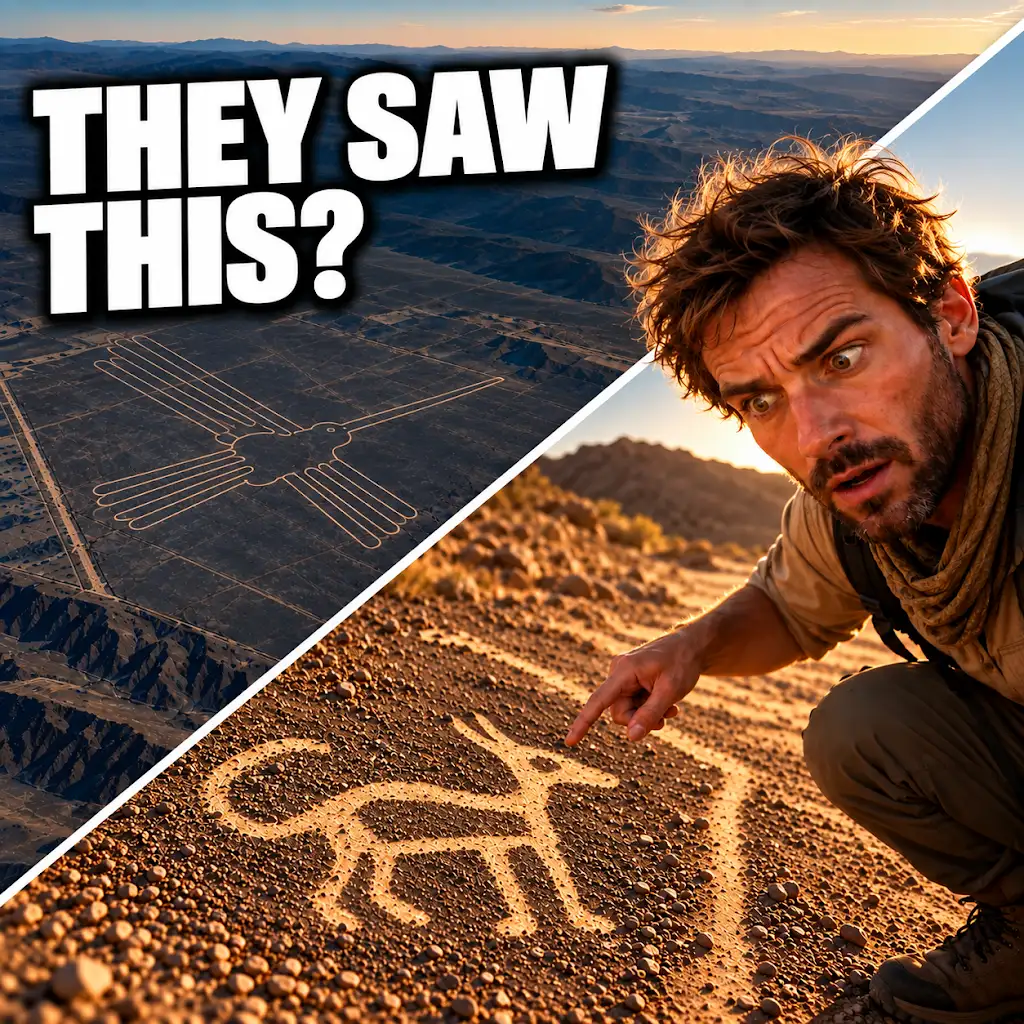
AI Found New Nazca Drawings—Could People See Them from the Ground?
FAQs
What are Nazca geoglyphs?
Nazca geoglyphs are large designs created on the ground in the Nazca Desert in southern Peru. They are believed to have been made by the ancient Nazca people between 500 BC and 500 AD.
How were Nazca geoglyphs created?
Nazca geoglyphs were created by removing the reddish-brown iron oxide-coated pebbles that cover the surface of the Nazca Desert, revealing the lighter-colored earth underneath. This process created the distinctive designs that can be seen from above.
What is the visibility pattern of Nazca geoglyph groups?
The visibility pattern of Nazca geoglyph groups varies, with some designs easily visible from the ground while others are best viewed from the air. The designs that are best viewed from the air are often larger and more complex.
Why were Nazca geoglyphs created?
The purpose of Nazca geoglyphs is still a topic of debate among researchers. Some theories suggest that they had religious or ceremonial significance, while others propose that they served as markers for underground water sources or astronomical calendars.
Are Nazca geoglyphs still visible today?
Yes, many Nazca geoglyphs are still visible today, although they have been subject to some damage over the years due to natural erosion and human activity. Efforts are being made to preserve and protect these ancient designs for future generations.