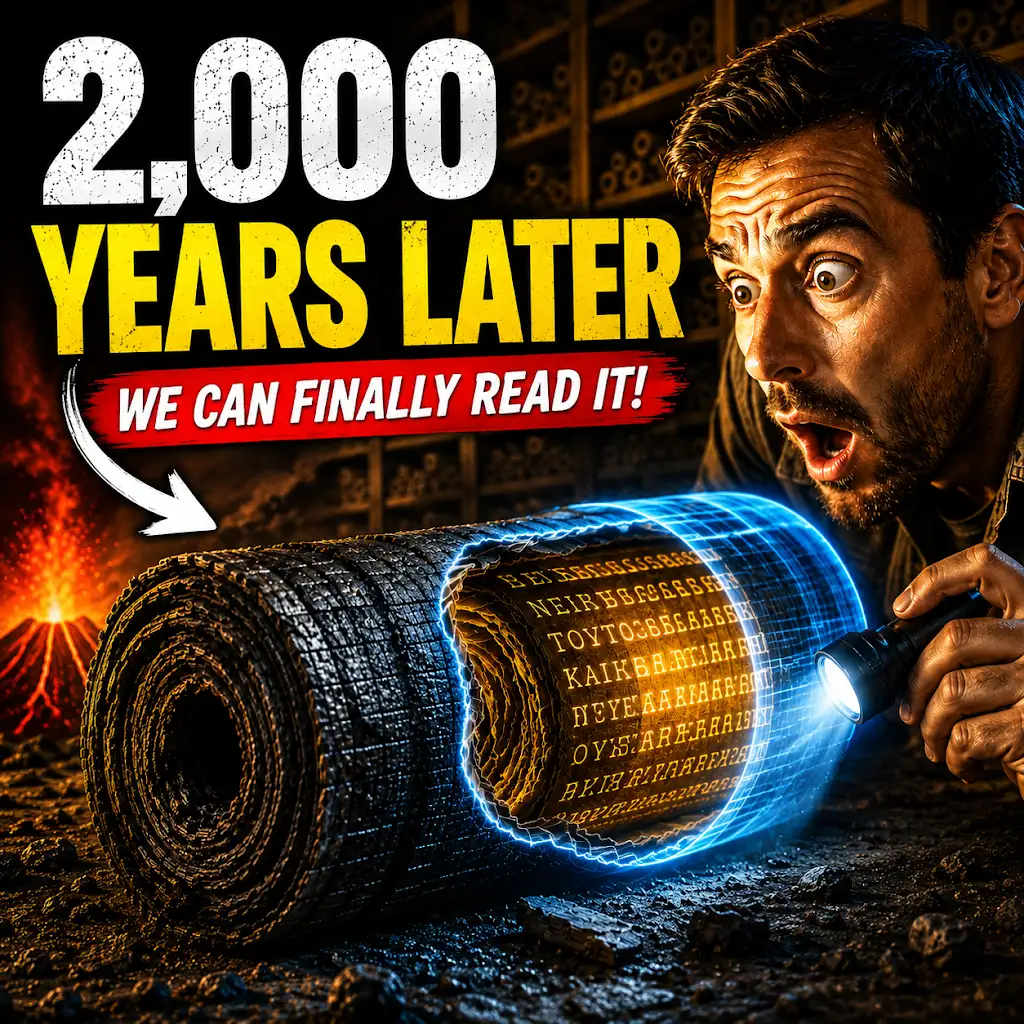
The Herculean task of deciphering scorched and brittle papyrus scrolls, buried for centuries under the volcanic ash of Mount Vesuvius, has long been the domain of dedicated scholars and meticulous archaeologists. These fragments, remnants of ancient Roman life tragically preserved, hold invaluable insights into history, philosophy, and daily existence. Yet, the sheer fragility and immense number of these scrolls have presented an almost insurmountable challenge. Until now. A groundbreaking initiative, dubbed the “Vesuvius Challenge AI Ancient Texts,” is poised to revolutionize this field, leveraging the power of artificial intelligence to unlock the secrets held within these extraordinary artifacts.
The Catastrophe that Froze Time
The eruption of Mount Vesuvius in 79 AD was a cataclysm of unimaginable proportions. While Pompeii is perhaps the more widely known victim of this volcanic fury, the nearby Roman town of Herculaneum suffered an equally devastating, albeit different, fate. Instead of being buried under a blanket of ash and pumice, Herculaneum was inundated by a pyroclastic flow – a superheated avalanche of gas, ash, and rock that swept through the town at incredible speed. This intense heat carbonized the organic materials it encountered, including an estimated 1,800 papyrus scrolls found in the Villa of the Papyri, a luxurious ancient villa believed to have belonged to the family of Lucius Calpurnius Piso Caesoninus, Julius Caesar’s father-in-law. The intense heat essentially baked the scrolls, transforming them into brittle, carbonized lumps that were nearly impossible to unroll and read without disintegrating.
The Herculaneum Papyri: A Treasure Trove of Lost Knowledge
For centuries, these carbonized scrolls lay dormant, a tantalizing mystery entompered by nature. Excavations in the 18th century brought them to light, but the challenges of preservation and decipherment quickly became apparent. Traditional methods of unrolling and reading were incredibly destructive, often leading to the complete loss of the text. Scholars painstakingly attempted to separate the delicate layers, a process that could take years for a single scroll and often resulted in only fragments being salvaged. Despite these Herculean efforts, a vast majority of the scrolls remained unreadable, their contents lost to time. The potential knowledge contained within these unread scrolls is immense: philosophical treatises, historical accounts, literary works, and perhaps even personal letters offering a glimpse into the lives of individuals from a pivotal era in human history.
The Ethical and Practical Dilemmas of Preservation
The preservation of these ancient artifacts is a delicate balancing act. The environment in which they were preserved – buried in volcanic ash – is crucial for their current state. Any attempt to alter this environment or handle the scrolls without extreme care risks their irreversible degradation. The sheer number of scrolls, combined with their extreme fragility, means that even with the most advanced traditional techniques, the pace of decipherment is incredibly slow. This has led to a growing sense of urgency among researchers, as the risk of these invaluable documents deteriorating further increases with each passing year. The ethical imperative to preserve and understand this unique historical record weighs heavily on the scientific community.
The Dawn of AI in Ancient Text Decipherment
The Limitations of Traditional Methods
The traditional approach to deciphering ancient texts, particularly fragile ones like the Herculaneum papyri, is a painstaking and often destructive process. Scholars have historically relied on physical manipulation, employing specialized tools and techniques to gently separate the layers of carbonized papyrus. This often involves a combination of mechanical methods, such as using fine scalpels and brushes, and chemical treatments to strengthen the brittle material. However, even with the most skilled hands, the process is fraught with peril. The slightest misstep can cause the delicate papyrus to crumble, rendering sections of text irretrievable. Furthermore, the sheer volume of scrolls and the time-consuming nature of this manual decipherment mean that progress is measured in decades, not years. This slow pace is a significant barrier to fully understanding the wealth of information contained within these unique artifacts.
The Promise of Machine Learning and Computer Vision
The limitations of traditional methods have long been acknowledged, and the search for more effective solutions has been ongoing. The advent of artificial intelligence, particularly in the fields of machine learning and computer vision, has offered a beacon of hope. These technologies possess the remarkable ability to analyze vast amounts of data, identify complex patterns, and even “learn” from experience. For the Herculaneum papyri, this translates into the potential to analyze the subtle variations in ink density, the minuscule indentations left by the scribe’s stylus, and the intricate patterns of carbonization that traditional methods struggle to fully discern. Computer vision algorithms can be trained to recognize the shapes of ancient letters, even when they are distorted or incomplete, by learning from a dataset of known ancient texts. Machine learning can then be employed to predict missing letters or words based on linguistic context and known grammatical structures.
Early Explorations and the Birth of the Vesuvius Challenge
The idea of using AI to decipher ancient texts is not entirely new. Researchers have explored various computational approaches for some time, with varying degrees of success. However, the Vesuvius Challenge AI Ancient Texts represents a significant escalation and formalization of these efforts. Recognizing the unique challenges posed by the Herculaneum papyri – their extreme fragility, their burnt state, and their immense historical significance – the challenge was designed to bring together the world’s brightest minds in AI and ancient studies. The goal was to foster a collaborative environment where innovative solutions could be developed and tested, pushing the boundaries of what was previously thought possible in the field of digital archaeology and philology. The challenge provided a clear objective: to develop AI models capable of reading previously unreadable texts from the Villa of the Papyri.
The AI Toolkit: Algorithms and Techniques
Deep Learning for Text Recognition
At the heart of the Vesuvius Challenge lies the application of deep learning, a powerful subset of machine learning that utilizes artificial neural networks with multiple layers. These networks are particularly adept at learning hierarchical representations of data, meaning they can process complex information by breaking it down into progressively more abstract features. In the context of the Herculaneum papyri, deep learning models are trained to recognize the visual characteristics of ancient Greek and Latin letters, even when they are faint, distorted, or partially obscured. The process involves feeding the AI algorithms with a large dataset of images – both of readable ancient texts and of the unreadable papyrus fragments. The algorithms learn to identify subtle differences in pixel intensity, shape, and texture that correspond to specific letters and ligatures. This allows them to distinguish between ink marks and carbonized background, a critical task given the uniform brown hue of the scrolls.
Convolutional Neural Networks (CNNs) for Image Analysis
Convolutional Neural Networks (CNNs) are a specific type of deep learning architecture that has proven exceptionally effective for image recognition tasks. CNNs are designed to automatically and adaptively learn spatial hierarchies of features from input images. They use layers of “convolution” to detect patterns, such as edges, corners, and curves, in the data. As the information passes through deeper layers of the network, these basic features are combined to recognize more complex shapes, ultimately leading to the identification of entire characters or even words. For the Vesuvius Challenge, CNNs are trained on cross-sections of the papyri, allowing them to analyze the minute details of the ink strokes against the carbonized papyrus background.
Recurrent Neural Networks (RNNs) for Sequential Data
While CNNs excel at analyzing spatial patterns, Recurrent Neural Networks (RNNs) are designed to process sequential data, such as text. In the context of deciphering ancient texts, RNNs can be used to understand the grammatical structure and predict missing letters or words based on the surrounding context. Once a CNN has identified potential characters, an RNN can then analyze the sequence of these characters, taking into account the probability of certain letter combinations or word formations in ancient Greek or Latin. This allows the AI to make educated guesses about obscured or unreadable sections, effectively completing the text.
Image Processing and Enhancement Techniques
Beyond deep learning, a suite of sophisticated image processing techniques is employed to prepare the papyrus fragments for AI analysis. The raw images of the papyrus sections often require significant enhancement to bring out the subtle details of the ink. This can involve techniques like contrast adjustment, noise reduction, and edge enhancement. Specialized algorithms are used to segment the papyrus into individual character regions, making it easier for the AI to focus on specific parts of the text. The goal is to create the clearest possible digital representation of the ancient writing, maximizing the chances of successful decipherment.
Segmentation and Feature Extraction
Before feeding images to deep learning models, the text needs to be segmented into individual characters or even character components. This process, known as segmentation, isolates the ink marks from the papyrus background. Feature extraction then identifies key characteristics of these segmented regions, such as the curvature of strokes, the thickness of lines, and the presence of serifs. These extracted features serve as the input for the AI models, allowing them to learn and recognize different characters.
Contrast Enhancement and Noise Reduction
The carbonized nature of the papyri often results in low contrast between the ink and the background, and the imaging process can introduce noise. Contrast enhancement techniques are used to make the ink marks more visible, while noise reduction algorithms help to clean up the images, removing unwanted artifacts that could confuse the AI. These steps are crucial for ensuring that the AI models are not misled by irrelevant visual information.
Natural Language Processing (NLP) for Linguistic Reconstruction
Once potential characters and words have been identified by the visual AI models, Natural Language Processing (NLP) techniques come into play to reconstruct the coherent text. NLP algorithms are designed to understand and process human language. In this context, they are used to analyze the sequences of recognized characters, identifying grammatical structures, word boundaries, and potential semantic meanings. This allows the AI to fill in gaps, correct errors, and provide a more complete and understandable translation of the deciphered text.
Language Modeling and Predictive Text
Language models, a core component of NLP, are trained on vast corpora of ancient Greek and Latin texts. These models learn the statistical probabilities of word sequences, grammatical rules, and common phrases. When the AI encounters an incomplete word or a section of illegible text, the language model can predict the most likely word or phrase that should be there, based on the surrounding context. This predictive capability is essential for reconstructing the full meaning of the damaged scrolls.
Translation and Semantic Analysis
The ultimate goal is not just to read the characters but to understand the meaning of the text. NLP tools are employed for translation and semantic analysis, converting the deciphered ancient language into modern languages and identifying the underlying meaning and intent of the original author. This involves understanding nuances of vocabulary, idiom, and historical context, further enriching our understanding of the ancient world.
The Vesuvius Challenge: A Collaborative Endeavor
The Call for Global Participation
The Vesuvius Challenge was not conceived as a solitary pursuit but as a global, collaborative effort. Recognizing that no single institution or team possessed all the necessary expertise, the organizers issued a public call for participation, inviting researchers, AI developers, and classical scholars from around the world to contribute. This open-source approach was crucial for fostering innovation and accelerating progress. It allowed for a diverse range of perspectives and skillsets to be brought to bear on the problem, creating a dynamic environment where novel solutions could emerge. The challenge provided access to digitized images of the papyri, along with the necessary tools and frameworks for participants to develop and test their AI models.
The Prize and the Motivation for Innovation
To incentivize participation and recognize outstanding contributions, the Vesuvius Challenge offered significant prizes to the teams that achieved the most successful results in deciphering the scrolls. This monetary incentive, combined with the intrinsic motivation of contributing to a significant historical and scientific endeavor, attracted a large and talented pool of participants. The competitive nature of the challenge spurred innovation, encouraging teams to push the boundaries of AI technology and develop highly effective algorithms. The prospect of being the first to read previously lost ancient texts was a powerful motivator for many, offering the chance to make a tangible impact on our understanding of the past.
Building a Community of AI and Classics Experts
Beyond the direct decipherment of the scrolls, the Vesuvius Challenge has fostered the creation of a vibrant community at the intersection of artificial intelligence and classical studies. This interdisciplinary collaboration has led to a greater understanding and appreciation of each other’s fields. AI experts have gained valuable insights into the complexities of ancient languages and the challenges of historical research, while classicists have become more familiar with the potential of computational tools to advance their work. This bridging of disciplines is a crucial long-term outcome of the challenge, paving the way for future collaborative projects and innovations. The shared goal of unlocking ancient knowledge has created strong bonds and a spirit of mutual learning.
Breakthroughs and Future Prospects
Early Successes and Deciphered Texts
The Vesuvius Challenge has already yielded remarkable successes. Teams utilizing AI have managed to decipher significant portions of previously unreadable papyrus fragments. These breakthroughs have revealed previously unknown philosophical texts, offering new perspectives on ancient thought. For instance, one early success involved deciphering sections of a philosophical work by Philodemus, a Greek philosopher who lived in Herculaneum. The AI’s ability to reconstruct damaged sections and identify obscure terminology has allowed scholars to engage with these texts in ways that were previously impossible. These early victories have validated the potential of AI in this field and provided valuable data for further refinement of the algorithms.
The Next Frontier: Unlocking More Scrolls
The success of the initial phase of the Vesuvius Challenge has paved the way for tackling the vast majority of the unread papyri. The algorithms and techniques developed are continually being improved, becoming more sophisticated and accurate with each iteration. The goal is to systematically work through the remaining scrolls, extracting as much information as possible. This ongoing effort promises to unlock a treasure trove of ancient knowledge that has been hidden for two millennia, potentially reshaping our understanding of ancient history, philosophy, and culture. The sheer volume of the remaining unread scrolls means that this will be a long-term project, but one with immense potential rewards.
The Long-Term Impact on Archaeology and History
The Vesuvius Challenge AI Ancient Texts is not just about deciphering a few scrolls; it represents a paradigm shift in how we approach the study of ancient civilizations. The methodologies developed and the collaborations forged are likely to be applied to other ancient texts and artifacts around the world. This AI-driven approach has the potential to democratize access to historical knowledge, allowing for more rapid and extensive decipherment of fragile and complex documents. It opens up new avenues for research, enabling historians and archaeologists to ask and answer questions that were previously unanswerable, leading to a more nuanced and comprehensive understanding of our shared human past. The implications for digital archaeology and the broader field of humanities are profound and far-reaching. The Vesuvius Challenge has truly ushered in a new era of discovery.